Loading...
Murad IV vs Napoleon Bonaparte
Napoleon Bonaparte leads by 9.9 pts · 2 figures compared
…
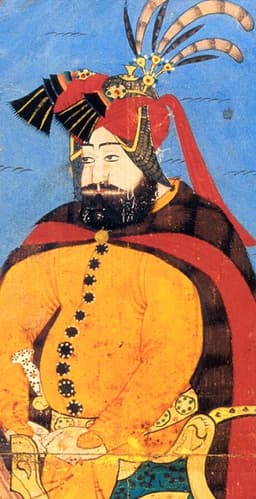
Murad IV
Emperor · Modern
61.0Total

Napoleon Bonaparte
General · Modern
70.9Total
Basic Information
Born
1612
1769
Died
1640
1821
Era
Modern
Modern
Nationality
Ottoman Empire
France
Occupation
Emperor
General
Civilization
Middle Eastern
Western
Score Comparison
Military (10%)
67.3
94.0
Political (20%)
55.0
72.0
Influence (20%)
59.0
40.0
Legacy (20%)
52.0
80.0
Leadership (15%)
78.0
78.0
Strategy (15%)
65.4
90.0
TOTAL
61.0
70.9
Murad IV — Complete Timeline
1632 AD
Suppression of the Janissary RevoltPolitical Action◆ Major
Murad IV faced a major revolt by the Janissaries, who demanded the execution of several officials. Murad IV initially conceded but later executed the Janissary leaders and purged the corps. He then imposed strict discipline, reducing the Janissaries' political power and restoring order in the capital.
RevoltJanissariesPurge
Impact: nationaldestructive
1633 AD
Ban on Tobacco and AlcoholReform
Murad IV issued a decree banning the use of tobacco, coffee, and alcohol throughout the Ottoman Empire. He enforced this ban with harsh penalties, including execution for violators. This measure aimed to restore public morality and discipline, reflecting his authoritarian rule.
ProhibitionMoralityAuthoritarianism
Impact: nationaldestructive
1638 AD
Recapture of BaghdadWar◆ Major
Murad IV personally led a massive Ottoman army to recapture Baghdad from the Safavid Empire after a 40-day siege. The city had been lost to the Safavids in 1623. The victory restored Ottoman control over Mesopotamia and was a major military achievement of his reign.
SiegeSafavid WarMesopotamia
Impact: regional
1639 AD
Treaty of ZuhabPolitical Action◆ Major
Murad IV's recapture of Baghdad led to the Treaty of Zuhab with the Safavid Empire. This treaty established the permanent border between the Ottoman and Safavid empires, which largely corresponds to the modern Iran-Iraq border. It ended decades of war between the two empires.
TreatyBorderOttoman-Safavid
Impact: regionalconstructive
Napoleon Bonaparte — Complete Timeline
1799 AD
Coup of 18 BrumaireOther◆ Major
Napoleon Bonaparte, with support from his brother Lucien and key political figures, overthrew the Directory in a bloodless coup. He established the Consulate with himself as First Consul, effectively becoming the ruler of France. This event ended the French Revolution's most unstable period.
French RevolutionCoupRise to Power
Impact: regional
1804 AD
Promulgation of the Napoleonic CodeOther◆ Major
Napoleon enacted the Civil Code of the French, known as the Napoleonic Code, a comprehensive set of laws that replaced the fragmented feudal legal systems. The code established legal equality, protected property rights, and secularized law. It became the basis for legal systems in many European and world countries.
Legal ReformNapoleonic CodeCivil Law
Impact: globalconstructive
1805 AD
Battle of AusterlitzWar◆ Major
Napoleon's Grande Arm
Napoleonic WarsBattleDecisive Victory
Impact: global
1812 AD
Invasion of RussiaWar◆ Major
Napoleon led the Grande Arm
Napoleonic WarsInvasionDisaster
Impact: globaldestructive
1815 AD
Battle of WaterlooWar◆ Major
Napoleon's French army was defeated by the combined forces of the Duke of Wellington's Anglo-Allied army and Gebhard Leberecht von Bl
Napoleonic WarsBattleFinal Defeat
Impact: globaldestructive
Expert Analysis
murad-iv-vs-napoleon-bonaparte
# The Iron Throne and the Imperial Eagle: Murad IV and Napoleon Bonaparte
In the summer of 1638, a young sultan rode at the head of a vast Ottoman army toward the walls of Baghdad, his hand never far from his sword, his eyes scanning for treachery among his own men. Nearly two centuries later, a Corsican artillery officer stood before the pyramids of Egypt, promising his soldiers that forty centuries were watching them. Both men commanded empires. Both seized history by the throat. Yet one died in exile, a prisoner of the British, while the other died in his bed, still sovereign of his realm. What separates a conqueror from a restorer, and why do their fates diverge so sharply?
Origins
Napoleon Bonaparte was born in 1769 on the island of Corsica, a place that had just become French by treaty. His family was minor nobility, poor enough to feel hunger, proud enough to resent France. He spoke Italian before French, and his early writings seethed with Corsican nationalism. The French Revolution, which erupted when he was twenty, shattered the old order and opened doors that birth had once locked. For a brilliant young man with no money but immense ambition, it was an invitation to remake the world.
Murad IV entered history in 1612 as a prince of the House of Osman, born into the gilded cage of the Topkapi Palace. His father, Sultan Ahmed I, had died when Murad was five, and his mother, Kösem Sultan, ruled as regent. The Ottoman Empire was rotting from within: the Janissaries—the elite infantry corps—had become kingmakers, extorting bribes and toppling sultans. Provincial governors raised private armies. Coffeehouses buzzed with sedition. Murad grew up watching his mother govern while his elder brother, Sultan Osman II, was dragged through the streets and strangled by mutinous soldiers. He learned early that power is either absolute or it is nothing.
Rise to Power
Napoleon’s ascent was meteoric, propelled by talent and the chaos of war. At twenty-four, he cleared the streets of Paris of royalist rebels with a “whiff of grapeshot,” earning the gratitude of the revolutionary government. At twenty-six, he conquered Italy. At thirty, he made himself First Consul of France. His victories—Austerlitz, Jena, Friedland—were so complete that he crowned himself Emperor in 1804, taking the crown from the Pope’s hands and placing it on his own head. He was not born to rule; he seized rule by force of will.
Murad IV’s rise was slower and bloodier. He became sultan at eleven, but real power belonged to his mother and the Janissaries. For years, he was a figurehead, drinking heavily and watching the empire decay. Then, in 1632, the Janissaries revolted again, demanding the heads of his officials. Murad, now twenty, agreed—and then, once they were satisfied, he struck. He executed the Janissary leaders, purged the palace, and banned alcohol and tobacco across the empire. He personally patrolled the streets of Istanbul at night, disguised as a commoner, beheading anyone he caught breaking his decrees. He did not rise on a wave of popular acclaim; he rose by terror.
Leadership & Governance
Napoleon governed through brilliance and systems. His Napoleonic Code standardized French law, abolished feudal privileges, and established merit-based advancement. He built roads, founded banks, and reformed education. He was a genius of organization, able to dictate letters to eight secretaries simultaneously. His military strategy was revolutionary: rapid marches, massed artillery, and the destruction of enemy armies rather than the capture of territory. At Austerlitz in 1805, he crushed the combined forces of Austria and Russia in a single day, a masterpiece of deception and timing.
Murad IV governed through fear and presence. He had no code, no reforms that outlasted his reign. His great achievement was the recapture of Baghdad in 1638, after a forty-day siege. He led the assault personally, sword in hand, and when the city fell, he massacred its defenders. The Treaty of Zuhab in 1639, which followed, established a permanent border between the Ottoman and Safavid empires—a border that largely exists to this day. But Murad’s governance was a holding action: he stopped the rot, but he did not cure the disease. He banned coffeehouses because they bred conspiracy, not because he had a vision for society.
Triumph & Tragedy
Napoleon’s greatest triumph was his empire itself. By 1810, he controlled most of Europe, from Spain to Poland. His tragedy was his reach. The invasion of Russia in 1812, with 600,000 men, ended in catastrophic retreat. The Grand Army froze, starved, and was hunted by Cossacks. Only 40,000 returned. He was exiled to Elba, escaped, ruled for a hundred days, and was finally crushed at Waterloo in 1815. His final exile on Saint Helena was a slow death, poisoned by the British climate and his own bitterness.
Murad IV’s triumph was the restoration of order. He died in 1640 at the age of twenty-seven, possibly from cirrhosis or gout, in his bed in the Topkapi Palace. He had no son, and his brother Ibrahim—mentally unstable and long imprisoned—succeeded him. Within a decade, the empire slid back into chaos. Murad’s tragedy was that his iron hand was personal, not institutional. He could not pass on his will.
Character & Destiny
Napoleon was restless, driven by an insatiable hunger for glory. “Impossible,” he once said, “is a word to be found only in the dictionary of fools.” He believed he could bend the world to his will, and for a time, he did. But his personality—arrogant, impatient, incapable of delegation—led him to overreach. He dismissed the Russian winter, ignored the British navy, and refused to compromise. His destiny was to rise higher than any man of his age, and to fall further.
Murad IV was paranoid, ruthless, and haunted by the ghost of his murdered brother. He trusted no one, not even his mother. He executed his own viziers on suspicion of disloyalty. His personality was shaped by the violence he witnessed as a child; he believed that only terror could hold the empire together. He was right, but only for his own lifetime. His destiny was to be a stopgap, a strong hand in a weak age.
Legacy
Napoleon’s legacy is immense. The Napoleonic Code influenced legal systems across Europe and the Americas. He redrew the map of Europe, ended the Holy Roman Empire, and spread the ideals of nationalism and meritocracy. He is remembered as both a liberator and a tyrant, a genius and a warmonger. His name is synonymous with ambition.
Murad IV is remembered, if at all, as the sultan who banned coffee and tobacco, and who recaptured Baghdad. His legacy is local, confined to the Ottoman world. He did not change the course of history; he merely delayed its decline. His score of 67.5 reflects a competent ruler, not a transformative one.
Conclusion
Napoleon and Murad IV both ruled through force, but they represent two different kinds of power. Napoleon was a revolutionary who tried to remake the world in his image. Murad was a conservative who tried to preserve a world that was crumbling. One aimed for the infinite; the other, for the immediate. In the end, Napoleon’s ambition undid him, while Murad’s caution preserved him. Yet it is Napoleon who still captures our imagination, because we are drawn to the man who reached for the stars, even if he burned up on reentry. Murad IV reminds us that sometimes, the hardest thing is not to conquer, but to hold.
Rankings
🥇
Napoleon BonaparteLeader
Mil: 94.0Pol: 72.0Inf: 40.0
70.9
🥈
Murad IV
Mil: 67.3Pol: 55.0Inf: 59.0
61.0
+9.9 behind
How This Comparison Works
Algorithm
Each figure is scored on 6 dimensions (0—100 scale) based on structured historical data: Military (10%), Political (20%), Influence (20%), Legacy (20%), Leadership (15%), Strategy (15%). The weighted total produces the final ranking.
Data Sources
Scores are computed from structured sub-indicators in the database. Scale factors adjust for era (Ancient ×0.85, Modern ×1.0) and civilization size (Eastern ×1.05, Other ×0.80) to account for differences in population and military scale.
Maximum 3 Figures
Comparisons are limited to 2—3 figures to ensure readability and statistical meaningfulness.
Error Margins
±5 points per dimension — Sub-scores are derived from historical records with inherent uncertainty. Two figures within 5 points on a dimension should be considered roughly equivalent in that area.
Total Score Accuracy
±3 points overall — The weighted combination of 6 dimensions produces a total score with approximately ±3 points of uncertainty. Differences of less than 3 points are not statistically significant— the figures are effectively tied.
Known Limitations
- Historical records are incomplete and uneven across civilizations
- Figures from oral-tradition societies may be underrepresented
- Occupation labels can misclassify multi-role figures
- Scores measure capability and impact, not moral character
- Quantitative scoring is a comparison tool, not absolute truth
Capability Radar
Military (10%) — Battles & Warfare
Battles
75
95
Win Rate
80
90
Expansion
60
95
Political (20%) — Governance & Reform
Reform
80
95
Diplomacy
50
80
Economy
55
85
Influence (20%) — Cultural & Global Reach
Cultural
40
85
Global
45
90
Legacy (20%) — Historical Impact
Historical
60
95
Longevity
50
90
Leadership (15%) — Power & Stability
Tenure
60
85
Stability
85
70
Strategy (15%) — Tactics & Innovation
Strategy
75
95
Tactics
70
98
Reform
65
92
Similar Comparisons
Comments & Discussion
No comments yet. Be the first to share your thoughts!