Loading...
Matthias vs Murad IV
Murad IV leads by 11.3 pts · 2 figures compared
…

Matthias
Emperor · Modern
49.7Total
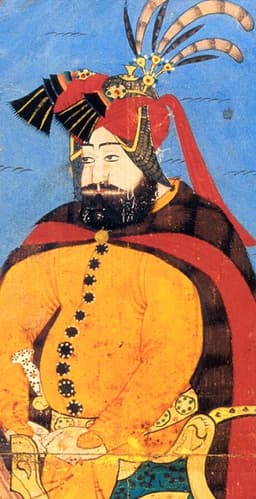
Murad IV
Emperor · Modern
61.0Total
Basic Information
Born
1557
1612
Died
1619
1640
Era
Modern
Modern
Nationality
Holy Roman Empire
Ottoman Empire
Occupation
Emperor
Emperor
Civilization
Western
Middle Eastern
Score Comparison
Military (10%)
50.0
67.3
Political (20%)
39.4
55.0
Influence (20%)
54.9
59.0
Legacy (20%)
50.0
52.0
Leadership (15%)
67.0
78.0
Strategy (15%)
25.0
65.4
TOTAL
49.7
61.0
Matthias — Complete Timeline
1606 AD
Peace of ZsitvatorokPolitical Action◆ Major
Matthias, as the representative of the Habsburgs, negotiated the Peace of Zsitvatorok with the Ottoman Empire, ending the Long Turkish War. The treaty was a compromise, with the Habsburgs ceasing to pay tribute to the Ottomans but recognizing Ottoman control over much of Hungary. This peace was a diplomatic achievement for Matthias.
Peace TreatyOttoman EmpireLong Turkish War
Impact: regionalconstructive
1611 AD
Deposition of Rudolf IIPolitical Action◆ Major
Matthias led a revolt of the Habsburg family and the Bohemian estates against his brother Rudolf II, forcing him to cede the crowns of Bohemia, Hungary, and Austria. Matthias was crowned King of Bohemia in 1611 and later became Holy Roman Emperor in 1612. This internal conflict weakened the Habsburg dynasty.
DepositionHabsburg Family FeudPower Struggle
Impact: regionaldestructive
1612 AD
Coronation as Holy Roman EmperorPolitical Action◆ Major
Matthias was crowned Holy Roman Emperor in Frankfurt, succeeding his brother Rudolf II. His reign was marked by attempts to maintain religious peace and centralize authority, but he faced opposition from both Catholic and Protestant factions. His policies ultimately failed to prevent the outbreak of the Thirty Years' War.
CoronationImperial AuthorityReligious Tensions
Impact: global
1618 AD
Defenestration of Prague (1618)Political Action
During Matthias's reign, Protestant nobles in Bohemia threw two Catholic imperial governors out of a window in Prague Castle, an event known as the Second Defenestration of Prague. This act was a direct challenge to Matthias's authority and sparked the Bohemian Revolt, which escalated into the Thirty Years' War. Matthias died shortly after.
Defenestration of PragueThirty Years' WarBohemian Revolt
Impact: globaldestructive
Murad IV — Complete Timeline
1632 AD
Suppression of the Janissary RevoltPolitical Action◆ Major
Murad IV faced a major revolt by the Janissaries, who demanded the execution of several officials. Murad IV initially conceded but later executed the Janissary leaders and purged the corps. He then imposed strict discipline, reducing the Janissaries' political power and restoring order in the capital.
RevoltJanissariesPurge
Impact: nationaldestructive
1633 AD
Ban on Tobacco and AlcoholReform
Murad IV issued a decree banning the use of tobacco, coffee, and alcohol throughout the Ottoman Empire. He enforced this ban with harsh penalties, including execution for violators. This measure aimed to restore public morality and discipline, reflecting his authoritarian rule.
ProhibitionMoralityAuthoritarianism
Impact: nationaldestructive
1638 AD
Recapture of BaghdadWar◆ Major
Murad IV personally led a massive Ottoman army to recapture Baghdad from the Safavid Empire after a 40-day siege. The city had been lost to the Safavids in 1623. The victory restored Ottoman control over Mesopotamia and was a major military achievement of his reign.
SiegeSafavid WarMesopotamia
Impact: regional
1639 AD
Treaty of ZuhabPolitical Action◆ Major
Murad IV's recapture of Baghdad led to the Treaty of Zuhab with the Safavid Empire. This treaty established the permanent border between the Ottoman and Safavid empires, which largely corresponds to the modern Iran-Iraq border. It ended decades of war between the two empires.
TreatyBorderOttoman-Safavid
Impact: regionalconstructive
Expert Analysis
Origins
Matthias (1557–1619), born in Vienna, was the fourth son of Emperor Maximilian II. Educated in the Catholic faith, he grew up in the shadow of his older brother Rudolf II. Matthias's early career was marked by his role as governor of the Netherlands (1577–1581), where he failed to suppress the Dutch Revolt. His Habsburg lineage destined him for power, but his weak health and indecisiveness shaped his cautious approach.
Murad IV (1612–1640) was born in Constantinople as the son of Sultan Ahmed I and the Greek-born Kösem Sultan. His childhood was turbulent: his father died when Murad was six, and his uncle Mustafa I briefly ruled before being deposed. Murad ascended the throne at age 11 after a Janissary revolt, inheriting a fractured empire plagued by corruption and military indiscipline.
Rise to Power
Matthias rose through family intrigue. In 1608, he led a revolt of Habsburg family members and Bohemian estates against his brother Rudolf II, forcing him to cede the crowns of Bohemia, Hungary, and Austria. This coup, known as the "Brothers' Quarrel," was a political maneuver that relied on support from Protestant nobles. Matthias was crowned Holy Roman Emperor in 1612, but his power was compromised from the start. He had to grant religious concessions to Protestants in the Letter of Majesty (1609), which later fueled conflict.
Murad IV's rise was marked by a regency dominated by his mother Kösem Sultan and the Janissaries. In 1623, at age 11, he was placed on the throne after the deposition of his uncle Mustafa I. For years, real power lay with the Janissaries and court factions. Murad's turning point came in 1632 when he suppressed a Janissary revolt by executing their leaders. He then asserted personal rule, ending the era of palace women and eunuchs controlling the state.
Leadership & Governance
Matthias's leadership was reactive and conciliatory. He sought to maintain peace between Catholics and Protestants through the Peace of Zsitvatorok (1606) with the Ottoman Empire, which ended the Long Turkish War. However, his policies lacked decisiveness. He allowed the formation of Protestant unions and Catholic leagues, inadvertently escalating tensions. His reliance on advisors like Melchior Klesl, a cardinal who advocated compromise, alienated both sides. When the Defenestration of Prague occurred in 1618, Matthias failed to respond effectively, and the Thirty Years' War erupted.
Murad IV governed through fear and force. He banned tobacco, coffee, and alcohol, enforcing the ban with executions. He personally led military campaigns, recapturing Baghdad from the Safavids in 1638 after a 40-day siege. His leadership style was autocratic: he executed corrupt officials and Janissaries, restoring discipline. The Treaty of Zuhab (1639) with the Safavids established permanent borders that lasted centuries. Murad's governance scored 78.0 in leadership and 65.4 in strategy, while Matthias scored only 67.0 and 25.0 respectively.
Triumph & Tragedy
Matthias's greatest success was the Peace of Zsitvatorok (1606), which secured Habsburg borders and recognized Ottoman parity. However, his greatest failure was his inability to prevent the Thirty Years' War. The Defenestration of Prague in 1618, where Protestant nobles threw Catholic governors out a window, occurred under his watch. He died in 1619 as the war consumed Europe. His political score of 39.4 reflects his ineffective rule.
Murad IV triumphed with the recapture of Baghdad in 1638, ending 15 years of Safavid occupation. His harsh reforms stabilized the empire, but his brutality—executing thousands for minor offenses—created a legacy of terror. He died of cirrhosis at age 27, likely from alcohol abuse despite his own ban. His military score of 67.3 and political score of 55.0 reflect his mixed legacy.
Character & Destiny
Matthias was cautious and diplomatic but lacked the will to enforce his authority. His indecision during the Bohemian revolt sealed his fate: he allowed the war to begin rather than taking decisive action. Historians describe him as a "transitional figure" who failed to adapt to the religious polarization of his time.
Murad IV was ruthless and determined. He personally led executions and campaigns, earning the nickname "the Conqueror of Baghdad." His character was shaped by a desire to restore Ottoman glory, but his early death cut short his reforms. He left a legacy of fear that prevented rebellions for decades.
Legacy
Matthias's legacy is overshadowed by the Thirty Years' War. The Peace of Zsitvatorok is a minor footnote, while the war he failed to prevent killed 8 million people. His total score of 49.7 places him below average among Holy Roman Emperors.
Murad IV's legacy is more positive: the Treaty of Zuhab set borders that lasted until World War I. His suppression of the Janissaries paved the way for later reforms. However, his short reign and harsh methods limited his long-term impact. His total score of 61.0 reflects a more effective but flawed rule.
Conclusion
Murad IV had a greater impact than Matthias. While Matthias's inaction triggered a catastrophic war, Murad's decisive actions stabilized the Ottoman Empire and secured its eastern borders. Murad's scores are higher in every category except legacy (52.0 vs 50.0), and his total of 61.0 exceeds Matthias's 49.7 by 11.3 points. Matthias's failure to prevent the Thirty Years' War marks him as a weak leader, whereas Murad's restoration of order, though brutal, demonstrates effective governance. In the balance of history, Murad IV's influence, while limited by his early death, was more consequential.
Rankings
🥇
Murad IVLeader
Mil: 67.3Pol: 55.0Inf: 59.0
61.0
🥈
Matthias
Mil: 50.0Pol: 39.4Inf: 54.9
49.7
+11.3 behind
How This Comparison Works
Algorithm
Each figure is scored on 6 dimensions (0—100 scale) based on structured historical data: Military (10%), Political (20%), Influence (20%), Legacy (20%), Leadership (15%), Strategy (15%). The weighted total produces the final ranking.
Data Sources
Scores are computed from structured sub-indicators in the database. Scale factors adjust for era (Ancient ×0.85, Modern ×1.0) and civilization size (Eastern ×1.05, Other ×0.80) to account for differences in population and military scale.
Maximum 3 Figures
Comparisons are limited to 2—3 figures to ensure readability and statistical meaningfulness.
Error Margins
±5 points per dimension — Sub-scores are derived from historical records with inherent uncertainty. Two figures within 5 points on a dimension should be considered roughly equivalent in that area.
Total Score Accuracy
±3 points overall — The weighted combination of 6 dimensions produces a total score with approximately ±3 points of uncertainty. Differences of less than 3 points are not statistically significant— the figures are effectively tied.
Known Limitations
- Historical records are incomplete and uneven across civilizations
- Figures from oral-tradition societies may be underrepresented
- Occupation labels can misclassify multi-role figures
- Scores measure capability and impact, not moral character
- Quantitative scoring is a comparison tool, not absolute truth
Capability Radar
Military (10%) — Battles & Warfare
Battles
20
75
Win Rate
15
80
Expansion
10
60
Political (20%) — Governance & Reform
Reform
30
80
Diplomacy
25
50
Economy
20
55
Influence (20%) — Cultural & Global Reach
Cultural
20
40
Global
50
45
Legacy (20%) — Historical Impact
Historical
60
60
Longevity
55
50
Leadership (15%) — Power & Stability
Tenure
55
60
Stability
15
85
Strategy (15%) — Tactics & Innovation
Strategy
15
75
Tactics
10
70
Reform
10
65
Similar Comparisons
Comments & Discussion
No comments yet. Be the first to share your thoughts!