Loading...
Adad-nirari I vs Merneptah
Adad-nirari I leads by 4.5 pts · 2 figures compared
…

Adad-nirari I
Emperor · Ancient
54.4Total
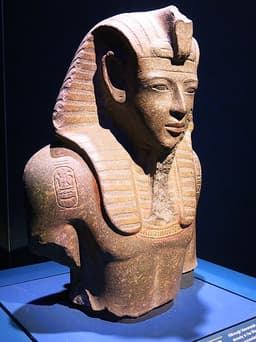
Merneptah
Emperor · Ancient
49.9Total
Basic Information
Born
-1305
-1213
Died
-1274
-1203
Era
Ancient
Ancient
Nationality
Assyria
Egypt
Occupation
Emperor
Emperor
Civilization
Middle Eastern
Middle Eastern
Score Comparison
Military (10%)
67.3
52.5
Political (20%)
68.0
48.0
Influence (20%)
54.1
52.5
Legacy (20%)
47.5
49.2
Leadership (15%)
40.0
40.0
Strategy (15%)
60.7
60.0
TOTAL
54.4
49.9
Adad-nirari I — Complete Timeline
1290 BC
Conquered the Mitanni kingdomWar
Adad-nirari I launched a successful military campaign against the Mitanni kingdom, defeating King Shattuara and annexing its territory. This conquest eliminated Assyria's main rival and brought the entire region of northern Mesopotamia under Assyrian control.
ConquestMitanniExpansion
Impact: regional
1285 BC
Expanded Assyrian borders to the EuphratesWar◆ Major
Adad-nirari I extended Assyrian territory westward to the Euphrates River, capturing cities like Harran and Carchemish. This expansion secured control over key trade routes and agricultural lands, strengthening the Assyrian economy and military.
ExpansionEuphratesTrade
Impact: regional
1280 BC
Defeated the Kassites and asserted dominance over BabylonWar◆ Major
Adad-nirari I fought against the Kassite rulers of Babylon, defeating them in battle and forcing them to accept Assyrian suzerainty. This victory established Assyria as the dominant power in Mesopotamia, overshadowing Babylon.
BabylonKassitesDominance
Impact: regional
Built and restored temples and fortificationsCultural
Adad-nirari I undertook building projects including the restoration of the temple of Ashur in the capital and the construction of fortifications in conquered cities. These works reinforced Assyrian control and demonstrated royal piety.
BuildingTempleFortification
constructive
Merneptah — Complete Timeline
1210 BC
Libyan War campaignWar◆ Major
Merneptah repelled an invasion by Libyan tribes and their Sea Peoples allies in the western Delta. The victory was recorded in the Great Karnak Inscription. This campaign secured Egypt's western borders and prevented a major incursion into the Nile Valley.
LibyaSea PeoplesDefense
Impact: regional
Suppression of the revolt in CanaanWar
Merneptah conducted a military campaign in Canaan to suppress rebellions against Egyptian control. The campaign included the capture of the cities of Gezer, Yanoam, and Ashkelon. This reasserted Egyptian authority over the region for the remainder of his reign.
CanaanRevoltMilitary
Impact: regional
1208 BC
Merneptah Stele inscriptionCultural◆ Major
Merneptah commissioned a victory stele at Thebes that contains the earliest known extrabiblical reference to Israel. The stele describes a military campaign in Canaan and states 'Israel is laid waste, its seed is not.' This provides the first historical evidence of Israel as a people in the region.
IsraelSteleCanaan
Impact: global
Expert Analysis
Origins
Adad-nirari I was an Assyrian king who reigned from approximately 1305–1274 BCE. Born into the royal family of the Middle Assyrian Empire, he inherited a kingdom that had been consolidating power under earlier rulers. His father, Arik-den-ili, had already expanded Assyrian influence, but Adad-nirari I would take it further. He was trained in military command and statecraft, typical for Assyrian princes, and ascended the throne with the ambition to transform Assyria into a dominant power.
Merneptah, the fourth pharaoh of the 19th Dynasty of Egypt, reigned from around 1213–1203 BCE. He was the 13th son of Ramesses II, who had ruled for 66 years. Merneptah was born to Queen Isetnofret and was not initially the heir, but outlived his older brothers. His upbringing in the royal court exposed him to military and administrative duties, and he served as a general before becoming pharaoh. His reign occurred during a period of increasing external threats from Libyan tribes and Sea Peoples.
Rise to Power
Adad-nirari I's rise to prominence came through his military campaigns. He launched a successful war against the Mitanni kingdom, which had been weakened by Hittite attacks. In a decisive battle, he defeated King Shattuara of Mitanni, capturing the capital Washukanni and annexing the kingdom as a province. This victory, dated to around 1295 BCE, marked the first time Assyria directly controlled Mitanni territory. He then turned westward, extending Assyrian borders to the Euphrates River, capturing key cities like Harran and Carchemish. These successes established him as a major power broker in the region.
Merneptah became pharaoh at an advanced age, likely in his 60s. His father Ramesses II had left a stable but overextended empire. Early in his reign, Merneptah faced a major invasion by Libyan tribes, led by their chief Meryey, who allied with Sea Peoples. Merneptah mobilized his army and met the invaders at the border of the western Delta. In a battle recorded in the Great Karnak Inscription (c. 1208 BCE), he decisively defeated them, killing 6,000 enemies and capturing many prisoners. This victory secured his reputation as a defender of Egypt.
Leadership & Governance
Adad-nirari I's leadership was characterized by aggressive expansion and centralized control. He reorganized the conquered territories into Assyrian provinces, installing governors who reported directly to him. He also invested in infrastructure, building and restoring temples, notably the temple of Ashur in the capital, and fortifying cities like Nineveh. His administrative reforms increased royal authority and weakened local nobles. Militarily, he scored high with a Military score of 67.3 and Strategy of 60.7, reflecting his effective campaigns.
Merneptah's governance focused on consolidation and defense. He maintained the administrative systems established by his father but faced economic strains due to ongoing conflicts. He commissioned the Merneptah Stele to commemorate his victories, which also served as propaganda to assert his authority. His political score of 48.0 indicates he was less successful in internal politics, possibly due to his short reign (about 10 years). He did not undertake major building projects, likely due to limited resources.
Triumph & Tragedy
Adad-nirari I's greatest triumph was the conquest of Mitanni, which doubled Assyrian territory and established it as a major empire. He also defeated the Kassites of Babylon, forcing them to accept Assyrian suzerainty. However, his expansion created lasting enemies, particularly the Hittites, who saw Assyria as a threat. His military campaigns were costly, and his death around 1274 BCE left a legacy of ongoing conflict. His total score of 54.4 reflects a moderately effective ruler.
Merneptah's triumph was the repulsion of the Libyan invasion, preserving Egyptian independence. The Merneptah Stele, with its mention of Israel, became one of the most important archaeological finds, providing the earliest extrabiblical reference to Israel. However, his Canaan campaign was less successful; the stele claims to have destroyed cities like Gezer and Yanoam, but Egyptian control over Canaan was weakening. His reign ended with a score of 49.9, slightly lower than Adad-nirari I.
Character & Destiny
Adad-nirari I was a determined and ambitious ruler, typical of Assyrian kings. His inscriptions boast of his conquests and assert his divine mandate from Ashur. His character drove him to relentless expansion, but this also overstretched Assyria's resources. He was pragmatic, as seen in his administrative reforms, but his militarism set a pattern for later Assyrian kings.
Merneptah was a pharaoh who prioritized defense over expansion. He was pragmatic, facing the realities of a declining empire. His decision to commission the stele shows his desire to record his achievements for posterity. However, his advanced age and short reign limited his impact. He died around 1203 BCE, succeeded by his son Seti II, but the dynasty soon faced turmoil.
Legacy
Adad-nirari I's legacy is as a founder of the Middle Assyrian Empire. His conquests laid the groundwork for future Assyrian dominance under Shalmaneser I and Tukulti-Ninurta I. His administrative innovations influenced later Assyrian governance. His influence score of 54.1 reflects his role in shaping Assyrian imperialism.
Merneptah's legacy is dominated by the stele bearing his name, which provides crucial historical evidence for the existence of Israel in Canaan. His military campaigns, while defensive, helped delay the collapse of Egyptian power. However, his impact was more symbolic than transformative. His legacy score of 49.2 is slightly lower.
Conclusion
Between Adad-nirari I and Merneptah, Adad-nirari I had a greater impact on history. His conquest of Mitanni transformed Assyria from a regional state into an empire, setting a precedent for later Assyrian expansion. His military score of 67.3 and total score of 54.4 exceed Merneptah's 52.5 and 49.9, respectively. While Merneptah's stele provides invaluable historical data, his reign was essentially a holding action. Adad-nirari I's actions directly shaped the political landscape of the ancient Near East for centuries, making him the more consequential figure.
Rankings
🥇
Adad-nirari ILeader
Mil: 67.3Pol: 68.0Inf: 54.1
54.4
🥈
Merneptah
Mil: 52.5Pol: 48.0Inf: 52.5
49.9
+4.5 behind
How This Comparison Works
Algorithm
Each figure is scored on 6 dimensions (0—100 scale) based on structured historical data: Military (10%), Political (20%), Influence (20%), Legacy (20%), Leadership (15%), Strategy (15%). The weighted total produces the final ranking.
Data Sources
Scores are computed from structured sub-indicators in the database. Scale factors adjust for era (Ancient ×0.85, Modern ×1.0) and civilization size (Eastern ×1.05, Other ×0.80) to account for differences in population and military scale.
Maximum 3 Figures
Comparisons are limited to 2—3 figures to ensure readability and statistical meaningfulness.
Error Margins
±5 points per dimension — Sub-scores are derived from historical records with inherent uncertainty. Two figures within 5 points on a dimension should be considered roughly equivalent in that area.
Total Score Accuracy
±3 points overall — The weighted combination of 6 dimensions produces a total score with approximately ±3 points of uncertainty. Differences of less than 3 points are not statistically significant— the figures are effectively tied.
Known Limitations
- Historical records are incomplete and uneven across civilizations
- Figures from oral-tradition societies may be underrepresented
- Occupation labels can misclassify multi-role figures
- Scores measure capability and impact, not moral character
- Quantitative scoring is a comparison tool, not absolute truth
Capability Radar
Military (10%) — Battles & Warfare
Battles
65
55
Win Rate
70
60
Expansion
70
40
Political (20%) — Governance & Reform
Reform
55
40
Diplomacy
60
50
Economy
50
45
Influence (20%) — Cultural & Global Reach
Cultural
45
35
Global
40
40
Legacy (20%) — Historical Impact
Historical
55
60
Longevity
50
55
Leadership (15%) — Power & Stability
Tenure
60
60
Stability
55
55
Strategy (15%) — Tactics & Innovation
Strategy
65
55
Tactics
60
50
Reform
55
30
Similar Comparisons
Comments & Discussion
No comments yet. Be the first to share your thoughts!