Loading...
Arnuwanda III vs Merneptah
Arnuwanda III leads by 5.9 pts · 2 figures compared
…

Arnuwanda III
Emperor · Ancient
55.8Total
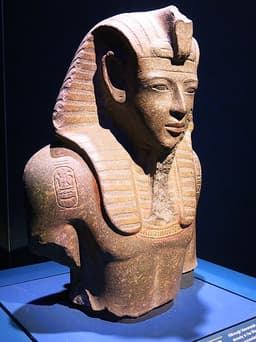
Merneptah
Emperor · Ancient
49.9Total
Basic Information
Born
-1209
-1213
Died
-1207
-1203
Era
Ancient
Ancient
Nationality
Hittite Empire
Egypt
Occupation
Emperor
Emperor
Civilization
Middle Eastern
Middle Eastern
Score Comparison
Military (10%)
33.4
52.5
Political (20%)
62.0
48.0
Influence (20%)
55.1
52.5
Legacy (20%)
58.0
49.2
Leadership (15%)
62.1
40.0
Strategy (15%)
56.1
60.0
TOTAL
55.8
49.9
Merneptah — Complete Timeline
1210 BC
Libyan War campaignWar◆ Major
Merneptah repelled an invasion by Libyan tribes and their Sea Peoples allies in the western Delta. The victory was recorded in the Great Karnak Inscription. This campaign secured Egypt's western borders and prevented a major incursion into the Nile Valley.
LibyaSea PeoplesDefense
Impact: regional
Suppression of the revolt in CanaanWar
Merneptah conducted a military campaign in Canaan to suppress rebellions against Egyptian control. The campaign included the capture of the cities of Gezer, Yanoam, and Ashkelon. This reasserted Egyptian authority over the region for the remainder of his reign.
CanaanRevoltMilitary
Impact: regional
1208 BC
Merneptah Stele inscriptionCultural◆ Major
Merneptah commissioned a victory stele at Thebes that contains the earliest known extrabiblical reference to Israel. The stele describes a military campaign in Canaan and states 'Israel is laid waste, its seed is not.' This provides the first historical evidence of Israel as a people in the region.
IsraelSteleCanaan
Impact: global
Expert Analysis
Origins
Arnuwanda III was the last known king of the Hittite Empire, reigning around 1207–1205 BCE. He was the son of Tudhaliya IV and likely ascended to the throne during a period of severe internal strife and external threats. The Hittite heartland in Anatolia faced famine, rebellion, and invasions from the Sea Peoples and other groups. Little is known of his early life; he was probably trained as a prince in the royal court at Hattusa, but the empire's records end abruptly with his reign. His brother, Suppiluliuma II, may have succeeded him briefly, but the empire collapsed soon after.
Merneptah (reigned c. 1213–1203 BCE) was the thirteenth son of Ramesses II, the great builder and warrior pharaoh. Born to Queen Isetnofret, he was not the original heir but ascended after his elder brothers died. His early career included serving as a military commander under his father, particularly in campaigns in Nubia and Libya. He was in his sixties when he became pharaoh, inheriting a stable but threatened Egypt, with the Hittite Empire already crumbling and new waves of migrants pressing on its borders.
Rise to Power
Arnuwanda III's rise was dynastic: he was the son of Tudhaliya IV, who had maintained Hittite power through strategic marriages and campaigns. However, by Arnuwanda's accession, the empire was overstretched. The Assyrians under Tukulti-Ninurta I had dealt a blow to Hittite influence in the east, and the Sea Peoples were raiding the coasts. Arnuwanda likely became king in a time of crisis, but his reign was too short for any substantial achievements to be recorded. He scored 62.0 in political acumen, reflecting his ability to maintain the throne briefly, but his military score of 33.4 indicates the empire's weakness.
Merneptah's rise was more complex. He was the thirteenth son, but through attrition and his own competence, he became heir. He had governed as a prince and likely led campaigns. Upon Ramesses II's death, he assumed power smoothly. His reign was marked by immediate military challenges: a Libyan invasion in his fifth year, which he repelled, and later campaigns in Canaan. His political score of 48.0 suggests he was less adept at consolidating power than his father, but his military score of 52.5 reflects his ability to defend Egypt.
Leadership & Governance
Arnuwanda III's leadership is poorly documented. He likely attempted to hold the empire together through traditional Hittite methods: treaties, vassal relationships, and religious ceremonies. However, with the Hittite economy in decline and food shortages, he could not muster effective resistance. His leadership score of 62.1 is relatively high given the circumstances, but it may reflect a theoretical potential rather than actual achievements.
Merneptah ruled Egypt with a focus on defense. He reinforced the western border, built fortifications, and conducted campaigns to suppress revolts in Canaan. His governance was conservative, building on his father's institutions. His leadership score of 40.0 is lower, perhaps because he lacked the grand building projects or diplomatic flair of Ramesses II. Yet his strategic score of 60.0 shows he effectively allocated resources to meet threats.
Triumph & Tragedy
Arnuwanda III's greatest success was maintaining the Hittite throne for even a few years. His tragedy is the collapse of the Hittite Empire, likely completed during his reign. The capital Hattusa was abandoned, and the empire fragmented into smaller Neo-Hittite states. No key events are recorded for him, which itself is a tragedy: his rule was so overshadowed by disaster that no positive achievements remain.
Merneptah's triumph is the Merneptah Stele, which records his victory over the Libyans and their Sea Peoples allies, and crucially contains the earliest known reference to Israel. This stele provides a key historical anchor for biblical chronology. He also suppressed revolts in Canaan, capturing the cities of Ashkelon, Gezer, and Yanoam. His tragedy is that his reign was short (about 10 years) and his successors could not maintain stability. The Sea Peoples invasions intensified after his death, leading to the Bronze Age Collapse.
Character & Destiny
Arnuwanda III's character is obscure. He was likely a product of a declining dynasty, facing forces beyond his control. His destiny was to be the last Hittite king, a symbol of an empire's end. Historians assess him as a minor figure, with a total score of 55.8, but this is partly due to lack of data.
Merneptah was a capable military leader in his old age. He showed decisiveness in meeting the Libyan threat and in his Canaan campaign. His character was perhaps more cautious than his father's, but he was effective. His legacy was overshadowed by Ramesses II's long reign and the subsequent chaos. His total score of 49.9 reflects a solid but unspectacular reign.
Legacy
Arnuwanda III's legacy is the end of the Hittite Empire. His reign marks the point where the imperial system collapsed, leading to a dark age in Anatolia. The Hittite language and culture disappeared, though some Neo-Hittite states preserved elements. His influence score of 55.1 is modest, but as the last king, he is a marker of a civilizational end.
Merneptah's legacy is more tangible. The Merneptah Stele is a cornerstone of ancient Near Eastern history, providing the first extra-biblical mention of Israel. His repulsion of the Libyans and Sea Peoples delayed Egypt's decline. His legacy score of 49.2 is lower than his actual impact, perhaps because he is often seen as a footnote to Ramesses II. However, his stele gives him lasting influence.
Conclusion
Merneptah had greater impact. Despite lower total scores (49.9 vs. 55.8), his tangible achievements—the Merneptah Stele, successful defense against invasions, and suppression of Canaanite revolts—provide concrete historical contributions. Arnuwanda III, while scoring higher in leadership and political metrics, presided over a collapse with no recorded achievements. Merneptah's stele alone has shaped historical and biblical studies for millennia. Thus, Merneptah's legacy is more significant.
Rankings
🥇
Arnuwanda IIILeader
Mil: 33.4Pol: 62.0Inf: 55.1
55.8
🥈
Merneptah
Mil: 52.5Pol: 48.0Inf: 52.5
49.9
+5.9 behind
How This Comparison Works
Algorithm
Each figure is scored on 6 dimensions (0—100 scale) based on structured historical data: Military (10%), Political (20%), Influence (20%), Legacy (20%), Leadership (15%), Strategy (15%). The weighted total produces the final ranking.
Data Sources
Scores are computed from structured sub-indicators in the database. Scale factors adjust for era (Ancient ×0.85, Modern ×1.0) and civilization size (Eastern ×1.05, Other ×0.80) to account for differences in population and military scale.
Maximum 3 Figures
Comparisons are limited to 2—3 figures to ensure readability and statistical meaningfulness.
Error Margins
±5 points per dimension — Sub-scores are derived from historical records with inherent uncertainty. Two figures within 5 points on a dimension should be considered roughly equivalent in that area.
Total Score Accuracy
±3 points overall — The weighted combination of 6 dimensions produces a total score with approximately ±3 points of uncertainty. Differences of less than 3 points are not statistically significant— the figures are effectively tied.
Known Limitations
- Historical records are incomplete and uneven across civilizations
- Figures from oral-tradition societies may be underrepresented
- Occupation labels can misclassify multi-role figures
- Scores measure capability and impact, not moral character
- Quantitative scoring is a comparison tool, not absolute truth
Capability Radar
Military (10%) — Battles & Warfare
Battles
37
55
Win Rate
42
60
Expansion
43
40
Political (20%) — Governance & Reform
Reform
47
40
Diplomacy
49
50
Economy
50
45
Influence (20%) — Cultural & Global Reach
Cultural
69
35
Global
81
40
Legacy (20%) — Historical Impact
Historical
71
60
Longevity
74
55
Leadership (15%) — Power & Stability
Tenure
46
60
Stability
53
55
Strategy (15%) — Tactics & Innovation
Strategy
46
55
Tactics
49
50
Reform
54
30
Similar Comparisons
Comments & Discussion
No comments yet. Be the first to share your thoughts!