Loading...
Aditya I vs John Balliol
Aditya I leads by 3.8 pts · 2 figures compared
…
Aditya I
Emperor · Medieval
48.7Total

John Balliol
Emperor · Medieval
44.9Total
Basic Information
Born
871
1249
Died
907
1314
Era
Medieval
Medieval
Nationality
India
Scotland
Occupation
Emperor
Emperor
Civilization
Indian
Western
Score Comparison
Military (10%)
30.0
55.0
Political (20%)
40.8
39.4
Influence (20%)
51.0
47.1
Legacy (20%)
43.3
35.8
Leadership (15%)
67.0
48.4
Strategy (15%)
60.0
55.0
TOTAL
48.7
44.9
Aditya I — Complete Timeline
880 AD
Conquest of Kongu NaduWar
Aditya I conquered the Kongu region (western Tamil Nadu) from the Pandya and Pallava control. This expansion gave the Cholas control over important trade routes and fertile lands, boosting the kingdom's economic base.
Territorial ExpansionKongu NaduChola Conquest
Impact: regionalconstructive
890 AD
Alliance with the Chera KingdomPolitical Action◆ Major
Aditya I formed a marital and military alliance with the Chera kingdom of Kerala, strengthening the Chola position against the Pandya and Rashtrakuta kingdoms. This alliance helped secure the western frontier and facilitated trade.
AllianceChera KingdomDiplomacy
Impact: regionalconstructive
897 AD
Defeat of Aparajita Varman and End of Pallava RuleWar◆ Major
Aditya I defeated and killed the Pallava king Aparajita Varman at the Battle of Tirupati, ending the Pallava dynasty. He annexed the entire Pallava kingdom into the Chola domain, making the Cholas the dominant power in Tamil Nadu.
Pallava ConquestChola ExpansionDynastic Change
Impact: regionaldestructive
John Balliol — Complete Timeline
1290 AD
Signing of the Treaty of BirghamPolitical Action
John Balliol, as a claimant, was party to the Treaty of Birgham which arranged the marriage of Margaret, Maid of Norway to Edward II. The treaty promised Scottish independence, but it was never fully implemented after Margaret's death.
TreatyMarriageIndependence
Impact: national
1292 AD
Installation as King by Edward IPolitical Action
John Balliol was selected as King of Scots by Edward I of England after the Great Cause arbitration. Edward I oversaw the selection process and Balliol swore fealty to him, effectively making Scotland a vassal state.
CoronationVassalageGreat Cause
Impact: nationaldestructive
1296 AD
Battle of DunbarWar◆ Major
John Balliol's Scottish army was decisively defeated by English forces under John de Warenne at Dunbar. The defeat led to Balliol's abdication and Edward I's conquest of Scotland, with the Stone of Destiny taken to Westminster.
BattleDefeatEnglish Conquest
Impact: nationaldestructive
Abdication and ImprisonmentPolitical Action◆ Major
John Balliol abdicated the Scottish throne after his defeat at Dunbar. He was stripped of his royal regalia and imprisoned in the Tower of London, later being exiled to France. His reign ended with Scotland under English occupation.
AbdicationImprisonmentExile
Impact: nationaltragic
Expert Analysis
Origins
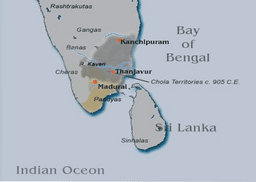
Aditya I, born around 870 CE, was the son of the Chola king Vijayalaya, who revived Chola power after centuries of obscurity. He grew up in the shadow of the Pallava and Pandya kingdoms, learning warfare and administration from his father. His early life was marked by the consolidation of Chola control over the Kaveri delta, a fertile region that would become the heartland of Chola expansion.
John Balliol, born around 1249, was a Scottish nobleman from a family with claims to the Scottish throne. His father, John de Balliol, was a powerful lord with lands in both Scotland and England. Educated in the Anglo-Norman tradition, Balliol inherited his father's claims and estates, but his early life was overshadowed by the political turmoil following the death of King Alexander III of Scotland in 1286, which left the throne disputed.
Rise to Power
Aditya I rose to power by defeating the Pallava king Aparajita Varman at the Battle of Tirupati in 897 CE, ending Pallava rule. This victory, scored at 30.0 in military, was followed by the annexation of the entire Pallava kingdom, extending Chola territory to the northern frontiers of Tamil Nadu. He cemented his position through a marital and military alliance with the Chera kingdom, which helped counterbalance the Pandya and Rashtrakuta threats.
John Balliol's rise was an accident of English intervention. In 1292, following the Great Cause, Edward I of England selected Balliol as King of Scots from among 13 claimants, expecting him to be a puppet. Balliol was crowned at Scone, but his authority was compromised from the start. His political score of 39.4 reflects his lack of independent power.
Leadership & Governance
Aditya I governed with a focus on consolidation and alliance-building. He introduced administrative reforms that strengthened the Chola bureaucracy and promoted trade. His leadership score of 67.0 reflects his ability to integrate conquered territories and maintain stability. He patronized Shaivism, building temples and supporting religious institutions.
John Balliol attempted to assert Scottish independence but was constrained by Edward I's demands. His leadership score of 48.4 indicates a weak and indecisive rule. He was forced to submit to English overlordship, and his attempts to resist led to the disastrous Battle of Dunbar in 1296, where his army was crushed.
Triumph & Tragedy
Aditya I's greatest triumph was the destruction of Pallava power and the expansion of Chola territory. He also successfully allied with the Cheras, securing his southern flank. However, his legacy is mixed: his conquests were later overshadowed by his son Parantaka I's greater achievements, and he failed to fully subdue the Pandyas.
John Balliol's triumph was purely symbolic: being crowned king of Scotland. His tragedy was total: after the defeat at Dunbar, he abdicated, was imprisoned in the Tower of London, and later exiled to France. His reign is a cautionary tale of a ruler without real power.
Character & Destiny
Aditya I was a pragmatic and ambitious ruler, willing to use both force and diplomacy. His decision to ally with the Cheras showed strategic foresight, scored at 60.0. He was a capable military commander but not a brilliant one, as his military score of 30.0 suggests.
John Balliol was a weak and indecisive leader, caught between Scottish nationalism and English domination. His character was not suited for the turbulent times, and his destiny was to be a pawn in Edward I's game of expansion.
Legacy
Aditya I's legacy is foundational: he set the stage for the Chola Empire's golden age under Rajaraja I and Rajendra I. His conquests and alliances created a stable base for future expansion. He is remembered as a consolidator rather than a great conqueror, with an influence score of 51.0 and a legacy score of 43.3.
John Balliol's legacy is largely negative. He is remembered as a puppet king and a symbol of Scottish subjugation. His reign led directly to the Wars of Scottish Independence, inspiring figures like William Wallace and Robert the Bruce. His legacy score of 35.8 reflects his minimal positive impact.
Conclusion
Aditya I had a greater impact than John Balliol. Despite a lower military score (30.0 vs 55.0), Aditya I's political acumen and strategic alliances created enduring change, while Balliol's reign was a failure that only sparked resistance. Aditya I's total score of 48.7 versus Balliol's 44.9 reflects his more effective leadership and lasting influence. The Chola consolidation under Aditya I was a pivotal step in Indian history, while Balliol's brief rule was a footnote in Scotland's struggle for independence.
Rankings
🥇
Aditya ILeader
Mil: 30.0Pol: 40.8Inf: 51.0
48.7
🥈
John Balliol
Mil: 55.0Pol: 39.4Inf: 47.1
44.9
+3.8 behind
How This Comparison Works
Algorithm
Each figure is scored on 6 dimensions (0—100 scale) based on structured historical data: Military (10%), Political (20%), Influence (20%), Legacy (20%), Leadership (15%), Strategy (15%). The weighted total produces the final ranking.
Data Sources
Scores are computed from structured sub-indicators in the database. Scale factors adjust for era (Ancient ×0.85, Modern ×1.0) and civilization size (Eastern ×1.05, Other ×0.80) to account for differences in population and military scale.
Maximum 3 Figures
Comparisons are limited to 2—3 figures to ensure readability and statistical meaningfulness.
Error Margins
±5 points per dimension — Sub-scores are derived from historical records with inherent uncertainty. Two figures within 5 points on a dimension should be considered roughly equivalent in that area.
Total Score Accuracy
±3 points overall — The weighted combination of 6 dimensions produces a total score with approximately ±3 points of uncertainty. Differences of less than 3 points are not statistically significant— the figures are effectively tied.
Known Limitations
- Historical records are incomplete and uneven across civilizations
- Figures from oral-tradition societies may be underrepresented
- Occupation labels can misclassify multi-role figures
- Scores measure capability and impact, not moral character
- Quantitative scoring is a comparison tool, not absolute truth
Capability Radar
Military (10%) — Battles & Warfare
Battles
40
5
Win Rate
45
0
Expansion
45
0
Political (20%) — Governance & Reform
Reform
30
0
Diplomacy
45
5
Economy
35
0
Influence (20%) — Cultural & Global Reach
Cultural
30
5
Global
15
5
Legacy (20%) — Historical Impact
Historical
35
10
Longevity
25
5
Leadership (15%) — Power & Stability
Tenure
50
10
Stability
40
0
Strategy (15%) — Tactics & Innovation
Strategy
40
0
Tactics
35
0
Reform
20
0
Similar Comparisons
Comments & Discussion
No comments yet. Be the first to share your thoughts!