Loading...
This comparison has not been analyzed yet.
One-time AI generation (~1 minute). Scores and timeline are already available below.
Agrippa I vs Amenemhat I
Amenemhat I leads by 11.9 pts · 2 figures compared
…
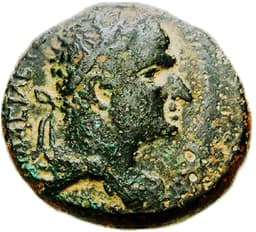
Agrippa I
Emperor · Ancient
42.3Total
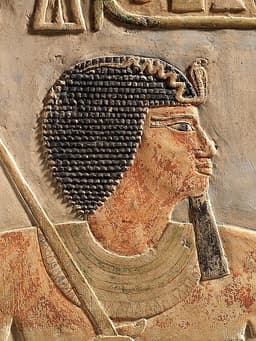
Amenemhat I
Emperor · Ancient
54.2Total
Basic Information
Born
-11
-1970
Died
44
-1940
Era
Ancient
Ancient
Nationality
Judea
Middle Kingdom Egypt
Occupation
Emperor
Emperor
Civilization
Middle Eastern
Middle Eastern
Score Comparison
Military (10%)
22.6
30.0
Political (20%)
43.7
45.0
Influence (20%)
48.6
61.0
Legacy (20%)
38.3
54.0
Leadership (15%)
51.9
65.0
Strategy (15%)
39.6
60.0
TOTAL
42.3
54.2
Agrippa I — Complete Timeline
36 AD
Imprisoned by TiberiusPolitical Action◆ Major
Agrippa I was imprisoned by Emperor Tiberius after making a remark interpreted as wishing for Tiberius's death. He was held in chains for six months until Tiberius's death in 37 AD, when he was released by the new emperor Caligula, who granted him territories.
ImprisonmentTiberiusCaligula
Impact: regionaltragic
37 AD
Appointed King of Judea by CaligulaPolitical Action◆ Major
Upon his release from prison, Emperor Caligula appointed Agrippa I as king of the territories formerly held by his uncle Philip (Batanea, Trachonitis, and Gaulanitis). In 39 AD, Caligula added the tetrarchy of Herod Antipas (Galilee and Perea) after Antipas's exile.
KingshipCaligulaTerritorial Expansion
Impact: regionalconstructive
44 AD
Persecuted the Apostles and Executed JamesPolitical Action◆ Major
According to the Acts of the Apostles, King Agrippa I began persecuting the early Christian church. He executed James, son of Zebedee, by the sword. This was the first apostolic martyrdom recorded in the New Testament. The persecution pleased the Jewish authorities.
Christian PersecutionJames the ApostleMartyrdom
Impact: regionaldestructive
Imprisoned Peter the ApostlePolitical Action◆ Major
Agrippa I arrested Peter the Apostle during Passover and imprisoned him, intending to execute him after the festival. According to Acts, Peter was freed by an angel and escaped. Agrippa executed the guards who had been responsible for Peter's custody.
Peter the ApostleImprisonmentMiraculous Escape
Impact: regionaldestructive
Death at Caesarea MaritimaOther◆ Major
Agrippa I died suddenly at Caesarea Maritima during a public festival. According to Josephus and Acts, he was struck down by an angel of God after accepting acclamation as a god. He was eaten by worms and died after five days of illness. His death ended the Herodian kingdom.
DeathDivine JudgmentEnd of Kingdom
Impact: regionaltragic
Amenemhat I — Complete Timeline
1970 BC
Accession as pharaohPolitical Action◆ Major
Amenemhat I, formerly vizier to Mentuhotep IV, seized the throne and founded the 12th Dynasty. His accession marked a new era of strong central authority and administrative reform in the Middle Kingdom.
Accession12th DynastyMiddle Kingdom
Impact: nationalconstructive
1965 BC
Foundation of ItjtawyPolitical Action◆ Major
Amenemhat I founded a new capital city called Itjtawy ('Seizer of the Two Lands'), located near modern Lisht. This move shifted the political center from Thebes to a more central location, improving control over both Upper and Lower Egypt.
CapitalAdministrationReform
Impact: nationalconstructive
1960 BC
Construction of the 'Walls of the Ruler'War◆ Major
Amenemhat I built a series of fortifications in the eastern Delta, known as the 'Walls of the Ruler', to protect Egypt from Asiatic incursions. These defenses strengthened Egypt's borders and controlled trade routes into the Levant.
FortificationDefenseBorder Control
Impact: regionalconstructive
1955 BC
Military campaigns in NubiaWar◆ Major
Amenemhat I led military campaigns into Nubia, extending Egyptian control to the Second Cataract. These conquests secured access to gold mines and trade routes, and established Egyptian forts such as Buhen.
Nubian CampaignConquestGold
Impact: regional
1940 BC
Assassination in palace conspiracyPolitical Action◆ Major
Amenemhat I was assassinated in a palace conspiracy, as recorded in the 'Teaching of Amenemhat' text. The plot involved members of his own court, including possibly his guards and harem. His son Senusret I, who was on a campaign, returned to secure the throne.
AssassinationConspiracyPalace Intrigue
Impact: nationaltragic
This comparison has not been analyzed yet.
One-time AI generation (~1 minute). Scores and timeline are already available below.
Rankings
🥇
Amenemhat ILeader
Mil: 30.0Pol: 45.0Inf: 61.0
54.2
🥈
Agrippa I
Mil: 22.6Pol: 43.7Inf: 48.6
42.3
+11.9 behind
How This Comparison Works
Algorithm
Each figure is scored on 6 dimensions (0—100 scale) based on structured historical data: Military (10%), Political (20%), Influence (20%), Legacy (20%), Leadership (15%), Strategy (15%). The weighted total produces the final ranking.
Data Sources
Scores are computed from structured sub-indicators in the database. Scale factors adjust for era (Ancient ×0.85, Modern ×1.0) and civilization size (Eastern ×1.05, Other ×0.80) to account for differences in population and military scale.
Maximum 3 Figures
Comparisons are limited to 2—3 figures to ensure readability and statistical meaningfulness.
Error Margins
±5 points per dimension — Sub-scores are derived from historical records with inherent uncertainty. Two figures within 5 points on a dimension should be considered roughly equivalent in that area.
Total Score Accuracy
±3 points overall — The weighted combination of 6 dimensions produces a total score with approximately ±3 points of uncertainty. Differences of less than 3 points are not statistically significant— the figures are effectively tied.
Known Limitations
- Historical records are incomplete and uneven across civilizations
- Figures from oral-tradition societies may be underrepresented
- Occupation labels can misclassify multi-role figures
- Scores measure capability and impact, not moral character
- Quantitative scoring is a comparison tool, not absolute truth
Capability Radar
Military (10%) — Battles & Warfare
Battles
10
30
Win Rate
10
35
Expansion
5
55
Political (20%) — Governance & Reform
Reform
30
70
Diplomacy
60
65
Economy
30
60
Influence (20%) — Cultural & Global Reach
Cultural
30
55
Global
20
50
Legacy (20%) — Historical Impact
Historical
30
65
Longevity
20
60
Leadership (15%) — Power & Stability
Tenure
40
60
Stability
25
40
Strategy (15%) — Tactics & Innovation
Strategy
10
45
Tactics
10
40
Reform
5
50
Similar Comparisons
Comments & Discussion
No comments yet. Be the first to share your thoughts!