Loading...
Agrippa I vs Julius Caesar
Julius Caesar leads by 40.5 pts · 2 figures compared
…
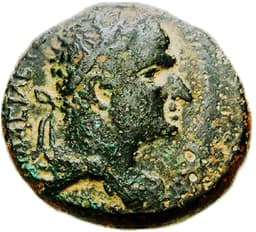
Agrippa I
Emperor · Ancient
42.3Total

Julius Caesar
General · Ancient
82.8Total
Basic Information
Born
-11
-100
Died
44
-44
Era
Ancient
Ancient
Nationality
Judea
Roman Republic
Occupation
Emperor
General
Civilization
Middle Eastern
Western
Score Comparison
Military (10%)
22.6
88.0
Political (20%)
43.7
78.0
Influence (20%)
48.6
85.0
Legacy (20%)
38.3
82.0
Leadership (15%)
51.9
80.0
Strategy (15%)
39.6
85.0
TOTAL
42.3
82.8
Agrippa I — Complete Timeline
36 AD
Imprisoned by TiberiusPolitical Action◆ Major
Agrippa I was imprisoned by Emperor Tiberius after making a remark interpreted as wishing for Tiberius's death. He was held in chains for six months until Tiberius's death in 37 AD, when he was released by the new emperor Caligula, who granted him territories.
ImprisonmentTiberiusCaligula
Impact: regionaltragic
37 AD
Appointed King of Judea by CaligulaPolitical Action◆ Major
Upon his release from prison, Emperor Caligula appointed Agrippa I as king of the territories formerly held by his uncle Philip (Batanea, Trachonitis, and Gaulanitis). In 39 AD, Caligula added the tetrarchy of Herod Antipas (Galilee and Perea) after Antipas's exile.
KingshipCaligulaTerritorial Expansion
Impact: regionalconstructive
44 AD
Persecuted the Apostles and Executed JamesPolitical Action◆ Major
According to the Acts of the Apostles, King Agrippa I began persecuting the early Christian church. He executed James, son of Zebedee, by the sword. This was the first apostolic martyrdom recorded in the New Testament. The persecution pleased the Jewish authorities.
Christian PersecutionJames the ApostleMartyrdom
Impact: regionaldestructive
Imprisoned Peter the ApostlePolitical Action◆ Major
Agrippa I arrested Peter the Apostle during Passover and imprisoned him, intending to execute him after the festival. According to Acts, Peter was freed by an angel and escaped. Agrippa executed the guards who had been responsible for Peter's custody.
Peter the ApostleImprisonmentMiraculous Escape
Impact: regionaldestructive
Death at Caesarea MaritimaOther◆ Major
Agrippa I died suddenly at Caesarea Maritima during a public festival. According to Josephus and Acts, he was struck down by an angel of God after accepting acclamation as a god. He was eaten by worms and died after five days of illness. His death ended the Herodian kingdom.
DeathDivine JudgmentEnd of Kingdom
Impact: regionaltragic
Julius Caesar — Complete Timeline
58 BC
Gallic WarsWar◆ Major
Caesar, as proconsul of Gaul, launched a series of campaigns that conquered all of Gaul (modern France, Belgium, and parts of Switzerland). He fought numerous battles, including against the Helvetii, the Belgae, and the Gallic chieftain Vercingetorix. The wars brought immense wealth and a loyal army to Caesar.
Gallic WarsConquestRoman Expansion
Impact: regional
49 BC
Crossing the RubiconPolitical Action◆ Major
Caesar led Legio XIII across the Rubicon River into Italy, defying the Roman Senate's order to disband his army. This act triggered a civil war against Pompey and the Optimates, ultimately leading to Caesar's dictatorship and the end of the Roman Republic.
Roman Civil WarEnd of RepublicPower Struggle
Impact: global
48 BC
Battle of PharsalusWar◆ Major
Caesar's outnumbered army defeated the larger forces of Pompey the Great at Pharsalus in Greece. Caesar's tactical use of a reserve line to counter Pompey's cavalry charge proved decisive. Pompey fled to Egypt, where he was assassinated, leaving Caesar as the undisputed master of the Roman world.
Roman Civil WarBattleDecisive Victory
Impact: regional
44 BC
Appointment as Dictator for LifePolitical Action◆ Major
The Roman Senate appointed Caesar dictator perpetuo (dictator for life), granting him unprecedented personal power. This move concentrated military, legislative, and judicial authority in one person, effectively ending the Roman Republic's traditional system of checks and balances and alarming many senators.
DictatorshipEnd of RepublicPower Consolidation
Impact: regionaldestructive
Assassination on the Ides of MarchPolitical Action◆ Major
A group of Roman senators, led by Marcus Junius Brutus and Gaius Cassius Longinus, stabbed Caesar to death at a meeting of the Senate in the Theatre of Pompey. The assassination was intended to restore the Republic, but instead triggered another civil war that led to the rise of the Roman Empire.
AssassinationRoman PoliticsEnd of Republic
Impact: globaldestructive
Expert Analysis
agrippa-i-vs-julius-caesar
# The Crossing and the Throne
On a January morning in 49 BCE, Julius Caesar stood at the banks of the Rubicon River in northern Italy, a small stream that marked the boundary between his province and the Roman heartland. To cross it with his army was to declare war on the Republic itself. He paused, then uttered the words that would echo through millennia: *“The die is cast.”* He crossed. Less than a century later, another king—Agrippa I of Judea—sat on a throne granted not by conquest but by the favor of emperors, and he too faced a moment of decision: whether to crush a fledgling sect called Christianity or to let it grow. One man changed the world by breaking every rule; the other preserved his kingdom by obeying them. Why such different paths, and what drove their fates?
Origins
Julius Caesar was born into the patrician Julian clan, a family of ancient lineage but modest political influence in the first century BCE. His uncle was Gaius Marius, the populist general who had reformed the Roman army, but his family’s fortunes had waned under the dictatorship of Sulla. Caesar grew up in a Rome torn by civil war, where ambition was a survival instinct. He learned early that the old aristocratic order was crumbling, and that a man could rise not by birth alone but by audacity, eloquence, and the loyalty of soldiers.
Agrippa I, by contrast, was born into a kingdom of puppets. His grandfather was Herod the Great, the client king who had rebuilt the Temple in Jerusalem but whose legacy was stained by paranoia and massacre. Agrippa’s own father, Aristobulus IV, was executed by Herod on suspicion of treason. Young Agrippa was sent to Rome for his education, where he grew up in the household of the imperial family—a hostage in all but name. He learned the arts of flattery, patience, and the delicate dance of survival under the shadow of the Caesars.
Rise to Power
Caesar’s path was a masterclass in calculated risk. He climbed the Roman political ladder—quaestor, aedile, praetor—but his true breakthrough came with the governorship of Gaul in 58 BCE. Over eight years, he conquered a vast territory, built a loyal army, and amassed wealth that dwarfed the Roman treasury. His Commentaries on the Gallic Wars were not just history but propaganda, crafting his image as a civilizing hero. When the Senate ordered him to disband his army and return to Rome as a private citizen, he refused. The Rubicon was the point of no return.
Agrippa’s rise was more like a tightrope walk over a chasm. He spent years in Rome, cultivating friendships with the future emperors Caligula and Claudius. In 36 CE, he made a fatal slip: he remarked to his chariot driver that he wished Tiberius would die soon. The driver reported him, and Agrippa was thrown into prison, chains clanking in a dungeon. But when Caligula became emperor in 37 CE, he freed his old friend and granted him the territories of his uncle Philip—a kingdom stitched together by imperial decree, not conquest. Agrippa had earned his throne through survival and sycophancy, not swords.
Leadership & Governance
Caesar governed like a storm. As dictator, he reformed the calendar (giving us the Julian calendar), expanded citizenship to provincials, and launched massive public works. His military genius was unmatched: at Alesia in 52 BCE, he besieged the Gallic chieftain Vercingetorix while simultaneously repelling a relief army, a feat of siegecraft and logistics that still astounds strategists. Yet his political wisdom was brittle. He centralized power, packed the Senate with his supporters, and accepted the title “dictator for life.” He believed his genius could override the Republic’s ancient institutions. He was wrong.
Agrippa ruled with a softer hand. As king of Judea from 41 to 44 CE, he expanded his territory to match that of his grandfather Herod, but he governed as a client monarch, always deferring to Rome. He built fortifications, maintained order, and—crucially—cultivated the favor of the Jewish religious establishment. He observed the Law, offered sacrifices in the Temple, and even wept publicly when a Roman official placed an imperial statue in the holy precinct. But his leadership had a dark edge. In 44 CE, to appease the Jewish sectarian factions, he began persecuting the early Christians. He executed James, the brother of John, and imprisoned Peter the Apostle, planning to execute him after Passover. This was not ideology; it was political calculus. He saw the Christians as a threat to his fragile coalition.
Triumph & Tragedy
Caesar’s greatest triumph was also his greatest tragedy. After defeating his rival Pompey at Pharsalus in 48 BCE, he became master of the Roman world. He pardoned his enemies, reformed governance, and dreamed of a campaign against Parthia. But on the Ides of March, 44 BCE, a conspiracy of senators—many of them his own allies—stabbed him to death in the Senate chamber. His last words, according to tradition, were to his friend Brutus: *“Et tu, Brute?”* The Republic died with him, and the Empire was born.
Agrippa’s triumph was brief and strange. He had won the trust of both Rome and his Jewish subjects—a rare balance. But in 44 CE, during a festival at Caesarea Maritima, he appeared in a silver robe that glittered in the sunlight. The crowd hailed him as a god. According to the historian Josephus, he did not refuse the praise. Suddenly, he was struck by a severe pain. Five days later, he died, eaten by worms, as both Josephus and the Acts of the Apostles record. His kingdom was immediately reabsorbed into the Roman province of Syria.
Character & Destiny
Caesar’s character was a forge of contradictions. He was ruthlessly ambitious yet famously clement to defeated enemies. He was a brilliant writer who could dictate letters while riding, yet he suffered from epilepsy. His confidence bordered on hubris—he ignored warnings of the conspiracy, believing his aura would protect him. That hubris was his destiny. He had broken the Republic, but he could not break the habit of tyranny that the Republic had fought for centuries.
Agrippa’s character was shaped by dependence. He was charming, adaptable, and deeply pragmatic. He had learned in Rome’s palaces that power was a gift, not a right. He never forgot that his throne rested on the whims of emperors. This made him cautious, even calculating. Yet his sudden death at the height of his power—struck down before he could consolidate his gains—suggests a destiny beyond his control. He was a man who had navigated the currents of empire, but the currents swept him away.
Legacy
Caesar’s legacy is the foundation of Western history. His name became a title—Kaiser, Tsar—and his reforms shaped Europe for centuries. His assassination did not restore the Republic but paved the way for Augustus and the imperial system. He is remembered as a military genius, a political revolutionary, and a cautionary tale about the price of ambition. His scores—Military 88, Political 78, Influence 85—reflect a man who transformed the world but could not save himself.
Agrippa I is remembered dimly, if at all. His total score of 61.2 places him as a minor figure in the shadow of his grandfather Herod and his Roman patrons. For Jews, he is a king who briefly restored a semblance of independence. For Christians, he is a persecutor who tried to stamp out the faith. His legacy is a footnote in the Acts of the Apostles, a reminder that even a king who pleased both Caesar and the Temple could not escape the worm.
Conclusion
Caesar and Agrippa I lived in the same ancient world, separated by only a few decades. Yet their stories could not be more different. Caesar crossed the Rubicon and changed history; Agrippa crossed the threshold of a palace and died. One forged his destiny with iron and ink; the other accepted his destiny as a gift from masters. What drove the difference? Not talent alone, but the shape of the world they inherited. Caesar lived in a Republic that was already breaking, where a man of audacity could shatter the old order. Agrippa lived in an empire that was already built, where a man of prudence could only hold onto what he had been given. In the end, both were consumed by forces larger than themselves—Caesar by the knives of his peers, Agrippa by the judgment of a god he had not worshipped. The die is cast for all of us, but the hand that throws it is never entirely our own.
Rankings
🥇
Julius CaesarLeader
Mil: 88.0Pol: 78.0Inf: 85.0
82.8
🥈
Agrippa I
Mil: 22.6Pol: 43.7Inf: 48.6
42.3
+40.5 behind
How This Comparison Works
Algorithm
Each figure is scored on 6 dimensions (0—100 scale) based on structured historical data: Military (10%), Political (20%), Influence (20%), Legacy (20%), Leadership (15%), Strategy (15%). The weighted total produces the final ranking.
Data Sources
Scores are computed from structured sub-indicators in the database. Scale factors adjust for era (Ancient ×0.85, Modern ×1.0) and civilization size (Eastern ×1.05, Other ×0.80) to account for differences in population and military scale.
Maximum 3 Figures
Comparisons are limited to 2—3 figures to ensure readability and statistical meaningfulness.
Error Margins
±5 points per dimension — Sub-scores are derived from historical records with inherent uncertainty. Two figures within 5 points on a dimension should be considered roughly equivalent in that area.
Total Score Accuracy
±3 points overall — The weighted combination of 6 dimensions produces a total score with approximately ±3 points of uncertainty. Differences of less than 3 points are not statistically significant— the figures are effectively tied.
Known Limitations
- Historical records are incomplete and uneven across civilizations
- Figures from oral-tradition societies may be underrepresented
- Occupation labels can misclassify multi-role figures
- Scores measure capability and impact, not moral character
- Quantitative scoring is a comparison tool, not absolute truth
Capability Radar
Military (10%) — Battles & Warfare
Battles
10
95
Win Rate
10
92
Expansion
5
97
Political (20%) — Governance & Reform
Reform
30
90
Diplomacy
60
85
Economy
30
82
Influence (20%) — Cultural & Global Reach
Cultural
30
88
Global
20
94
Legacy (20%) — Historical Impact
Historical
30
95
Longevity
20
96
Leadership (15%) — Power & Stability
Tenure
40
75
Stability
25
60
Strategy (15%) — Tactics & Innovation
Strategy
10
94
Tactics
10
96
Reform
5
88
Similar Comparisons
Comments & Discussion
No comments yet. Be the first to share your thoughts!