Loading...
Agustin de Iturbide vs Zayed bin Sultan Al Nahyan
Zayed bin Sultan Al Nahyan leads by 8.5 pts · 2 figures compared
…
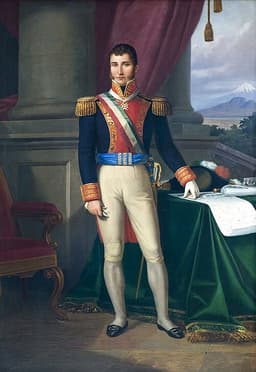
Agustin de Iturbide
Emperor · Modern
55.3Total
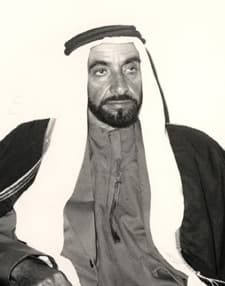
Zayed bin Sultan Al Nahyan
Emperor · Modern
63.8Total
Basic Information
Born
1783
1918
Died
1824
2004
Era
Modern
Modern
Nationality
Mexico
UAE
Occupation
Emperor
Emperor
Civilization
Western
Middle Eastern
Score Comparison
Military (10%)
52.5
11.3
Political (20%)
53.8
82.0
Influence (20%)
57.2
68.0
Legacy (20%)
46.7
72.0
Leadership (15%)
67.0
85.0
Strategy (15%)
60.0
25.7
TOTAL
55.3
63.8
Agustin de Iturbide — Complete Timeline
1820 AD
Switched sides to join the independence movementPolitical Action
Iturbide, a royalist general who had fought against the insurgents, was appointed to command the army against Vicente Guerrero. Instead of fighting, he negotiated with Guerrero and issued the Plan of Iguala on February 24, 1821, proposing independence, constitutional monarchy, and protection of the Catholic Church.
Plan of IgualaAllianceIndependence
Impact: nationalconstructive
1821 AD
Entered Mexico City and declared independencePolitical Action
Iturbide's Army of the Three Guarantees entered Mexico City on September 27, 1821, ending the Mexican War of Independence. The next day, the Declaration of Independence of the Mexican Empire was signed. Iturbide became the head of a provisional government, effectively ruling Mexico.
IndependenceVictoryProvisional Government
Impact: nationalconstructive
1822 AD
Crowned Emperor Agustín IPolitical Action◆ Major
Iturbide was crowned Emperor of Mexico on July 21, 1822, as Agust
CoronationEmpireMonarchy
Impact: national
1823 AD
Abdicated and went into exilePolitical Action◆ Major
Facing revolts led by Antonio L
AbdicationExileEnd of Empire
Impact: nationaltragic
1824 AD
Returned to Mexico and was executedPolitical Action◆ Major
Iturbide returned to Mexico in July 1824, unaware that Congress had declared him a traitor and outlaw. He was captured upon landing and executed by firing squad on July 19, 1824, in Padilla, Tamaulipas. His death ended any possibility of restoring the monarchy.
ExecutionReturnDeath
Impact: nationaltragic
Zayed bin Sultan Al Nahyan — Complete Timeline
1970 AD
Oil Revenue Investment in InfrastructureReform◆ Major
After the discovery of oil in Abu Dhabi in the 1950s, Zayed directed oil revenues toward building modern infrastructure: roads, hospitals, schools, and housing. This transformed Abu Dhabi from a poor region into a wealthy state.
OilDevelopmentInfrastructure
Impact: nationalconstructive
1971 AD
Formation of the United Arab EmiratesPolitical Action
Zayed bin Sultan Al Nahyan, as ruler of Abu Dhabi, played a key role in uniting seven emirates to form the United Arab Emirates on December 2, 1971. He became the first President, a position he held until his death.
UnificationUAEIndependence
Impact: regionalconstructive
1990 AD
Environmental Conservation InitiativesReform
Zayed established the Zayed International Prize for the Environment and implemented policies to protect wildlife and habitats, including the creation of nature reserves. He was a pioneer in environmentalism in the Gulf region.
EnvironmentConservationAwards
Impact: regionalconstructive
Women's Rights ReformsReform◆ Major
Zayed supported women's education and employment, appointing women to government positions and promoting their participation in the workforce. These reforms were progressive for the region at the time.
Women's RightsEducationReform
Impact: nationalprogressive
2004 AD
Death and LegacyOther◆ Major
Zayed died on November 2, 2004, after a long illness. His funeral drew massive crowds, and he was mourned as the founding father of the UAE. His legacy includes a stable, prosperous federation.
DeathLegacyFounding Father
Impact: nationaltragic
Expert Analysis
Agustin de Iturbide vs Zayed bin Sultan Al Nahyan
# The Emperor and the Father: Two Visions of Power in the Modern Age
In the summer of 1822, Agustín de Iturbide entered Mexico City’s cathedral in a gold-embroidered robe, a crown upon his head, as the chants of a new empire filled the air. One hundred and forty-nine years later, on a December evening in 1971, Zayed bin Sultan Al Nahyan stood before a gathering of tribal leaders in a modest Dubai hotel, signing a document that would create the United Arab Emirates. One man sought to claim an ancient throne; the other sought to build a nation from sand and ambition. Both were men of their time, yet their paths could not have diverged more sharply—one ending before a firing squad, the other dying in peace, mourned by millions. What made the difference?
Origins
Agustín de Iturbide was born in 1783 in Valladolid, modern-day Morelia, into a family of Spanish descent that had prospered in colonial Mexico. His father was a Basque immigrant who had made a fortune in agriculture, and young Agustín grew up with the privileges of the creole elite—educated, ambitious, but barred from the highest offices by the Spanish-born *peninsulares*. The world he knew was one of rigid hierarchy, where the Napoleonic Wars had shattered the old certainties and left a vacuum that men of action could fill. He entered the royalist army at sixteen, a loyal subject of a crumbling empire.
Zayed bin Sultan Al Nahyan was born in 1918 in the desert of Abu Dhabi, a world away from European cathedrals and colonial courts. His father, Sultan bin Zayed, was the ruler of Abu Dhabi, but the family lived in the oasis of Al Ain, far from the coast and its pearl-diving economy. Zayed grew up in a harsh, unforgiving landscape where water was more precious than gold and tribal loyalty was the only law. He learned to read the stars, to track camels, and to settle disputes among Bedouin—skills that would serve him better than any military academy. The British Empire controlled the Gulf, but its presence was light, and the tribes governed themselves through custom and consensus.
Rise to Power
Iturbide’s rise was forged in blood and betrayal. For a decade, he fought against Mexico’s independence movement, earning a reputation for ruthlessness against insurgents like José María Morelos. But by 1820, Spain itself had been transformed by a liberal revolt, and the conservative elites of New Spain feared that the motherland would impose reforms that threatened their power. Iturbide saw his moment. In 1820, he switched sides, meeting the rebel leader Vicente Guerrero and proposing a union of royalists and insurgents under the Plan of Iguala. The plan offered three guarantees: independence, the supremacy of the Catholic Church, and equality between Spaniards and Mexicans. It was a masterstroke of political pragmatism, and on September 27, 1821, Iturbide’s Army of the Three Guarantees entered Mexico City. He was the liberator, the man of the hour.
Zayed’s rise was slower, more deliberate. He became ruler of Abu Dhabi in 1966, deposing his brother in a palace coup that was bloodless but decisive. At that time, the emirate was poor, its people living in palm-frond huts, its economy dependent on date farming and fishing. But oil had been discovered in the 1950s, and the revenues were beginning to flow. Zayed understood that oil was a finite gift, and that the only way to secure his people’s future was to build something that would outlast the wells. He began pouring money into roads, schools, hospitals, and housing. He did not seek power for its own sake; he sought the power to transform.
Leadership & Governance
Iturbide’s leadership was that of a caudillo—a military strongman who believed that order had to be imposed from above. His empire lasted less than a year. He disbanded the congress that had elected him, ruling by decree, alienating both the liberals who wanted a republic and the conservatives who saw him as an upstart. His military genius, once proven on the battlefield, failed him in the palace. When Antonio López de Santa Anna raised a revolt in 1823, Iturbide found himself isolated, his army melting away. He abdicated on March 19, 1823, and sailed for Europe, a monarch without a throne.
Zayed’s governance was the opposite—a patient, almost tribal approach to power. He did not impose unity; he negotiated it. In 1971, when the British withdrew from the Gulf, Zayed convinced the rulers of six other emirates—Dubai, Sharjah, Ajman, Umm al-Quwain, Fujairah, and later Ras al-Khaimah—to form a federation. He did not claim a crown; he accepted the presidency, a position that rotated among the emirs. He decentralized authority, respecting local traditions while building a national identity. His reforms were gradual but profound: he appointed women to government positions in the 1990s, long before most of the region, and he established environmental conservation initiatives that protected the desert’s fragile ecosystems.
Triumph & Tragedy
Iturbide’s greatest moment was his entry into Mexico City in 1821, hailed as the father of independence. His greatest tragedy was his return to Mexico in 1824. After his exile, he heard rumors of unrest and believed he could rally support. He landed at Soto la Marina in July 1824, unaware that the Mexican Congress had declared him a traitor and an outlaw. He was captured, tried, and executed by firing squad. His last words were reportedly: “Mexicans! I die because I came to help you. I die happily, for I die among you.” It was a tragic end, but one that reflected his fatal flaw: he believed that his personal ambition and the nation’s destiny were the same thing.
Zayed’s triumph was the UAE itself—a nation that grew from a collection of desert sheikhdoms into a global hub of trade, tourism, and finance. His tragedy was more private: the oil wealth that transformed his people also brought challenges of corruption, inequality, and the erosion of traditional values. He spent his final years trying to balance modernity with heritage, establishing the Zayed International Prize for the Environment and funding cultural institutions. When he died on November 2, 2004, after a long illness, the nation mourned as if it had lost a father—because it had.
Character & Destiny
Iturbide was a man of ambition and courage, but also of impatience and pride. He saw himself as a Mexican Napoleon, and like Napoleon, he could not tolerate rivals or limits. His personality drove him to seize power too quickly, to trust too few, and to believe that his will alone could shape history. It was a destiny that led to a bullet.
Zayed was a man of patience and vision, but also of humility and pragmatism. He saw himself as a servant of his people, not their master. He once said, “Wealth is not money. Wealth is not oil. Wealth is the people.” His personality drove him to build institutions, to share power, and to think in decades, not days. It was a destiny that led to a funeral attended by heads of state from around the world.
Legacy
Iturbide’s legacy is complicated. For decades, he was a controversial figure—a traitor to the republic, a would-be emperor who failed. But in the 20th century, Mexican historians began to re-evaluate him, recognizing his role in achieving independence. Today, his name is inscribed on the Column of Independence in Mexico City, alongside the heroes he once fought. He is remembered not as a great ruler, but as a necessary step on the road to nationhood.
Zayed’s legacy is more straightforward. He is the founding father of the UAE, his face on currency, his name on streets, schools, and mosques. The oil wealth he managed so carefully created one of the world’s most prosperous societies. But his true legacy is the idea that a leader’s power should be measured not by how long he rules, but by how well he prepares his people to rule themselves.
Conclusion
The contrast between Iturbide and Zayed is a study in the nature of power itself. One man tried to build an empire on ambition, and it crumbled. Another built a nation on trust, and it endured. Iturbide’s story is a warning: that the desire to lead can become a desire to dominate, and that domination without consent is always fragile. Zayed’s story is a lesson: that the most lasting power is the power that is shared. In the end, the emperor died alone, while the father died surrounded by his children. That is the difference between a crown and a legacy.
Rankings
🥇
Zayed bin Sultan Al NahyanLeader
Mil: 11.3Pol: 82.0Inf: 68.0
63.8
🥈
Agustin de Iturbide
Mil: 52.5Pol: 53.8Inf: 57.2
55.3
+8.5 behind
How This Comparison Works
Algorithm
Each figure is scored on 6 dimensions (0—100 scale) based on structured historical data: Military (10%), Political (20%), Influence (20%), Legacy (20%), Leadership (15%), Strategy (15%). The weighted total produces the final ranking.
Data Sources
Scores are computed from structured sub-indicators in the database. Scale factors adjust for era (Ancient ×0.85, Modern ×1.0) and civilization size (Eastern ×1.05, Other ×0.80) to account for differences in population and military scale.
Maximum 3 Figures
Comparisons are limited to 2—3 figures to ensure readability and statistical meaningfulness.
Error Margins
±5 points per dimension — Sub-scores are derived from historical records with inherent uncertainty. Two figures within 5 points on a dimension should be considered roughly equivalent in that area.
Total Score Accuracy
±3 points overall — The weighted combination of 6 dimensions produces a total score with approximately ±3 points of uncertainty. Differences of less than 3 points are not statistically significant— the figures are effectively tied.
Known Limitations
- Historical records are incomplete and uneven across civilizations
- Figures from oral-tradition societies may be underrepresented
- Occupation labels can misclassify multi-role figures
- Scores measure capability and impact, not moral character
- Quantitative scoring is a comparison tool, not absolute truth
Capability Radar
Military (10%) — Battles & Warfare
Battles
60
4
Win Rate
65
9
Expansion
50
12
Political (20%) — Governance & Reform
Reform
45
90
Diplomacy
55
95
Economy
30
90
Influence (20%) — Cultural & Global Reach
Cultural
40
70
Global
35
70
Legacy (20%) — Historical Impact
Historical
50
75
Longevity
30
65
Leadership (15%) — Power & Stability
Tenure
30
85
Stability
20
85
Strategy (15%) — Tactics & Innovation
Strategy
60
16
Tactics
55
16
Reform
40
18
Similar Comparisons
Comments & Discussion
No comments yet. Be the first to share your thoughts!