Loading...
This comparison has not been analyzed yet.
One-time AI generation (~1 minute). Scores and timeline are already available below.
Maeda Toshiie vs Thomas Fairfax
Thomas Fairfax leads by 2.9 pts · 2 figures compared
…

Maeda Toshiie
General · Modern
60.1Total
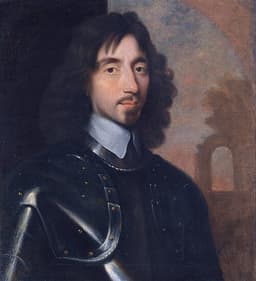
Thomas Fairfax
General · Modern
63.0Total
Basic Information
Born
1538
1612
Died
1599
1671
Era
Modern
Modern
Nationality
Japan
England
Occupation
General
General
Civilization
Eastern
Western
Score Comparison
Military (10%)
70.0
61.7
Political (20%)
68.0
68.0
Influence (20%)
56.4
58.3
Legacy (20%)
49.2
55.0
Leadership (15%)
72.0
72.0
Strategy (15%)
57.5
75.0
TOTAL
60.1
63.0
Maeda Toshiie — Complete Timeline
1583 AD
Battle of ShizugatakeWar◆ Major
Maeda Toshiie fought for Toyotomi Hideyoshi against Shibata Katsuie at the Battle of Shizugatake. His performance contributed to Hideyoshi's victory, which solidified Hideyoshi's control over Japan after the death of Oda Nobunaga.
Sengoku periodBattle
Impact: national
1590 AD
Siege of OdawaraWar
Maeda Toshiie participated in Toyotomi Hideyoshi's campaign against the Hojo clan at Odawara Castle. The siege ended with the Hojo surrender, leading to the unification of Japan under Hideyoshi.
Unification of JapanCampaign
Impact: national
1598 AD
Appointed as one of the Five EldersPolitical Action◆ Major
Toyotomi Hideyoshi appointed Maeda Toshiie as one of the Five Elders to govern Japan during the minority of his son Hideyori. This placed Toshiie among the highest-ranking officials in the Toyotomi administration, responsible for collective rule.
Toyotomi administrationRegency
Impact: national
1599 AD
Conflict with Tokugawa IeyasuPolitical Action◆ Major
After Hideyoshi's death, Maeda Toshiie opposed Tokugawa Ieyasu's growing influence. Tensions escalated, but Toshiie died before open conflict erupted. His death removed a key obstacle to Ieyasu's rise.
Power struggleTokugawa
Impact: national
Thomas Fairfax — Complete Timeline
1645 AD
Battle of NasebyWar
Fairfax led the New Model Army to a decisive victory over King Charles I's forces at Naseby. The battle destroyed the main Royalist army and effectively decided the First English Civil War in favor of Parliament.
English Civil WarBattleDecisive Victory
Impact: national
Appointed Commander-in-Chief of the New Model ArmyPolitical Action◆ Major
Fairfax was appointed commander-in-chief of the New Model Army, a professional army created by Parliament to fight the Royalists. This appointment placed him at the head of the most effective military force in England during the First English Civil War.
English Civil WarMilitary CommandParliament
Impact: national
1646 AD
Siege of OxfordWar◆ Major
Fairfax commanded the siege of Oxford, the Royalist capital. The city surrendered, and King Charles I fled, effectively ending the First English Civil War. Fairfax treated the defeated Royalists with moderation.
English Civil WarSiegeRoyalist Defeat
Impact: national
1647 AD
Refused to Arrest the Five MembersPolitical Action
Fairfax refused orders from the Army Council to arrest five Presbyterian members of Parliament who were critical of the army. This action demonstrated his independence from radical army factions and his commitment to parliamentary authority.
English Civil WarPolitical CrisisArmy-Parliament Relations
Impact: national
1650 AD
Resigned as Commander-in-ChiefPolitical Action◆ Major
Fairfax resigned his commission as commander-in-chief of the New Model Army rather than lead an invasion of Scotland to suppress the Scottish Covenanters who had proclaimed Charles II as king. He cited his conscience and opposition to preemptive war.
English Civil WarResignationConscience
Impact: national
1660 AD
Led the Restoration Delegation to Charles IIPolitical Action◆ Major
Fairfax led a parliamentary delegation to The Hague to invite Charles II to return as king, restoring the monarchy. He played a key role in the peaceful Restoration, helping to avoid further civil war.
RestorationMonarchyPolitical Transition
Impact: nationalconstructive
This comparison has not been analyzed yet.
One-time AI generation (~1 minute). Scores and timeline are already available below.
Rankings
🥇
Thomas FairfaxLeader
Mil: 61.7Pol: 68.0Inf: 58.3
63.0
🥈
Maeda Toshiie
Mil: 70.0Pol: 68.0Inf: 56.4
60.1
+2.9 behind
How This Comparison Works
Algorithm
Each figure is scored on 6 dimensions (0—100 scale) based on structured historical data: Military (10%), Political (20%), Influence (20%), Legacy (20%), Leadership (15%), Strategy (15%). The weighted total produces the final ranking.
Data Sources
Scores are computed from structured sub-indicators in the database. Scale factors adjust for era (Ancient ×0.85, Modern ×1.0) and civilization size (Eastern ×1.05, Other ×0.80) to account for differences in population and military scale.
Maximum 3 Figures
Comparisons are limited to 2—3 figures to ensure readability and statistical meaningfulness.
Error Margins
±5 points per dimension — Sub-scores are derived from historical records with inherent uncertainty. Two figures within 5 points on a dimension should be considered roughly equivalent in that area.
Total Score Accuracy
±3 points overall — The weighted combination of 6 dimensions produces a total score with approximately ±3 points of uncertainty. Differences of less than 3 points are not statistically significant— the figures are effectively tied.
Known Limitations
- Historical records are incomplete and uneven across civilizations
- Figures from oral-tradition societies may be underrepresented
- Occupation labels can misclassify multi-role figures
- Scores measure capability and impact, not moral character
- Quantitative scoring is a comparison tool, not absolute truth
Capability Radar
Military (10%) — Battles & Warfare
Battles
65
75
Win Rate
60
80
Expansion
50
40
Political (20%) — Governance & Reform
Reform
30
60
Diplomacy
50
50
Economy
40
30
Influence (20%) — Cultural & Global Reach
Cultural
40
55
Global
30
55
Legacy (20%) — Historical Impact
Historical
45
70
Longevity
40
60
Leadership (15%) — Power & Stability
Tenure
55
55
Stability
45
45
Strategy (15%) — Tactics & Innovation
Strategy
60
82
Tactics
55
78
Reform
30
85
Similar Comparisons
Comments & Discussion
No comments yet. Be the first to share your thoughts!