Loading...
Ahmad Fanakati vs Zhao Pu
Zhao Pu leads by 11.3 pts · 2 figures compared
…

Ahmad Fanakati
Politician · Medieval
45.9Total
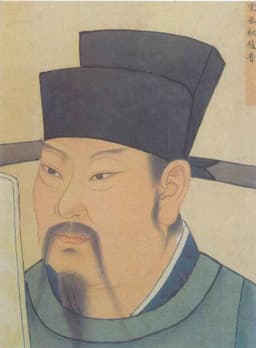
Zhao Pu
Politician · Medieval
57.2Total
Basic Information
Born
1242
922
Died
1282
992
Era
Medieval
Medieval
Nationality
China
China
Occupation
Politician
Politician
Civilization
Eastern
Eastern
Score Comparison
Military (10%)
35.5
21.4
Political (20%)
68.0
72.0
Influence (20%)
48.6
58.0
Legacy (20%)
37.5
52.0
Leadership (15%)
41.5
78.0
Strategy (15%)
43.8
51.0
TOTAL
45.9
57.2
Ahmad Fanakati — Complete Timeline
1262 AD
Appointed Finance Minister of the Yuan DynastyPolitical Action◆ Major
Ahmad Fanakati was appointed by Kublai Khan as finance minister, tasked with managing the empire's revenues. He implemented tax reforms and monopolies on salt, iron, and tea, increasing state income but generating resentment among Chinese officials.
Yuan DynastyTaxationEconomic Policy
Impact: national
1265 AD
Implemented Paper Currency ReformsReform◆ Major
Ahmad Fanakati oversaw the expansion of paper money (chao) as the primary currency in Yuan China. He standardized its issuance and circulation, which facilitated trade but also led to inflation and economic instability due to overprinting.
Currency ReformPaper MoneyEconomic Policy
Impact: national
1282 AD
Assassinated by Chinese OfficialsPolitical Action◆ Major
Ahmad Fanakati was assassinated by a group of Chinese officials led by Wang Zhu and Gao Heshang, who accused him of corruption and tyranny. His death led to a purge of his supporters and a temporary shift in Yuan fiscal policy.
AssassinationPolitical ConflictCorruption
Impact: nationaldestructive
Zhao Pu — Complete Timeline
960 AD
Advising Emperor Taizu on the unification strategyPolitical Action
Zhao Pu counseled Emperor Taizu of Song to first pacify the south and then attack the north, a strategy that guided the Song conquest of the Ten Kingdoms. This approach prioritized consolidation of core territories before confronting the Liao dynasty.
Song DynastyUnificationStrategy
Impact: nationalconstructive
961 AD
Centralization of military powerReform◆ Major
Zhao Pu advised Emperor Taizu to disband the regional military governors and centralize command under the emperor. This reform reduced the risk of warlordism and strengthened imperial control over the Song military.
Military ReformCentralizationSong Dynasty
Impact: nationalconstructive
965 AD
Implementation of the 'Half the Analects' governanceReform◆ Major
Zhao Pu, as chancellor, promoted a pragmatic governance style based on a simplified reading of Confucian classics, famously stating that half the Analects could govern the empire. This approach emphasized practical administration over scholarly debate.
GovernanceConfucianismSong Dynasty
Impact: nationalconstructive
973 AD
Dismissal from chancellorshipPolitical Action
Zhao Pu was removed from his position as chancellor due to allegations of corruption and abuse of power. This event reflected the political instability of the early Song court and Zhao's fall from favor.
Political FallCorruptionSong Dynasty
Impact: nationaldestructive
Expert Analysis
Origins
Ahmad Fanakati (c. 1240s–1282) was a Persian-speaking Muslim from the Ferghana Valley, likely of Central Asian origin. Little is known about his early life, but he entered the service of Kublai Khan during the Mongol conquest of China. His background in finance and administration led to his appointment as a key fiscal official in the Yuan Dynasty. Zhao Pu (922–992) was born in Youzhou (modern Beijing) into a modest family. He studied the Confucian classics, especially the Analects, and later became a trusted advisor to Zhao Kuangyin, the future Emperor Taizu of Song. Zhao Pu's early career involved serving as a magistrate and military secretary, gaining experience in governance and strategy.
Rise to Power
Ahmad Fanakati rose to prominence under Kublai Khan by efficiently increasing state revenues through tax reforms and monopolies on salt, iron, and other goods. In 1262, he was appointed director of the Imperial Secretariat, effectively becoming the finance minister. His ability to fund the Mongol campaigns and imperial projects earned Kublai's trust. Zhao Pu's rise began when he advised Zhao Kuangyin during the Chenqiao Mutiny in 960, which led to the founding of the Song Dynasty. As chancellor, he counseled Emperor Taizu on consolidating power, including the famous strategy to "first pacify the south, then attack the north" (先南后北). This strategy guided the Song conquest of the Ten Kingdoms.
Leadership & Governance
Ahmad Fanakati's leadership was characterized by centralized fiscal control. He expanded the use of paper currency (chao), standardizing its issuance to facilitate trade and tax collection. However, his heavy-handed methods, including monopolies and harsh tax collection, created widespread resentment among Chinese officials and commoners. His governance scored 41.5 in leadership and 43.8 in strategy. Zhao Pu, by contrast, advocated for a pragmatic, Confucian-based governance. He famously stated that "half the Analects can govern the world," promoting simplified moral administration. He advised the emperor to dissolve regional military governors, centralizing military power to prevent rebellions. His leadership score was 78.0, reflecting his effective consolidation of Song authority.
Triumph & Tragedy
Ahmad Fanakati's greatest success was the implementation of paper currency reforms, which modernized the Yuan economy and facilitated long-distance trade. His fiscal policies initially boosted state revenue, supporting Kublai's campaigns. However, his downfall came from his perceived corruption and tyranny. In 1282, he was assassinated by Chinese officials Wang Zhu and Gao Heshang, who accused him of embezzlement and abuse. His death exposed the tensions between Mongol rulers and Chinese subjects. Zhao Pu's triumph was guiding the Song unification, reducing internal warfare. He also helped design the civil service examination system's revival. Yet, he faced tragedy when dismissed as chancellor in 973 due to corruption allegations, reflecting the political instability of early Song. He later returned to favor but never regained full power.
Character & Destiny
Ahmad Fanakati was a capable but ruthless administrator. His focus on revenue maximization and disregard for Chinese sensibilities led to his violent end. Historical assessments paint him as a competent financier but a divisive figure. Zhao Pu was pragmatic and loyal, but also ambitious and prone to political maneuvering. His character helped stabilize the Song state, but his involvement in succession disputes tarnished his reputation. The Song History (宋史) praises his strategic advice but notes his moral lapses.
Legacy
Ahmad Fanakati's legacy is mixed: his paper currency system influenced later monetary policies in China and beyond, but his assassination highlighted the fragility of Mongol rule. His political score is 68.0, but legacy only 37.5. Zhao Pu's legacy is more enduring: his "half the Analects" approach became a byword for pragmatic governance. His centralization of military power prevented warlordism for centuries. His legacy score is 52.0, reflecting his foundational role in Song governance.
Conclusion
Zhao Pu had a greater overall impact on Chinese history. His political score (72.0 vs 68.0), leadership (78.0 vs 41.5), and legacy (52.0 vs 37.5) all surpass Ahmad Fanakati's. While Fanakati's monetary reforms were innovative, they were tied to a short-lived dynasty and marred by corruption. Zhao Pu's strategies shaped the Song Dynasty's 300-year stability, influencing governance models across East Asia. The score gap of 11.3 points confirms Zhao Pu's superiority in historical significance.
Rankings
🥇
Zhao PuLeader
Mil: 21.4Pol: 72.0Inf: 58.0
57.2
🥈
Ahmad Fanakati
Mil: 35.5Pol: 68.0Inf: 48.6
45.9
+11.3 behind
How This Comparison Works
Algorithm
Each figure is scored on 6 dimensions (0—100 scale) based on structured historical data: Military (10%), Political (20%), Influence (20%), Legacy (20%), Leadership (15%), Strategy (15%). The weighted total produces the final ranking.
Data Sources
Scores are computed from structured sub-indicators in the database. Scale factors adjust for era (Ancient ×0.85, Modern ×1.0) and civilization size (Eastern ×1.05, Other ×0.80) to account for differences in population and military scale.
Maximum 3 Figures
Comparisons are limited to 2—3 figures to ensure readability and statistical meaningfulness.
Error Margins
±5 points per dimension — Sub-scores are derived from historical records with inherent uncertainty. Two figures within 5 points on a dimension should be considered roughly equivalent in that area.
Total Score Accuracy
±3 points overall — The weighted combination of 6 dimensions produces a total score with approximately ±3 points of uncertainty. Differences of less than 3 points are not statistically significant— the figures are effectively tied.
Known Limitations
- Historical records are incomplete and uneven across civilizations
- Figures from oral-tradition societies may be underrepresented
- Occupation labels can misclassify multi-role figures
- Scores measure capability and impact, not moral character
- Quantitative scoring is a comparison tool, not absolute truth
Capability Radar
Military (10%) — Battles & Warfare
Battles
37
5
Win Rate
40
5
Expansion
46
10
Political (20%) — Governance & Reform
Reform
30
75
Diplomacy
25
70
Economy
70
65
Influence (20%) — Cultural & Global Reach
Cultural
10
50
Global
10
30
Legacy (20%) — Historical Impact
Historical
15
60
Longevity
10
50
Leadership (15%) — Power & Stability
Tenure
20
70
Stability
10
70
Strategy (15%) — Tactics & Innovation
Strategy
45
10
Tactics
49
5
Reform
51
10
Similar Comparisons
Comments & Discussion
No comments yet. Be the first to share your thoughts!