Loading...
Ahmad Shah Durrani vs Maria I of Portugal
Ahmad Shah Durrani leads by 20.2 pts · 2 figures compared
…
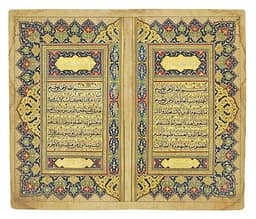
Ahmad Shah Durrani
Emperor · Modern
66.1Total
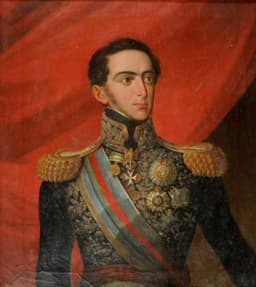
Maria I of Portugal
Emperor · Modern
45.9Total
Basic Information
Born
1722
1734
Died
1772
1816
Era
Modern
Modern
Nationality
Afghanistan
Portugal
Occupation
Emperor
Emperor
Civilization
Middle Eastern
Western
Score Comparison
Military (10%)
82.0
10.6
Political (20%)
45.0
39.4
Influence (20%)
82.0
53.3
Legacy (20%)
55.0
43.3
Leadership (15%)
72.0
58.8
Strategy (15%)
60.7
60.0
TOTAL
66.1
45.9
Ahmad Shah Durrani — Complete Timeline
1747 AD
Coronation as King of AfghanistanPolitical Action
Ahmad Shah Durrani was elected as the leader of the Pashtun tribes at a loya jirga in Kandahar, following the assassination of Nadir Shah of Persia. He was crowned as the first King of Afghanistan, founding the Durrani Empire and the modern Afghan state.
AfghanistanFoundingEmpire
Impact: regionalconstructive
Establishment of Kandahar as capitalPolitical Action
Ahmad Shah Durrani made Kandahar the capital of his new empire. He built a new city, including the famous mausoleum of the Prophet Muhammad's cloak, and established it as the political and cultural center of the Durrani Empire.
AfghanistanCapitalUrban Development
Impact: nationalconstructive
1750 AD
Conquest of Herat and MashhadWar
Ahmad Shah Durrani captured the cities of Herat and Mashhad from the declining Persian Empire. These conquests expanded the Durrani Empire's territory into modern-day Iran and secured control over key trade routes and religious centers.
AfghanistanPersiaExpansion
Impact: regional
1761 AD
Battle of PanipatWar◆ Major
Ahmad Shah Durrani led Afghan forces to a decisive victory against the Maratha Empire at the Third Battle of Panipat in India. The battle halted Maratha expansion in northern India and established Afghan influence in the region, but also weakened both empires.
IndiaAfghanistanBattle
Impact: regional
Maria I of Portugal — Complete Timeline
1777 AD
Accession as first undisputed queen regnant of PortugalPolitical Action◆ Major
Maria I ascended the throne upon the death of her father, King Joseph I. She became the first undisputed queen regnant of Portugal, immediately dismissing the powerful Marquis of Pombal and reversing many of his reforms, signaling a shift in policy.
SuccessionPolitical ChangeMonarchy
Impact: national
Dismissal of the Marquis of PombalPolitical Action◆ Major
One of Maria I's first acts as queen was to dismiss the powerful and controversial Marquis of Pombal. She ordered an investigation into his administration, leading to his exile and the reversal of many of his Enlightenment reforms, restoring power to the aristocracy and Church.
Political PurgeReversal of ReformsAristocracy
Impact: national
1792 AD
Onset of religious mania and mental illnessOther◆ Major
Maria I began exhibiting severe symptoms of religious mania and mental illness, including delusions and anxiety. This condition, possibly exacerbated by the French Revolution and the death of her husband and son, rendered her incapable of ruling, leading to her son John becoming regent.
Mental HealthRegencyRoyal Illness
Impact: nationaltragic
1807 AD
Transfer of the Portuguese court to BrazilPolitical Action
As Napoleon's forces invaded Portugal, the incapacitated Queen Maria I was transported with the royal family and court to Brazil under British escort. She spent the remainder of her life in Rio de Janeiro, where she died, never returning to Portugal.
Napoleonic WarsRoyal FlightExile
Impact: global
Expert Analysis
Origins
Ahmad Shah Durrani was born in 1722 in the Sadozai clan of the Abdali Pashtuns, in Herat (modern-day Afghanistan). His father, Mohammad Zaman Khan, was a tribal chief. Ahmad Shah was taken as a hostage by Nadir Shah of Persia but later rose to command a contingent of Abdali troops. After Nadir Shah's assassination in 1747, Ahmad Shah was elected king (Padishah) by a loya jirga of Pashtun tribes in Kandahar, marking the foundation of the Durrani Empire.
Maria I was born on December 17, 1734, in Lisbon, Portugal, to King Joseph I and Mariana Victoria of Spain. She was educated in statecraft and religion. Her father's reign was dominated by the Marquis of Pombal, who implemented Enlightenment reforms. Maria was deeply religious and married her uncle, Prince Peter, in 1760. She ascended the throne on February 24, 1777, after her father's death, becoming the first undisputed queen regnant of Portugal.
Rise to Power
Ahmad Shah Durrani's rise was swift. In 1747, after Nadir Shah's murder, he was chosen as leader at the loya jirga in Kandahar. He immediately launched campaigns to consolidate Pashtun tribes and expand territory. By 1749, he captured Ghazni, Kabul, and Peshawar. His turning point came in 1761 at the Third Battle of Panipat, where he decisively defeated the Maratha Empire, scoring a military 82.0. This victory solidified his control over northern India and established him as a major power in South Asia.
Maria I's rise was hereditary. She became queen regnant in 1777, inheriting a kingdom shaped by Pombal's reforms. Her first major act was dismissing Pombal, ordering an investigation into his administration, and distancing from his anti-clerical policies. She sought to restore traditional religious influence, which earned her support from the Church and conservative nobles. However, her reign was overshadowed by the French Revolution and Napoleonic Wars.
Leadership & Governance
Ahmad Shah Durrani led as a military chieftain and tribal unifier. He convened loya jirgas to gain consensus among Pashtun leaders, balancing tribal autonomy with central authority. He established Kandahar as the capital and built infrastructure, including the mausoleum of the Prophet's cloak. His governance was decentralized, relying on local khans. He maintained control through military campaigns and strategic marriages. His political score of 45.0 reflects limited institutional building beyond tribal structures.
Maria I governed as a constitutional monarch, relying on ministers. She reversed Pombal's anti-Jesuit policies and promoted religious piety. However, her mental health deteriorated after 1786, leading to religious mania and delusions. In 1792, her son John (later John VI) took over as regent. Her leadership was passive, scoring 58.8 in leadership but 39.4 in political influence. The transfer of the Portuguese court to Brazil in 1807, under British escort, was a turning point that preserved the monarchy but showcased her incapacity.
Triumph & Tragedy
Ahmad Shah Durrani's greatest triumph was the Third Battle of Panipat (1761), where he crushed the Maratha Empire, preventing their hegemony over India. He expanded the Durrani Empire from Khorasan to Kashmir and Punjab. His tragedy was the empire's fragility after his death; his son Timur Shah faced internal revolts and lost territories. Ahmad Shah also failed to establish a lasting administrative system, leading to decline.
Maria I's triumph was her accession as the first undisputed queen regnant, dismissing Pombal and restoring religious influence. She also established the Royal Academy of Sciences in 1779. Her tragedy was her mental illness, which incapacitated her after 1786. She suffered from religious mania, believing she was damned, and required confinement. The French invasion of Portugal in 1807 forced her to flee to Brazil, where she died in 1816, never returning to Portugal.
Character & Destiny
Ahmad Shah Durrani was a charismatic and pragmatic leader, skilled in military strategy (strategy score 60.7) and tribal diplomacy. His character unified the Pashtuns, but his reliance on personal authority rather than institutions doomed his empire. He was known for his generosity and piety, earning the title "Durr-i-Durran" (Pearl of Pearls). His destiny was to found a nation but leave a fragile legacy.
Maria I was deeply religious and melancholic. Her piety and guilt over her father's policies may have contributed to her mental illness. She was indecisive and dependent on advisors. Her character shaped her fate: her mental decline led to a regency, which allowed her son to prepare for the Brazilian transfer. Historians view her as a tragic figure, not a strong ruler.
Legacy
Ahmad Shah Durrani is revered as the "Father of Afghanistan" and his name is central to Afghan national identity. The Durrani Empire's boundaries influenced modern Afghanistan. However, his legacy is mixed: he is celebrated for uniting Pashtuns but criticized for his invasions of India, which caused devastation. His military score of 82.0 and influence score of 82.0 highlight his impact. The empire collapsed within 50 years, but his symbol persists.
Maria I's legacy is tied to the transfer of the Portuguese court to Brazil, which elevated Brazil's status to a kingdom in 1815. This laid groundwork for Brazilian independence in 1822. She is remembered as a pious queen who suffered mentally. Her reign saw the end of Pombal's reforms and a return to conservatism. Her influence score of 53.3 reflects her limited impact compared to Ahmad Shah.
Conclusion
Ahmad Shah Durrani had greater impact, with a total score of 66.1 against Maria I's 45.9. He founded an empire and shaped Afghan identity, while Maria I's reign was marked by mental illness and external crisis. Ahmad Shah's military and influence scores dwarf hers. Although both faced challenges, Ahmad Shah's agency in building a state contrasts with Maria's passive role. Thus, Ahmad Shah Durrani stands as the more consequential historical figure.
Rankings
🥇
Ahmad Shah DurraniLeader
Mil: 82.0Pol: 45.0Inf: 82.0
66.1
🥈
Maria I of Portugal
Mil: 10.6Pol: 39.4Inf: 53.3
45.9
+20.2 behind
How This Comparison Works
Algorithm
Each figure is scored on 6 dimensions (0—100 scale) based on structured historical data: Military (10%), Political (20%), Influence (20%), Legacy (20%), Leadership (15%), Strategy (15%). The weighted total produces the final ranking.
Data Sources
Scores are computed from structured sub-indicators in the database. Scale factors adjust for era (Ancient ×0.85, Modern ×1.0) and civilization size (Eastern ×1.05, Other ×0.80) to account for differences in population and military scale.
Maximum 3 Figures
Comparisons are limited to 2—3 figures to ensure readability and statistical meaningfulness.
Error Margins
±5 points per dimension — Sub-scores are derived from historical records with inherent uncertainty. Two figures within 5 points on a dimension should be considered roughly equivalent in that area.
Total Score Accuracy
±3 points overall — The weighted combination of 6 dimensions produces a total score with approximately ±3 points of uncertainty. Differences of less than 3 points are not statistically significant— the figures are effectively tied.
Known Limitations
- Historical records are incomplete and uneven across civilizations
- Figures from oral-tradition societies may be underrepresented
- Occupation labels can misclassify multi-role figures
- Scores measure capability and impact, not moral character
- Quantitative scoring is a comparison tool, not absolute truth
Capability Radar
Military (10%) — Battles & Warfare
Battles
75
37
Win Rate
70
42
Expansion
80
42
Political (20%) — Governance & Reform
Reform
55
20
Diplomacy
60
25
Economy
50
30
Influence (20%) — Cultural & Global Reach
Cultural
70
30
Global
60
20
Legacy (20%) — Historical Impact
Historical
75
35
Longevity
70
25
Leadership (15%) — Power & Stability
Tenure
65
40
Stability
45
15
Strategy (15%) — Tactics & Innovation
Strategy
70
45
Tactics
65
46
Reform
60
49
Similar Comparisons
Comments & Discussion
No comments yet. Be the first to share your thoughts!