Loading...
Ahmad Shah Durrani vs Napoleon Bonaparte
Napoleon Bonaparte leads by 4.8 pts · 2 figures compared
…
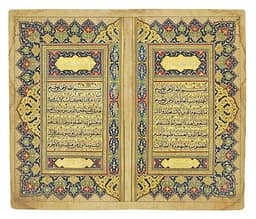
Ahmad Shah Durrani
Emperor · Modern
66.1Total

Napoleon Bonaparte
General · Modern
70.9Total
Basic Information
Born
1722
1769
Died
1772
1821
Era
Modern
Modern
Nationality
Afghanistan
France
Occupation
Emperor
General
Civilization
Middle Eastern
Western
Score Comparison
Military (10%)
82.0
94.0
Political (20%)
45.0
72.0
Influence (20%)
82.0
40.0
Legacy (20%)
55.0
80.0
Leadership (15%)
72.0
78.0
Strategy (15%)
60.7
90.0
TOTAL
66.1
70.9
Ahmad Shah Durrani — Complete Timeline
1747 AD
Coronation as King of AfghanistanPolitical Action
Ahmad Shah Durrani was elected as the leader of the Pashtun tribes at a loya jirga in Kandahar, following the assassination of Nadir Shah of Persia. He was crowned as the first King of Afghanistan, founding the Durrani Empire and the modern Afghan state.
AfghanistanFoundingEmpire
Impact: regionalconstructive
Establishment of Kandahar as capitalPolitical Action
Ahmad Shah Durrani made Kandahar the capital of his new empire. He built a new city, including the famous mausoleum of the Prophet Muhammad's cloak, and established it as the political and cultural center of the Durrani Empire.
AfghanistanCapitalUrban Development
Impact: nationalconstructive
1750 AD
Conquest of Herat and MashhadWar
Ahmad Shah Durrani captured the cities of Herat and Mashhad from the declining Persian Empire. These conquests expanded the Durrani Empire's territory into modern-day Iran and secured control over key trade routes and religious centers.
AfghanistanPersiaExpansion
Impact: regional
1761 AD
Battle of PanipatWar◆ Major
Ahmad Shah Durrani led Afghan forces to a decisive victory against the Maratha Empire at the Third Battle of Panipat in India. The battle halted Maratha expansion in northern India and established Afghan influence in the region, but also weakened both empires.
IndiaAfghanistanBattle
Impact: regional
Napoleon Bonaparte — Complete Timeline
1799 AD
Coup of 18 BrumaireOther◆ Major
Napoleon Bonaparte, with support from his brother Lucien and key political figures, overthrew the Directory in a bloodless coup. He established the Consulate with himself as First Consul, effectively becoming the ruler of France. This event ended the French Revolution's most unstable period.
French RevolutionCoupRise to Power
Impact: regional
1804 AD
Promulgation of the Napoleonic CodeOther◆ Major
Napoleon enacted the Civil Code of the French, known as the Napoleonic Code, a comprehensive set of laws that replaced the fragmented feudal legal systems. The code established legal equality, protected property rights, and secularized law. It became the basis for legal systems in many European and world countries.
Legal ReformNapoleonic CodeCivil Law
Impact: globalconstructive
1805 AD
Battle of AusterlitzWar◆ Major
Napoleon's Grande Arm
Napoleonic WarsBattleDecisive Victory
Impact: global
1812 AD
Invasion of RussiaWar◆ Major
Napoleon led the Grande Arm
Napoleonic WarsInvasionDisaster
Impact: globaldestructive
1815 AD
Battle of WaterlooWar◆ Major
Napoleon's French army was defeated by the combined forces of the Duke of Wellington's Anglo-Allied army and Gebhard Leberecht von Bl
Napoleonic WarsBattleFinal Defeat
Impact: globaldestructive
Expert Analysis
ahmad-shah-durrani-vs-napoleon-bonaparte
The Emperor and the Father
In the winter of 1761, two men stood at the apex of their power, yet their paths could not have diverged more sharply. One, a short Corsican artillery officer, was still a decade away from his first command, dreaming of glory in the snows of northern Italy. The other, a towering Pashtun warrior in his late thirties, had just crushed the Maratha Empire at Panipat, cementing his place as the undisputed master of northern India. Napoleon Bonaparte would go on to conquer Europe, only to die in lonely exile on a volcanic rock in the South Atlantic. Ahmad Shah Durrani would found a nation that still bears his spirit, dying in his bed, mourned by a people who called him *Baba*—Father. Why did one man’s ambition end in ashes while the other’s legacy became a homeland?
Origins
Napoleon was born in 1769 on the island of Corsica, a place that had become French only months before his birth. His family was minor nobility, struggling and resentful of French rule. He spoke Italian before French, and his childhood was marked by a sense of being an outsider—a provincial in a Parisian world. The French Revolution, which erupted when he was twenty, shattered the old order and opened a path for talent over birth. It was a world of chaos and opportunity, where a young artillery officer could rise faster than any king’s son.
Ahmad Shah Durrani, born in 1722, came from a very different world. He was a member of the Abdali (later Durrani) tribe of Pashtuns, a warrior people who had long fought for survival between the Persian and Mughal empires. His early life was spent as a hostage at the court of Nadir Shah of Persia, a brutal but brilliant conqueror. There, young Ahmad learned the arts of war and politics from a master, watching how loyalty and fear could bind an empire together. When Nadir Shah was assassinated in 1747, the Abdali tribesmen needed a leader. They chose Ahmad, not for his birth alone, but for his courage, his charisma, and his reputation for fairness.
Rise to Power
Napoleon’s rise was a masterpiece of speed and calculation. In 1793, at the age of twenty-four, he drove the British from the port of Toulon with a brilliant artillery plan. By 1795, he had saved the revolutionary government from a royalist uprising with a “whiff of grapeshot.” In 1796, he took command of a ragged army in Italy and turned it into an instrument of lightning conquest. Each victory—Lodi, Arcola, Rivoli—was a stepping stone. He was not just a general; he was a political phenomenon, a man who seemed to embody the revolutionary spirit while also taming it.
Ahmad Shah’s rise was more deliberate, more rooted in the fabric of his people. At the loya jirga in Kandahar in 1747, the tribal elders did not crown him; they elected him, placing a sheaf of wheat in his turban as a symbol of peace and prosperity. He did not conquer his way to power; he was invited to lead. From that foundation, he built an empire through patient diplomacy and relentless campaigning. He captured Herat and Mashhad in 1750, expanding into the weakening Persian Empire. He raided into India repeatedly, not to rule but to plunder and to assert Afghan dominance. His greatest test came in 1761 at the Third Battle of Panipat, where he faced the Maratha Confederacy, the most powerful Indian force of the age. The battle was a slaughter—perhaps 100,000 dead—and it broke Maratha power for a generation.
Leadership & Governance
Napoleon ruled through sheer force of will and institutional genius. He centralized the French state, created the Napoleonic Code—a legal system that influenced much of Europe—and reformed education, finance, and administration. His military system was built on speed, deception, and the destruction of enemy armies. He fought more than sixty battles and lost only a handful. Yet his governance was autocratic. He crowned himself emperor in 1804, surrounded himself with family and sycophants, and treated conquered territories as sources of men and money.
Ahmad Shah ruled as a primus inter pares—first among equals. He never claimed absolute power. He consulted tribal councils, respected local customs, and governed through a loose federation of Pashtun chiefs. His military strategy was less about brilliant maneuvers than about endurance and the mobilization of tribal loyalty. He did not impose a single legal code; he let each region keep its traditions. His empire was less centralized than Napoleon’s, but it was also more resilient. When he died, it did not collapse overnight; it slowly fragmented because his successors lacked his unifying charisma.
Triumph & Tragedy
Napoleon’s greatest triumph was the campaign of 1805, when he marched his Grande Armée from the English Channel to the heart of Austria and destroyed the armies of Austria and Russia at Austerlitz. He was at the height of his power, the master of Europe. His tragedy was the invasion of Russia in 1812. He led 600,000 men into the frozen vastness; fewer than 100,000 came back. The disaster broke his aura of invincibility. He was exiled to Elba, returned for a hundred days, and was finally crushed at Waterloo in 1815. He spent his last six years on Saint Helena, a prisoner, dictating his memoirs and blaming others for his fall.
Ahmad Shah’s triumph was Panipat. He had proven that the Afghans could defeat the greatest empire in India. His tragedy was that he could not hold what he had won. He returned to Afghanistan after Panipat and never again led a major campaign into India. His health declined, and he spent his final years trying to manage the rivalries among his sons and chiefs. He died in 1772, probably of a facial cancer, at the age of fifty. He was buried in Kandahar, in a mausoleum that still stands.
Character & Destiny
Napoleon was driven by an insatiable hunger for glory. “I live only for posterity,” he once said. He was brilliant, ruthless, and vain. He believed he was a man of destiny, and for a time, he was. But his ambition had no limits. He could not stop. He had to conquer everything, and that need to possess everything cost him everything.
Ahmad Shah was driven by a different impulse: the desire to unite his people. He called himself “Durr-i-Durran”—Pearl of Pearls—but he never forgot that he was a servant of the tribes. He was a warrior, but also a diplomat. He knew when to fight and when to negotiate. His destiny was not personal glory but the creation of a nation.
Legacy
Napoleon’s legacy is immense but ambiguous. He reshaped Europe, spread the ideals of the French Revolution, and created the modern state. But he also caused millions of deaths and left a legacy of war and nationalism that would plague the continent for a century. Today, he is remembered as a genius and a tyrant, a symbol of ambition and its limits.
Ahmad Shah’s legacy is simpler and more enduring. He is the Father of Afghanistan. Every Afghan, from the Pashtun tribes to the Tajik farmers, knows his name. He gave them a national identity, a capital in Kandahar, and a sense of pride. His empire did not last, but the idea of Afghanistan did. When the British and Russians tried to conquer the country in the nineteenth century, they fought against the spirit that Ahmad Shah had forged.
Conclusion
Two men, two worlds. Napoleon conquered a continent and lost everything. Ahmad Shah founded a nation and gained immortality. Napoleon’s story is a tragedy of overreach; Ahmad Shah’s is a story of foundation. One was a comet that blazed across the sky and vanished; the other was a mountain that remained. Perhaps the difference lies in what they sought: Napoleon wanted to be remembered; Ahmad Shah wanted to be needed. And as history shows, a people’s need outlasts any emperor’s glory.
Rankings
🥇
Napoleon BonaparteLeader
Mil: 94.0Pol: 72.0Inf: 40.0
70.9
🥈
Ahmad Shah Durrani
Mil: 82.0Pol: 45.0Inf: 82.0
66.1
+4.8 behind
How This Comparison Works
Algorithm
Each figure is scored on 6 dimensions (0—100 scale) based on structured historical data: Military (10%), Political (20%), Influence (20%), Legacy (20%), Leadership (15%), Strategy (15%). The weighted total produces the final ranking.
Data Sources
Scores are computed from structured sub-indicators in the database. Scale factors adjust for era (Ancient ×0.85, Modern ×1.0) and civilization size (Eastern ×1.05, Other ×0.80) to account for differences in population and military scale.
Maximum 3 Figures
Comparisons are limited to 2—3 figures to ensure readability and statistical meaningfulness.
Error Margins
±5 points per dimension — Sub-scores are derived from historical records with inherent uncertainty. Two figures within 5 points on a dimension should be considered roughly equivalent in that area.
Total Score Accuracy
±3 points overall — The weighted combination of 6 dimensions produces a total score with approximately ±3 points of uncertainty. Differences of less than 3 points are not statistically significant— the figures are effectively tied.
Known Limitations
- Historical records are incomplete and uneven across civilizations
- Figures from oral-tradition societies may be underrepresented
- Occupation labels can misclassify multi-role figures
- Scores measure capability and impact, not moral character
- Quantitative scoring is a comparison tool, not absolute truth
Capability Radar
Military (10%) — Battles & Warfare
Battles
75
95
Win Rate
70
90
Expansion
80
95
Political (20%) — Governance & Reform
Reform
55
95
Diplomacy
60
80
Economy
50
85
Influence (20%) — Cultural & Global Reach
Cultural
70
85
Global
60
90
Legacy (20%) — Historical Impact
Historical
75
95
Longevity
70
90
Leadership (15%) — Power & Stability
Tenure
65
85
Stability
45
70
Strategy (15%) — Tactics & Innovation
Strategy
70
95
Tactics
65
98
Reform
60
92
Similar Comparisons
Comments & Discussion
PanipatPundit6/17/2026
Napoleon never fought a battle like Panipat in 1761, with 100,000+ casualties in a single day. Ahmad Shah Durrani crushed the Maratha Empire at its peak, facing armies that dwarfed anything Napoleon saw in Italy. Nappy’s Austerlitz was brilliant, sure, but Panipat was a civilization-defining clash. The Father ground three empires into dust. Bonaparte just lost at Waterloo. Context matters.
历史数据侠6/17/2026
说拿破仑比艾哈迈德·沙·杜兰尼更会打仗?看看数字:杜兰尼在帕尼帕特战役中面对40万敌军,拿破仑在博罗季诺只有25万俄军。而且杜兰尼没输过决定性战役,拿破仑却三次被流放。衡量标准不同,但“不败”vs“三次滑铁卢”,胜负太明显了。
SkepticalScholar6/17/2026
You’re comparing a man who conquered a continent for a decade to a tribal chieftain who won one big battle? Napoleon reorganized European law with the Code, created modern warfare, and almost beat every major power simultaneously. Ahmad Shah’s “empire” dissolved after his death because he couldn’t build institutions. Legacy? Afghanistan still can’t hold together. Give me Bonaparte’s failures over Durrani’s fleeting coalition any day.
钟情古典6/17/2026
拿破仑是最后的古典统帅,杜兰尼是最后的游牧大汗。一个靠大炮和法典,一个靠弯刀和血亲。但拿破仑败在体系上——欧洲国家联合反抗;杜兰尼赢在时机上——印度没有统一对手。比较他们就像比苹果和石榴:都甜,但一个是西欧的理性,一个是中亚的狂野。我只服史实:杜兰尼死在床上,拿破仑死在岛上。
RevisionistRover6/17/2026
Let’s be real—Ahmad Shah Durrani is romanticized because he’s seen as the “father” of a nation that’s been a battlefield for centuries. Napoleon gets the hate because he lost. But look deeper: Durrani’s Panipat victory came through treachery and numerical superiority, not genius. Napoleon’s Italian campaign of 1796 was pure tactical brilliance against overwhelming odds. One’s a lucky warlord, the other was a strategic prodigy. Stop the myth-making.