Loading...
This comparison has not been analyzed yet.
One-time AI generation (~1 minute). Scores and timeline are already available below.
Ahmad Shah Qajar vs Ntare V of Burundi
Ahmad Shah Qajar leads by 0.4 pts · 2 figures compared
…
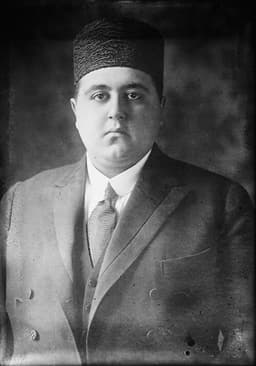
Ahmad Shah Qajar
Emperor · Modern
40.7Total

Ntare V of Burundi
Emperor · Modern
40.3Total
Basic Information
Born
1898
1947
Died
1930
—
Era
Modern
Modern
Nationality
Persia
Burundi
Occupation
Emperor
Emperor
Civilization
Middle Eastern
Other
Score Comparison
Military (10%)
43.3
12.2
Political (20%)
26.4
48.0
Influence (20%)
47.1
46.3
Legacy (20%)
35.8
34.2
Leadership (15%)
41.5
58.8
Strategy (15%)
54.3
29.0
TOTAL
40.7
40.3
Ahmad Shah Qajar — Complete Timeline
1919 AD
Signed the Anglo-Persian Agreement of 1919Political Action◆ Major
Ahmad Shah's government signed the Anglo-Persian Agreement, which would have made Persia a British protectorate in exchange for loans and military assistance. Widespread nationalist opposition forced the Majlis to reject the agreement, and it was never ratified, contributing to the government's weakness.
TreatyBritish InfluenceNationalist Opposition
Impact: nationaldestructive
1923 AD
Fled to EuropePolitical Action◆ Major
Ahmad Shah left Persia for Europe, ostensibly for medical treatment, but effectively went into exile. He left Reza Khan as prime minister with full powers. His absence weakened the monarchy and allowed Reza Khan to consolidate control, leading to the eventual deposition.
ExilePolitical VacuumReza Khan's Rise
Impact: nationaltragic
1925 AD
Deposed by Reza KhanPolitical Action
Ahmad Shah Qajar was deposed by the Majlis, which voted to end the Qajar dynasty and appoint Reza Khan as the new shah. This followed Reza Khan's coup in 1921 and his subsequent consolidation of power. Ahmad Shah was in Europe at the time and never returned to Persia.
DepositionEnd of Qajar DynastyReza Khan
Impact: nationaltragic
Ntare V of Burundi — Complete Timeline
1966 AD
Installed as king after the 1966 coupPolitical Action◆ Major
Ntare V was installed as mwami by the military regime that overthrew his father Mwambutsa IV. He was a figurehead monarch, with real power held by the military government led by Michel Micombero. His reign lasted only a few months before the monarchy was abolished.
MonarchyCoupFigurehead
Impact: regional
Deposed and monarchy abolishedPolitical Action◆ Major
Later in 1966, Prime Minister Michel Micombero declared Burundi a republic, deposing Ntare V and abolishing the monarchy. Ntare V went into exile in Uganda, where he lived under the protection of President Idi Amin, ending the centuries-old Ganwa dynasty.
End of MonarchyRepublicExile
Impact: regionaltragic
1972 AD
Returned to Burundi and was killedPolitical Action◆ Major
Ntare V returned to Burundi in 1972 after negotiations with President Micombero, but was immediately placed under house arrest. During a Hutu uprising that year, he was killed by Tutsi soldiers, possibly on government orders. His death became a symbol of the ethnic violence that engulfed Burundi.
DeathEthnic ViolenceCivil War
Impact: regionaltragic
This comparison has not been analyzed yet.
One-time AI generation (~1 minute). Scores and timeline are already available below.
Rankings
🥇
Ahmad Shah QajarLeader
Mil: 43.3Pol: 26.4Inf: 47.1
40.7
🥈
Ntare V of Burundi
Mil: 12.2Pol: 48.0Inf: 46.3
40.3
+0.4 behind
How This Comparison Works
Algorithm
Each figure is scored on 6 dimensions (0—100 scale) based on structured historical data: Military (10%), Political (20%), Influence (20%), Legacy (20%), Leadership (15%), Strategy (15%). The weighted total produces the final ranking.
Data Sources
Scores are computed from structured sub-indicators in the database. Scale factors adjust for era (Ancient ×0.85, Modern ×1.0) and civilization size (Eastern ×1.05, Other ×0.80) to account for differences in population and military scale.
Maximum 3 Figures
Comparisons are limited to 2—3 figures to ensure readability and statistical meaningfulness.
Error Margins
±5 points per dimension — Sub-scores are derived from historical records with inherent uncertainty. Two figures within 5 points on a dimension should be considered roughly equivalent in that area.
Total Score Accuracy
±3 points overall — The weighted combination of 6 dimensions produces a total score with approximately ±3 points of uncertainty. Differences of less than 3 points are not statistically significant— the figures are effectively tied.
Known Limitations
- Historical records are incomplete and uneven across civilizations
- Figures from oral-tradition societies may be underrepresented
- Occupation labels can misclassify multi-role figures
- Scores measure capability and impact, not moral character
- Quantitative scoring is a comparison tool, not absolute truth
Capability Radar
Military (10%) — Battles & Warfare
Battles
5
5
Win Rate
5
8
Expansion
5
13
Political (20%) — Governance & Reform
Reform
10
0
Diplomacy
15
5
Economy
10
0
Influence (20%) — Cultural & Global Reach
Cultural
10
10
Global
10
5
Legacy (20%) — Historical Impact
Historical
15
10
Longevity
10
5
Leadership (15%) — Power & Stability
Tenure
20
5
Stability
10
0
Strategy (15%) — Tactics & Innovation
Strategy
5
13
Tactics
5
19
Reform
5
22
Similar Comparisons
Comments & Discussion
No comments yet. Be the first to share your thoughts!