Loading...
Ahmad Shah Qajar vs Napoleon Bonaparte
Napoleon Bonaparte leads by 30.2 pts · 2 figures compared
…
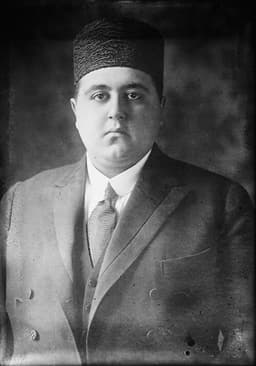
Ahmad Shah Qajar
Emperor · Modern
40.7Total

Napoleon Bonaparte
General · Modern
70.9Total
Basic Information
Born
1898
1769
Died
1930
1821
Era
Modern
Modern
Nationality
Persia
France
Occupation
Emperor
General
Civilization
Middle Eastern
Western
Score Comparison
Military (10%)
43.3
94.0
Political (20%)
26.4
72.0
Influence (20%)
47.1
40.0
Legacy (20%)
35.8
80.0
Leadership (15%)
41.5
78.0
Strategy (15%)
54.3
90.0
TOTAL
40.7
70.9
Ahmad Shah Qajar — Complete Timeline
1919 AD
Signed the Anglo-Persian Agreement of 1919Political Action◆ Major
Ahmad Shah's government signed the Anglo-Persian Agreement, which would have made Persia a British protectorate in exchange for loans and military assistance. Widespread nationalist opposition forced the Majlis to reject the agreement, and it was never ratified, contributing to the government's weakness.
TreatyBritish InfluenceNationalist Opposition
Impact: nationaldestructive
1923 AD
Fled to EuropePolitical Action◆ Major
Ahmad Shah left Persia for Europe, ostensibly for medical treatment, but effectively went into exile. He left Reza Khan as prime minister with full powers. His absence weakened the monarchy and allowed Reza Khan to consolidate control, leading to the eventual deposition.
ExilePolitical VacuumReza Khan's Rise
Impact: nationaltragic
1925 AD
Deposed by Reza KhanPolitical Action
Ahmad Shah Qajar was deposed by the Majlis, which voted to end the Qajar dynasty and appoint Reza Khan as the new shah. This followed Reza Khan's coup in 1921 and his subsequent consolidation of power. Ahmad Shah was in Europe at the time and never returned to Persia.
DepositionEnd of Qajar DynastyReza Khan
Impact: nationaltragic
Napoleon Bonaparte — Complete Timeline
1799 AD
Coup of 18 BrumaireOther◆ Major
Napoleon Bonaparte, with support from his brother Lucien and key political figures, overthrew the Directory in a bloodless coup. He established the Consulate with himself as First Consul, effectively becoming the ruler of France. This event ended the French Revolution's most unstable period.
French RevolutionCoupRise to Power
Impact: regional
1804 AD
Promulgation of the Napoleonic CodeOther◆ Major
Napoleon enacted the Civil Code of the French, known as the Napoleonic Code, a comprehensive set of laws that replaced the fragmented feudal legal systems. The code established legal equality, protected property rights, and secularized law. It became the basis for legal systems in many European and world countries.
Legal ReformNapoleonic CodeCivil Law
Impact: globalconstructive
1805 AD
Battle of AusterlitzWar◆ Major
Napoleon's Grande Arm
Napoleonic WarsBattleDecisive Victory
Impact: global
1812 AD
Invasion of RussiaWar◆ Major
Napoleon led the Grande Arm
Napoleonic WarsInvasionDisaster
Impact: globaldestructive
1815 AD
Battle of WaterlooWar◆ Major
Napoleon's French army was defeated by the combined forces of the Duke of Wellington's Anglo-Allied army and Gebhard Leberecht von Bl
Napoleonic WarsBattleFinal Defeat
Impact: globaldestructive
Expert Analysis
ahmad-shah-qajar-vs-napoleon-bonaparte
# The Emperor Who Lost an Empire and the Emperor Who Never Had One
On a gray morning in 1815, a man in a gray coat stood on a muddy field in Belgium, watching his dreams dissolve into cannon smoke. On a spring day in 1923, a young man in a silk suit boarded a train in Tehran, leaving his throne behind without a single shot fired. Napoleon Bonaparte and Ahmad Shah Qajar both wore crowns. Both ended their lives in exile. But between them lies a gulf not merely of geography, but of will, circumstance, and the peculiar cruelty of history.
Origins
Napoleon Bonaparte was born in 1769 on the island of Corsica, a place that had been French for barely a year. His family was minor nobility, poor enough that he had to fight for every advantage. The France of his youth was a furnace of revolution—the old order crumbling, careers opening to talent, a continent in chaos waiting for a man of ambition. He absorbed Enlightenment ideas at military school, where his classmates mocked his accent and his poverty. That resentment forged something: a hunger to prove himself, again and again, until the world had no choice but to bow.
Ahmad Shah Qajar was born in 1898 into the opposite world. His was a dynasty already in decay, a Persia caught between Russian and British empires like a lamb between wolves. He became shah at age eleven, a boy king in a court of intrigues. His father had been murdered; his regents mismanaged everything. The Persia of his youth was not a furnace but a slow fire, smoldering under foreign domination, its treasury empty, its army a shadow. Where Napoleon learned to command, Ahmad Shah learned to endure.
Rise to Power
Napoleon’s rise was a ladder of victories. At twenty-four, he drove the British out of Toulon. At twenty-six, he crushed a royalist uprising in Paris with a “whiff of grapeshot.” At twenty-seven, he conquered Italy. By thirty, he was First Consul of France; by thirty-five, Emperor. Each step was earned in blood and audacity. He had a gift for being in the right place at the right moment—and for making that moment his own.
Ahmad Shah’s rise was an accident of birth. He was crowned in 1909, at eleven, after his father was forced to abdicate. He did not seize power; it was handed to him, already diminished. The Persian Constitution of 1906 had already limited the monarchy. The Anglo-Russian Convention of 1907 had already carved Persia into spheres of influence. Ahmad Shah inherited a throne that was, in many ways, a cage.
Leadership & Governance
Napoleon governed with the energy of a force of nature. He reformed French law into the Napoleonic Code, a system so clear and rational it still shapes legal systems across Europe and beyond. He centralized education, established the Bank of France, built roads and canals. He was a military genius—his 93 in strategy speaks to campaigns that are still studied in war colleges. But he was also a political architect, creating institutions that outlasted his empire.
Ahmad Shah governed, if that is the word, by absence. He spent much of his reign in Europe, leaving Persia to be run by ministers and, increasingly, by the ambitious Reza Khan, a Cossack brigadier who knew how to use a rifle and a telephone. The Anglo-Persian Agreement of 1919, which Ahmad Shah’s government signed, would have made Persia a British protectorate. It was a disaster of diplomacy, and it exposed the shah’s weakness. He did not lead; he was led, and eventually, he was carried away.
Triumph & Tragedy
Napoleon’s greatest moment might have been Austerlitz in 1805, where he destroyed an Austro-Russian army and redrew the map of Europe. His most devastating failure was the invasion of Russia in 1812—600,000 men marched east; fewer than 100,000 returned. The tragedy was not just the loss of an army but the loss of his aura of invincibility. After that, the coalition against him grew stronger, and his star dimmed. Waterloo, in 1815, was the final act: a battle he might have won if not for rain, mud, and the late arrival of Prussian reinforcements.
Ahmad Shah’s greatest moment is harder to find. Perhaps it was simply surviving as long as he did, a fragile king in a predatory world. His tragedy was the 1925 deposition by Reza Khan, who had the Majlis vote to end the Qajar dynasty. Ahmad Shah was in Europe, supposedly for medical treatment, but really in exile. He never returned. He died in 1930 in Neuilly-sur-Seine, France, at age thirty-one, a forgotten monarch in a rented house.
Character & Destiny
Napoleon was driven by an insatiable will. “Impossible is a word to be found only in the dictionary of fools,” he once said. He believed he could shape history with his own hands, and for a decade, he was right. But that will also blinded him. He could not stop; he could not compromise; he could not accept limits. His character was his engine and his anchor.
Ahmad Shah was passive by temperament and circumstance. He did not lack intelligence—he spoke several languages, played the piano, appreciated art. But he lacked the ferocity to rule. In a time when Persia needed a lion, it got a lamb. His character was not a tragedy in itself; the tragedy was that history placed him in a role he could not fill.
Legacy
Napoleon’s legacy is enormous. The Napoleonic Code, the metric system, the modern concept of the nation-state—these are his shadows. He is remembered as both liberator and tyrant, genius and madman. His scores—94 in military, 82 in influence—reflect a man who changed the world, for better and worse.
Ahmad Shah’s legacy is a footnote. He is the last Qajar, the one who lost the throne. His scores—36 in military, 39 in political—reflect a ruler who could not rule. He is remembered, if at all, as a cautionary tale: what happens when a dynasty runs out of energy, when a king becomes a passenger in his own kingdom.
Conclusion
Two emperors, two exiles. Napoleon died on a remote Atlantic island, still plotting, still dreaming of return. Ahmad Shah died in a Paris suburb, forgotten, his dreams long surrendered. One fought history and lost; the other let history happen to him. The difference was not just talent or luck, but something deeper: the belief that a single man can bend the arc of events. Napoleon believed it so fiercely that he almost succeeded. Ahmad Shah never believed it at all. And that, perhaps, is the saddest difference of all.
Rankings
🥇
Napoleon BonaparteLeader
Mil: 94.0Pol: 72.0Inf: 40.0
70.9
🥈
Ahmad Shah Qajar
Mil: 43.3Pol: 26.4Inf: 47.1
40.7
+30.2 behind
How This Comparison Works
Algorithm
Each figure is scored on 6 dimensions (0—100 scale) based on structured historical data: Military (10%), Political (20%), Influence (20%), Legacy (20%), Leadership (15%), Strategy (15%). The weighted total produces the final ranking.
Data Sources
Scores are computed from structured sub-indicators in the database. Scale factors adjust for era (Ancient ×0.85, Modern ×1.0) and civilization size (Eastern ×1.05, Other ×0.80) to account for differences in population and military scale.
Maximum 3 Figures
Comparisons are limited to 2—3 figures to ensure readability and statistical meaningfulness.
Error Margins
±5 points per dimension — Sub-scores are derived from historical records with inherent uncertainty. Two figures within 5 points on a dimension should be considered roughly equivalent in that area.
Total Score Accuracy
±3 points overall — The weighted combination of 6 dimensions produces a total score with approximately ±3 points of uncertainty. Differences of less than 3 points are not statistically significant— the figures are effectively tied.
Known Limitations
- Historical records are incomplete and uneven across civilizations
- Figures from oral-tradition societies may be underrepresented
- Occupation labels can misclassify multi-role figures
- Scores measure capability and impact, not moral character
- Quantitative scoring is a comparison tool, not absolute truth
Capability Radar
Military (10%) — Battles & Warfare
Battles
5
95
Win Rate
5
90
Expansion
5
95
Political (20%) — Governance & Reform
Reform
10
95
Diplomacy
15
80
Economy
10
85
Influence (20%) — Cultural & Global Reach
Cultural
10
85
Global
10
90
Legacy (20%) — Historical Impact
Historical
15
95
Longevity
10
90
Leadership (15%) — Power & Stability
Tenure
20
85
Stability
10
70
Strategy (15%) — Tactics & Innovation
Strategy
5
95
Tactics
5
98
Reform
5
92
Similar Comparisons
Comments & Discussion
CorsicanCannon6/17/2026
Calling this a comparison between emperors is like comparing a stallion to a mule. Napoleon built an empire through tactical genius like the 1805 Ulm Campaign, a masterpiece of maneuver warfare. Ahmad Shah Qajar inherited a throne at 11 and lost Persia's effective independence by 1921 without fighting a single major battle to save it. One shaped Europe's destiny. The other was a passenger in his own history. Different leagues entirely.
波斯遗少6/17/2026
拿拿破仑跟艾哈迈德比简直是侮辱军事史。拿破仑在奥斯特里茨用三万人击败八万俄奥联军,战术安排精妙到至今被军校研究。艾哈迈德呢?1921年政变时连调动军队保卫王室的勇气都没有,穿着丝绸睡衣跑上火车去巴黎当寓公。一个死在战场与权力的巅峰,一个死在巴黎赌场和鸦片房里。
AusterlitzOrphan6/17/2026
The data doesn't lie: Napoleon commanded over 600,000 men at his peak and lost maybe 400,000 in total across his campaigns while still reshaping Europe. Ahmad Shah Qajar's army in 1921 was barely 15,000 men with obsolete rifles and zero functioning artillery, according to British intelligence reports. The scale difference is staggering. Napoleon's empire controlled 70 million people. Ahmad's "realm" was a hollow shell where foreign powers dictated oil concessions and trade policy. Quantity has a
流亡者不配称皇6/17/2026
数据最能说明问题:拿破仑巅峰时控制七千万人口,年收入超过七亿法郎;艾哈迈德统治的波斯1919年财政收入不到两千万图曼,其中四成得还给英俄的贷款。拿破仑的统一法典至今影响着欧洲法律,艾哈迈德留给后人的只有一张没签完的宪法和一堆卖国条约。胜利者书写历史,失败者只能当历史的脚注,可艾哈迈德连脚注都写得稀烂。