Loading...
This comparison has not been analyzed yet.
One-time AI generation (~1 minute). Scores and timeline are already available below.
Ahmed Izzet Pasha vs Zhang Xueliang
Ahmed Izzet Pasha leads by 1.2 pts · 2 figures compared
…

Ahmed Izzet Pasha
General · Modern
53.2Total
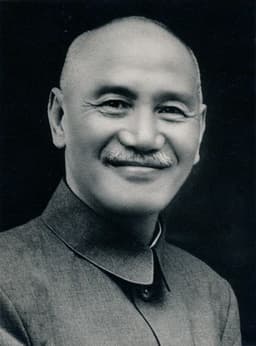
Zhang Xueliang
General · Modern
52.0Total
Basic Information
Born
1864
1901
Died
1937
2001
Era
Modern
Modern
Nationality
Ottoman Empire
China
Occupation
General
General
Civilization
Middle Eastern
Eastern
Score Comparison
Military (10%)
46.7
46.7
Political (20%)
45.1
43.7
Influence (20%)
56.4
58.0
Legacy (20%)
45.8
54.0
Leadership (15%)
68.0
50.7
Strategy (15%)
60.0
51.7
TOTAL
53.2
52.0
Ahmed Izzet Pasha — Complete Timeline
1918 AD
Appointed Grand VizierPolitical Action◆ Major
Ahmed Izzet Pasha was appointed Grand Vizier by Sultan Mehmed VI in October 1918. He was tasked with negotiating an end to World War I after the collapse of the CUP government.
Grand VizierWorld War IArmistice
Impact: national
Signed the Armistice of MudrosPolitical Action
Ahmed Izzet Pasha authorized the signing of the Armistice of Mudros on October 30, 1918, ending Ottoman participation in World War I. The armistice imposed harsh terms including the occupation of the Straits and the right to occupy any territory in case of disorder.
ArmisticeWorld War IOccupation
Impact: globaltragic
Resigned as Grand VizierPolitical Action
Ahmed Izzet Pasha resigned as Grand Vizier after only a few weeks in office. His resignation was forced by the Sultan and the Allies who demanded a more compliant government to implement the armistice terms.
ResignationArmisticePolitics
Impact: national
1919 AD
Served as Minister of WarPolitical Action
Ahmed Izzet Pasha served as Minister of War in the government of Damat Ferid Pasha. He attempted to reform the Ottoman army but was hampered by Allied occupation and the rise of the Turkish National Movement.
Minister of WarReformOccupation
Impact: national
Zhang Xueliang — Complete Timeline
1928 AD
Inheritance of the Fengtian ArmyPolitical Action◆ Major
Zhang Xueliang inherited command of the Fengtian Army after his father Zhang Zuolin was assassinated by the Japanese. He became the Young Marshal and controlled Manchuria, one of China's most strategic regions.
Fengtian CliqueInheritanceMilitary Command
Impact: national
Northeast Flag ReplacementPolitical Action
Zhang Xueliang declared allegiance to the Nationalist government by replacing the Fengtian flag with the Kuomintang flag in Manchuria. This act nominally unified China under Chiang Kai-shek's rule and ended the warlord era in the northeast.
Chinese UnificationNationalist GovernmentPolitics
Impact: nationalconstructive
1931 AD
Loss of Manchuria to JapanWar
Zhang Xueliang's forces withdrew from Manchuria following the Mukden Incident, allowing Japan to occupy the region. His decision not to resist led to the establishment of Manchukuo and widespread criticism of his leadership.
Japanese InvasionManchuriaMilitary Decision
Impact: globaltragic
1936 AD
Xi'an IncidentPolitical Action
Zhang Xueliang kidnapped Chiang Kai-shek in Xi'an to force him to form a united front against Japan. The incident ended with Chiang's release and the establishment of the Second United Front between the KMT and CCP.
Xi'an IncidentUnited FrontKidnapping
Impact: globalconstructive
1937 AD
House Arrest by Chiang Kai-shekPolitical Action◆ Major
After the Xi'an Incident, Zhang Xueliang was placed under house arrest by Chiang Kai-shek. He remained in captivity for over 50 years, first in mainland China and later in Taiwan, until his release in 1990.
House ArrestPolitical PrisonerChiang Kai-shek
Impact: nationaltragic
This comparison has not been analyzed yet.
One-time AI generation (~1 minute). Scores and timeline are already available below.
Rankings
🥇
Ahmed Izzet PashaLeader
Mil: 46.7Pol: 45.1Inf: 56.4
53.2
🥈
Zhang Xueliang
Mil: 46.7Pol: 43.7Inf: 58.0
52.0
+1.2 behind
How This Comparison Works
Algorithm
Each figure is scored on 6 dimensions (0—100 scale) based on structured historical data: Military (10%), Political (20%), Influence (20%), Legacy (20%), Leadership (15%), Strategy (15%). The weighted total produces the final ranking.
Data Sources
Scores are computed from structured sub-indicators in the database. Scale factors adjust for era (Ancient ×0.85, Modern ×1.0) and civilization size (Eastern ×1.05, Other ×0.80) to account for differences in population and military scale.
Maximum 3 Figures
Comparisons are limited to 2—3 figures to ensure readability and statistical meaningfulness.
Error Margins
±5 points per dimension — Sub-scores are derived from historical records with inherent uncertainty. Two figures within 5 points on a dimension should be considered roughly equivalent in that area.
Total Score Accuracy
±3 points overall — The weighted combination of 6 dimensions produces a total score with approximately ±3 points of uncertainty. Differences of less than 3 points are not statistically significant— the figures are effectively tied.
Known Limitations
- Historical records are incomplete and uneven across civilizations
- Figures from oral-tradition societies may be underrepresented
- Occupation labels can misclassify multi-role figures
- Scores measure capability and impact, not moral character
- Quantitative scoring is a comparison tool, not absolute truth
Capability Radar
Military (10%) — Battles & Warfare
Battles
35
35
Win Rate
30
30
Expansion
20
20
Political (20%) — Governance & Reform
Reform
30
20
Diplomacy
40
55
Economy
25
15
Influence (20%) — Cultural & Global Reach
Cultural
20
30
Global
30
40
Legacy (20%) — Historical Impact
Historical
40
60
Longevity
25
45
Leadership (15%) — Power & Stability
Tenure
55
40
Stability
20
10
Strategy (15%) — Tactics & Innovation
Strategy
45
45
Tactics
40
40
Reform
30
25
Similar Comparisons
Comments & Discussion
No comments yet. Be the first to share your thoughts!