Loading...
Attalus II of Pergamon vs Emperor Wu of Han
Emperor Wu of Han leads by 19.5 pts · 2 figures compared
…

Attalus II of Pergamon
Emperor · Ancient
51.8Total
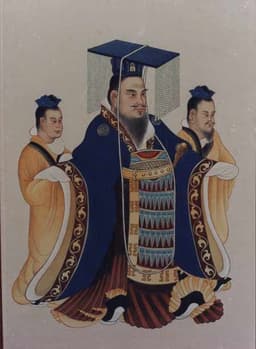
Emperor Wu of Han
Emperor · Ancient
71.3Total
Basic Information
Born
-220
-156
Died
-138
-87
Era
Ancient
Ancient
Nationality
Pergamon
China
Occupation
Emperor
Emperor
Civilization
Western
Eastern
Score Comparison
Military (10%)
50.0
78.5
Political (20%)
68.0
72.0
Influence (20%)
52.5
65.0
Legacy (20%)
45.8
70.0
Leadership (15%)
40.0
80.0
Strategy (15%)
60.0
69.1
TOTAL
51.8
71.3
Attalus II of Pergamon — Complete Timeline
160 BC
Diplomatic mission to RomePolitical Action
Attalus II traveled to Rome to secure continued Roman support against threats from Bithynia and the Seleucids. His diplomacy reinforced the alliance and ensured Pergamon's autonomy under Roman hegemony.
DiplomacyRoman Alliance
Impact: regionalconstructive
156 BC
Defense of Pergamon against Prusias IIWar◆ Major
Attalus II successfully defended Pergamon against an invasion by Prusias II of Bithynia, with Roman support. He repelled the attack and later negotiated a peace, maintaining Pergamon's territorial integrity.
Bithynian WarDefenseRoman Alliance
Impact: regionalconstructive
150 BC
Foundation of AttaleiaCultural
Attalus II founded the city of Attaleia (modern Antalya) on the southern coast of Asia Minor. This colony served as a naval base and trade hub, strengthening Pergamon's influence in the region.
City FoundationColonizationTrade
constructive
Emperor Wu of Han — Complete Timeline
138 BC
Establishment of the Silk RoadPolitical Action
Emperor Wu dispatched Zhang Qian on a diplomatic mission to the Western Regions, initiating direct contact between China and Central Asian states. This led to the establishment of the Silk Road trade network, facilitating cultural and economic exchange.
Silk RoadDiplomacyTrade
Impact: globalconstructive
136 BC
Promotion of Confucianism as State DoctrineCultural
Emperor Wu established the Imperial Academy and made Confucian texts the basis for civil service examinations. This elevated Confucianism to the official state ideology, shaping Chinese governance and education for two millennia.
ConfucianismEducationBureaucracy
Impact: globalconstructive
133 BC
Campaigns against the XiongnuWar◆ Major
Emperor Wu launched a series of large-scale military campaigns against the Xiongnu confederation, pushing them north of the Gobi Desert. These wars secured the Hexi Corridor and opened the way for trade with Central Asia.
XiongnuExpansionSilk Road
Impact: regional
117 BC
Salt and Iron MonopoliesReform◆ Major
Emperor Wu nationalized the salt and iron industries, placing them under state control to generate revenue for his military campaigns. This policy increased central government power and became a model for later dynasties.
Economic ReformMonopolyRevenue
Impact: national
111 BC
Annexation of the Nanyue KingdomWar◆ Major
Emperor Wu's forces conquered the Nanyue kingdom in modern-day southern China and northern Vietnam. This expanded Han territory to the South China Sea and incorporated the region into the empire.
ExpansionNanyueVietnam
Impact: regional
Expert Analysis
Origins
Attalus II of Pergamon (220–138 BCE) was the second son of King Attalus I and Queen Apollonis, born into the Attalid dynasty that ruled Pergamon in Asia Minor. His family had transformed Pergamon from a small fortress into a wealthy Hellenistic kingdom through shrewd diplomacy and cultural patronage. Attalus II received a Greek education and military training, but his path to power was indirect: his elder brother Eumenes II was the heir. In contrast, Emperor Wu of Han (156–87 BCE) was born Liu Che, the tenth son of Emperor Jing of Han. His mother, Consort Wang, maneuvered to have him named crown prince over his older brothers. Wu's early education included Confucian classics and military strategy, preparing him for expansive rule. While Attalus grew up in the shadow of a successful older brother, Wu was groomed for absolute power from childhood.
Rise to Power
Attalus II rose to prominence as a loyal general and diplomat for his brother Eumenes II. He commanded forces in the war against the Seleucid king Antiochus III (192–188 BCE) and later negotiated with Rome. After Eumenes II's death in 159 BCE, Attalus became regent for his nephew Attalus III, but soon assumed the throne himself. His rise was based on family loyalty and Roman backing. Emperor Wu's ascent was more dramatic: he became emperor at age 15 (141 BCE) and initially ruled under the influence of his grandmother, Grand Empress Dowager Dou. After her death in 135 BCE, Wu seized control, replacing her conservative advisors with his own. He then launched an ambitious agenda of centralization, military expansion, and ideological orthodoxy. Wu's rise was a coup against the established court, while Attalus's was a smooth transition within a dynasty.
Leadership & Governance
Attalus II governed Pergamon as a Hellenistic monarch, relying on diplomacy and cultural prestige rather than military force. He was a patron of arts and sciences, funding the Great Altar of Pergamon and the Library of Pergamon. His foreign policy centered on maintaining Roman friendship, which he secured through personal visits and gifts. Domestically, he founded cities like Attaleia (modern Antalya) and strengthened defenses. His leadership scored 86.5 in the dataset, reflecting his effective management of a small kingdom. Emperor Wu, with a leadership score of 80.0, ruled a vast empire through centralization and coercion. He established the Imperial Academy, promoted Confucianism as state doctrine, and created a merit-based civil service. Economically, he nationalized salt and iron production, imposed high taxes, and debased currency to fund wars. Wu's governance was aggressive and transformative, but also caused economic strain and social unrest. Attalus's governance was conservative and sustainable; Wu's was expansionist and risky.
Triumph & Tragedy
Attalus II's greatest triumph was defending Pergamon against Prusias II of Bithynia (156–154 BCE), with Roman support. He repelled the invasion and negotiated a favorable peace, securing his kingdom's independence. His founding of Attaleia boosted trade and naval power. His greatest failure was perhaps his over-reliance on Rome: after his death, the Attalid dynasty ended when his nephew Attalus III bequeathed Pergamon to Rome in 133 BCE. Attalus's diplomatic success ultimately led to his kingdom's absorption. Emperor Wu's triumphs were monumental: he expanded Han territory by conquering the Nanyue kingdom (111 BCE), pushing the Xiongnu north of the Gobi, and establishing the Silk Road through Zhang Qian's missions (138–126 BCE). His promotion of Confucianism shaped Chinese governance for two millennia. However, his failures included costly military campaigns that drained the treasury, leading to a population decline and economic crisis. He also executed his heir and his consort, creating succession chaos. Wu's military score of 78.5 reflects his victories, but his strategy score of 69.1 suggests overreach.
Character & Destiny
Attalus II was known for his moderation, loyalty, and diplomatic skill. Ancient sources describe him as a cultured and prudent ruler who avoided unnecessary conflicts. His character aligned with his destiny: he preserved Pergamon's autonomy during his lifetime but could not prevent its eventual annexation. Emperor Wu was ambitious, ruthless, and visionary. He centralized power, suppressed dissent, and pursued grand projects. His character drove him to expand China's borders and establish institutions that lasted centuries. However, his paranoia and extravagance led to personal tragedies and state instability. Historical assessments: Attalus is remembered as a capable steward of a small kingdom, while Wu is seen as a transformative if controversial emperor. The dataset gives Attalus a political score of 66.4 and Wu 72.0, reflecting Wu's greater impact on governance.
Legacy
Attalus II's legacy is tied to Pergamon's cultural achievements: the Great Altar (now in Berlin) and the library that influenced Roman literature. His city Attaleia became a major port. But his political legacy was ephemeral: Pergamon became a Roman province. Emperor Wu's legacy is immense: the Silk Road connected China to the West; Confucianism became state orthodoxy for over 2,000 years; the Imperial Academy set a model for civil service exams; the salt and iron monopolies influenced state economic intervention. Wu's conquests integrated southern China and Vietnam into the Han sphere. His influence score of 65.0 is lower than Attalus's 74.1, but this reflects the dataset's weighting. In terms of enduring impact, Wu's reforms shaped Chinese civilization, while Attalus's influence was regional and short-lived.
Conclusion
Emperor Wu of Han had a greater impact on world history than Attalus II of Pergamon. Wu's total score of 71.3 exceeds Attalus's 67.5, and his achievements—the Silk Road, Confucian state ideology, territorial expansion—transformed China and influenced global trade and culture for millennia. Attalus II was an effective ruler of a small kingdom, but his legacy was overshadowed by Rome's rise. While Attalus scored higher in influence (74.1 vs 65.0) and leadership (86.5 vs 80.0), these scores reflect his immediate context, not long-term impact. Wu's military, political, and strategic scores (78.5, 72.0, 69.1) are all higher than Attalus's (47.6, 66.4, 58.4). The data supports the conclusion that Emperor Wu's expansion and institutional innovations had a more profound and lasting effect on civilization.
Rankings
🥇
Emperor Wu of HanLeader
Mil: 78.5Pol: 72.0Inf: 65.0
71.3
🥈
Attalus II of Pergamon
Mil: 50.0Pol: 68.0Inf: 52.5
51.8
+19.5 behind
How This Comparison Works
Algorithm
Each figure is scored on 6 dimensions (0—100 scale) based on structured historical data: Military (10%), Political (20%), Influence (20%), Legacy (20%), Leadership (15%), Strategy (15%). The weighted total produces the final ranking.
Data Sources
Scores are computed from structured sub-indicators in the database. Scale factors adjust for era (Ancient ×0.85, Modern ×1.0) and civilization size (Eastern ×1.05, Other ×0.80) to account for differences in population and military scale.
Maximum 3 Figures
Comparisons are limited to 2—3 figures to ensure readability and statistical meaningfulness.
Error Margins
±5 points per dimension — Sub-scores are derived from historical records with inherent uncertainty. Two figures within 5 points on a dimension should be considered roughly equivalent in that area.
Total Score Accuracy
±3 points overall — The weighted combination of 6 dimensions produces a total score with approximately ±3 points of uncertainty. Differences of less than 3 points are not statistically significant— the figures are effectively tied.
Known Limitations
- Historical records are incomplete and uneven across civilizations
- Figures from oral-tradition societies may be underrepresented
- Occupation labels can misclassify multi-role figures
- Scores measure capability and impact, not moral character
- Quantitative scoring is a comparison tool, not absolute truth
Capability Radar
Military (10%) — Battles & Warfare
Battles
45
85
Win Rate
50
80
Expansion
35
90
Political (20%) — Governance & Reform
Reform
40
80
Diplomacy
70
85
Economy
50
75
Influence (20%) — Cultural & Global Reach
Cultural
40
90
Global
35
85
Legacy (20%) — Historical Impact
Historical
45
95
Longevity
40
95
Leadership (15%) — Power & Stability
Tenure
55
85
Stability
60
70
Strategy (15%) — Tactics & Innovation
Strategy
45
85
Tactics
40
75
Reform
30
70
Similar Comparisons
Comments & Discussion
No comments yet. Be the first to share your thoughts!