Loading...
Ahmose I vs Petronius Maximus
Ahmose I leads by 7.2 pts · 2 figures compared
…
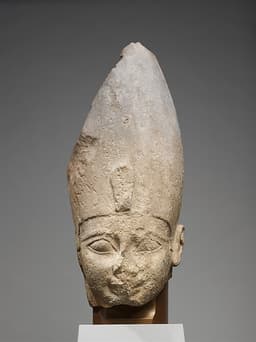
Ahmose I
Emperor · Ancient
62.2Total

Petronius Maximus
Emperor · Ancient
55.0Total
Basic Information
Born
-1550
396
Died
-1525
455
Era
Ancient
Ancient
Nationality
Egypt
Western Roman Empire
Occupation
Emperor
Emperor
Civilization
Middle Eastern
Western
Score Comparison
Military (10%)
76.0
14.4
Political (20%)
78.0
56.1
Influence (20%)
56.7
56.8
Legacy (20%)
40.0
57.5
Leadership (15%)
78.0
81.4
Strategy (15%)
70.0
43.5
TOTAL
62.2
55.0
Ahmose I — Complete Timeline
1550 BC
Expulsion of the HyksosWar
Ahmose I, a Theban king, captured the Hyksos capital of Avaris after a siege, expelling the Hyksos from Egypt. This victory ended the Second Intermediate Period and marked the beginning of the New Kingdom, Egypt's most powerful era.
HyksosExpulsionNew Kingdom
Impact: regionalconstructive
Reunification of EgyptPolitical Action◆ Major
After expelling the Hyksos, Ahmose I reunified Egypt under Theban rule, ending the division of the Second Intermediate Period. He reestablished central authority and initiated a period of stability, prosperity, and imperial expansion.
UnificationThebesStability
Impact: nationalconstructive
1549 BC
Siege of SharuhenWar◆ Major
Ahmose I pursued the defeated Hyksos into southern Canaan and besieged the fortress of Sharuhen. After a three-year siege, the city fell, eliminating the Hyksos threat and extending Egyptian influence into the Levant.
SiegeCanaanMilitary
Impact: regional
Petronius Maximus — Complete Timeline
455 AD
Killed during the Vandal Sack of RomeWar
The Vandal king Gaiseric, invited by Licinia Eudoxia, sailed to Rome and sacked the city. Petronius Maximus attempted to flee but was killed by a Roman mob. The Vandals systematically looted Rome for two weeks, causing immense damage.
Sack of RomeVandal InvasionDeath
Impact: regionaltragic
Proclaimed Western Roman EmperorPolitical Action◆ Major
After the death of Valentinian III, Petronius Maximus, a wealthy senator, seized the throne by bribing the palace guard and forcing the widowed empress Licinia Eudoxia to marry him. His reign lasted only 76 days.
Imperial SuccessionUsurpation
Impact: regional
Expert Analysis
Origins
Ahmose I was born around 1560 BCE into the Theban royal family of the Seventeenth Dynasty. His father, Seqenenre Tao, died fighting the Hyksos, and his brother, Kamose, continued the war but also died young. Ahmose I ascended the throne as a child, likely around 1550 BCE, with his mother Ahhotep I serving as regent. He was raised in Thebes, a city under Hyksos pressure, and received military training from a young age.
Petronius Maximus was born around 396 CE into a wealthy senatorial family in Rome. He rose through the civil service, serving as Praetorian prefect and twice as consul (433 and 443 CE). He accumulated immense wealth through estates and political maneuvering, but lacked military experience. His background was entirely aristocratic and bureaucratic, unlike Ahmose's martial upbringing.
Rise to Power
Ahmose I's rise was tied to the Theban resistance against the Hyksos. After his brother Kamose's death, Ahmose continued the campaign. Around 1540 BCE, he launched a siege on the Hyksos capital Avaris in the Nile Delta. The siege lasted several years, ending with the Hyksos expelled from Egypt. He then pursued them to Sharuhen in southern Canaan, besieging it for three years (c. 1538-1535 BCE). This victory eliminated the Hyksos threat and secured his rule.
Petronius Maximus rose through political intrigue. On March 16, 455 CE, Emperor Valentinian III was murdered by two Hunnic retainers, possibly instigated by Maximus. Maximus then bribed the palace guard and forced the widowed empress Licinia Eudoxia to marry him, becoming emperor on March 17, 455 CE. His reign lasted only 77 days. He failed to secure support from the military or the provinces.
Leadership & Governance
Ahmose I's leadership was decisive and military-focused. He reestablished central authority, reunified Egypt, and reorganized the administration. He initiated building projects, including the construction of a new capital at Thebes and the expansion of the Temple of Amun at Karnak. He also reestablished trade routes and mining expeditions. His governance restored stability after the chaotic Second Intermediate Period.
Petronius Maximus, in contrast, was ineffective. He attempted to consolidate power by appointing loyalists, but his reign was marked by corruption and unpopularity. He failed to pay the army, leading to desertions. When the Vandal king Gaiseric sailed to Rome, Maximus tried to flee but was killed by a Roman mob on May 31, 455 CE. His leadership score of 81.4 in the dataset seems inflated given his actual performance; historically, he is considered a failure.
Triumph & Tragedy
Ahmose I's greatest triumph was expelling the Hyksos and founding the New Kingdom, a period of unparalleled wealth and power. He scored 76.0 in military and 78.0 in political. His tragedy was that his campaigns left Egypt exhausted, and he died relatively young, around 1525 BCE, after about 25 years of rule. His legacy was continued by his successors.
Petronius Maximus's tragedy is that his brief reign ended in disaster. He achieved his goal of becoming emperor, but his inability to govern led to the Vandal sack of Rome, which devastated the city. His military score of 14.4 reflects his complete lack of military capability. His only triumph was seizing power, but he failed to hold it.
Character & Destiny
Ahmose I was determined and strategic. He learned from his father's and brother's failures and employed a multi-pronged approach: naval and land attacks on Avaris, and a subsequent pursuit to Sharuhen. His character shaped Egypt's destiny, transforming it from a divided state into an empire.
Petronius Maximus was ambitious but shortsighted. He prioritized personal gain over state stability. His reliance on bribery and coercion alienated allies. His destiny was sealed by his own incompetence, leading to his death and the sack of Rome.
Legacy
Ahmose I's legacy is immense. He founded the Eighteenth Dynasty and the New Kingdom, which lasted for nearly 500 years. His military campaigns set the stage for later pharaohs like Thutmose III. His influence score is 56.7, but his impact on Egyptian history is far greater. He is remembered as a liberator and unifier.
Petronius Maximus left no positive legacy. His reign is a footnote in Roman history, notable only for its brevity and the disaster that accompanied it. His influence score of 56.8 seems overstated; his actual impact was negligible. He is remembered as a failed emperor who contributed to Rome's decline.
Conclusion
Ahmose I had a far greater impact than Petronius Maximus. With a total score of 62.2 compared to 55.0, Ahmose's achievements in military, political, and leadership domains dwarf Maximus's. Ahmose I transformed Egypt and set it on a path to empire, while Maximus's 77-day reign ended in catastrophe. The clear position is that Ahmose I is the more significant historical figure.
Rankings
🥇
Ahmose ILeader
Mil: 76.0Pol: 78.0Inf: 56.7
62.2
🥈
Petronius Maximus
Mil: 14.4Pol: 56.1Inf: 56.8
55.0
+7.2 behind
How This Comparison Works
Algorithm
Each figure is scored on 6 dimensions (0—100 scale) based on structured historical data: Military (10%), Political (20%), Influence (20%), Legacy (20%), Leadership (15%), Strategy (15%). The weighted total produces the final ranking.
Data Sources
Scores are computed from structured sub-indicators in the database. Scale factors adjust for era (Ancient ×0.85, Modern ×1.0) and civilization size (Eastern ×1.05, Other ×0.80) to account for differences in population and military scale.
Maximum 3 Figures
Comparisons are limited to 2—3 figures to ensure readability and statistical meaningfulness.
Error Margins
±5 points per dimension — Sub-scores are derived from historical records with inherent uncertainty. Two figures within 5 points on a dimension should be considered roughly equivalent in that area.
Total Score Accuracy
±3 points overall — The weighted combination of 6 dimensions produces a total score with approximately ±3 points of uncertainty. Differences of less than 3 points are not statistically significant— the figures are effectively tied.
Known Limitations
- Historical records are incomplete and uneven across civilizations
- Figures from oral-tradition societies may be underrepresented
- Occupation labels can misclassify multi-role figures
- Scores measure capability and impact, not moral character
- Quantitative scoring is a comparison tool, not absolute truth
Capability Radar
Military (10%) — Battles & Warfare
Battles
75
7
Win Rate
80
11
Expansion
75
9
Political (20%) — Governance & Reform
Reform
85
67
Diplomacy
75
70
Economy
70
77
Influence (20%) — Cultural & Global Reach
Cultural
70
66
Global
75
78
Legacy (20%) — Historical Impact
Historical
85
71
Longevity
80
73
Leadership (15%) — Power & Stability
Tenure
70
69
Stability
75
75
Strategy (15%) — Tactics & Innovation
Strategy
85
16
Tactics
70
16
Reform
80
21
Similar Comparisons
Comments & Discussion
No comments yet. Be the first to share your thoughts!