Loading...
Ahuitzotl vs Julius Caesar
Julius Caesar leads by 20.2 pts · 2 figures compared
…
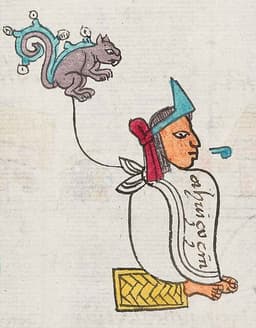
Ahuitzotl
Emperor · Medieval
62.6Total

Julius Caesar
General · Ancient
82.8Total
Basic Information
Born
1440
-100
Died
1502
-44
Era
Medieval
Ancient
Nationality
Aztec Empire
Roman Republic
Occupation
Emperor
General
Civilization
Other
Western
Score Comparison
Military (10%)
78.5
88.0
Political (20%)
55.0
78.0
Influence (20%)
61.0
85.0
Legacy (20%)
54.0
82.0
Leadership (15%)
72.0
80.0
Strategy (15%)
70.0
85.0
TOTAL
62.6
82.8
Ahuitzotl — Complete Timeline
1486 AD
Expanded the Aztec Empire to its Greatest ExtentWar
Ahuitzotl launched extensive military campaigns that expanded the Aztec Empire to its maximum territorial extent, conquering regions from the Gulf of Mexico to the Pacific coast, including parts of modern-day Guatemala. He subjugated over 50 city-states.
Aztec ExpansionMilitary ConquestImperial Peak
Impact: regional
1487 AD
Dedicated the Great Temple of TenochtitlanCultural◆ Major
Ahuitzotl presided over the rededication of the Templo Mayor in Tenochtitlan, a massive ceremony involving the sacrifice of thousands of captives. The event reinforced Aztec religious authority and demonstrated the empire's military power.
Human SacrificeReligious CeremonyAztec Religion
Impact: regionaldestructive
1490 AD
Conquest of the Mixtec and Zapotec RegionsWar◆ Major
Ahuitzotl led campaigns into Oaxaca, conquering Mixtec and Zapotec strongholds such as Coixtlahuaca and Tehuantepec. These victories secured control over key trade routes and tribute sources, including gold and cotton.
Military CampaignOaxacaTribute
Impact: regional
Julius Caesar — Complete Timeline
58 BC
Gallic WarsWar◆ Major
Caesar, as proconsul of Gaul, launched a series of campaigns that conquered all of Gaul (modern France, Belgium, and parts of Switzerland). He fought numerous battles, including against the Helvetii, the Belgae, and the Gallic chieftain Vercingetorix. The wars brought immense wealth and a loyal army to Caesar.
Gallic WarsConquestRoman Expansion
Impact: regional
49 BC
Crossing the RubiconPolitical Action◆ Major
Caesar led Legio XIII across the Rubicon River into Italy, defying the Roman Senate's order to disband his army. This act triggered a civil war against Pompey and the Optimates, ultimately leading to Caesar's dictatorship and the end of the Roman Republic.
Roman Civil WarEnd of RepublicPower Struggle
Impact: global
48 BC
Battle of PharsalusWar◆ Major
Caesar's outnumbered army defeated the larger forces of Pompey the Great at Pharsalus in Greece. Caesar's tactical use of a reserve line to counter Pompey's cavalry charge proved decisive. Pompey fled to Egypt, where he was assassinated, leaving Caesar as the undisputed master of the Roman world.
Roman Civil WarBattleDecisive Victory
Impact: regional
44 BC
Appointment as Dictator for LifePolitical Action◆ Major
The Roman Senate appointed Caesar dictator perpetuo (dictator for life), granting him unprecedented personal power. This move concentrated military, legislative, and judicial authority in one person, effectively ending the Roman Republic's traditional system of checks and balances and alarming many senators.
DictatorshipEnd of RepublicPower Consolidation
Impact: regionaldestructive
Assassination on the Ides of MarchPolitical Action◆ Major
A group of Roman senators, led by Marcus Junius Brutus and Gaius Cassius Longinus, stabbed Caesar to death at a meeting of the Senate in the Theatre of Pompey. The assassination was intended to restore the Republic, but instead triggered another civil war that led to the rise of the Roman Empire.
AssassinationRoman PoliticsEnd of Republic
Impact: globaldestructive
Expert Analysis
ahuitzotl-vs-julius-caesar
# The Eagle and the Serpent: Two Paths to Empire
On a blood-soaked pyramid in the heart of Tenochtitlan, the Aztec emperor Ahuitzotl watched as thousands of captives were led to the sacrificial stone, their hearts offered to Huitzilopochtli beneath a sky darkened by smoke and incense. It was 1487, and the rededication of the Great Temple was a spectacle of terror and devotion unlike anything the world had seen. Half a world away and four decades later, another conqueror stood on the banks of the Rubicon River, a thin stream separating him from the fate of the Roman Republic. Julius Caesar paused, weighed the consequences of treason, and gave the order to cross. Two men, two empires, two entirely different visions of power—and yet both carved their names into history by expanding realms to their breaking points. Why did one become a legend of Western civilization while the other remains a shadow in the annals of a fallen world?
Origins
Caesar was born into the chaos of a dying republic, the year 100 BCE, to a patrician family that had seen better days. Rome was a city of marble and blood, where senators plotted in the Forum and generals fought for glory in distant provinces. His uncle Marius had been a populist reformer; his aunt Julia was Marius’s wife. From childhood, Caesar breathed the air of political intrigue and military ambition. He was educated in rhetoric, philosophy, and the art of war—the tools of a Roman aristocrat who intended to rise.
Ahuitzotl, born around 1440, entered a world of stone and sky. The Aztec Empire, centered on the island city of Tenochtitlan, was a theocracy built on war and sacrifice. He was a member of the royal house, a son of the warrior god Huitzilopochtli’s chosen people. There were no schools of philosophy, no debates in a senate—only the relentless cycle of conquest, tribute, and ritual. His education came from the battlefield and the priesthood, where the universe was understood as a fragile balance maintained by human blood.
The difference in their origins was not merely cultural but cosmic. Caesar’s world was one of reason and law, where power could be argued and written. Ahuitzotl’s was a world of omens and obligations, where power was proven by the number of hearts offered to the sun.
Rise to Power
Caesar’s path was a ladder of debts, alliances, and calculated risks. He served as a military tribune in Asia, was captured by pirates and famously demanded they raise his ransom, then returned to crucify them. He climbed the political cursus honorum—quaestor, aedile, praetor—spending fortunes on games and bribes to win the favor of the Roman mob. In 60 BCE, he formed the First Triumvirate with Pompey and Crassus, a backroom deal that gave him command of Gaul. His conquest of that vast territory (58–50 BCE) was not just a war—it was a personal empire-building project, funded by plunder and staffed by loyal legions.
Ahuitzotl’s rise was simpler and more brutal. He became emperor in 1486, inheriting a machine of war that had been running for generations. His predecessor, Tizoc, had been weak; Ahuitzotl was anything but. His first major act was to launch a campaign that would expand the Aztec Empire to its greatest territorial extent. There were no political parties, no alliances with rivals—only the mandate of the gods and the will of the warrior elite. His power was absolute from the moment he donned the turquoise diadem.
The contrast is stark: Caesar had to scheme, borrow, and fight for every step; Ahuitzotl simply stepped into a throne built on centuries of blood. One rose through a system, the other was born into one.
Leadership & Governance
Caesar governed with a blend of clemency and calculation. He pardoned enemies, extended citizenship to Gauls, reformed the calendar, and centralized authority in his own hands. His military genius lay in speed and adaptability—at Alesia in 52 BCE, he built a double ring of fortifications to trap Vercingetorix’s army while fending off a relief force. As dictator, he launched public works, reduced debt, and planned campaigns against Parthia. But he never fully dismantled the Republic’s institutions; he merely bent them to his will, a fatal hesitation.
Ahuitzotl ruled through terror and ritual. His conquests of the Mixtec and Zapotec regions around 1490 were not about incorporation but extraction—tribute flowed to Tenochtitlan, and captives flowed to the temples. He presided over the rededication of the Templo Mayor, a ceremony that reportedly involved the sacrifice of tens of thousands of prisoners. His political wisdom was the wisdom of fear: he crushed rebellions with such ferocity that few dared to rise again. Yet his empire had no bureaucracy, no written laws, no concept of citizenship. It was a pyramid of violence, with Ahuitzotl at the apex.
Caesar built a state that could survive him (though barely); Ahuitzotl built one that depended entirely on him.
Triumph & Tragedy
Caesar’s greatest moment was his triumph over Gaul—he had conquered a territory larger than Italy, brought millions under Roman rule, and returned with enough gold to pay off his debts and buy the loyalty of Rome. His tragedy was the Ides of March, 44 BCE, when sixty senators stabbed him to death in the Curia of Pompey. He died not on a battlefield but in a room full of men he had pardoned, his blood pooling on the marble floor.
Ahuitzotl’s triumph was the dedication of the Great Temple in 1487, a spectacle that announced Aztec dominance to the world. His tragedy came in 1502, when a flood devastated Tenochtitlan. The emperor, in a desperate attempt to control the waters, ordered a stone aqueduct built—but the project failed, and the city suffered. He died soon after, possibly of illness or injury, leaving an empire at its peak but already cracking under its own weight.
Both men died at the height of their power, but Caesar’s death was a political assassination, Ahuitzotl’s a natural end. One was cut down by his peers; the other by the gods.
Character & Destiny
Caesar was restless, brilliant, and deeply human. He wept over Alexander’s statue, lamenting that he had conquered nothing at an age when Alexander had conquered the world. He was vain, ambitious, and generous to a fault. His character drove him to take risks that no sane Roman would take—crossing the Rubicon, pardoning enemies, accepting a crown he publicly refused. His destiny was to destroy the Republic he loved, precisely because he loved it too much to share it.
Ahuitzotl was a creature of his culture: devout, ruthless, and utterly convinced of his divine mission. He did not question the gods or the necessity of sacrifice; he simply delivered. His character was the character of the Aztec Empire itself—expansive, hungry, and doomed. He could not have ruled any other way, and that inflexibility sealed the fate of his civilization.
Legacy
Caesar’s legacy is the Roman Empire. His name became a title—*Caesar*—used by emperors for centuries, from Augustus to the Tsars of Russia and the Kaisers of Germany. His writings, *The Gallic Wars*, are still read. He changed the course of Western history.
Ahuitzotl’s legacy is a ruin. The Aztec Empire fell to Cortés in 1521, less than two decades after his death. His name is known only to specialists; his greatest monument, the Templo Mayor, was buried beneath Mexico City. He left no writings, no laws, no institutions that outlasted the Spanish conquest. He expanded an empire that was already a dead man walking.
Conclusion
Standing at the edge of their respective worlds, Caesar and Ahuitzotl faced the same fundamental question: how do you hold an empire together? Caesar answered with reform, citizenship, and a vision of a unified Mediterranean world. Ahuitzotl answered with sacrifice, tribute, and a vision of a universe balanced on blood. One built for the future; the other built for the present. One died by the dagger of his peers; the other by the slow decay of a system that could not adapt. In the end, the difference between them is not a matter of skill or ambition—it is a matter of what they believed the purpose of power to be. Caesar believed power was a tool to be used; Ahuitzotl believed it was a gift to be offered. History remembers the toolmaker, and buries the gift-giver.
Rankings
🥇
Julius CaesarLeader
Mil: 88.0Pol: 78.0Inf: 85.0
82.8
🥈
Ahuitzotl
Mil: 78.5Pol: 55.0Inf: 61.0
62.6
+20.2 behind
How This Comparison Works
Algorithm
Each figure is scored on 6 dimensions (0—100 scale) based on structured historical data: Military (10%), Political (20%), Influence (20%), Legacy (20%), Leadership (15%), Strategy (15%). The weighted total produces the final ranking.
Data Sources
Scores are computed from structured sub-indicators in the database. Scale factors adjust for era (Ancient ×0.85, Modern ×1.0) and civilization size (Eastern ×1.05, Other ×0.80) to account for differences in population and military scale.
Maximum 3 Figures
Comparisons are limited to 2—3 figures to ensure readability and statistical meaningfulness.
Error Margins
±5 points per dimension — Sub-scores are derived from historical records with inherent uncertainty. Two figures within 5 points on a dimension should be considered roughly equivalent in that area.
Total Score Accuracy
±3 points overall — The weighted combination of 6 dimensions produces a total score with approximately ±3 points of uncertainty. Differences of less than 3 points are not statistically significant— the figures are effectively tied.
Known Limitations
- Historical records are incomplete and uneven across civilizations
- Figures from oral-tradition societies may be underrepresented
- Occupation labels can misclassify multi-role figures
- Scores measure capability and impact, not moral character
- Quantitative scoring is a comparison tool, not absolute truth
Capability Radar
Military (10%) — Battles & Warfare
Battles
85
95
Win Rate
90
92
Expansion
90
97
Political (20%) — Governance & Reform
Reform
70
90
Diplomacy
65
85
Economy
80
82
Influence (20%) — Cultural & Global Reach
Cultural
60
88
Global
45
94
Legacy (20%) — Historical Impact
Historical
65
95
Longevity
50
96
Leadership (15%) — Power & Stability
Tenure
75
75
Stability
70
60
Strategy (15%) — Tactics & Innovation
Strategy
85
94
Tactics
80
96
Reform
70
88
Similar Comparisons
Comments & Discussion
TopedWarrior6/17/2026
Caesar won because he had better PR. Ahuitzotl conquered the same amount of territory in a decade, yet we call one a "legend" and the other a "shadow"? The Aztec emperor’s tribute system was more efficient—he forced 30+ city-states to deliver goods annually, while Caesar borrowed from Crassus and got his legions killed at Gergovia. Face it: the difference is literacy and Latin, not military genius.
SkepticInk6/17/2026
The comparison cherry-picks facts. Ahuitzotl’s "empire" was a loose alliance of tributary towns, not a centralized state—Rome had roads, taxes, and legions. Caesar crossed the Rubicon with 5,000 men; Ahuitzotl needed 200,000 warriors just to hold the Valley of Mexico. One was a statesman-engineer; the other, a warlord with a god-complex. Don’t confuse scale with sophistication.
血祭玄武6/17/2026
阿维索特尔把敌人全杀了,凯撒却把高卢人变成罗马公民。1487年的大神庙血祭里,数千俘虏的心脏被掏出,这叫治国?凯撒在高卢杀了百万,但他也给了高卢人元老院席位和拉丁语。一个用死亡统治,一个用融合征服——谁更聪明?历史用胜利说话,却很少问赢了之后怎么活。
墨城刀客6/17/2026
别拿凯撒跟阿维索特尔比。阿维索特尔连自己的继承人都不确定,结果呢?蒙特祖玛二世上台后,一切都崩了。凯撒就算被刺杀,罗马还撑了五百年。阿维索特尔扩张的帝国,在西班牙人来之前就内部争斗不断。短命的霸权不配叫帝国,叫部落聚会更合适。
ClassicsCipher6/17/2026
You’re missing the cultural key: Caesar wrote his own history—*Commentarii de Bello Gallico* made him immortal. Ahuitzotl left no books, no memoirs, only Spanish chronicles that called him a savage. One controlled the narrative; the other was silenced by time and conquest. In the end, the pen beats the obsidian knife. Always has.