Loading...
Ajatashatru vs Vespasian
Vespasian leads by 9.7 pts · 2 figures compared
…

Ajatashatru
Emperor · Ancient
58.6Total
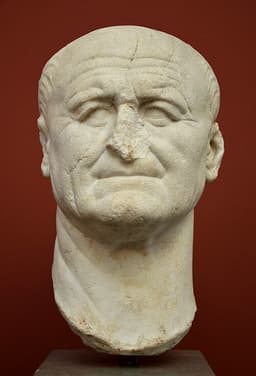
Vespasian
Emperor · Ancient
68.3Total
Basic Information
Born
-530
9
Died
-460
79
Era
Ancient
Ancient
Nationality
India
Roman Empire
Occupation
Emperor
Emperor
Civilization
Indian
Western
Score Comparison
Military (10%)
63.3
82.0
Political (20%)
68.0
72.0
Influence (20%)
55.0
68.0
Legacy (20%)
58.0
55.0
Leadership (15%)
53.2
79.8
Strategy (15%)
58.0
65.4
TOTAL
58.6
68.3
Ajatashatru — Complete Timeline
491 BC
Imprisoned His Father BimbisaraPolitical Action◆ Major
Ajatashatru overthrew his father Bimbisara, imprisoning him to seize the throne of Magadha. This act of patricide was condemned in Buddhist texts, but it secured Ajatashatru's rule and allowed him to pursue an expansionist policy.
Succession CrisisPatricide
Impact: nationaldestructive
485 BC
Fortified RajagrihaOther
Ajatashatru fortified the city of Rajagriha (modern Rajgir) with massive stone walls to protect Magadha's capital from attack. The fortifications included a new outer wall and strengthened defenses, making Rajagriha one of the strongest fortified cities in ancient India.
FortificationDefense
483 BC
Convened the First Buddhist CouncilCultural
Ajatashatru sponsored the First Buddhist Council at Rajagriha, held shortly after the Buddha's death. Under the monk Mahakashyapa's leadership, 500 arhats recited and codified the Buddha's teachings (Sutras) and monastic rules (Vinaya), preserving them orally.
BuddhismCouncilScripture
Impact: globalconstructive
480 BC
War with the Licchavis of VaishaliWar◆ Major
Ajatashatru waged a prolonged war against the Licchavi republic of Vaishali, eventually conquering it. He used new military technology including catapults and a siege engine. This victory expanded Magadha's territory and eliminated a rival power.
ConquestMagadha Expansion
Impact: regional
Vespasian — Complete Timeline
69 AD
Accession as EmperorPolitical Action
Vespasian was proclaimed emperor by his troops in Egypt and later recognized by the Senate after the death of Vitellius. He founded the Flavian dynasty, ending the Year of the Four Emperors.
SuccessionFlavian DynastyCivil War
Impact: global
70 AD
Siege of Jerusalem and Destruction of the TempleWar
Vespasian's son Titus captured Jerusalem after a siege, destroying the Second Temple. The victory ended the First Jewish-Roman War and established the Flavian reputation.
Jewish WarSiegeTemple Destruction
Impact: regionaldestructive
Financial Reforms and Tax on UrineReform◆ Major
Vespasian restored the empire's finances by increasing taxes, including a tax on urine collected from public latrines for use in fulling cloth. He also revalued the currency and reduced spending.
TaxationFinanceReform
Impact: nationalconstructive
72 AD
Construction of the Colosseum BeginsCultural◆ Major
Vespasian began construction of the Flavian Amphitheatre (Colosseum) on the site of Nero's Domus Aurea. The project used spoils from the Jewish War and provided public entertainment.
ArchitecturePublic WorksEntertainment
Impact: globalconstructive
79 AD
Death and DeificationOther◆ Major
Vespasian died of natural causes at age 69, the first Roman emperor to die in office since Vespasian. He was deified by the Senate, and his sons Titus and Domitian succeeded him.
DeathDeificationSuccession
Impact: national
Expert Analysis
Origins
Ajatashatru (c. 492–460 BCE) was the son of King Bimbisara of Magadha, one of the sixteen Mahajanapadas in ancient India. Born into the Haryanka dynasty, he was raised in the royal court of Rajagriha. Buddhist texts describe him as ambitious and ruthless from a young age. His education included statecraft, warfare, and administration under his father's guidance. In contrast, Vespasian (9–79 CE) was born into a relatively modest equestrian family in Falacrinae, Italy. His father, Titus Flavius Sabinus, was a tax collector and banker. Vespasian's early career included military service in Thrace and Germany, and he later held the quaestorship and aedileship. His rise was gradual, built on competence rather than birth.
Rise to Power
Ajatashatru seized power by imprisoning and starving his father Bimbisara to death around 492 BCE. This patricide was condemned in Buddhist sources but allowed him to become king of Magadha. He then expanded his realm through war, notably against the Licchavi republic of Vaishali. He employed new military technology, including catapults and a covered chariot with a swinging mace. The war lasted 16 years, ending with Magadha's victory. Vespasian's rise was through military success. He commanded the Second Legion Augusta during the Roman invasion of Britain in 43 CE, earning triumphal ornaments. He later governed Africa and served as proconsul. During Nero's reign, he fell out of favor but was recalled to command the Roman forces in the First Jewish-Roman War in 66 CE. After Nero's death, civil war erupted, and Vespasian was proclaimed emperor by his troops in Egypt on July 1, 69 CE. The Senate recognized him after Vitellius's death, founding the Flavian dynasty.
Leadership & Governance
Ajatashatru ruled Magadha with an iron fist, centralizing power and fortifying his capital. He built massive stone walls around Rajagriha, which still stand. His governance relied on military strength and territorial expansion. He is noted for his patronage of Buddhism after the Buddha's death, sponsoring the First Buddhist Council at Rajagriha to preserve the Buddha's teachings. However, his rule was autocratic and marked by paranoia. Vespasian, in contrast, was a pragmatic and effective administrator. He restored the Roman Empire's finances after Nero's extravagance and the civil wars. He introduced new taxes, including a tax on urine collected from public latrines, famously stating, "Money does not stink." He also reformed the military, settled veterans, and began construction of the Colosseum on the site of Nero's Domus Aurea, symbolizing the return of public space. His leadership scored 79.8, significantly higher than Ajatashatru's 53.2.
Triumph & Tragedy
Ajatashatru's greatest success was the conquest of Vaishali, which doubled Magadha's territory and established it as the dominant power in the Ganges plain. He also sponsored the First Buddhist Council, a key event in Buddhist history. His greatest failure was his patricide, which tarnished his legacy and led to a reputation for cruelty. He also died before fully consolidating his conquests, possibly murdered by his own son Udayin. Vespasian's triumph was the restoration of Roman stability after the Year of the Four Emperors. He successfully ended the Jewish revolt with the destruction of Jerusalem and the Second Temple in 70 CE. His building projects, including the Colosseum, left a lasting architectural legacy. His tragedy was the early death of his son Titus after a short reign, and his own death from natural causes at 69, but he was deified. Vespasian's military score of 82.0 far exceeds Ajatashatru's 63.3.
Character & Destiny
Ajatashatru is portrayed in Buddhist texts as a conflicted figure: initially a parricide, later a repentant patron of Buddhism. His decisions were driven by ambition and paranoia, leading to his father's murder and aggressive wars. His character limited his long-term success, as his kingdom faced instability after his death. Vespasian was known for his earthy humor, pragmatism, and lack of pretense. He was a skilled general and administrator who understood the importance of public perception. His character helped him navigate the treacherous politics of imperial Rome. He died naturally, a rare feat for Roman emperors, and was succeeded by his sons, ensuring a smooth transition. Historical assessments rate Vespasian higher in leadership and strategy.
Legacy
Ajatashatru's legacy is mixed. He expanded Magadha's power, laying the groundwork for the Maurya Empire. The First Buddhist Council helped codify Buddhist scriptures, influencing the religion's spread. However, his method of usurpation set a precedent for palace intrigue. His fortifications at Rajagriha are an archaeological site. Vespasian's legacy is more tangible. He founded the Flavian dynasty, which ruled for 27 years. The Colosseum remains a symbol of Rome. His financial reforms stabilized the empire for decades. He was deified, and his name is synonymous with practical governance. Vespasian's influence score of 68.0 is higher than Ajatashatru's 55.0.
Conclusion
Comparing Ajatashatru and Vespasian, Vespasian had a greater impact on world history. His total score of 68.3 against Ajatashatru's 58.6 reflects his superior military, political, and leadership abilities. While Ajatashatru's patronage of Buddhism was significant, his reign was brief and marked by violence. Vespasian restored the Roman Empire, built enduring structures, and established a dynasty. His reforms shaped the empire for centuries. Ajatashatru's influence was regional and limited to his era. Therefore, Vespasian is the more consequential figure.
Rankings
🥇
VespasianLeader
Mil: 82.0Pol: 72.0Inf: 68.0
68.3
🥈
Ajatashatru
Mil: 63.3Pol: 68.0Inf: 55.0
58.6
+9.7 behind
How This Comparison Works
Algorithm
Each figure is scored on 6 dimensions (0—100 scale) based on structured historical data: Military (10%), Political (20%), Influence (20%), Legacy (20%), Leadership (15%), Strategy (15%). The weighted total produces the final ranking.
Data Sources
Scores are computed from structured sub-indicators in the database. Scale factors adjust for era (Ancient ×0.85, Modern ×1.0) and civilization size (Eastern ×1.05, Other ×0.80) to account for differences in population and military scale.
Maximum 3 Figures
Comparisons are limited to 2—3 figures to ensure readability and statistical meaningfulness.
Error Margins
±5 points per dimension — Sub-scores are derived from historical records with inherent uncertainty. Two figures within 5 points on a dimension should be considered roughly equivalent in that area.
Total Score Accuracy
±3 points overall — The weighted combination of 6 dimensions produces a total score with approximately ±3 points of uncertainty. Differences of less than 3 points are not statistically significant— the figures are effectively tied.
Known Limitations
- Historical records are incomplete and uneven across civilizations
- Figures from oral-tradition societies may be underrepresented
- Occupation labels can misclassify multi-role figures
- Scores measure capability and impact, not moral character
- Quantitative scoring is a comparison tool, not absolute truth
Capability Radar
Military (10%) — Battles & Warfare
Battles
55
75
Win Rate
60
80
Expansion
75
60
Political (20%) — Governance & Reform
Reform
65
75
Diplomacy
60
80
Economy
55
85
Influence (20%) — Cultural & Global Reach
Cultural
70
75
Global
65
70
Legacy (20%) — Historical Impact
Historical
75
80
Longevity
70
75
Leadership (15%) — Power & Stability
Tenure
70
70
Stability
50
80
Strategy (15%) — Tactics & Innovation
Strategy
70
75
Tactics
65
70
Reform
60
65
Similar Comparisons
Comments & Discussion
No comments yet. Be the first to share your thoughts!