Loading...
Maximinus Thrax vs Vespasian
Vespasian leads by 27.3 pts · 2 figures compared
…
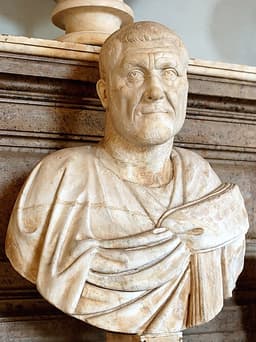
Maximinus Thrax
Emperor · Ancient
41.0Total
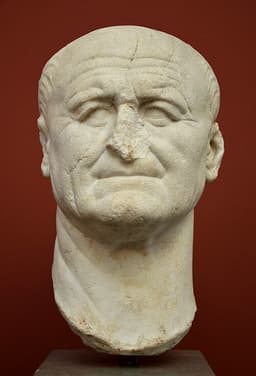
Vespasian
Emperor · Ancient
68.3Total
Basic Information
Born
173
9
Died
238
79
Era
Ancient
Ancient
Nationality
Roman Empire
Roman Empire
Occupation
Emperor
Emperor
Civilization
Western
Western
Score Comparison
Military (10%)
45.0
82.0
Political (20%)
26.4
72.0
Influence (20%)
47.9
68.0
Legacy (20%)
38.3
55.0
Leadership (15%)
33.6
79.8
Strategy (15%)
60.0
65.4
TOTAL
41.0
68.3
Maximinus Thrax — Complete Timeline
235 AD
Campaign against the AlemanniWar◆ Major
Maximinus led a campaign against the Alemanni tribe in Germania. He defeated them in battle and drove them back across the Rhine. He then devastated their territory, earning the title 'Germanicus Maximus' from the Senate.
Germanic WarsRhine FrontierMilitary Victory
Impact: regional
Accession as EmperorPolitical Action
Maximinus was proclaimed emperor by the Pannonian legions after the assassination of Severus Alexander. He was the first emperor to rise from the ranks of the army without any senatorial background, marking a shift in imperial power dynamics.
Imperial AccessionBarracks EmperorMilitary Coup
Impact: global
238 AD
Siege of AquileiaWar◆ Major
Maximinus marched on Italy to suppress a rebellion led by the Senate and the Gordians. He besieged the city of Aquileia, which resisted his army. The siege dragged on, and Maximinus's troops grew discontented with the lack of supplies and progress.
Civil WarSiegeItaly
Impact: regionaldestructive
Assassination by His Own TroopsPolitical Action◆ Major
Maximinus was assassinated in his tent by soldiers of the Legio II Parthica during the siege of Aquileia. His death ended his three-year reign. The Praetorian Guard and the Senate then recognized the new emperors Pupienus and Balbinus.
AssassinationMilitary MutinyEnd of Reign
Impact: nationaltragic
Vespasian — Complete Timeline
69 AD
Accession as EmperorPolitical Action
Vespasian was proclaimed emperor by his troops in Egypt and later recognized by the Senate after the death of Vitellius. He founded the Flavian dynasty, ending the Year of the Four Emperors.
SuccessionFlavian DynastyCivil War
Impact: global
70 AD
Siege of Jerusalem and Destruction of the TempleWar
Vespasian's son Titus captured Jerusalem after a siege, destroying the Second Temple. The victory ended the First Jewish-Roman War and established the Flavian reputation.
Jewish WarSiegeTemple Destruction
Impact: regionaldestructive
Financial Reforms and Tax on UrineReform◆ Major
Vespasian restored the empire's finances by increasing taxes, including a tax on urine collected from public latrines for use in fulling cloth. He also revalued the currency and reduced spending.
TaxationFinanceReform
Impact: nationalconstructive
72 AD
Construction of the Colosseum BeginsCultural◆ Major
Vespasian began construction of the Flavian Amphitheatre (Colosseum) on the site of Nero's Domus Aurea. The project used spoils from the Jewish War and provided public entertainment.
ArchitecturePublic WorksEntertainment
Impact: globalconstructive
79 AD
Death and DeificationOther◆ Major
Vespasian died of natural causes at age 69, the first Roman emperor to die in office since Vespasian. He was deified by the Senate, and his sons Titus and Domitian succeeded him.
DeathDeificationSuccession
Impact: national
Expert Analysis
Origins
Maximinus Thrax was born around 173 CE in Thrace, a province often viewed as barbaric by Roman elites. His parents were of mixed Gothic and Alanic descent, and he grew up as a shepherd before joining the Roman army. His immense physical strength—ancient sources claim he stood over 8 feet tall—helped him rise through the ranks. He served under Emperor Septimius Severus and later became a commander under Severus Alexander. Lacking senatorial lineage or formal education, Maximinus was an outsider to Rome's ruling class.
Vespasian was born on November 17, 9 CE, in Falacrinae, Italy, to a family of the equestrian order. His father, Titus Flavius Sabinus, was a tax collector and banker, while his mother, Vespasia Polla, came from a senatorial family. Vespasian received a traditional Roman education and initially pursued a military career. He served as a military tribune in Thrace and later as a quaestor in Crete and Cyrene. His early career was marked by steady advancement under the Julio-Claudian emperors.
Rise to Power
Maximinus Thrax rose to power abruptly in 235 CE when the Pannonian legions proclaimed him emperor after the assassination of Severus Alexander. He was the first 'barracks emperor'—a soldier elevated by his troops rather than by the Senate. His reign began with a campaign against the Alemanni, whom he defeated, driving them across the Rhine. However, his reliance on the army and disregard for the Senate created immediate tensions.
Vespasian's path to power was more gradual. He gained military renown as a commander in the Roman invasion of Britain in 43 CE, where he subdued the southwest and captured several hillforts. He later served as governor of Africa and, under Nero, was sent to suppress the Jewish revolt in 66 CE. During the Year of the Four Emperors (69 CE), Vespasian was proclaimed emperor by his troops in Egypt and later by the legions in the East. After the death of Vitellius, the Senate recognized him, founding the Flavian dynasty.
Leadership & Governance
Maximinus Thrax ruled as a military autocrat. He never set foot in Rome, instead leading campaigns along the Rhine and Danube. His governance was focused on funding his army through confiscations and heavy taxation, which alienated the senatorial class and the urban populace. He neglected administration and diplomacy, relying solely on force. His siege of Aquileia in 238 CE, intended to crush a senatorial rebellion, ended in failure when his own troops assassinated him due to supply shortages and growing dissatisfaction.
Vespasian, in contrast, combined military strength with political acumen. He restored the empire's finances by introducing new taxes, including the infamous tax on urine from public latrines (used in cloth-making). He began construction of the Colosseum, symbolizing the shift from Nero's private luxury to public entertainment. He reformed the senatorial and equestrian orders, promoted fiscal discipline, and stabilized the frontiers. His leadership scored 79.8 in the dataset, reflecting his ability to balance military and civilian governance.
Triumph & Tragedy
Maximinus's greatest triumph was his campaign against the Alemanni in 235-236 CE, where he defeated the tribe and secured the Rhine frontier. However, his greatest failure was his inability to secure legitimacy or support beyond his army. His three-year reign ended in assassination, and his policies left the empire in crisis, contributing to the subsequent period of military anarchy. His total score of 41.0 reflects his limited impact.
Vespasian's triumphs include the successful conclusion of the Jewish War in 70 CE, with the destruction of the Second Temple, and the initiation of the Colosseum, which became an enduring symbol of Rome. His financial reforms restored stability after the chaos of 69 CE. However, his reign also saw the persecution of philosophers and the heavy taxation that burdened provinces. He died of natural causes in 79 CE, the first emperor since Augustus to die in office. His total score of 68.3 places him among the more effective Roman emperors.
Character & Destiny
Maximinus Thrax was a product of his environment: a soldier who valued physical strength and military loyalty above all. His character—brutal, ambitious, and politically naive—led him to ignore the need for civilian support. His destiny was sealed when he failed to adapt to the complexities of imperial rule. Ancient sources depict him as a giant with a fearsome temper, but also as a capable commander on the battlefield.
Vespasian was known for his pragmatism, wit, and humility. He famously joked on his deathbed, 'I think I am becoming a god.' He was a shrewd politician who understood the importance of legitimacy, building alliances with the Senate and the army. His character allowed him to navigate the turbulent Year of the Four Emperors and establish a dynasty that lasted for 27 years. His leadership score of 79.8 and political score of 72.0 highlight his balanced abilities.
Legacy
Maximinus Thrax's legacy is largely negative: he epitomizes the 'barracks emperor' who destabilized the Roman Empire. His reign foreshadowed the Crisis of the Third Century, a period of frequent usurpations and civil wars. He is remembered more for his physical stature than for any lasting achievements. His influence score of 47.9 and legacy score of 38.3 indicate his limited impact.
Vespasian's legacy is substantial. He founded the Flavian dynasty, which included his sons Titus and Domitian. The Colosseum remains a global icon of Roman engineering. His financial policies set precedents for imperial taxation. He stabilized the empire after a civil war and restored confidence in the principate. His influence score of 68.0 and legacy score of 55.0 demonstrate his enduring significance.
Conclusion
Vespasian had a far greater impact on the Roman Empire than Maximinus Thrax. With a total score of 68.3 compared to Maximinus's 41.0, Vespasian's achievements in military, political, and cultural realms are clear. While Maximinus was a product of his time, his reign was a failure that contributed to imperial decline. Vespasian, by contrast, restored stability, built enduring structures, and established a dynasty that shaped Rome's future. The data supports Vespasian as the superior emperor.
Rankings
🥇
VespasianLeader
Mil: 82.0Pol: 72.0Inf: 68.0
68.3
🥈
Maximinus Thrax
Mil: 45.0Pol: 26.4Inf: 47.9
41.0
+27.3 behind
How This Comparison Works
Algorithm
Each figure is scored on 6 dimensions (0—100 scale) based on structured historical data: Military (10%), Political (20%), Influence (20%), Legacy (20%), Leadership (15%), Strategy (15%). The weighted total produces the final ranking.
Data Sources
Scores are computed from structured sub-indicators in the database. Scale factors adjust for era (Ancient ×0.85, Modern ×1.0) and civilization size (Eastern ×1.05, Other ×0.80) to account for differences in population and military scale.
Maximum 3 Figures
Comparisons are limited to 2—3 figures to ensure readability and statistical meaningfulness.
Error Margins
±5 points per dimension — Sub-scores are derived from historical records with inherent uncertainty. Two figures within 5 points on a dimension should be considered roughly equivalent in that area.
Total Score Accuracy
±3 points overall — The weighted combination of 6 dimensions produces a total score with approximately ±3 points of uncertainty. Differences of less than 3 points are not statistically significant— the figures are effectively tied.
Known Limitations
- Historical records are incomplete and uneven across civilizations
- Figures from oral-tradition societies may be underrepresented
- Occupation labels can misclassify multi-role figures
- Scores measure capability and impact, not moral character
- Quantitative scoring is a comparison tool, not absolute truth
Capability Radar
Military (10%) — Battles & Warfare
Battles
55
75
Win Rate
50
80
Expansion
35
60
Political (20%) — Governance & Reform
Reform
15
75
Diplomacy
20
80
Economy
15
85
Influence (20%) — Cultural & Global Reach
Cultural
20
75
Global
25
70
Legacy (20%) — Historical Impact
Historical
30
80
Longevity
20
75
Leadership (15%) — Power & Stability
Tenure
20
70
Stability
10
80
Strategy (15%) — Tactics & Innovation
Strategy
40
75
Tactics
45
70
Reform
30
65
Similar Comparisons
Comments & Discussion
No comments yet. Be the first to share your thoughts!