Loading...
Al-Adil I vs Edward III of England
Edward III of England leads by 2.9 pts · 2 figures compared
…
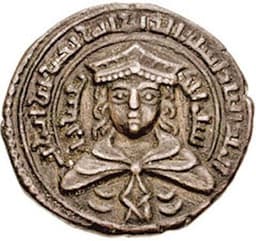
Al-Adil I
Emperor · Medieval
58.0Total
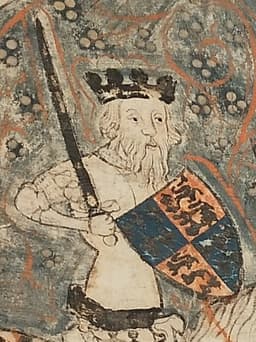
Edward III of England
Emperor · Medieval
60.9Total
Basic Information
Born
1145
1312
Died
1218
1377
Era
Medieval
Medieval
Nationality
Ayyubid Dynasty
England
Occupation
Emperor
Emperor
Civilization
Middle Eastern
Western
Score Comparison
Military (10%)
60.0
72.0
Political (20%)
62.7
55.0
Influence (20%)
55.7
65.0
Legacy (20%)
47.5
40.0
Leadership (15%)
68.0
79.8
Strategy (15%)
66.3
72.0
TOTAL
58.0
60.9
Al-Adil I — Complete Timeline
1135 AD
Siege of DamascusWar◆ Major
Imad ad-Din Zengi besieged Damascus, attempting to expand his control over Syria. The siege failed due to strong defenses and the intervention of the Burid dynasty, preventing Zengi from unifying Muslim Syria under his rule.
DamascusSiegeBurid
Impact: regional
1144 AD
Capture of EdessaWar
Imad ad-Din Zengi, atabeg of Mosul, besieged and captured the Crusader city of Edessa. This was the first major Crusader territory to fall to Muslim forces, triggering the Second Crusade and establishing Zengi as a leading Muslim commander.
CrusadesEdessaSecond Crusade
Impact: global
1146 AD
Assassination of Imad ad-Din ZengiPolitical Action◆ Major
Imad ad-Din Zengi was assassinated by a Frankish slave in his sleep while besieging the fortress of Qal'at Ja'bar. His death fragmented his territories, which were divided between his sons Nur ad-Din and Saif ad-Din, but his legacy continued through Nur ad-Din's later successes.
AssassinationNur ad-DinQal'at Ja'bar
Impact: regionaltragic
Edward III of England — Complete Timeline
1337 AD
Start of the Hundred Years' WarWar
Edward III declared himself King of France, challenging Philip VI's claim. This began the Hundred Years' War, a prolonged conflict over the French throne and English territories in France.
WarFranceSuccession
Impact: global
1346 AD
Battle of CrécyWar◆ Major
Edward III's English army defeated a larger French force at the Battle of Cr
BattleLongbowFrance
Impact: regional
Siege of CalaisWar◆ Major
Edward III besieged the French port of Calais for nearly a year. The city surrendered, and Edward took control, making it an English stronghold for over two centuries.
SiegeCalaisFrance
Impact: regional
1356 AD
Battle of PoitiersWar◆ Major
Edward III's son, the Black Prince, defeated and captured King John II of France at the Battle of Poitiers. This victory led to the Treaty of Br
BattleCapture of KingTreaty
Impact: regional
1360 AD
Treaty of BrétignyPolitical Action◆ Major
Edward III signed the Treaty of Br
TreatyPeaceTerritorial Gains
Impact: regionalconstructive
Expert Analysis
Origins
Al-Adil I (1145–1218) was born into the Kurdish Ayyubid family, the son of Najm ad-Din Ayyub and brother of Saladin. He grew up in the service of his brother, learning administration and military command in the campaigns against the Crusaders. His early career involved governing territories like Egypt and Syria, where he gained experience in diplomacy and warfare.
Edward III (1312–1377) was born at Windsor Castle, the son of Edward II and Isabella of France. His childhood was marked by political turmoil, including his father's deposition and his mother's regency. He was educated in chivalry and statecraft, and at age 14 he effectively took power by overthrowing his mother's lover, Roger Mortimer.
Rise to Power
Al-Adil rose through the ranks as a loyal deputy to Saladin, governing Egypt and leading campaigns against the Crusader states. After Saladin's death in 1193, power struggles among his sons allowed Al-Adil to consolidate control. By 1200, he had defeated his nephews and become the sole Ayyubid sultan, unifying Egypt and Syria under his rule.
Edward III's rise began with a coup in 1330 when he arrested Mortimer and assumed personal rule. He quickly asserted his authority, reviving the monarchy's prestige. In 1337, he provoked the Hundred Years' War by claiming the French throne through his mother, challenging Philip VI. This aggressive move rallied English nobles and set the stage for his military campaigns.
Leadership & Governance
Al-Adil ruled with a pragmatic, decentralized approach. He maintained the Ayyubid system of appanages, granting provinces to family members while centralizing control through loyalty. He negotiated truces with Crusaders and focused on economic stability, reducing taxes and promoting trade. His governance was cautious, avoiding major confrontations to preserve his realm.
Edward III was a hands-on warrior king who led armies personally. He fostered a culture of chivalry, founding the Order of the Garter to bind nobles to his cause. He relied on Parliament for war financing, granting concessions that strengthened its role. His governance was expansionist, prioritizing military conquest over domestic reform.
Triumph & Tragedy
Al-Adil's triumph was the peaceful consolidation of Saladin's empire, avoiding the fragmentation that often followed a great leader's death. He secured Ayyubid rule for another generation. His tragedy was the loss of Jerusalem to the Sixth Crusade in 1229, a diplomatic failure that occurred after his death but stemmed from his treaties with Crusaders.
Edward III's greatest triumph was the victory at Crécy (1346) and the capture of Calais (1347), which established English military dominance. The Treaty of Brétigny (1360) gave England vast French territories. His tragedy was the eventual loss of those gains due to French resurgence and the Black Death's economic impact. He also faced the decline of his later years, with his son the Black Prince dying before him.
Character & Destiny
Al-Adil was pragmatic, patient, and diplomatic, preferring negotiation over war. This allowed him to maintain stability but also led to criticisms of passivity. His character shaped a reign of consolidation rather than expansion, leaving a fragile legacy that crumbled after his death.
Edward III was ambitious, charismatic, and militaristic. His aggressive pursuit of the French throne defined his destiny, bringing glory but also long-term strain. His chivalric image boosted his popularity but overshadows the financial costs and eventual reversals.
Legacy
Al-Adil I scored 47.5 in Legacy, reflecting his limited long-term impact. He is remembered as a competent administrator who preserved the Ayyubid state but failed to expand it. His reign is overshadowed by Saladin's.
Edward III scored 40.0 in Legacy, lower than expected. While he initiated the Hundred Years' War and fostered English national identity, his territorial gains were temporary. His military innovations, like the use of longbowmen, influenced warfare, but his legacy is mixed due to the war's eventual failure.
Conclusion
Edward III had greater impact than Al-Adil I, as his actions shaped European history for centuries. Despite a lower Legacy score (40.0 vs 47.5), his political score of 55.0 and military score of 72.0 demonstrate his transformative role. Al-Adil's total of 58.0 falls short of Edward's 60.9, and while Al-Adil maintained stability, Edward's aggressive expansionism had more far-reaching consequences. Edward III's claim to the French throne and the resulting Hundred Years' War altered the balance of power in Europe, whereas Al-Adil's reign was a brief interlude in Crusader history. Thus, Edward III emerges as the more historically significant figure.
Rankings
🥇
Edward III of EnglandLeader
Mil: 72.0Pol: 55.0Inf: 65.0
60.9
🥈
Al-Adil I
Mil: 60.0Pol: 62.7Inf: 55.7
58.0
+2.9 behind
How This Comparison Works
Algorithm
Each figure is scored on 6 dimensions (0—100 scale) based on structured historical data: Military (10%), Political (20%), Influence (20%), Legacy (20%), Leadership (15%), Strategy (15%). The weighted total produces the final ranking.
Data Sources
Scores are computed from structured sub-indicators in the database. Scale factors adjust for era (Ancient ×0.85, Modern ×1.0) and civilization size (Eastern ×1.05, Other ×0.80) to account for differences in population and military scale.
Maximum 3 Figures
Comparisons are limited to 2—3 figures to ensure readability and statistical meaningfulness.
Error Margins
±5 points per dimension — Sub-scores are derived from historical records with inherent uncertainty. Two figures within 5 points on a dimension should be considered roughly equivalent in that area.
Total Score Accuracy
±3 points overall — The weighted combination of 6 dimensions produces a total score with approximately ±3 points of uncertainty. Differences of less than 3 points are not statistically significant— the figures are effectively tied.
Known Limitations
- Historical records are incomplete and uneven across civilizations
- Figures from oral-tradition societies may be underrepresented
- Occupation labels can misclassify multi-role figures
- Scores measure capability and impact, not moral character
- Quantitative scoring is a comparison tool, not absolute truth
Capability Radar
Military (10%) — Battles & Warfare
Battles
55
85
Win Rate
60
80
Expansion
55
85
Political (20%) — Governance & Reform
Reform
55
70
Diplomacy
70
75
Economy
60
70
Influence (20%) — Cultural & Global Reach
Cultural
40
70
Global
35
70
Legacy (20%) — Historical Impact
Historical
45
80
Longevity
40
75
Leadership (15%) — Power & Stability
Tenure
60
85
Stability
65
65
Strategy (15%) — Tactics & Innovation
Strategy
65
90
Tactics
60
85
Reform
50
75
Similar Comparisons
Comments & Discussion
No comments yet. Be the first to share your thoughts!