Loading...
Al-Amin vs Alexander the Great
Alexander the Great leads by 45.3 pts · 2 figures compared
…

Al-Amin
Emperor · Medieval
39.9Total
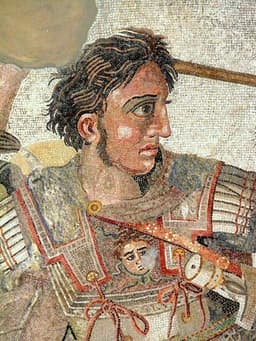
Alexander the Great
General · Ancient
85.2Total
Basic Information
Born
787
-356
Died
813
-323
Era
Medieval
Ancient
Nationality
Abbasid Caliphate
Macedon
Occupation
Emperor
General
Civilization
Middle Eastern
Western
Score Comparison
Military (10%)
50.0
95.0
Political (20%)
30.7
60.0
Influence (20%)
47.9
92.0
Legacy (20%)
38.3
90.0
Leadership (15%)
33.6
80.0
Strategy (15%)
36.8
92.0
TOTAL
39.9
85.2
Al-Amin — Complete Timeline
811 AD
Fourth Fitna (Civil War)War
Al-Amin's reign was dominated by the Fourth Fitna, a civil war against his brother al-Mamun. The conflict began when al-Amin tried to remove al-Mamun from succession, leading to a devastating war that weakened the Abbasid Caliphate.
Impact: regionaldestructive
812 AD
Siege of BaghdadWar◆ Major
Al-Mamun's forces, led by Tahir ibn Husayn, besieged Baghdad in 812-813. The siege lasted over a year, causing widespread destruction and famine. Al-Amin was captured and executed in 813, ending his caliphate.
Impact: regionaltragic
813 AD
Execution of Al-AminPolitical Action◆ Major
After the fall of Baghdad, al-Amin was captured by Tahir's forces. He was executed on al-Mamun's orders, marking the end of the civil war and the beginning of al-Mamun's sole rule.
Impact: nationaltragic
Alexander the Great — Complete Timeline
334 BC
Battle of the Granicus RiverWar◆ Major
Alexander led his Macedonian army across the Hellespont into Asia Minor and defeated a Persian force under local satraps at the Granicus River. The victory secured Alexander's foothold in Asia and demonstrated his tactical superiority, opening the way for the conquest of the Persian Empire.
Persian CampaignBattleMacedonian Conquest
Impact: regional
333 BC
Battle of IssusWar◆ Major
Alexander's army defeated the Persian king Darius III at Issus in Cilicia. Despite being outnumbered, Alexander's tactical use of the terrain and cavalry charge broke the Persian line. Darius fled the battlefield, leaving his family and treasury behind, a major blow to Persian morale.
Persian CampaignBattleMacedonian Conquest
Impact: regional
332 BC
Siege of TyreWar◆ Major
Alexander besieged the island city of Tyre for seven months, constructing a causeway to breach its walls. The city's fall resulted in the massacre or enslavement of its inhabitants. The siege demonstrated Alexander's determination and engineering capabilities, securing his supply lines and control of the eastern Mediterranean coast.
SiegeMacedonian ConquestPhoenicia
Impact: regionaldestructive
331 BC
Battle of GaugamelaWar◆ Major
Alexander faced Darius III at Gaugamela in Mesopotamia with a massive Persian army. Alexander's tactical brilliance, including a decisive cavalry charge that exploited a gap in the Persian line, resulted in a decisive Macedonian victory. Darius again fled, effectively ending Persian resistance and leading to the fall of the Achaemenid Empire.
Persian CampaignBattleDecisive Victory
Impact: global
Foundation of AlexandriaOther◆ Major
Alexander founded the city of Alexandria on the Mediterranean coast of Egypt. He personally selected the site and oversaw the initial planning. Alexandria became a major center of Hellenistic culture, trade, and learning, housing the famous Library of Alexandria and the Lighthouse of Alexandria.
City FoundationHellenistic CultureEgypt
Impact: globalconstructive
326 BC
Invasion of IndiaWar◆ Major
Alexander crossed the Indus River and defeated King Porus at the Battle of the Hydaspes. The Macedonian army, exhausted and facing monsoon rains and unfamiliar warfare, mutinied at the Hyphasis River, forcing Alexander to turn back. This campaign marked the easternmost extent of his conquests.
Indian CampaignBattleMutiny
Impact: regional
Expert Analysis
Alexander the Great vs Al-Amin
# The Conqueror and the Caliph: Two Faces of Power in the Ancient and Medieval Worlds
On a summer day in 326 BCE, Alexander the Great stood on the banks of the Hyphasis River in India, his men weeping with exhaustion and mutiny in their eyes. He had marched them over eleven thousand miles, through deserts and mountains, defeating every army that dared oppose him. He was thirty years old, and he wanted to go farther. His soldiers refused. Across the centuries and the continents, in the year 813 CE, another ruler watched helplessly as his world collapsed. Al-Amin, the Caliph of Baghdad, heard the battering rams against his city walls, the screams of his people, and the footsteps of his brother’s army drawing closer. He was twenty-six years old, and he had no army left to command. One man would die on the battlefield of history, his name immortal. The other would die in a dungeon, his name nearly forgotten. What made the difference?
Origins
Alexander was born into the crucible of ambition. His father, Philip II of Macedon, had transformed a backwater kingdom into the dominant power of Greece, forging an army of unprecedented discipline and inventing the sarissa phalanx that would shatter enemy lines. His mother, Olympias, was a fierce and mystical woman who claimed descent from Achilles. Alexander grew up with Aristotle as his tutor, absorbing the *Iliad* by heart and dreaming of matching his hero’s glory. The world he inherited was one of constant warfare, where a king’s legitimacy was proven by victory.
Al-Amin was born into the gilded cage of imperial luxury. His father, Harun al-Rashid, was the legendary caliph of the *Arabian Nights*, ruling an empire that stretched from Spain to Central Asia. The Abbasid court was a world of poets, scholars, and eunuchs, where power was negotiated in marble halls rather than on bloody fields. Al-Amin was raised as the favored son, but his father, in a fateful decision, divided the succession: Al-Amin would be caliph in Baghdad, while his older brother al-Mamun would rule the eastern provinces from Merv. This was not a foundation for unity—it was a recipe for civil war.
Rise to Power
Alexander’s path to power was forged in fire. At sixteen, he crushed a Thracian rebellion and founded a city. At eighteen, he commanded the left wing at the Battle of Chaeronea, where Philip defeated Athens and Thebes. When Philip was assassinated in 336 BCE, Alexander moved with brutal speed: he executed his rivals, crushed revolts in Thebes by razing the city to the ground, and then turned east. His rise was a series of gambles, each one riskier than the last, but each one paid off because he led from the front, sword in hand, his men following him into impossible odds.
Al-Amin’s rise was a matter of birth, not battle. He became caliph in 809 CE upon his father’s death, inheriting the throne without ever commanding a single soldier. His brother al-Mamun, however, was a different kind of ruler—patient, calculating, and willing to wait. When Al-Amin tried to remove his brother from the succession and name his own infant son as heir, he ignited the Fourth Fitna, a civil war that would consume his reign. Al-Amin’s mistake was not ambition; it was misunderstanding the nature of power. He thought the title of caliph was enough. In Baghdad, it was not.
Leadership & Governance
Alexander governed through sheer presence. He married Persian princesses, adopted Persian court customs, and appointed Persian satraps alongside Macedonians. His vision was fusion: a single empire where Greek and Persian cultures would blend into something new. He founded over seventy cities, spreading Hellenistic civilization from Egypt to the Indus. His military genius was unmatched—at Gaugamela, he defeated a Persian army of perhaps 100,000 with fewer than 50,000 men, using tactics that are still studied at West Point today.
Al-Amin governed through delegation and neglect. He surrounded himself with sycophants and ignored the growing power of his brother. When al-Mamun’s general, Tahir ibn Husayn, marched on Baghdad, Al-Amin raised an army of mercenaries and street fighters, but they were no match for disciplined Khurasanian troops. The siege of Baghdad lasted over a year, and the city starved. Al-Amin’s political score of 35.7 and military score of 11.4 reflect a ruler who was outmaneuvered at every turn. He had the title, but his brother had the army, the strategy, and the patience.
Triumph & Tragedy
Alexander’s greatest moment was the conquest of Persia. At the Battle of Issus in 333 BCE, he defeated Darius III and captured the Persian royal family, treating them with honor. At the Siege of Tyre, he built a causeway across the sea to take an island fortress—an engineering feat that still inspires awe. His tragedy was his end: dying in Babylon at thirty-two, possibly from fever, poison, or exhaustion, leaving no clear heir. His empire fragmented within a generation.
Al-Amin’s greatest moment was his coronation in 809 CE, when the empire was at peace and he was the most powerful man in the Islamic world. His tragedy was everything that followed: the civil war, the siege, the starvation of his capital, and his execution in 813 CE. He was captured by Tahir’s forces and killed on al-Mamun’s orders. His legacy score of 48.2 reflects a ruler who is remembered, if at all, as a cautionary tale—a man who had everything and lost it because he did not know how to keep it.
Character & Destiny
Alexander was driven by an insatiable *pothos*—a longing for glory that bordered on madness. He wept when there were no more worlds to conquer. He killed his best friend Cleitus in a drunken rage, then mourned for days. His personality was his weapon and his curse: it made him invincible, but it also made him impossible to replace.
Al-Amin was a product of his environment—soft, pampered, and convinced that his birthright was enough. He lacked the instinct for survival that his brother possessed. When al-Mamun offered to let him keep the title of caliph if he surrendered, Al-Amin refused, clinging to pride. That pride cost him his life. His character was not the stuff of tragedy in the classical sense; it was the stuff of a quiet, unremarkable fall.
Legacy
Alexander’s legacy is written in the DNA of Western civilization. The Hellenistic world he created spread Greek language, philosophy, and art across three continents. His tactics are still taught. His name is synonymous with conquest. His composite score of 84.7 places him among the greatest figures in history.
Al-Amin’s legacy is a footnote. His brother al-Mamun went on to become one of the greatest Abbasid caliphs, founding the House of Wisdom and sponsoring the translation of Greek philosophy into Arabic. Al-Amin is remembered only as the brother who lost. His composite score of 39.3 is a reminder that history has little patience for those who cannot wield the power they inherit.
Conclusion
What separates the conqueror from the caliph is not intelligence or opportunity—it is the willingness to risk everything for a vision. Alexander gambled his life a hundred times and won. Al-Amin gambled his throne once and lost. In the end, both men died young, one in glory and one in obscurity. But the difference is not in the dying; it is in the living. Alexander lived every day as if he were storming a wall. Al-Amin lived every day as if he were sitting on a throne. History, it seems, rewards the stormers.
Rankings
🥇
Alexander the GreatLeader
Mil: 95.0Pol: 60.0Inf: 92.0
85.2
🥈
Al-Amin
Mil: 50.0Pol: 30.7Inf: 47.9
39.9
+45.3 behind
How This Comparison Works
Algorithm
Each figure is scored on 6 dimensions (0—100 scale) based on structured historical data: Military (10%), Political (20%), Influence (20%), Legacy (20%), Leadership (15%), Strategy (15%). The weighted total produces the final ranking.
Data Sources
Scores are computed from structured sub-indicators in the database. Scale factors adjust for era (Ancient ×0.85, Modern ×1.0) and civilization size (Eastern ×1.05, Other ×0.80) to account for differences in population and military scale.
Maximum 3 Figures
Comparisons are limited to 2—3 figures to ensure readability and statistical meaningfulness.
Error Margins
±5 points per dimension — Sub-scores are derived from historical records with inherent uncertainty. Two figures within 5 points on a dimension should be considered roughly equivalent in that area.
Total Score Accuracy
±3 points overall — The weighted combination of 6 dimensions produces a total score with approximately ±3 points of uncertainty. Differences of less than 3 points are not statistically significant— the figures are effectively tied.
Known Limitations
- Historical records are incomplete and uneven across civilizations
- Figures from oral-tradition societies may be underrepresented
- Occupation labels can misclassify multi-role figures
- Scores measure capability and impact, not moral character
- Quantitative scoring is a comparison tool, not absolute truth
Capability Radar
Military (10%) — Battles & Warfare
Battles
20
98
Win Rate
15
99
Expansion
5
99
Political (20%) — Governance & Reform
Reform
10
75
Diplomacy
10
80
Economy
15
70
Influence (20%) — Cultural & Global Reach
Cultural
15
95
Global
10
95
Legacy (20%) — Historical Impact
Historical
20
98
Longevity
10
95
Leadership (15%) — Power & Stability
Tenure
20
60
Stability
10
55
Strategy (15%) — Tactics & Innovation
Strategy
10
98
Tactics
15
99
Reform
5
85
Similar Comparisons
Comments & Discussion
Conqueror's Advocate6/16/2026
Alexander wasn't just lucky—he had a machine. Philip's sarissa phalanx and siege innovations were military tech leaps, not destiny. Al-Amin inherited a fractured Abbasid bureaucracy; his real failure was losing the postal intelligence network. Alexander knew logistics win wars. Al-Amin trusted his guards to a brother who betrayed him. Compare that to Alexander's Companions personally fighting alongside him. That's the gap between soldier-leader and pampered caliph.
理智的怀疑论者6/16/2026
别被浪漫的“十万英里行军”骗了。亚历山大远征大部分是沿波斯御道走,后勤靠希腊收买波斯总督。阿拉敏的四战之敌哈希姆·伊本·达尔,在巴格达巷战里用简易火油瓶击退过马蒙的象兵一次。如果阿拉敏早两年学学亚历山大那套“先分化敌人再决战”的鬼把戏——比如贿赂突厥雇佣军——他弟弟的围城战根本撑不过雨季。
Narrator of the Unfinished6/16/2026
Al-Amin's real sin? He was too honest for his time. Alexander burned Persepolis for show; Al-Amin refused to drown his brother's children in the Tigris—a mercy that cost him the throne. History prefers the bloody pragmatist. Alexander's body was preserved six years in honey; Al-Amin's corpse was thrown to dogs. The difference isn't strategy but ruthlessness. One built an empire by killing everyone who challenged him; the other trusted family. We remember the killer, not the kinsman.
记忆的修补匠6/16/2026
我们忘了:阿拉敏在813年扛了马蒙八个月的围城,而亚历山大在326年选择撤退而不是强攻希达斯佩斯河。阿拉敏缺的不是勇气,是时间——他二十三岁登基,压不住哈希姆派的宗教叛乱和叙利亚的税赋起义。亚历山大二十二岁就斩首过底比斯的反叛,三十二岁命丧巴比伦。如果阿拉敏活到三十岁?也许巴格达的明灯会再亮几代。命运偏爱赢家时,连偏头痛都是美德。
Archeology of Hubris6/16/2026
Both men died young, but their ambitions mirrored their cities. Alexander's Babylon was a crossroads of tolerance; Al-Amin's Baghdad was a sectarian powder keg. Alexander could marry three foreign princesses and get away with it; Al-Amin made the same gesture—appointing a Persian vizier—and his Arab generals mutinied. Alexander's empire was held by Greek veterans; Al-Amin's was held by slave soldiers who switched sides for gold. One empire remembered forgiveness; the other punished it. That's no