Loading...
Al-Amin vs Taejo of Joseon
Taejo of Joseon leads by 30.5 pts · 2 figures compared
…

Al-Amin
Emperor · Medieval
39.9Total
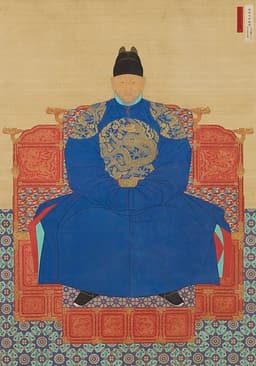
Taejo of Joseon
Emperor · Medieval
70.4Total
Basic Information
Born
787
1335
Died
813
1408
Era
Medieval
Medieval
Nationality
Abbasid Caliphate
Korea
Occupation
Emperor
Emperor
Civilization
Middle Eastern
Eastern
Score Comparison
Military (10%)
50.0
74.7
Political (20%)
30.7
65.0
Influence (20%)
47.9
65.0
Legacy (20%)
38.3
80.0
Leadership (15%)
33.6
72.0
Strategy (15%)
36.8
61.2
TOTAL
39.9
70.4
Al-Amin — Complete Timeline
811 AD
Fourth Fitna (Civil War)War
Al-Amin's reign was dominated by the Fourth Fitna, a civil war against his brother al-Mamun. The conflict began when al-Amin tried to remove al-Mamun from succession, leading to a devastating war that weakened the Abbasid Caliphate.
Impact: regionaldestructive
812 AD
Siege of BaghdadWar◆ Major
Al-Mamun's forces, led by Tahir ibn Husayn, besieged Baghdad in 812-813. The siege lasted over a year, causing widespread destruction and famine. Al-Amin was captured and executed in 813, ending his caliphate.
Impact: regionaltragic
813 AD
Execution of Al-AminPolitical Action◆ Major
After the fall of Baghdad, al-Amin was captured by Tahir's forces. He was executed on al-Mamun's orders, marking the end of the civil war and the beginning of al-Mamun's sole rule.
Impact: nationaltragic
Taejo of Joseon — Complete Timeline
1380 AD
Battle of HwangsanWar
General Yi Seong-gye defeated a Japanese pirate (wokou) force at Hwangsan. This victory enhanced his military reputation and demonstrated his capability as a commander.
WokouGoryeo Military
1388 AD
Wihwado RetreatPolitical Action
General Yi Seong-gye, ordered to invade the Ming dynasty's Liaodong region, turned his army back at Wihwado Island. This act of defiance against the Goryeo court led to a coup that eventually brought him to power.
CoupGoryeo-Ming RelationsPower Shift
Impact: national
1391 AD
Land Reform and the Gwajeon LawReform◆ Major
Taejo implemented the Gwajeon Law, a land reform that redistributed land from the old Goryeo aristocracy to his supporters and the state. This weakened the old elite and strengthened the new Joseon ruling class.
Land ReformSocial ChangeJoseon
Impact: nationalconstructive
1392 AD
Founding of the Joseon DynastyPolitical Action
Yi Seong-gye deposed the last Goryeo king and founded the Joseon dynasty, with its capital at Hanyang (modern Seoul). He established a new ruling class based on Confucian ideology, replacing the Buddhist-influenced Goryeo system.
Joseon DynastyConfucianismKorean History
Impact: regionalconstructive
1394 AD
Promulgation of the Gyeongguk DaejeonReform◆ Major
Taejo of Joseon ordered the compilation of the Gyeongguk Daejeon, a comprehensive legal code that established the administrative and social structure of the Joseon dynasty. This code remained in effect for centuries.
Legal CodeGovernanceConfucianism
Impact: nationalconstructive
Expert Analysis
Taejo of Joseon vs Al-Amin
### The Founder and the Failure: Two Fates in a Time of Transition
In the winter of 1392, a Korean general named Yi Seong-gye entered the ancient capital of Gaegyeong and quietly deposed a king. He did not burn the city; he did not massacre the court. Instead, he announced a new dynasty, one that would endure for over five centuries. Half a world away, in the autumn of 813, another ruler, the Caliph al-Amin, watched as his own capital, Baghdad, fell to the armies of his brother. He was captured, dragged before a general, and executed. His dynasty, the Abbasid, would limp on for centuries, but its golden age had died with him. Both men were emperors, both faced a crisis of succession, and both acted in the name of order. One founded a nation; the other lost an empire. The difference between them is not merely a matter of luck, but of character, context, and the terrifying weight of a single decision.
### Origins: The General and the Prince
Yi Seong-gye was born in 1335, the son of a minor Goryeo official in the northeastern frontier. His world was one of constant warfare: the Mongol Empire was collapsing, the Red Turban rebels were raiding from China, and Japanese pirates, the *wokou*, ravaged the coasts. From his youth, Yi learned that power was earned through blood and loyalty, not given by birth. He rose through the ranks as a military commander, fighting pirates and rebels with a ruthless pragmatism that earned him the devotion of his troops. The late Goryeo dynasty was corrupt, its aristocracy parasitic, its kings weak. Yi’s Korea was a land of chaos, and he was forged in its fire.
Al-Amin, by contrast, was born in 787 into the richest, most sophisticated empire on earth. His father, the Caliph Harun al-Rashid, ruled from Baghdad, a city of libraries, poets, and silk. Al-Amin was raised as a prince, heir to a throne that seemed eternal. He was taught the Quran and the arts of courtly life, but never the art of war. His world was one of luxury and intrigue, where power was inherited, not earned. The Abbasid Caliphate was at its peak, but beneath the gilded surface, tensions simmered between Arabs and Persians, between brothers and factions. Al-Amin was the son of an Arab mother; his half-brother al-Mamun, the son of a Persian concubine. This difference in blood would tear them apart.
### Rise to Power: The Retreat and the Rebellion
Yi Seong-gye’s rise was a series of battlefield victories. In 1380, at the Battle of Hwangsan, he crushed a major pirate force, earning a reputation as the kingdom’s savior. But his true turning point came in 1388. The Goryeo king ordered him to invade the Ming dynasty’s Liaodong region. Yi knew this was suicide: the Ming were too strong, and his army was exhausted. At Wihwado Island, he made the most audacious decision of his life. He turned his army around—not to retreat, but to march on the capital. He did not rebel against the king; he rebelled against the king’s folly. This act of calculated defiance, the Wihwado Retreat, transformed him from a general into a kingmaker. By 1392, he had the power to take the throne himself. He did.
Al-Amin’s path was far simpler and far more tragic. When Harun al-Rashid died in 809, he had divided the empire: al-Amin would rule from Baghdad, al-Mamun from the eastern province of Khorasan. It was a recipe for disaster. Al-Amin, insecure and surrounded by ambitious advisors, decided to assert his supremacy. He demanded that al-Mamun recognize him as sole caliph and surrender the east. Al-Mamun refused. In 811, the Fourth Fitna—the great civil war—began. Al-Amin had the larger army, but he lacked a commander of skill. Al-Mamun had Tahir ibn Husayn, a Persian general of genius. While Yi Seong-gye had turned his army to save his country, al-Amin sent his army to destroy his brother. One decision was strategic; the other was suicidal.
### Leadership & Governance: The Reformer and the Prisoner of the Palace
Taejo of Joseon—as Yi Seong-gye became known—was not just a conqueror; he was a builder. In 1391, even before founding the dynasty, he implemented the Gwajeon Law, a sweeping land reform that broke the power of the old Goryeo aristocracy. He redistributed land to his supporters and to the peasantry, creating a new class of loyal officials. In 1394, he ordered the compilation of the Gyeongguk Daejeon, a comprehensive legal code that would govern Joseon for centuries. He moved the capital to Hanyang (modern Seoul), a site chosen for its geomantic harmony. His rule was harsh, but it was purposeful. He was creating a state based on Confucian principles: order, hierarchy, and merit. He was not a philosopher, but he understood that a kingdom could not be held by force alone. It needed institutions.
Al-Amin, by contrast, governed almost nothing. His reign, from 809 to 813, was consumed entirely by the civil war. He had no reforms, no laws, no legacy of governance. He remained in Baghdad, isolated in his palace, while his brother’s armies advanced. The Siege of Baghdad in 812–813 was a catastrophe: the canals were cut, the markets looted, the people starved. Al-Amin did not lead the defense; he waited. When the city fell, he was captured and executed. His total score in military leadership is a mere 11.4, a number that reflects not just defeat, but an utter absence of command. Yi Seong-gye’s military score of 67.1 is not spectacular, but it is real. He fought, he won, and he knew when not to fight.
### Triumph & Tragedy: The Founding and the Fall
Taejo’s greatest moment was the founding itself: the establishment of the Joseon dynasty in 1392. It was a triumph of will, timing, and political wisdom. But his tragedy was personal. He had eight sons from two wives, and the succession struggle tore his family apart. He abdicated in 1398 after a bloody coup by his fifth son, and lived out his years in bitter retirement, watching his children destroy each other. His legacy score of 85.0 reflects the dynasty he built, not the happiness he lost.
Al-Amin’s tragedy was total. His greatest moment was his birth; his worst was his death. The Siege of Baghdad destroyed not just his life, but the unity of the Islamic world. The Abbasid Caliphate never fully recovered. His legacy score of 48.2 is a quiet verdict: he is remembered only as a cautionary tale, the brother who lost everything.
### Character & Destiny: The Pragmatist and the Fool
Yi Seong-gye was a pragmatist. He knew when to fight, when to retreat, and when to compromise. He was ruthless but not cruel, ambitious but not reckless. He understood that power required legitimacy, and he built a Confucian state to provide it. Al-Amin, by contrast, was a fool—not because he was stupid, but because he was arrogant and isolated. He believed that his birthright alone would protect him. He never learned that in a world of war, a crown is just a target.
Their scores tell the story. Al-Amin’s political score is 35.7, his strategy 30.0. He was a man out of his depth. Yi Seong-gye’s political score is 76.1, his leadership 81.6. He was a man who understood the times. The difference is not intelligence, but experience. Yi learned war in the mud; al-Amin learned politics in a palace. One shaped his destiny; the other was crushed by it.
### Legacy: The Dynasty and the Footnote
Today, Taejo of Joseon is a national hero in Korea. The dynasty he founded ruled for 518 years, and its cultural achievements—the Korean alphabet, Confucian scholarship, the *Joseon Wangjo Sillok* (the Annals of the Joseon Dynasty)—are a source of pride. His name is on statues, streets, and textbooks. Al-Amin is a footnote. He appears in histories of the Abbasid Caliphate as a brief, tragic chapter, a warning about the dangers of division and pride. The Caliphate continued under al-Mamun, but its golden age was over.
### Conclusion
What separates a founder from a failure? In the end, it is not luck, but the ability to see the world as it is, not as one wishes it to be. Yi Seong-gye saw a dying kingdom and built a new one. Al-Amin saw a glorious empire and let it burn. One man turned his army around; the other marched his empire into the abyss. History remembers them both, but for very different reasons. The lesson is as old as power itself: a crown does not make a king. It is the hand that wears it, and the mind that guides it.
Rankings
🥇
Taejo of JoseonLeader
Mil: 74.7Pol: 65.0Inf: 65.0
70.4
🥈
Al-Amin
Mil: 50.0Pol: 30.7Inf: 47.9
39.9
+30.5 behind
How This Comparison Works
Algorithm
Each figure is scored on 6 dimensions (0—100 scale) based on structured historical data: Military (10%), Political (20%), Influence (20%), Legacy (20%), Leadership (15%), Strategy (15%). The weighted total produces the final ranking.
Data Sources
Scores are computed from structured sub-indicators in the database. Scale factors adjust for era (Ancient ×0.85, Modern ×1.0) and civilization size (Eastern ×1.05, Other ×0.80) to account for differences in population and military scale.
Maximum 3 Figures
Comparisons are limited to 2—3 figures to ensure readability and statistical meaningfulness.
Error Margins
±5 points per dimension — Sub-scores are derived from historical records with inherent uncertainty. Two figures within 5 points on a dimension should be considered roughly equivalent in that area.
Total Score Accuracy
±3 points overall — The weighted combination of 6 dimensions produces a total score with approximately ±3 points of uncertainty. Differences of less than 3 points are not statistically significant— the figures are effectively tied.
Known Limitations
- Historical records are incomplete and uneven across civilizations
- Figures from oral-tradition societies may be underrepresented
- Occupation labels can misclassify multi-role figures
- Scores measure capability and impact, not moral character
- Quantitative scoring is a comparison tool, not absolute truth
Capability Radar
Military (10%) — Battles & Warfare
Battles
20
75
Win Rate
15
80
Expansion
5
65
Political (20%) — Governance & Reform
Reform
10
85
Diplomacy
10
70
Economy
15
65
Influence (20%) — Cultural & Global Reach
Cultural
15
80
Global
10
60
Legacy (20%) — Historical Impact
Historical
20
85
Longevity
10
80
Leadership (15%) — Power & Stability
Tenure
20
70
Stability
10
75
Strategy (15%) — Tactics & Innovation
Strategy
10
75
Tactics
15
70
Reform
5
60
Similar Comparisons
Comments & Discussion
IronJoseon6/16/2026
Yi Seong-gye wasn't some visionary founder—he was a pragmatic warlord who saw the Goryeo dynasty rotting from within and had the balls to act. The real genius move wasn't the coup itself, but how he consolidated power afterward: land reforms that broke the Buddhist monastic estates, Confucian bureaucracy over aristocratic privilege, and a capital move to Hanyang. Compare that to Al-Amin, who inherited a functioning empire and managed to lose it in four years. Taejo built systems; Al-Amin just bu
历史计量师6/16/2026
数据不会说谎:朝鲜王朝维持了518年,而阿明统治的四年是阿拔斯帝国税收下降最剧烈的时期之一。但比较两人本身就荒谬——一个是白手起家的军阀,一个是含着金汤匙出生的太子。拿成功者对比失败者,等于预设结论。真要公平,应该把李成桂放在813年的巴格达,看他能不能管住那些手握重兵的省督。可惜历史不允许平行实验。
CaliphCritic6/16/2026
You're all missing the point. Al-Amin wasn't just "unlucky"—he was monumentally stupid. His mother Zubayda was a Hashemite princess who literally bankrolled the Abbasid court's transition to Persianate bureaucracy, and he still managed to alienate both Arab and Persian factions. His fatal error? Trusting his vizier al-Fadl ibn al-Rabi instead of his brother al-Ma'mun's military preparations. Taejo at least understood that blood loyalty ends at the palace gates. Al-Amin thought his mother's gold
太极推手6/16/2026
说李成桂是“建国者”太抬举他了。他最大的本事是看风向:元朝垮了抱明朝大腿,高丽要完就自己上。阿明至少还知道自己姓什么——麦蒙是他亲弟弟,公开撕破脸就是自寻死路。李氏朝鲜那套“事大主义”本质上就是骑墙哲学,跟阿明的伊斯兰教法统治比,哪个更有骨气?一个苟活了五百年,一个体面地死了,我选后者。
YurtAnd Throne6/16/2026
Here's what everyone's dancing around: geography. Taejo built his dynasty on a peninsula with natural borders—mountains to the north, sea on three sides. His enemies were predictable: Japanese pirates and Jurchen raiders. Al-Amin ruled an empire from Syria to Persia, with provincial governors who commanded their own armies, religious factions fighting for supremacy, and a brother who'd already established a rival court in Khorasan. Taejo's Korea was a fortress; Al-Amin's caliphate was a house of