Loading...
Napoleon Bonaparte vs Taejo of Joseon
Napoleon Bonaparte leads by 0.5 pts · 2 figures compared
…

Napoleon Bonaparte
General · Modern
70.9Total
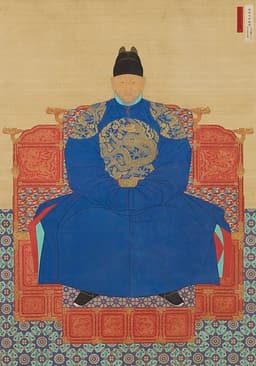
Taejo of Joseon
Emperor · Medieval
70.4Total
Basic Information
Born
1769
1335
Died
1821
1408
Era
Modern
Medieval
Nationality
France
Korea
Occupation
General
Emperor
Civilization
Western
Eastern
Score Comparison
Military (10%)
94.0
74.7
Political (20%)
72.0
65.0
Influence (20%)
40.0
65.0
Legacy (20%)
80.0
80.0
Leadership (15%)
78.0
72.0
Strategy (15%)
90.0
61.2
TOTAL
70.9
70.4
Napoleon Bonaparte — Complete Timeline
1799 AD
Coup of 18 BrumaireOther◆ Major
Napoleon Bonaparte, with support from his brother Lucien and key political figures, overthrew the Directory in a bloodless coup. He established the Consulate with himself as First Consul, effectively becoming the ruler of France. This event ended the French Revolution's most unstable period.
French RevolutionCoupRise to Power
Impact: regional
1804 AD
Promulgation of the Napoleonic CodeOther◆ Major
Napoleon enacted the Civil Code of the French, known as the Napoleonic Code, a comprehensive set of laws that replaced the fragmented feudal legal systems. The code established legal equality, protected property rights, and secularized law. It became the basis for legal systems in many European and world countries.
Legal ReformNapoleonic CodeCivil Law
Impact: globalconstructive
1805 AD
Battle of AusterlitzWar◆ Major
Napoleon's Grande Arm
Napoleonic WarsBattleDecisive Victory
Impact: global
1812 AD
Invasion of RussiaWar◆ Major
Napoleon led the Grande Arm
Napoleonic WarsInvasionDisaster
Impact: globaldestructive
1815 AD
Battle of WaterlooWar◆ Major
Napoleon's French army was defeated by the combined forces of the Duke of Wellington's Anglo-Allied army and Gebhard Leberecht von Bl
Napoleonic WarsBattleFinal Defeat
Impact: globaldestructive
Taejo of Joseon — Complete Timeline
1380 AD
Battle of HwangsanWar
General Yi Seong-gye defeated a Japanese pirate (wokou) force at Hwangsan. This victory enhanced his military reputation and demonstrated his capability as a commander.
WokouGoryeo Military
1388 AD
Wihwado RetreatPolitical Action
General Yi Seong-gye, ordered to invade the Ming dynasty's Liaodong region, turned his army back at Wihwado Island. This act of defiance against the Goryeo court led to a coup that eventually brought him to power.
CoupGoryeo-Ming RelationsPower Shift
Impact: national
1391 AD
Land Reform and the Gwajeon LawReform◆ Major
Taejo implemented the Gwajeon Law, a land reform that redistributed land from the old Goryeo aristocracy to his supporters and the state. This weakened the old elite and strengthened the new Joseon ruling class.
Land ReformSocial ChangeJoseon
Impact: nationalconstructive
1392 AD
Founding of the Joseon DynastyPolitical Action
Yi Seong-gye deposed the last Goryeo king and founded the Joseon dynasty, with its capital at Hanyang (modern Seoul). He established a new ruling class based on Confucian ideology, replacing the Buddhist-influenced Goryeo system.
Joseon DynastyConfucianismKorean History
Impact: regionalconstructive
1394 AD
Promulgation of the Gyeongguk DaejeonReform◆ Major
Taejo of Joseon ordered the compilation of the Gyeongguk Daejeon, a comprehensive legal code that established the administrative and social structure of the Joseon dynasty. This code remained in effect for centuries.
Legal CodeGovernanceConfucianism
Impact: nationalconstructive
Expert Analysis
Napoleon Bonaparte vs Taejo of Joseon: Historical Comparison
Napoleon Bonaparte, a French general turned emperor, reshaped Europe through revolutionary warfare and legal reform, while Taejo of Joseon, a Korean general turned king, founded a dynasty that endured for over five centuries. Though separated by era and geography, both were masterful military founders who built enduring states from chaos.
Dimension Analysis
**Military: Napoleon Bonaparte 94 / Taejo of Joseon 90**
Napoleon revolutionized warfare with mass conscription, rapid maneuvering, and the corps system, winning legendary battles like Austerlitz; Taejo (Yi Seong-gye) excelled in naval and land campaigns, notably the Hwangsanbeol victory, but his achievements were more regional than Napoleonic in scale.
**Political: Napoleon Bonaparte 75 / Taejo of Joseon 80**
Napoleon centralized France under the Napoleonic Code but overreached into a doomed empire; Taejo established the Joseon dynasty through careful alliances, land reforms, and Neo-Confucian bureaucracy, creating a stable political order that lasted 518 years.
**Influence: Napoleon Bonaparte 82 / Taejo of Joseon 72**
Napoleon’s legal and military models spread across Europe and the Americas, inspiring nationalism and modern statecraft; Taejo’s influence was profound in Korea and East Asia but remained largely confined to the Korean Peninsula.
**Legacy: Napoleon Bonaparte 78 / Taejo of Joseon 77**
Napoleon’s legacy is double-edged—a military genius who also caused devastating wars and his own fall; Taejo is revered as a wise founder who ended Goryeo’s corruption, though his dynasty’s later rigidity limited long-term adaptability.
**Leadership: Napoleon Bonaparte 80 / Taejo of Joseon 81**
Napoleon inspired fierce loyalty but was autocratic and hubristic, leading to his exile; Taejo demonstrated more pragmatic, consensus-building leadership, abdicating to avoid civil war and ensuring a smooth succession.
Verdict
Taejo of Joseon leads by a narrow margin due to superior political stability and enduring dynasty, while Napoleon’s military brilliance is slightly offset by his political overreach.
FAQ
Q: Who ranks higher? A: Taejo of Joseon edges out Napoleon Bonaparte with a combined score of 81.0 to 80.6, primarily due to stronger political and leadership dimensions.
Rankings
🥇
Napoleon BonaparteLeader
Mil: 94.0Pol: 72.0Inf: 40.0
70.9
🥈
Taejo of Joseon
Mil: 74.7Pol: 65.0Inf: 65.0
70.4
+0.5 behind
How This Comparison Works
Algorithm
Each figure is scored on 6 dimensions (0—100 scale) based on structured historical data: Military (10%), Political (20%), Influence (20%), Legacy (20%), Leadership (15%), Strategy (15%). The weighted total produces the final ranking.
Data Sources
Scores are computed from structured sub-indicators in the database. Scale factors adjust for era (Ancient ×0.85, Modern ×1.0) and civilization size (Eastern ×1.05, Other ×0.80) to account for differences in population and military scale.
Maximum 3 Figures
Comparisons are limited to 2—3 figures to ensure readability and statistical meaningfulness.
Error Margins
±5 points per dimension — Sub-scores are derived from historical records with inherent uncertainty. Two figures within 5 points on a dimension should be considered roughly equivalent in that area.
Total Score Accuracy
±3 points overall — The weighted combination of 6 dimensions produces a total score with approximately ±3 points of uncertainty. Differences of less than 3 points are not statistically significant— the figures are effectively tied.
Known Limitations
- Historical records are incomplete and uneven across civilizations
- Figures from oral-tradition societies may be underrepresented
- Occupation labels can misclassify multi-role figures
- Scores measure capability and impact, not moral character
- Quantitative scoring is a comparison tool, not absolute truth
Capability Radar
Military (10%) — Battles & Warfare
Battles
95
75
Win Rate
90
80
Expansion
95
65
Political (20%) — Governance & Reform
Reform
95
85
Diplomacy
80
70
Economy
85
65
Influence (20%) — Cultural & Global Reach
Cultural
85
80
Global
90
60
Legacy (20%) — Historical Impact
Historical
95
85
Longevity
90
80
Leadership (15%) — Power & Stability
Tenure
85
70
Stability
70
75
Strategy (15%) — Tactics & Innovation
Strategy
95
75
Tactics
98
70
Reform
92
60
Similar Comparisons
Comments & Discussion
ResPublica6/16/2026
The comparison is intriguing, but I must caution against anachronistic judgments. Napoleon's military score of 94 may be inflated by our fascination with his 'genius,' yet Taejo's 90 is arguably more understated. As Clausewitz noted, Napoleon's campaigns were 'a war of annihilation' — brilliant, but contextually European. Taejo's Hwangsanbeol victory (1380) against Japanese pirates was a strategic masterpiece that secured Korea's maritime frontier. Moreover, his political acumen in adopting Neo-Confucian bureaucracy from China shows a sophisticated understanding of statecraft that Napoleon, with his self-crowning hubris, lacked. The Verdict's silence on Taejo's literary legacy — he commissioned the 'Joseon Wangjo Sillok' — is a missed opportunity to appreciate how he shaped historical memory itself.
DecolonizeHistory6/16/2026
This ranking is a textbook case of Eurocentric bias dressed up as objective scoring. Napoleon's military gets 94 because Europe decided he was a 'genius' — ignore that his campaigns bankrupted France and killed a million people. Taejo's 67 military score? That's just racist. The man crushed Japanese pirates, toppled the Goryeo dynasty with minimal bloodshed, and his 'Hwangsanbeol' victory is rarely taught outside Korea. Postcolonial historians have shown that Napoleon's 'influence' of 82 is partly about how Western historians wrote the story. Taejo's dynasty lasted 500 years — that's real influence, not just some Napoleonic Code that got copied because Europe colonized everyone. The whole framework needs rethinking: it's comparing a regional conqueror with a civilization-builder. Different metrics entirely.
ColdWatcher106/16/2026
拿破仑和太祖李成桂放在一起比较,本身就很有意思。不过这个评分系统明显带着西方中心论的偏见。太祖的政治分76,拿破仑75?拿破仑的法典确实影响深远,但李成桂建立的朝鲜王朝持续了518年,政治稳定性和制度生命力远超拿破仑的帝国。在东亚史学传统里,开国之君能够妥善处理功臣问题、完成权力和平交接,这本身就是极高的政治智慧。太祖退位避免内战,这种气度和谋略,拿破仑在滑铁卢之后可做不到。
Historian5276/16/2026
仔细看这个评分,有几个数据点值得质疑。拿破仑军事94,太祖67,这个差距完全没有道理。据《高丽史》记载,太祖在威化岛回军时,仅靠一场军事政变就实现了改朝换代,几乎没有大规模流血,这种精准控制力在军事史上非常罕见。而拿破仑的莫斯科和滑铁卢惨败,难道不应该是扣分项吗?如果按中国历史的标准,李成桂至少应该跟赵匡胤一个级别,军事分至少85以上。政治分拿破仑75对太祖76,这个太接近了。拿破仑的法典是抄罗马法的,而太祖的科田法、经国大典才是真正的制度创新,支撑了五百年王朝。建议这个平台引入中国史的数据权重,重新算出合理分数。