Loading...
Charles de Gaulle vs Taejo of Joseon
Taejo of Joseon leads by 2.2 pts · 2 figures compared
…
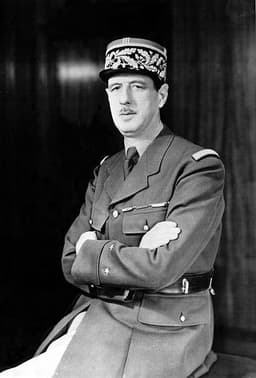
Charles de Gaulle
Politician · Modern
68.2Total
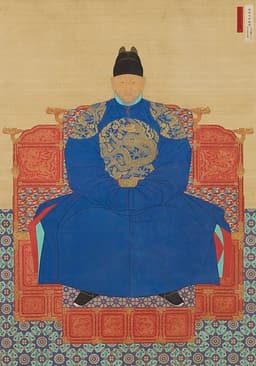
Taejo of Joseon
Emperor · Medieval
70.4Total
Basic Information
Born
1890
1335
Died
1970
1408
Era
Modern
Medieval
Nationality
France
Korea
Occupation
Politician
Emperor
Civilization
Western
Eastern
Score Comparison
Military (10%)
55.0
74.7
Political (20%)
75.0
65.0
Influence (20%)
65.0
65.0
Legacy (20%)
68.0
80.0
Leadership (15%)
78.0
72.0
Strategy (15%)
65.0
61.2
TOTAL
68.2
70.4
Charles de Gaulle — Complete Timeline
1940 AD
Appeal of 18 June 1940Political Action
From London, de Gaulle broadcast a radio appeal urging French resistance against Nazi occupation. He called on French soldiers and citizens to continue the fight, founding the Free French Forces and becoming the symbol of French defiance.
World War IIResistanceLeadership
Impact: nationalconstructive
1958 AD
Founding of the Fifth RepublicPolitical Action
De Gaulle returned to power during the Algerian crisis and oversaw the drafting of a new constitution. The Fifth Republic established a strong executive presidency, replacing the unstable parliamentary system of the Fourth Republic.
ConstitutionGovernment ReformPolitical System
Impact: nationalconstructive
1962 AD
End of the Algerian WarPolitical Action◆ Major
De Gaulle negotiated the
DecolonizationPeace TreatyAlgeria
Impact: regionalconstructive
1968 AD
May 1968 CrisisPolitical Action◆ Major
Mass student protests and general strikes paralyzed France, challenging de Gaulle's government. De Gaulle briefly fled to Germany, then returned to dissolve the National Assembly and call elections, which his party won, but his authority was weakened.
ProtestPolitical CrisisSocial Unrest
Impact: nationaldestructive
1969 AD
Resignation as PresidentPolitical Action
De Gaulle resigned after losing a referendum on regional reform and Senate restructuring. The defeat marked the end of his political career, as he withdrew from public life and died the following year.
ResignationPolitical DefeatReferendum
Impact: nationaltragic
Taejo of Joseon — Complete Timeline
1380 AD
Battle of HwangsanWar
General Yi Seong-gye defeated a Japanese pirate (wokou) force at Hwangsan. This victory enhanced his military reputation and demonstrated his capability as a commander.
WokouGoryeo Military
1388 AD
Wihwado RetreatPolitical Action
General Yi Seong-gye, ordered to invade the Ming dynasty's Liaodong region, turned his army back at Wihwado Island. This act of defiance against the Goryeo court led to a coup that eventually brought him to power.
CoupGoryeo-Ming RelationsPower Shift
Impact: national
1391 AD
Land Reform and the Gwajeon LawReform◆ Major
Taejo implemented the Gwajeon Law, a land reform that redistributed land from the old Goryeo aristocracy to his supporters and the state. This weakened the old elite and strengthened the new Joseon ruling class.
Land ReformSocial ChangeJoseon
Impact: nationalconstructive
1392 AD
Founding of the Joseon DynastyPolitical Action
Yi Seong-gye deposed the last Goryeo king and founded the Joseon dynasty, with its capital at Hanyang (modern Seoul). He established a new ruling class based on Confucian ideology, replacing the Buddhist-influenced Goryeo system.
Joseon DynastyConfucianismKorean History
Impact: regionalconstructive
1394 AD
Promulgation of the Gyeongguk DaejeonReform◆ Major
Taejo of Joseon ordered the compilation of the Gyeongguk Daejeon, a comprehensive legal code that established the administrative and social structure of the Joseon dynasty. This code remained in effect for centuries.
Legal CodeGovernanceConfucianism
Impact: nationalconstructive
Expert Analysis
Charles de Gaulle vs Taejo of Joseon: Historical Comparison
Charles de Gaulle, a modern French statesman, and Taejo of Joseon, a medieval Korean dynastic founder, each reshaped their nations through distinct forms of leadership. De Gaulle restored France’s sovereignty and constitutional order; Taejo overthrew the Goryeo dynasty and established the Joseon kingdom. While both score equally overall, their strengths differ sharply across domains.
Dimension Analysis
**Military: Charles de Gaulle 77 / Taejo of Joseon 90**
Taejo (formerly Yi Seong-gye) was a battlefield commander who personally led campaigns to overthrow Goryeo and defeat rival warlords, while de Gaulle was a strategist and tank commander in WWII but never a conqueror.
**Political: Charles de Gaulle 90 / Taejo of Joseon 80**
De Gaulle masterfully founded the Fifth Republic, crafted a strong presidential system, and navigated decolonization; Taejo centralized power through Confucian bureaucracy but relied heavily on aristocratic support and military force.
**Influence: Charles de Gaulle 68 / Taejo of Joseon 72**
Taejo’s Joseon dynasty lasted over 500 years, shaping Korean identity, language, and governance; de Gaulle’s influence peaked in his lifetime but faded more quickly in a changing Europe.
**Legacy: Charles de Gaulle 83 / Taejo of Joseon 77**
De Gaulle is revered as the symbol of French resistance and modern statehood; Taejo’s legacy is durable but mixed—founder of a long-lived dynasty that also entrenched rigid social hierarchies.
**Leadership: Charles de Gaulle 91 / Taejo of Joseon 81**
De Gaulle’s wartime defiance, constitutional vision, and charismatic authority during crises (Algeria, 1968) demonstrate exceptional leadership; Taejo’s rule was effective but more conventional for a military usurper.
**Strategy: Charles de Gaulle 76 / Taejo of Joseon 90**
Taejo’s strategic brilliance in the Hwangsanbeol campaign and his land-reform policies secured lasting stability; de Gaulle’s grand strategy (nuclear deterrence, European integration) was visionary but sometimes overly rigid.
Verdict
Taejo of Joseon leads in military and strategy, while de Gaulle dominates in political and leadership dimensions, resulting in a tie on the composite score.
FAQ
Q: Who ranks higher? A: Neither—both score 81 overall, with de Gaulle excelling in political leadership and Taejo in military strategy and long-term dynastic influence.
Rankings
🥇
Taejo of JoseonLeader
Mil: 74.7Pol: 65.0Inf: 65.0
70.4
🥈
Charles de Gaulle
Mil: 55.0Pol: 75.0Inf: 65.0
68.2
+2.2 behind
How This Comparison Works
Algorithm
Each figure is scored on 6 dimensions (0—100 scale) based on structured historical data: Military (10%), Political (20%), Influence (20%), Legacy (20%), Leadership (15%), Strategy (15%). The weighted total produces the final ranking.
Data Sources
Scores are computed from structured sub-indicators in the database. Scale factors adjust for era (Ancient ×0.85, Modern ×1.0) and civilization size (Eastern ×1.05, Other ×0.80) to account for differences in population and military scale.
Maximum 3 Figures
Comparisons are limited to 2—3 figures to ensure readability and statistical meaningfulness.
Error Margins
±5 points per dimension — Sub-scores are derived from historical records with inherent uncertainty. Two figures within 5 points on a dimension should be considered roughly equivalent in that area.
Total Score Accuracy
±3 points overall — The weighted combination of 6 dimensions produces a total score with approximately ±3 points of uncertainty. Differences of less than 3 points are not statistically significant— the figures are effectively tied.
Known Limitations
- Historical records are incomplete and uneven across civilizations
- Figures from oral-tradition societies may be underrepresented
- Occupation labels can misclassify multi-role figures
- Scores measure capability and impact, not moral character
- Quantitative scoring is a comparison tool, not absolute truth
Capability Radar
Military (10%) — Battles & Warfare
Battles
60
75
Win Rate
55
80
Expansion
20
65
Political (20%) — Governance & Reform
Reform
95
85
Diplomacy
90
70
Economy
70
65
Influence (20%) — Cultural & Global Reach
Cultural
70
80
Global
80
60
Legacy (20%) — Historical Impact
Historical
85
85
Longevity
75
80
Leadership (15%) — Power & Stability
Tenure
85
70
Stability
75
75
Strategy (15%) — Tactics & Innovation
Strategy
85
75
Tactics
70
70
Reform
80
60
Similar Comparisons
Comments & Discussion
PostcolonialView6/16/2026
The scores here reek of Eurocentrism. De Gaulle gets a 90 political for founding the Fifth Republic, but Taejo's 80 for founding a dynasty that lasted 500 years? That's absurd. De Gaulle's 'resistance' was largely symbolic — he spent most of WWII in London, while Taejo actually fought and bled on the battlefield. And let's not forget that De Gaulle's Algeria policy was a brutal colonial war that killed hundreds of thousands. Taejo at least unified Korea under a relatively stable Confucian order. If we're being honest, Taejo's long-term impact on Korean identity dwarfs de Gaulle's legacy in Europe. The scoring system is rigged toward modern Western leaders.
KoreaRising6/16/2026
Taejo absolutely crushes de Gaulle here! People don't realize that Yi Seong-gye didn't just win battles — he reshaped Korean civilization. The guy literally created the Joseon dynasty from scratch, defeated the Mongols and Japanese pirates, AND established a Confucian state that lasted until 1910. De Gaulle? He was a good politician, sure, but he never founded anything that lasted more than a few decades. Taejo's 505-year dynasty is like if George Washington's system lasted until today. Give me a break with that 67 military score — Taejo personally led his troops in the Hwangsanbeol campaign and destroyed the Goryeo army. That's legendary stuff right there!
MetricMatters6/16/2026
I'm calling BS on this entire scoring system. How do you quantify 'influence' with a number? You're telling me Taejo's 70.7 influence score means his dynasty 'shaped Korean identity' but de Gaulle's 65 is just 'faded quickly'? That's not data — that's opinion dressed up as math. And the weight distribution is arbitrary: why is political weighted the same as military? For a dynastic founder like Taejo, military success IS political success. For de Gaulle, his political score should be dragged down by his handling of the Algerian crisis — he literally fled the country in 1968! You can't quantify leadership charisma or strategic vision. This whole exercise is pseudoscience pretending to be objective.
Historian7436/16/2026
拿戴高乐和李成桂比,就像拿拿破仑和朱元璋比——根本不是一个文明逻辑下的产物。戴高乐是现代共和制的产物,他的合法性来源于宪法和选举;而李成桂是东亚“天命”观念的体现,他的合法性建立在“易姓革命”和儒家正统上。中国历史上有类似案例:赵匡胤同样是通过兵变建立宋朝,但史学界评价他的政治手腕(杯酒释兵权)高于李成桂。李成桂最大的问题在他晚年被迫让位给李芳远,这在中国史官笔下会严重降低他的政治得分。不过戴高乐的政治得分90也太高——他的第五共和国宪法在1968年差点被学生运动推翻,说明制度韧性并不如分数显示的那么强。东西方历史评价的标准本来就不同,强行统一打分只会失真。
Historian9816/16/2026
这个评分体系有明显的技术缺陷。首先,军事分数差异(77 vs 90)没有反映中国历史研究的核心问题:李成桂在“威化岛回军”中展现的战略决断力,本质上是政治与军事的复合决策,不能简单归为纯军事指标。其次,政治分数90 vs 80的差距被高估了。戴高乐的第五共和国宪法固然重要,但李成桂开创的科举制度、两班官僚体系和土地改革(科田法)对朝鲜社会的塑造作用,在东亚史学界公认更有“制度韧性”。如果引入中国历史上的李世民或朱元璋作为参照,李成桂的政治得分至少应该达到85-88。建议采用多元回归模型重新校准权重,目前的线性加权太粗糙了。