Loading...
Al-Ashraf Khalil vs Julius Caesar
Julius Caesar leads by 33.7 pts · 2 figures compared
…
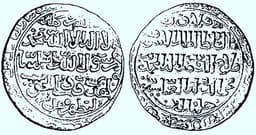
Al-Ashraf Khalil
Emperor · Medieval
49.1Total

Julius Caesar
General · Ancient
82.8Total
Basic Information
Born
1260
-100
Died
1293
-44
Era
Medieval
Ancient
Nationality
Egypt
Roman Republic
Occupation
Emperor
General
Civilization
Middle Eastern
Western
Score Comparison
Military (10%)
67.5
88.0
Political (20%)
32.2
78.0
Influence (20%)
55.7
85.0
Legacy (20%)
48.3
82.0
Leadership (15%)
41.5
80.0
Strategy (15%)
52.5
85.0
TOTAL
49.1
82.8
Al-Ashraf Khalil — Complete Timeline
1290 AD
Accession as Sultan (1290)Political Action◆ Major
Al-Ashraf Khalil succeeded his father Qalawun as Sultan of Egypt. He was the second ruler of the Qalawunid dynasty. His accession was contested by some Mamluk factions, but he quickly consolidated power.
SuccessionMamluk SultanateQalawunid Dynasty
Impact: regional
1291 AD
Siege and Capture of Acre (1291)War
Al-Ashraf Khalil led the Mamluk siege of Acre, the last major Crusader stronghold in the Levant. After a six-week siege, the city fell on May 18, 1291. The capture of Acre ended the Crusader presence in the Holy Land.
Crusader WarsSiegeEnd of Crusader States
Impact: globaldestructive
Conquest of Tyre, Sidon, and Beirut (1291)War◆ Major
Following the fall of Acre, Al-Ashraf Khalil's forces captured the remaining Crusader coastal cities of Tyre, Sidon, and Beirut without significant resistance. These conquests completed the Mamluk reconquest of the Levant and eliminated all Crusader footholds.
Crusader WarsConquestMamluk Expansion
Impact: regionaldestructive
1293 AD
Assassination of Al-Ashraf Khalil (1293)Other◆ Major
Al-Ashraf Khalil was assassinated by a group of Mamluk emirs while hunting near Cairo. His death was likely due to internal power struggles. He was succeeded by his young brother An-Nasir Muhammad, beginning a period of instability.
AssassinationSuccessionMamluk Sultanate
Impact: regionaltragic
Julius Caesar — Complete Timeline
58 BC
Gallic WarsWar◆ Major
Caesar, as proconsul of Gaul, launched a series of campaigns that conquered all of Gaul (modern France, Belgium, and parts of Switzerland). He fought numerous battles, including against the Helvetii, the Belgae, and the Gallic chieftain Vercingetorix. The wars brought immense wealth and a loyal army to Caesar.
Gallic WarsConquestRoman Expansion
Impact: regional
49 BC
Crossing the RubiconPolitical Action◆ Major
Caesar led Legio XIII across the Rubicon River into Italy, defying the Roman Senate's order to disband his army. This act triggered a civil war against Pompey and the Optimates, ultimately leading to Caesar's dictatorship and the end of the Roman Republic.
Roman Civil WarEnd of RepublicPower Struggle
Impact: global
48 BC
Battle of PharsalusWar◆ Major
Caesar's outnumbered army defeated the larger forces of Pompey the Great at Pharsalus in Greece. Caesar's tactical use of a reserve line to counter Pompey's cavalry charge proved decisive. Pompey fled to Egypt, where he was assassinated, leaving Caesar as the undisputed master of the Roman world.
Roman Civil WarBattleDecisive Victory
Impact: regional
44 BC
Appointment as Dictator for LifePolitical Action◆ Major
The Roman Senate appointed Caesar dictator perpetuo (dictator for life), granting him unprecedented personal power. This move concentrated military, legislative, and judicial authority in one person, effectively ending the Roman Republic's traditional system of checks and balances and alarming many senators.
DictatorshipEnd of RepublicPower Consolidation
Impact: regionaldestructive
Assassination on the Ides of MarchPolitical Action◆ Major
A group of Roman senators, led by Marcus Junius Brutus and Gaius Cassius Longinus, stabbed Caesar to death at a meeting of the Senate in the Theatre of Pompey. The assassination was intended to restore the Republic, but instead triggered another civil war that led to the rise of the Roman Empire.
AssassinationRoman PoliticsEnd of Republic
Impact: globaldestructive
Expert Analysis
al-ashraf-khalil-vs-julius-caesar
# The Ides of March and the Hunt in the Desert
On a winter morning in 44 BCE, Julius Caesar walked into the Senate chamber in Rome, brushing aside a warning to beware a specific date. Hours later, he lay bleeding at the foot of Pompey’s statue, stabbed twenty-three times by men he had trusted. Across the Mediterranean, 1,337 years later, another ruler—Al-Ashraf Khalil, the Mamluk sultan of Egypt—rode out from Cairo for a day of hunting near the pyramids. He never returned alive. His own emirs cut him down in the desert, their daggers settling a score that no enemy army could. Two assassinations. Two men who crushed their rivals and redrew maps. Why did one become a name that echoes across millennia, while the other faded into a footnote of crusader history?
Origins
Julius Caesar was born into the patrician Julian clan, a family that traced its lineage to the goddess Venus—but whose political influence had long since dimmed. Rome in the first century BCE was a republic tearing itself apart: senatorial corruption, street violence between populists and aristocrats, and generals who commanded personal armies loyal to themselves, not the state. Caesar grew up in this chaos, watching his uncle Marius and his rival Sulla march on Rome itself. His was a world where ambition was survival, and survival required ruthlessness.
Al-Ashraf Khalil, by contrast, was born a prince of the Mamluk Sultanate in 1260, the year the Mongols were finally stopped at Ain Jalut. His father, Sultan Qalawun, had spent decades fighting Crusaders and consolidating power. The Mamluks were a slave-soldier dynasty: men purchased as boys, trained in war, and promoted by merit—or by murder. Khalil inherited not a republic of squabbling senators but a military state where the throne was a prize to be seized, and every emir carried a blade for the man above him. He learned early that trust was a liability.
Rise to Power
Caesar’s path was long and layered. He fled Rome to avoid Sulla’s proscriptions, then returned as a rising lawyer and priest. He bought his way into the office of pontifex maximus, borrowed fortunes to fund public spectacles, and forged the First Triumvirate with Pompey and Crassus. His real breakthrough came when he secured command of Gaul: a province that gave him an army, a war, and a decade of conquest that made him the richest man in Rome. When the Senate ordered him to disband his legions, he crossed the Rubicon River in 49 BCE, triggering a civil war that he would win within five years.
Khalil’s rise was compressed and brutal. He became sultan in 1290 upon his father’s death, but his accession was contested. Qalawun had already planned the final campaign against the Crusader states—he had even signed a truce with Acre to buy time—but died before he could strike. Khalil inherited a war machine already in motion. He did not need to build alliances or win elections. He simply took the army his father had assembled and pointed it at the sea.
Leadership & Governance
Caesar governed through audacity and calculation. In Gaul, he fought eight campaigns against tribes that outnumbered him, splitting coalitions with diplomacy and crushing them in battle. He wrote his own commentaries to shape public opinion back home. As dictator, he reformed the calendar, extended citizenship to provincials, launched public works, and planned invasions of Parthia and Germania. His military genius lay in speed: he moved legions faster than his enemies thought possible, and he gambled everything on decisive engagements. Politically, he was both generous and reckless—pardoning enemies who would later kill him.
Khalil’s style was narrower. He was a warlord, not a reformer. In 1291, he besieged Acre with an army estimated at 60,000 men and a massive siege train that included trebuchets capable of hurling stones weighing hundreds of pounds. The city fell after six weeks. He then swept through Tyre, Sidon, and Beirut, dismantling Crusader fortifications and deporting or enslaving survivors. His strategy was methodical: starve, smash, and never leave a stronghold intact. But once the Crusaders were gone, he had no vision beyond consolidation. He did not reform Egypt’s administration, expand trade, or build lasting institutions. His rule was a single military achievement stretched thin.
Triumph & Tragedy
Caesar’s triumph was his Gallic Wars and his victory over Pompey. He paraded captives through Rome, paid every citizen from his war chest, and was named dictator for life. His tragedy was that he could not imagine a system that did not need him. He centralized power, humiliated the Senate, and refused to read the signs of his own doom. The Ides of March was not a random conspiracy—it was the logical response of a ruling class he had rendered powerless.
Khalil’s triumph was Acre. For the first time in nearly two centuries, no Crusader king held land in the Holy Land. The fall of Acre was a seismic event in Christendom, triggering panic from Cyprus to London. But Khalil’s tragedy came swiftly. In 1293, while hunting, his emirs turned on him. They resented his favoritism toward Christian and Armenian advisors, his centralization of authority, and his humiliations of senior commanders. He was twenty-three years old. His body was left in the sand.
Character & Destiny
Caesar was a man of immense charm, intellectual curiosity, and cold ambition. He slept with his enemies’ wives, pardoned his assassins before they struck, and believed—almost mystically—that his luck would hold. It did not. His character drove him to break the Republic, but also to fatally underestimate the men he had broken.
Khalil was proud, impulsive, and insecure. He executed his father’s senior emirs early in his reign, alienating the very class that kept Mamluks in power. He trusted outsiders more than his own warriors. His character made him a conqueror but not a king. He could win a war; he could not build a peace.
Legacy
Caesar’s legacy is the Roman Empire. His adopted heir, Octavian, learned from his mistakes: he centralized power but kept the Senate’s forms, ruled for decades, and died in bed. Caesar’s name became synonymous with autocracy—*Kaiser*, *Tsar*, *Caesar*—and his writings shaped Western military thought for two thousand years.
Khalil’s legacy is Acre’s fall. He ended the Crusades as a military enterprise, but his dynasty, the Qalawunids, collapsed into factional murder within a generation. His tomb in Cairo is obscure. History remembers him, if at all, as the man who finished what Saladin started—but without Saladin’s mercy or vision.
Conclusion
Two men, two daggers, two ends of an era. Caesar died because he had become too powerful for the Republic to contain. Khalil died because he was not powerful enough for the Mamluks to tolerate. One built an empire that lasted centuries; the other ended a war that had lasted two hundred years, then vanished into the desert. The difference was not talent—both were brilliant commanders. The difference was context. Caesar inherited a system that could be bent into an empire. Khalil inherited a system that could only devour itself. In the end, the measure of a conqueror is not how many walls he tears down, but what he leaves standing when the dust settles.
Rankings
🥇
Julius CaesarLeader
Mil: 88.0Pol: 78.0Inf: 85.0
82.8
🥈
Al-Ashraf Khalil
Mil: 67.5Pol: 32.2Inf: 55.7
49.1
+33.7 behind
How This Comparison Works
Algorithm
Each figure is scored on 6 dimensions (0—100 scale) based on structured historical data: Military (10%), Political (20%), Influence (20%), Legacy (20%), Leadership (15%), Strategy (15%). The weighted total produces the final ranking.
Data Sources
Scores are computed from structured sub-indicators in the database. Scale factors adjust for era (Ancient ×0.85, Modern ×1.0) and civilization size (Eastern ×1.05, Other ×0.80) to account for differences in population and military scale.
Maximum 3 Figures
Comparisons are limited to 2—3 figures to ensure readability and statistical meaningfulness.
Error Margins
±5 points per dimension — Sub-scores are derived from historical records with inherent uncertainty. Two figures within 5 points on a dimension should be considered roughly equivalent in that area.
Total Score Accuracy
±3 points overall — The weighted combination of 6 dimensions produces a total score with approximately ±3 points of uncertainty. Differences of less than 3 points are not statistically significant— the figures are effectively tied.
Known Limitations
- Historical records are incomplete and uneven across civilizations
- Figures from oral-tradition societies may be underrepresented
- Occupation labels can misclassify multi-role figures
- Scores measure capability and impact, not moral character
- Quantitative scoring is a comparison tool, not absolute truth
Capability Radar
Military (10%) — Battles & Warfare
Battles
65
95
Win Rate
70
92
Expansion
55
97
Political (20%) — Governance & Reform
Reform
20
90
Diplomacy
35
85
Economy
25
82
Influence (20%) — Cultural & Global Reach
Cultural
30
88
Global
45
94
Legacy (20%) — Historical Impact
Historical
50
95
Longevity
40
96
Leadership (15%) — Power & Stability
Tenure
30
75
Stability
20
60
Strategy (15%) — Tactics & Innovation
Strategy
65
94
Tactics
60
96
Reform
30
88
Similar Comparisons
Comments & Discussion
HISTORY'S CRUEL EDITOR6/17/2026
Caesar's story works because his killers talked and wrote, while Khalil's assassins stayed silent. We have Shakespeare, Plutarch, Suetonius - a whole literary industry built around those 23 stab wounds. Khalil? His death is a paragraph in an Arabic chronicle that even most medieval historians skip. The Mongols made better villains for the Mamluks than any domestic drama could. Caesar got the better PR team across two millennia. Simple as that.
匕首诗人6/17/2026
说什么千古一帝,凯撒不过是罗马军阀内卷的优胜者。他搞独裁,元老院就捅他;哈利勒也一样,马穆鲁克那套奴隶军制本来就弱肉强食。凯撒被记住,是因为后来西方史学家要给他的继承者屋大维编造正统神话。而哈利勒死后十年,苏丹就换了好几茬,谁还替他写传记?历史是胜利者的剧本,别把暗杀当成悲剧。