Loading...
Al-Hadi vs Wanyan Dan
Wanyan Dan leads by 1.1 pts · 2 figures compared
…

Al-Hadi
Emperor · Medieval
37.1Total
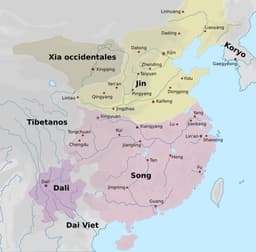
Wanyan Dan
Emperor · Medieval
38.2Total
Basic Information
Born
764
1119
Died
786
1150
Era
Medieval
Medieval
Nationality
Abbasid Caliphate
Jin dynasty
Occupation
Emperor
Emperor
Civilization
Middle Eastern
Eastern
Score Comparison
Military (10%)
10.2
21.2
Political (20%)
30.7
32.1
Influence (20%)
46.3
47.1
Legacy (20%)
34.2
36.7
Leadership (15%)
39.0
44.5
Strategy (15%)
54.8
36.8
TOTAL
37.1
38.2
Al-Hadi — Complete Timeline
785 AD
Accession as CaliphPolitical Action◆ Major
Al-Hadi succeeded his father al-Mahdi as caliph in 785. His reign was brief, lasting only about one year, and was marked by internal conflicts and a struggle for power with his brother Harun al-Rashid.
SuccessionCaliphate
Impact: national
786 AD
Conflict with Harun al-RashidPolitical Action◆ Major
Al-Hadi attempted to remove his brother Harun al-Rashid from the line of succession, leading to a power struggle. This conflict ended with al-Hadi's death under mysterious circumstances, possibly poisoned, allowing Harun to become caliph.
Succession CrisisPower Struggle
Impact: nationaldestructive
Wanyan Dan — Complete Timeline
1140 AD
Implemented Confucian reformsReform◆ Major
Wanyan Dan promoted Confucian learning and civil service examinations at the Jin court. He established a Han-style bureaucracy and reduced the power of Jurchen tribal nobles, centralizing authority under the emperor.
ConfucianizationReformBureaucracy
Impact: nationalconstructive
1150 AD
Assassinated by Wanyan LiangPolitical Action◆ Major
Emperor Wanyan Dan was murdered in his palace by a group of conspirators led by his cousin Wanyan Liang. Liang then seized the throne, claiming that Dan was unfit to rule. Dan's reign was cut short after only 15 years.
AssassinationCoupWanyan Liang
Impact: nationaltragic
Expert Analysis
Origins
Al-Hadi, born in 764 CE, was the eldest son of Caliph al-Mahdi and his wife al-Khayzuran. Raised in the opulent Abbasid court of Baghdad, he received a princely education but was overshadowed by his younger brother Harun al-Rashid. His early life was marked by privilege and political maneuvering, as his mother wielded considerable influence. Wanyan Dan, born in 1119 CE, was a member of the Jurchen Wanyan clan that founded the Jin dynasty. He was the son of Emperor Taizong and a concubine. His upbringing emphasized Jurchen martial traditions alongside exposure to Chinese culture, as the Jin court Sinicized rapidly. Both rulers inherited complex political environments: Al-Hadi a vast caliphate, Wanyan Dan a multi-ethnic empire.
Rise to Power
Al-Hadi ascended the caliphate in 785 CE upon his father's death. His accession was smooth, but he immediately faced pressure from his mother and brother Harun. He attempted to secure his position by removing Harun from succession, sparking a conflict that ended with Al-Hadi's death in 786 under mysterious circumstances. Wanyan Dan became emperor in 1135 CE after the death of his father, Emperor Taizong. His reign began with the consolidation of power against influential Jurchen nobles. He promoted Confucian reforms and centralization, which alienated traditionalists. His cousin Wanyan Liang, a capable general, plotted against him. In 1149, Wanyan Liang staged a coup, assassinating Wanyan Dan and seizing the throne. Both rulers rose to power through hereditary succession but failed to secure their reigns against internal rivals.
Leadership & Governance
Al-Hadi's leadership was autocratic but short-lived. He attempted to centralize authority by reducing the influence of his mother and brother, but his lack of experience and support led to isolation. He scored 39.0 in leadership and 30.7 in politics, reflecting ineffective governance. Wanyan Dan, scoring 44.5 in leadership and 32.1 in politics, implemented significant Confucian reforms. He established a Han-style bureaucracy, promoted civil service exams, and reduced the power of Jurchen nobles. His governance aimed at Sinicizing the Jin state, which strengthened central control but created enemies among the old guard. His assassination cut short his reforms, but they laid groundwork for later Jin administration.
Triumph & Tragedy
Al-Hadi's greatest triumph was maintaining stability during his brief reign, but his failure to manage succession led to his death. He scored only 10.2 in military, indicating no notable campaigns. His tragedy was his inability to outmaneuver his mother and brother. Wanyan Dan's triumphs include his Confucian reforms and the establishment of a merit-based bureaucracy. He scored 21.2 in military, modest due to his focus on civil affairs. His tragedy was his assassination by his cousin, which ended his reforms abruptly. His killer, Wanyan Liang, later reversed some policies, but Dan's legacy endured through the continued Sinicization of the Jin.
Character & Destiny
Al-Hadi was ambitious but reckless, challenging powerful family members without sufficient backing. His decision-making was impulsive, leading to a premature death. Historians view him as a failed ruler whose brief reign was overshadowed by Harun al-Rashid. Wanyan Dan was more cautious and systematic, but his reforms threatened entrenched interests. His character was that of a reformer, but he underestimated the resentment of Jurchen conservatives. His destiny was sealed by a trusted relative, a common fate for rulers who centralize power. Both men's characters—Al-Hadi's rashness and Wanyan Dan's idealism—shaped their tragic ends.
Legacy
Al-Hadi's legacy is minimal; he scored 46.3 in influence and 34.2 in legacy. He is remembered mainly as a footnote to Harun al-Rashid's golden age. Wanyan Dan scored 47.1 in influence and 36.7 in legacy. His Confucian reforms influenced Jin governance and set a precedent for later Jurchen rulers. His promotion of Chinese-style civil service exams helped Sinicize the Jin, which persisted even after his death. While neither ruler left a monumental legacy, Wanyan Dan's impact on Jin bureaucracy was more lasting.
Conclusion
In this comparison, Wanyan Dan scores 38.2 total against Al-Hadi's 37.1, a narrow 1.1-point gap. Despite both brief reigns, Wanyan Dan's Confucian reforms had a more enduring impact on the Jin dynasty's governance, while Al-Hadi's reign was ephemeral and inconsequential. Wanyan Dan's higher leadership and legacy scores reflect his substantive policy changes. Therefore, Wanyan Dan had greater historical impact, though both remain minor figures in their respective dynasties.
Rankings
🥇
Wanyan DanLeader
Mil: 21.2Pol: 32.1Inf: 47.1
38.2
🥈
Al-Hadi
Mil: 10.2Pol: 30.7Inf: 46.3
37.1
+1.1 behind
How This Comparison Works
Algorithm
Each figure is scored on 6 dimensions (0—100 scale) based on structured historical data: Military (10%), Political (20%), Influence (20%), Legacy (20%), Leadership (15%), Strategy (15%). The weighted total produces the final ranking.
Data Sources
Scores are computed from structured sub-indicators in the database. Scale factors adjust for era (Ancient ×0.85, Modern ×1.0) and civilization size (Eastern ×1.05, Other ×0.80) to account for differences in population and military scale.
Maximum 3 Figures
Comparisons are limited to 2—3 figures to ensure readability and statistical meaningfulness.
Error Margins
±5 points per dimension — Sub-scores are derived from historical records with inherent uncertainty. Two figures within 5 points on a dimension should be considered roughly equivalent in that area.
Total Score Accuracy
±3 points overall — The weighted combination of 6 dimensions produces a total score with approximately ±3 points of uncertainty. Differences of less than 3 points are not statistically significant— the figures are effectively tied.
Known Limitations
- Historical records are incomplete and uneven across civilizations
- Figures from oral-tradition societies may be underrepresented
- Occupation labels can misclassify multi-role figures
- Scores measure capability and impact, not moral character
- Quantitative scoring is a comparison tool, not absolute truth
Capability Radar
Military (10%) — Battles & Warfare
Battles
10
10
Win Rate
10
10
Expansion
5
10
Political (20%) — Governance & Reform
Reform
10
10
Diplomacy
15
10
Economy
10
10
Influence (20%) — Cultural & Global Reach
Cultural
10
10
Global
5
10
Legacy (20%) — Historical Impact
Historical
10
10
Longevity
5
10
Leadership (15%) — Power & Stability
Tenure
15
15
Stability
10
5
Strategy (15%) — Tactics & Innovation
Strategy
10
10
Tactics
10
10
Reform
5
10
Similar Comparisons
Comments & Discussion
No comments yet. Be the first to share your thoughts!