Loading...
Al-Hadi vs Peter I of Cyprus
Peter I of Cyprus leads by 8.6 pts · 2 figures compared
…

Al-Hadi
Emperor · Medieval
37.1Total
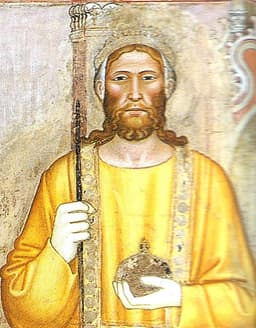
Peter I of Cyprus
Emperor · Medieval
45.7Total
Basic Information
Born
764
1328
Died
786
1369
Era
Medieval
Medieval
Nationality
Abbasid Caliphate
Cyprus
Occupation
Emperor
Emperor
Civilization
Middle Eastern
Western
Score Comparison
Military (10%)
10.2
20.0
Political (20%)
30.7
40.8
Influence (20%)
46.3
52.5
Legacy (20%)
34.2
42.5
Leadership (15%)
39.0
51.9
Strategy (15%)
54.8
60.0
TOTAL
37.1
45.7
Al-Hadi — Complete Timeline
785 AD
Accession as CaliphPolitical Action◆ Major
Al-Hadi succeeded his father al-Mahdi as caliph in 785. His reign was brief, lasting only about one year, and was marked by internal conflicts and a struggle for power with his brother Harun al-Rashid.
SuccessionCaliphate
Impact: national
786 AD
Conflict with Harun al-RashidPolitical Action◆ Major
Al-Hadi attempted to remove his brother Harun al-Rashid from the line of succession, leading to a power struggle. This conflict ended with al-Hadi's death under mysterious circumstances, possibly poisoned, allowing Harun to become caliph.
Succession CrisisPower Struggle
Impact: nationaldestructive
Peter I of Cyprus — Complete Timeline
1361 AD
Capture of AdaliaWar
Peter I captured the city of Adalia (Antalya) on the Anatolian coast from the Hamidid Turks. This victory gave Cyprus a foothold in Asia Minor and boosted Peter's reputation as a crusader king.
CrusadesConquestAnatolia
Impact: regional
1362 AD
Crusade of Peter IPolitical Action◆ Major
Peter I traveled across Europe to promote a new crusade, visiting Avignon, Paris, and London. He secured promises of support from Pope Urban V and various monarchs, though the actual military response was limited.
CrusadesDiplomacyEurope
Impact: regionalconstructive
1365 AD
Sack of AlexandriaWar◆ Major
Peter I led a Crusader fleet to Egypt and sacked the city of Alexandria. The attack was a brutal raid that resulted in massive destruction and loss of life, but failed to hold the city or achieve lasting strategic gains.
CrusadesSackAlexandriaEgypt
Impact: regionaldestructive
1369 AD
AssassinationPolitical Action◆ Major
Peter I was assassinated in his bed in Nicosia by a group of Cypriot nobles. The murder was motivated by his heavy taxation, autocratic rule, and the financial strain of his crusading campaigns.
CyprusAssassinationNobility
Impact: regionaltragic
Expert Analysis
Origins
Al-Hadi, born Musa ibn al-Mahdi in 764 CE, was the fourth Abbasid caliph, son of Caliph al-Mahdi and a Yemeni concubine named Khayzuran. He grew up in the opulent Abbasid court of Baghdad, receiving a princely education in Islamic jurisprudence, military tactics, and administration. His early life was overshadowed by his powerful mother, Khayzuran, who wielded significant influence in court politics. Al-Hadi's upbringing was marked by competition with his younger brother, Harun al-Rashid, who was favored by their father and the military elite.
Peter I of Cyprus, born Pierre de Lusignan in 1328, was the son of Hugh IV of Cyprus and Alice of Ibelin. He belonged to the Lusignan dynasty, a French noble family that had ruled Cyprus since the Crusades. Peter grew up in the medieval kingdom of Cyprus, a crossroads of Latin, Greek, and Islamic cultures. His education emphasized chivalry, military arts, and Latin Christianity. From a young age, he was exposed to the remnants of Crusader states and the ongoing conflicts with Mamluk Egypt and Turkish beyliks.
Rise to Power
Al-Hadi ascended the caliphate in 785 CE after the death of his father, al-Mahdi. His accession was smooth as he was the designated heir. However, his reign was immediately challenged by his brother Harun, who commanded military support. Al-Hadi attempted to secure his position by forcing Harun to renounce his succession rights, a move that alienated many in the court and army. The conflict escalated, leading to a standoff where al-Hadi's forces besieged Harun's residence. The crisis ended abruptly with al-Hadi's death in 786 CE, possibly poisoned by his mother or Harun's supporters.
Peter I became king of Cyprus in 1358 following the abdication of his father, Hugh IV. His rise was marked by a strong desire to revive the Crusader spirit. He immediately began planning a new crusade, traveling to Europe in 1362-1365 to secure support from Pope Urban V, King John II of France, and King Edward III of England. His diplomatic efforts resulted in promises of men and funds, though actual contributions fell short. In 1365, he assembled a fleet of 165 ships and launched an attack on Alexandria.
Leadership & Governance
Al-Hadi's leadership was autocratic and confrontational. He attempted to centralize power by reducing the influence of his mother, Khayzuran, and the court officials. He dismissed experienced administrators and appointed loyalists, leading to administrative chaos. His governance score of 30.7 reflects his inability to manage the Abbasid bureaucracy. In contrast, his military score of 10.2 indicates his failure to command effective military action, as his brief reign saw no major campaigns.
Peter I ruled Cyprus with a focus on military expansion and crusading. He imposed heavy taxes to fund his expeditions, which led to resentment among the nobility and commoners. His political score of 40.8 shows his moderate success in navigating international diplomacy, but his autocratic style alienated domestic allies. His military score of 20.0 reflects his leadership in the sack of Alexandria and capture of Adalia, though his tactics were brutal and unsustainable.
Triumph & Tragedy
Al-Hadi's triumph was securing the caliphate despite internal opposition. However, his tragedy was his short reign marked by conflict with his brother and potential assassination. He failed to leave a lasting mark, with his legacy score of 34.2 indicating limited long-term impact.
Peter I's greatest triumph was the sack of Alexandria in 1365, a stunning military achievement that temporarily disrupted Mamluk trade and boosted Christian morale. He also captured Adalia in 1361, expanding Cypriot territory. However, his tragedy was his assassination in 1369 by his own nobles, a result of his heavy taxation and authoritarian rule. His crusade failed to gain lasting support, and Alexandria was soon reoccupied by the Mamluks.
Character & Destiny
Al-Hadi was ambitious and stubborn, unwilling to share power with his mother or brother. His decision-making was impulsive, leading to unnecessary conflict. His character shaped his destiny: his attempt to remove Harun from succession led to his own downfall. Historians assess him as a weak ruler who could not manage the complexities of the Abbasid court.
Peter I was charismatic and driven, with a single-minded focus on crusading. He was a skilled diplomat and military leader but lacked political acumen in domestic affairs. His character—brave but imprudent—led to both his military successes and his violent death. His leadership score of 51.9 reflects his ability to inspire, but his strategy score of 60.0 shows his tactical skill, though his overall impact was diminished by his failures.
Legacy
Al-Hadi's legacy is minimal; he is remembered primarily as the brief predecessor to Harun al-Rashid, whose reign became a golden age. His influence score of 46.3 is inflated by his position as caliph, but his actual impact was negligible. He left no significant reforms or monuments.
Peter I of Cyprus left a more substantial legacy. His sack of Alexandria was one of the last major Crusader victories, and his efforts to revive crusading inspired later generations. He is remembered as a chivalric figure in Cypriot history. His influence score of 52.5 reflects his role in the Crusades, though his long-term impact was limited by the failure of his crusade. His legacy score of 42.5 indicates a moderate but lasting memory.
Conclusion
Peter I of Cyprus had a greater impact than Al-Hadi. With a total score of 45.7 compared to Al-Hadi's 37.1, Peter's military achievements, diplomatic efforts, and lasting memory outweigh Al-Hadi's brief and inconsequential reign. While Al-Hadi's position as caliph gave him nominal authority, his inability to govern or lead effectively resulted in no tangible legacy. Peter, despite his failures, left a mark on Crusader history and Cypriot identity. The data supports the conclusion that Peter I of Cyprus was the more significant historical figure.
Rankings
🥇
Peter I of CyprusLeader
Mil: 20.0Pol: 40.8Inf: 52.5
45.7
🥈
Al-Hadi
Mil: 10.2Pol: 30.7Inf: 46.3
37.1
+8.6 behind
How This Comparison Works
Algorithm
Each figure is scored on 6 dimensions (0—100 scale) based on structured historical data: Military (10%), Political (20%), Influence (20%), Legacy (20%), Leadership (15%), Strategy (15%). The weighted total produces the final ranking.
Data Sources
Scores are computed from structured sub-indicators in the database. Scale factors adjust for era (Ancient ×0.85, Modern ×1.0) and civilization size (Eastern ×1.05, Other ×0.80) to account for differences in population and military scale.
Maximum 3 Figures
Comparisons are limited to 2—3 figures to ensure readability and statistical meaningfulness.
Error Margins
±5 points per dimension — Sub-scores are derived from historical records with inherent uncertainty. Two figures within 5 points on a dimension should be considered roughly equivalent in that area.
Total Score Accuracy
±3 points overall — The weighted combination of 6 dimensions produces a total score with approximately ±3 points of uncertainty. Differences of less than 3 points are not statistically significant— the figures are effectively tied.
Known Limitations
- Historical records are incomplete and uneven across civilizations
- Figures from oral-tradition societies may be underrepresented
- Occupation labels can misclassify multi-role figures
- Scores measure capability and impact, not moral character
- Quantitative scoring is a comparison tool, not absolute truth
Capability Radar
Military (10%) — Battles & Warfare
Battles
10
45
Win Rate
10
40
Expansion
5
40
Political (20%) — Governance & Reform
Reform
10
35
Diplomacy
15
45
Economy
10
30
Influence (20%) — Cultural & Global Reach
Cultural
10
30
Global
5
25
Legacy (20%) — Historical Impact
Historical
10
35
Longevity
5
20
Leadership (15%) — Power & Stability
Tenure
15
40
Stability
10
25
Strategy (15%) — Tactics & Innovation
Strategy
10
50
Tactics
10
55
Reform
5
30
Similar Comparisons
Comments & Discussion
No comments yet. Be the first to share your thoughts!