Loading...
Al-Hadi vs John III of Cleves
John III of Cleves leads by 13.5 pts · 2 figures compared
…

Al-Hadi
Emperor · Medieval
37.1Total
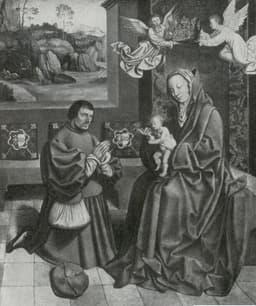
John III of Cleves
Emperor · Medieval
50.6Total
Basic Information
Born
764
1490
Died
786
1539
Era
Medieval
Medieval
Nationality
Abbasid Caliphate
Cleves
Occupation
Emperor
Emperor
Civilization
Middle Eastern
Western
Score Comparison
Military (10%)
10.2
25.9
Political (20%)
30.7
68.0
Influence (20%)
46.3
50.2
Legacy (20%)
34.2
40.0
Leadership (15%)
39.0
72.0
Strategy (15%)
54.8
45.0
TOTAL
37.1
50.6
Al-Hadi — Complete Timeline
785 AD
Accession as CaliphPolitical Action◆ Major
Al-Hadi succeeded his father al-Mahdi as caliph in 785. His reign was brief, lasting only about one year, and was marked by internal conflicts and a struggle for power with his brother Harun al-Rashid.
SuccessionCaliphate
Impact: national
786 AD
Conflict with Harun al-RashidPolitical Action◆ Major
Al-Hadi attempted to remove his brother Harun al-Rashid from the line of succession, leading to a power struggle. This conflict ended with al-Hadi's death under mysterious circumstances, possibly poisoned, allowing Harun to become caliph.
Succession CrisisPower Struggle
Impact: nationaldestructive
John III of Cleves — Complete Timeline
1490 AD
Inherited the Duchy of ClevesPolitical Action◆ Major
John III inherited the Duchy of Cleves upon the death of his father, John II. This succession placed him as ruler of a strategically important territory in the Lower Rhine region, setting the stage for his later territorial acquisitions.
SuccessionCleves
Impact: regional
1510 AD
Marriage to Maria of Jülich-BergPolitical Action◆ Major
John III married Maria, daughter of William IV of J
MarriageDynastic UnionTerritorial Expansion
Impact: regionalconstructive
1521 AD
Inherited the Duchies of Jülich and BergPolitical Action
Upon the death of his father-in-law, William IV, John III inherited the Duchies of J
InheritanceTerritorial MergerJülich-Berg
Impact: regionalconstructive
1532 AD
Issued the Cleves Church OrdinanceReform◆ Major
John III issued a church ordinance for the Duchy of Cleves, introducing moderate Protestant reforms while maintaining a degree of Catholic structure. This ordinance aimed to regulate religious practice and assert ducal authority over the church.
Religious ReformChurch OrdinanceProtestantism
Impact: regionalconstructive
Expert Analysis
Origins
Al-Hadi, born in 764, was the fourth Abbasid caliph, son of Caliph al-Mahdi and his wife Khayzuran. He grew up in the imperial court of Baghdad, immersed in the political intrigues and power struggles of the early Abbasid dynasty. His education was typical for a prince, focusing on Islamic jurisprudence, military tactics, and governance. However, his upbringing was heavily influenced by his mother, who wielded considerable influence over her son and the state.
John III of Cleves, born in 1490, was the son of John II, Duke of Cleves, and Mathilde of Hesse. He inherited the Duchy of Cleves in 1521, but his real rise came through marriage. In 1509, he married Maria of Jülich-Berg, daughter of William IV, Duke of Jülich and Berg. This marriage was a carefully arranged dynastic union that would eventually bring together three powerful territories: Cleves, Jülich, and Berg.
Rise to Power
Al-Hadi ascended to the caliphate in 785 after the death of his father, al-Mahdi. His reign was immediate but short-lived. He faced opposition from his brother, Harun al-Rashid, whom he tried to remove from the line of succession. This power struggle escalated, leading to al-Hadi's suspicious death in 786, possibly by poisoning or suffocation, after only one year on the throne. His rise was swift and his fall equally rapid, with no major turning points beyond his accession.
John III's rise was gradual and strategic. He inherited Cleves in 1521, but his major breakthrough came when his father-in-law, William IV, died in 1511, leaving Jülich and Berg to John's wife Maria. By 1521, John III had formally merged the three duchies into the United Duchies of Jülich-Cleves-Berg. This consolidation made him one of the most powerful princes in the Lower Rhine region. He navigated the complex politics of the Holy Roman Empire, aligning with the Habsburgs while maintaining a degree of independence.
Leadership & Governance
Al-Hadi's leadership was marked by authoritarian tendencies and a focus on consolidating power. He attempted to centralize authority and reduce the influence of his mother and the Barmakid family, who had been powerful under his father. However, his reign was too brief to implement lasting reforms. He scored 39.0 in Leadership and 30.7 in Political, reflecting his inability to maintain control. His strategy (54.8) was sound in theory—securing the succession—but execution was poor, leading to his downfall.
John III, on the other hand, was a pragmatic and moderate ruler. He scored 72.0 in Leadership and 68.0 in Political, indicating effective governance. He issued the Cleves Church Ordinance in 1532, introducing moderate Protestant reforms while preserving Catholic structures, a balancing act that maintained religious peace. He also promoted economic development, improved trade routes, and strengthened the duchies' defenses. His governance was characterized by diplomacy and gradual change rather than radical upheaval.
Triumph & Tragedy
Al-Hadi's greatest success was his accession itself, but his reign was devoid of major achievements. His tragedy was his inability to secure his rule and his mysterious death, which left the caliphate to his brother Harun al-Rashid, who would become one of the most famous Abbasid caliphs. Al-Hadi's failure to eliminate Harun from the succession led to his own demise, and his short reign scored only 10.2 in Military and 37.1 overall.
John III's triumph was the unification of Cleves, Jülich, and Berg, creating a powerful state that lasted beyond his death. He also successfully managed religious tensions during the Reformation. His tragedy was that his son, William V, inherited a state that faced increasing pressure from the Habsburgs and later became embroiled in the Jülich-Cleves War of Succession after William's death. John III's legacy was thus somewhat overshadowed by later conflicts.
Character & Destiny
Al-Hadi was ambitious and ruthless, but his character was flawed by impatience and a lack of political finesse. He attempted to assert his authority too quickly and alienated key supporters, including his mother. His destiny was cut short by his own actions, leading to a score of 46.3 in Influence and 34.2 in Legacy. Historical assessments view him as a minor figure, a footnote in Abbasid history.
John III was known as "the Peaceful" for his diplomatic and conciliatory approach. He was a careful planner, as seen in his marriage and territorial consolidation. His character allowed him to navigate the turbulent Reformation era without major conflict. His destiny was to be remembered as a successful unifier, with a legacy score of 40.0 and influence of 50.2.
Legacy
Al-Hadi's legacy is minimal. His brief reign had no lasting impact on the Abbasid Caliphate, which flourished under Harun al-Rashid. He is remembered primarily for his conflict with Harun and his mysterious death. His total score of 37.1 reflects his insignificance.
John III's legacy is more substantial. The United Duchies of Jülich-Cleves-Berg remained a significant political entity in the Holy Roman Empire until the 17th century. His church ordinance influenced the region's religious landscape. He is remembered as a capable administrator and unifier, with a total score of 50.6, significantly higher than Al-Hadi's.
Conclusion
John III of Cleves clearly had a greater impact than Al-Hadi. With a total score of 50.6 versus Al-Hadi's 37.1, the data shows that John III's political acumen, leadership, and legacy far exceeded those of the brief Abbasid caliph. While Al-Hadi's potential was cut short, John III achieved concrete, lasting unification of territories and maintained stability during a period of religious upheaval. The score gap of 13.5 points underscores this difference. John III is the more significant historical figure.
Rankings
🥇
John III of ClevesLeader
Mil: 25.9Pol: 68.0Inf: 50.2
50.6
🥈
Al-Hadi
Mil: 10.2Pol: 30.7Inf: 46.3
37.1
+13.5 behind
How This Comparison Works
Algorithm
Each figure is scored on 6 dimensions (0—100 scale) based on structured historical data: Military (10%), Political (20%), Influence (20%), Legacy (20%), Leadership (15%), Strategy (15%). The weighted total produces the final ranking.
Data Sources
Scores are computed from structured sub-indicators in the database. Scale factors adjust for era (Ancient ×0.85, Modern ×1.0) and civilization size (Eastern ×1.05, Other ×0.80) to account for differences in population and military scale.
Maximum 3 Figures
Comparisons are limited to 2—3 figures to ensure readability and statistical meaningfulness.
Error Margins
±5 points per dimension — Sub-scores are derived from historical records with inherent uncertainty. Two figures within 5 points on a dimension should be considered roughly equivalent in that area.
Total Score Accuracy
±3 points overall — The weighted combination of 6 dimensions produces a total score with approximately ±3 points of uncertainty. Differences of less than 3 points are not statistically significant— the figures are effectively tied.
Known Limitations
- Historical records are incomplete and uneven across civilizations
- Figures from oral-tradition societies may be underrepresented
- Occupation labels can misclassify multi-role figures
- Scores measure capability and impact, not moral character
- Quantitative scoring is a comparison tool, not absolute truth
Capability Radar
Military (10%) — Battles & Warfare
Battles
10
10
Win Rate
10
10
Expansion
5
20
Political (20%) — Governance & Reform
Reform
10
40
Diplomacy
15
60
Economy
10
50
Influence (20%) — Cultural & Global Reach
Cultural
10
30
Global
5
10
Legacy (20%) — Historical Impact
Historical
10
30
Longevity
5
20
Leadership (15%) — Power & Stability
Tenure
15
60
Stability
10
60
Strategy (15%) — Tactics & Innovation
Strategy
10
10
Tactics
10
10
Reform
5
10
Similar Comparisons
Comments & Discussion
No comments yet. Be the first to share your thoughts!