Loading...
Al-Hajjaj ibn Yusuf vs Zhou Bo
Al-Hajjaj ibn Yusuf leads by 12.7 pts · 2 figures compared
…
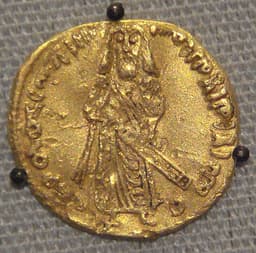
Al-Hajjaj ibn Yusuf
General · Ancient
64.2Total

Zhou Bo
General · Ancient
51.5Total
Basic Information
Born
-661
-240
Died
—
-169
Era
Ancient
Ancient
Nationality
Umayyad Caliphate
China
Occupation
General
General
Civilization
Middle Eastern
Eastern
Score Comparison
Military (10%)
90.0
65.0
Political (20%)
68.0
32.2
Influence (20%)
57.2
53.3
Legacy (20%)
50.0
49.2
Leadership (15%)
71.0
62.0
Strategy (15%)
76.0
52.5
TOTAL
64.2
51.5
Al-Hajjaj ibn Yusuf — Complete Timeline
694 AD
Appointed Governor of IraqPolitical Action◆ Major
Caliph Abd al-Malik appointed Al-Hajjaj ibn Yusuf as governor of Iraq. He was tasked with restoring order after years of rebellion and instability. His appointment marked the beginning of a harsh and effective administration.
GovernorshipIraqUmayyad
Impact: regional
700 AD
Reform of the Arabic ScriptCultural◆ Major
Al-Hajjaj ibn Yusuf commissioned the introduction of diacritical marks (dots) to the Arabic script to standardize the reading of the Quran and prevent mispronunciation. This reform had a lasting impact on Arabic writing and Islamic scholarship.
Language ReformArabic ScriptQuran
Impact: globalconstructive
701 AD
Battle of Dayr al-JamajimWar◆ Major
Al-Hajjaj ibn Yusuf led Umayyad forces to a decisive victory over the rebel army of Abd al-Rahman ibn al-Ash'ath at Dayr al-Jamajim in Iraq. The victory crushed a major rebellion and solidified Umayyad control over Iraq and the eastern provinces.
BattleRebellionUmayyad
Impact: regionaldestructive
Zhou Bo — Complete Timeline
206 BC
Role in the Han FoundingWar◆ Major
Zhou Bo served as a general under Liu Bang during the Chu-Han Contention. He participated in key battles, including the Battle of Gaixia, and was instrumental in the Han victory. He was enfeoffed as the Marquis of Jiang for his services.
Chu-Han ContentionBattle of GaixiaEnfeoffment
Impact: nationalconstructive
180 BC
Suppression of the Lü Clan RebellionWar◆ Major
After the death of Empress L
CoupLü ClanHan Dynasty
Impact: nationalconstructive
169 BC
Imprisonment and PardonPolitical Action
In his later years, Zhou Bo was falsely accused of treason and imprisoned. He was eventually pardoned and released after his son proved his innocence. The incident highlighted the dangers faced by meritorious officials under the Han.
False AccusationImprisonmentHan Dynasty
Impact: nationaltragic
Expert Analysis
Origins
Al-Hajjaj ibn Yusuf was born around 661 CE in the town of Ta'if in the Hejaz (modern-day Saudi Arabia). His father, Yusuf ibn al-Hakam, was a modest schoolteacher, and Al-Hajjaj initially followed the same profession. He belonged to the Thaqif tribe, which had a tradition of administrative service. His early life was marked by poverty and obscurity, but he gained recognition for his sharp intellect and ruthless efficiency as a low-level officer in the Umayyad army.
Zhou Bo was born around 250 BCE in Pei County (modern Jiangsu, China) during the late Qin dynasty. He came from a humble background, working as a weaver of bamboo baskets and later as a funeral musician. Unlike Al-Hajjaj, Zhou Bo had no formal education but was known for his physical strength and courage. He joined Liu Bang's rebel army during the uprising against the Qin, starting as a lowly soldier.
Rise to Power
Al-Hajjaj's rise began when he was appointed as a policeman in the Umayyad capital Damascus. His effectiveness in suppressing a rebellion in the city caught the attention of Caliph Abd al-Malik. In 694 CE, the caliph appointed him governor of Iraq, a volatile province plagued by Kharijite revolts and tribal unrest. Al-Hajjaj's first act was to deliver a famously harsh sermon in Kufa, declaring, "I see heads that are ripe for harvest." He restored order through brutal repression, executing thousands of rebels.
Zhou Bo's rise was gradual. He served Liu Bang (later Emperor Gaozu of Han) during the Chu-Han Contention (206-202 BCE). Zhou Bo fought in pivotal battles, including the Battle of Gaixia (202 BCE), where Liu Bang defeated Xiang Yu. He was enfeoffed as the Marquis of Jiang for his service. After Liu Bang's death, Zhou Bo remained loyal to the Han imperial family, serving under Emperors Hui and Wen. His critical moment came in 180 BCE when the Lü clan, led by Empress Dowager Lü, threatened to usurp the throne.
Leadership & Governance
Al-Hajjaj governed with an iron fist. He centralized tax collection, purged corrupt officials, and raised a new army of Syrian troops to enforce his will. His military leadership score of 90.0 reflects his effectiveness in crushing the rebellion of Abd al-Rahman ibn al-Ash'ath at the Battle of Dayr al-Jamajim (701 CE). However, his political score of 68.0 indicates his methods were divisive. He also reformed the Arabic script by adding diacritical marks, a cultural contribution that standardized Quranic recitation.
Zhou Bo's leadership was more passive but decisive in crisis. He lacked Al-Hajjaj's administrative ruthlessness but excelled in loyalty and timing. His political score of 32.2 reflects his reluctance to engage in court intrigue. When the Lü clan attempted a coup, Zhou Bo, then commander of the Northern Army, tricked his way into the camp, rallied the troops, and arrested the Lü leaders. He then helped install Emperor Wen, securing the Han dynasty's continuity. His military score of 65.0 is lower than Al-Hajjaj's, but his strategic move saved the dynasty.
Triumph & Tragedy
Al-Hajjaj's greatest triumph was pacifying Iraq and the eastern Caliphate. He extended Umayyad control to Central Asia, launching campaigns against the Turks and the Hindu Shahi kingdoms. However, his brutality created lasting resentment among non-Arab Muslims (mawali). His tragedy was his legacy as a tyrant; he died in 714 CE, and later historians, especially in the Abbasid era, vilified him. His reforms, like the Arabic script, outlasted him, but his name became synonymous with oppression.
Zhou Bo's triumph was the suppression of the Lü clan rebellion. By restoring the Han dynasty, he preserved a stable imperial system that would last centuries. However, his tragedy came later. In 169 BCE, he was falsely accused of treason and imprisoned. He endured humiliation and abuse in prison but was eventually pardoned after his son proved his innocence. He died shortly after, a broken man. His legacy as a loyal general was later rehabilitated.
Character & Destiny
Al-Hajjaj was calculating, ruthless, and efficient. He believed that fear was the best tool for governance. His character shaped his destiny: his severity secured short-term stability but earned him eternal infamy. Zhou Bo was simple, brave, and loyal. His lack of political ambition made him a trusted figure in the Han court, but also vulnerable to false accusations. His destiny was to be a savior in crisis and a scapegoat in peace.
Legacy
Al-Hajjaj's legacy is mixed. He is remembered as a tyrant in Islamic historiography, but his administrative and military achievements were foundational for the Umayyad state. His reforms to the Arabic script influenced the entire Islamic world. In contrast, Zhou Bo is celebrated as a loyal minister in Chinese history. His role in the Lü clan suppression is a staple of Han dynasty narratives. While Al-Hajjaj's influence score is 57.2 and legacy 50.0, Zhou Bo scores 53.3 and 49.2 respectively, reflecting a more localized but enduring reputation.
Conclusion
Al-Hajjaj ibn Yusuf had a greater impact than Zhou Bo. His total score of 64.2 against Zhou's 51.5 reflects his broader influence across military, administration, and culture. While Zhou Bo saved a dynasty, Al-Hajjaj shaped an empire's governance and its written language. His actions had consequences that rippled across centuries and continents, whereas Zhou's impact was confined to a single dynasty's survival. Al-Hajjaj's ruthlessness, though morally repugnant, was more transformative. Therefore, Al-Hajjaj emerges as the more consequential historical figure.
Rankings
🥇
Al-Hajjaj ibn YusufLeader
Mil: 90.0Pol: 68.0Inf: 57.2
64.2
🥈
Zhou Bo
Mil: 65.0Pol: 32.2Inf: 53.3
51.5
+12.7 behind
How This Comparison Works
Algorithm
Each figure is scored on 6 dimensions (0—100 scale) based on structured historical data: Military (10%), Political (20%), Influence (20%), Legacy (20%), Leadership (15%), Strategy (15%). The weighted total produces the final ranking.
Data Sources
Scores are computed from structured sub-indicators in the database. Scale factors adjust for era (Ancient ×0.85, Modern ×1.0) and civilization size (Eastern ×1.05, Other ×0.80) to account for differences in population and military scale.
Maximum 3 Figures
Comparisons are limited to 2—3 figures to ensure readability and statistical meaningfulness.
Error Margins
±5 points per dimension — Sub-scores are derived from historical records with inherent uncertainty. Two figures within 5 points on a dimension should be considered roughly equivalent in that area.
Total Score Accuracy
±3 points overall — The weighted combination of 6 dimensions produces a total score with approximately ±3 points of uncertainty. Differences of less than 3 points are not statistically significant— the figures are effectively tied.
Known Limitations
- Historical records are incomplete and uneven across civilizations
- Figures from oral-tradition societies may be underrepresented
- Occupation labels can misclassify multi-role figures
- Scores measure capability and impact, not moral character
- Quantitative scoring is a comparison tool, not absolute truth
Capability Radar
Military (10%) — Battles & Warfare
Battles
85
55
Win Rate
90
60
Expansion
75
30
Political (20%) — Governance & Reform
Reform
85
40
Diplomacy
60
55
Economy
75
30
Influence (20%) — Cultural & Global Reach
Cultural
40
40
Global
55
30
Legacy (20%) — Historical Impact
Historical
65
55
Longevity
50
50
Leadership (15%) — Power & Stability
Tenure
80
60
Stability
50
65
Strategy (15%) — Tactics & Innovation
Strategy
85
55
Tactics
80
50
Reform
70
20
Similar Comparisons
Comments & Discussion
No comments yet. Be the first to share your thoughts!