Loading...
Al-Harith ibn Jabalah vs Mithridates I of Parthia
Mithridates I of Parthia leads by 12.5 pts · 2 figures compared
…

Al-Harith ibn Jabalah
Emperor · Ancient
51.7Total
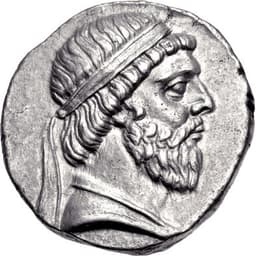
Mithridates I of Parthia
Emperor · Ancient
64.2Total
Basic Information
Born
-529
-195
Died
—
-132
Era
Ancient
Ancient
Nationality
Ghassanid Kingdom
Parthian Empire
Occupation
Emperor
Emperor
Civilization
Middle Eastern
Middle Eastern
Score Comparison
Military (10%)
60.0
85.0
Political (20%)
68.0
55.0
Influence (20%)
52.5
60.0
Legacy (20%)
42.5
56.0
Leadership (15%)
40.0
78.0
Strategy (15%)
57.5
67.2
TOTAL
51.7
64.2
Al-Harith ibn Jabalah — Complete Timeline
529 AD
Suppression of the Samaritan RevoltWar◆ Major
Al-Harith ibn Jabalah commanded Ghassanid troops to crush a Samaritan uprising in Palestine on behalf of the Byzantine Empire. The revolt was brutally suppressed, with many Samaritans killed or enslaved. This action reinforced Ghassanid loyalty to Byzantium and secured their position as key foederati.
Samaritan RevoltByzantine AlliesSuppression
Impact: regionaldestructive
Appointment as King of the GhassanidsPolitical Action◆ Major
Byzantine Emperor Justinian I formally appointed Al-Harith ibn Jabalah as king (phylarch) of the Ghassanids, elevating him to supreme commander of all Arab foederati. This appointment granted him authority over other Arab tribes and increased Ghassanid military and political power in the region.
AppointmentGhassanid KingdomByzantine Empire
Impact: regionalconstructive
531 AD
Battle of CallinicumWar◆ Major
Al-Harith ibn Jabalah led Ghassanid forces as Byzantine allies against the Sasanian Empire at Callinicum. The battle ended inconclusively, but Al-Harith's cavalry performance was noted. This engagement was part of the ongoing Byzantine-Sasanian wars, solidifying Ghassanid military reputation.
Byzantine-Sasanian WarsBattleGhassanids
Impact: regional
Mithridates I of Parthia — Complete Timeline
141 BC
Conquest of Media and MesopotamiaWar
Mithridates I conquered Media and Mesopotamia from the Seleucid Empire, capturing the cities of Ecbatana and Seleucia-on-the-Tigris. These conquests transformed Parthia from a minor kingdom into a major imperial power controlling the Iranian plateau and the Tigris-Euphrates valley.
Parthian ExpansionSeleucid DeclineConquest
Impact: regionalconstructive
140 BC
Adoption of the Title 'King of Kings'Political Action◆ Major
Mithridates I adopted the Achaemenid title 'King of Kings' (Shahanshah) on his coinage and inscriptions. This act asserted Parthian legitimacy as the successor to the Persian Empire and established the ideological foundation for the Parthian Empire.
Royal TitulaturePropagandaAchaemenid Legacy
Impact: regionalconstructive
138 BC
Capture of Demetrius II NicatorWar◆ Major
Mithridates I defeated and captured the Seleucid king Demetrius II Nicator during a campaign to reclaim the eastern provinces. Demetrius was held captive in Parthia for ten years, during which Mithridates consolidated his conquests.
Seleucid-Parthian WarCaptivityPrisoner
Impact: regionalconstructive
Expert Analysis
Origins
Al-Harith ibn Jabalah was born around 520 AD into the Ghassanid dynasty, a nomadic Arab tribe that had migrated from Yemen and settled in the Syrian steppe. The Ghassanids were Christianized and served as Byzantine foederati, guarding the eastern frontier. Al-Harith inherited the chieftaincy in the context of intense rivalry with the Lakhmids, clients of the Sasanian Empire. His early life was shaped by tribal warfare and the need to navigate Byzantine imperial politics.
Mithridates I of Parthia (r. 171–132 BC) was born into the Arsacid dynasty, which had established a small kingdom in Parthia (modern northeastern Iran) after breaking away from the Seleucid Empire. His father was Phraates I, who expanded Parthian territory. Mithridates likely received a military education and was exposed to Hellenistic culture through Seleucid influence. His early experiences included campaigns against the Seleucids and consolidating control over the eastern provinces.
Rise to Power
Al-Harith's rise was formalized in 529 AD when Byzantine Emperor Justinian I appointed him as king (phylarch) of the Ghassanids, elevating him to supreme commander of all Arab foederati. This appointment came after the Ghassanids had proven their military value. The turning point was the suppression of the Samaritan Revolt (529 AD), where Al-Harith brutally crushed the uprising, securing Byzantine favor. He became the preeminent Arab ally, with his authority recognized from the Euphrates to the Red Sea.
Mithridates I ascended the throne in 171 BC after the death of his brother, Phraates I. He immediately launched campaigns to expand Parthian power. His major turning point was the conquest of Media in 148 BC, capturing the capital Ecbatana. This was followed by the conquest of Mesopotamia, including Seleucia-on-the-Tigris in 141 BC. The capture of the Seleucid king Demetrius II Nicator in 138 BC marked his peak, as he adopted the title 'King of Kings' (Shahanshah), asserting Parthian legitimacy as heirs to the Achaemenid Empire.
Leadership & Governance
Al-Harith ruled through a combination of tribal authority and Byzantine backing. He maintained a mobile court and relied on personal loyalty from subordinate sheikhs. His governance focused on military service: providing cavalry for Byzantine campaigns. He did not implement major administrative reforms, as his kingdom remained a client state. His leadership score of 40.0 reflects limited independent authority.
Mithridates I, scoring 78.0 in leadership, established a decentralized imperial system. He retained local rulers as vassals, allowing religious and cultural autonomy, which facilitated rapid expansion. He adopted Hellenistic administrative practices, minted coins with Greek and Aramaic legends, and promoted Zoroastrianism. His political score of 55.0 indicates moderate institutional building.
Triumph & Tragedy
Al-Harith's greatest success was the Battle of Callinicum (531 AD), where his Ghassanid forces, as Byzantine allies, fought the Sasanians to a draw. However, the battle was inconclusive and Byzantine sources criticize his tactics. His tragedy was the lack of lasting independence: after his death, the Ghassanid kingdom declined and was eventually absorbed. He scored 60.0 in military and 42.5 in legacy.
Mithridates I's triumphs include conquering Media and Mesopotamia, expanding Parthia from a minor kingdom to a major empire. He captured two Seleucid kings, Demetrius II and Antiochus VII (though Antiochus was later defeated after Mithridates' death). His tragedy was that his conquests overstretched Parthia: after his death, the empire faced internal rebellions and external threats. He scored 85.0 in military and 56.0 in legacy.
Character & Destiny
Al-Harith was a capable tribal leader, pragmatic in serving Byzantine interests to secure his position. He was ruthless, as shown in the Samaritan suppression. His character was shaped by clientage, limiting his strategic options. He could not project power independently, which constrained his destiny.
Mithridates I was ambitious and strategic, with a vision of restoring Persian glory. He was patient, consolidating conquests before advancing. His adoption of the title 'King of Kings' shows his understanding of legitimacy. His character drove him to create a multi-ethnic empire, but the rapid expansion created administrative challenges that later rulers struggled with.
Legacy
Al-Harith's legacy is primarily as a Ghassanid king who temporarily unified Arab tribes under Byzantine patronage. He is remembered in pre-Islamic Arabic poetry as a generous patron. However, his influence waned after his death, and the Ghassanid state collapsed within a century. His legacy score of 42.5 reflects this.
Mithridates I established Parthia as a major power that lasted until 224 AD. He set the template for Parthian imperial rule: decentralized, tolerant, and militarily strong. His conquests doubled Parthian territory. Later Parthian kings styled themselves after him. His influence score of 60.0 and legacy score of 56.0 reflect his foundational role.
Conclusion
Mithridates I of Parthia had greater historical impact than Al-Harith ibn Jabalah. With a total score of 64.2 versus 51.7, Mithridates outperformed in military (85.0 vs 60.0), leadership (78.0 vs 40.0), and strategy (67.2 vs 57.5). While Al-Harith was a competent client king, Mithridates founded an empire that challenged Rome and shaped the Near East for centuries. The 12.5-point gap underscores that Mithridates' actions had enduring consequences, whereas Al-Harith's influence was contingent on Byzantine support and faded quickly.
Rankings
🥇
Mithridates I of ParthiaLeader
Mil: 85.0Pol: 55.0Inf: 60.0
64.2
🥈
Al-Harith ibn Jabalah
Mil: 60.0Pol: 68.0Inf: 52.5
51.7
+12.5 behind
How This Comparison Works
Algorithm
Each figure is scored on 6 dimensions (0—100 scale) based on structured historical data: Military (10%), Political (20%), Influence (20%), Legacy (20%), Leadership (15%), Strategy (15%). The weighted total produces the final ranking.
Data Sources
Scores are computed from structured sub-indicators in the database. Scale factors adjust for era (Ancient ×0.85, Modern ×1.0) and civilization size (Eastern ×1.05, Other ×0.80) to account for differences in population and military scale.
Maximum 3 Figures
Comparisons are limited to 2—3 figures to ensure readability and statistical meaningfulness.
Error Margins
±5 points per dimension — Sub-scores are derived from historical records with inherent uncertainty. Two figures within 5 points on a dimension should be considered roughly equivalent in that area.
Total Score Accuracy
±3 points overall — The weighted combination of 6 dimensions produces a total score with approximately ±3 points of uncertainty. Differences of less than 3 points are not statistically significant— the figures are effectively tied.
Known Limitations
- Historical records are incomplete and uneven across civilizations
- Figures from oral-tradition societies may be underrepresented
- Occupation labels can misclassify multi-role figures
- Scores measure capability and impact, not moral character
- Quantitative scoring is a comparison tool, not absolute truth
Capability Radar
Military (10%) — Battles & Warfare
Battles
55
75
Win Rate
60
80
Expansion
45
90
Political (20%) — Governance & Reform
Reform
45
60
Diplomacy
65
75
Economy
50
65
Influence (20%) — Cultural & Global Reach
Cultural
40
55
Global
35
65
Legacy (20%) — Historical Impact
Historical
45
70
Longevity
30
60
Leadership (15%) — Power & Stability
Tenure
60
70
Stability
55
70
Strategy (15%) — Tactics & Innovation
Strategy
55
85
Tactics
50
70
Reform
40
65
Similar Comparisons
Comments & Discussion
No comments yet. Be the first to share your thoughts!