Loading...
Al-Mahdi vs Askia Muhammad
Askia Muhammad leads by 16.7 pts · 2 figures compared
…
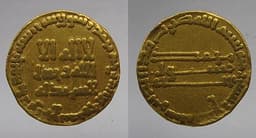
Al-Mahdi
Emperor · Medieval
54.5Total
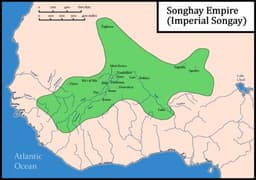
Askia Muhammad
Emperor · Medieval
71.2Total
Basic Information
Born
744
1443
Died
785
1538
Era
Medieval
Medieval
Nationality
Abbasid Caliphate
Songhai Empire
Occupation
Emperor
Emperor
Civilization
Middle Eastern
Other
Score Comparison
Military (10%)
52.5
78.0
Political (20%)
68.0
70.3
Influence (20%)
59.0
82.0
Legacy (20%)
50.0
55.0
Leadership (15%)
40.0
78.0
Strategy (15%)
57.5
69.1
TOTAL
54.5
71.2
Al-Mahdi — Complete Timeline
762 AD
Construction of Baghdad's Round CityCultural◆ Major
Al-Mahdi oversaw the completion of the Round City of Baghdad, the new Abbasid capital founded by his father al-Mansur. This city became a center of trade, learning, and culture, symbolizing Abbasid power.
Urban DevelopmentCapital City
Impact: globalconstructive
775 AD
Campaign against the ByzantinesWar◆ Major
Al-Mahdi led military campaigns against the Byzantine Empire, including a major expedition in 775 that reached as far as the outskirts of Constantinople. These campaigns were part of the ongoing Arab-Byzantine wars and resulted in territorial gains for the Abbasids.
Arab-Byzantine WarsMilitary Campaign
Impact: regional
779 AD
Suppression of the Kharijite RevoltWar
Al-Mahdi dispatched forces to suppress a Kharijite rebellion in the Jazira region. The revolt was crushed, and its leaders were executed, reinforcing Abbasid control over the region.
Kharijite RevoltInternal Conflict
Impact: regionaldestructive
780 AD
Patronage of the Translation MovementCultural◆ Major
Al-Mahdi supported the translation of Greek, Persian, and Indian scientific and philosophical texts into Arabic. This patronage contributed to the Abbasid Golden Age and the preservation of classical knowledge.
Translation MovementGolden Age
Impact: globalprogressive
Askia Muhammad — Complete Timeline
1493 AD
Coup against Sonni BaruPolitical Action
Askia Muhammad overthrew Sonni Baru, the son of Sonni Ali, in a coup. Muhammad, a general under Sonni Ali, seized power after Baru refused to embrace Islam more fully, establishing the Askia dynasty.
CoupAskia DynastyIslam
Impact: regional
1496 AD
Pilgrimage to MeccaCultural◆ Major
Askia Muhammad made a pilgrimage to Mecca, traveling with a large retinue and distributing gold. He was appointed Caliph of the Sudan by the Abbasid caliph, enhancing his religious and political legitimacy.
PilgrimageMeccaCaliph
Impact: regionalconstructive
1498 AD
Administrative ReformsReform◆ Major
Askia Muhammad reorganized the Songhai Empire into provinces governed by appointed officials. He standardized weights, measures, and currency, and established a professional bureaucracy, improving tax collection and governance.
AdministrationBureaucracyTaxation
Impact: regionalconstructive
1500 AD
Promotion of Islamic ScholarshipCultural◆ Major
Askia Muhammad patronized Islamic scholars and built mosques and schools in Timbuktu, Gao, and Djenn
ScholarshipTimbuktuIslam
Impact: regionalconstructive
1512 AD
Conquest of the Hausa StatesWar◆ Major
Askia Muhammad led a military campaign against the Hausa city-states, including Kano and Katsina. He conquered them and imposed tribute, extending Songhai control over the Hausa region and securing trade routes.
ConquestHausa StatesTrade Routes
Impact: regional
Expert Analysis
Origins
Al-Mahdi (born 744 or 745) was the third Abbasid caliph, born to al-Mansur, the founder of Baghdad. His early life was spent in the nascent Abbasid court, where he received education in Islamic law and administration. His mother was a Persian slave, which influenced his later patronage of Persian culture.
Askia Muhammad (born c. 1443) was a Soninke general under Sonni Ali, the founder of the Songhai Empire. His early life is obscure, but he rose through military ranks, demonstrating skill in cavalry tactics. He was not of royal blood, which made his later coup a break from tradition.
Rise to Power
Al-Mahdi became caliph in 775 after his father's death. He consolidated power by suppressing a rebellion in Khurasan and appointing loyalists to key positions. His reign was marked by a shift towards Persian administrative practices, influenced by the Barmakids, a powerful Persian family.
Askia Muhammad seized power in 1493 by overthrowing Sonni Baru, the son of Sonni Ali. Baru's refusal to convert to Islam alienated Muslim merchants and scholars. Muhammad, a devout Muslim, gained their support. He defeated Baru at the Battle of Anfao, establishing a new dynasty.
Leadership & Governance
Al-Mahdi's governance focused on centralization and cultural patronage. He completed the Round City of Baghdad, which served as the administrative hub. He increased the use of Persian bureaucrats and supported the Translation Movement, translating Greek, Persian, and Indian texts into Arabic. He also reformed the postal system (barid). However, his military leadership was moderate; his campaigns against the Byzantines achieved limited gains, scoring 52.5 in military.
Askia Muhammad implemented sweeping administrative reforms. He divided the empire into provinces governed by appointed officials, replacing hereditary chiefs. He standardized weights, measures, and currency, facilitating trade. He established a standing army and a navy on the Niger River. His military score of 78.0 reflects conquests of the Hausa states, Mali territories, and salt mines of Taghaza. He also promoted Islamic scholarship, building mosques and schools in Timbuktu.
Triumph & Tragedy
Al-Mahdi's triumphs include the flourishing of Baghdad as a center of learning and his patronage of the Translation Movement, which preserved classical knowledge. His construction of the Round City was a symbol of Abbasid power. However, his failure to decisively defeat the Byzantines limited his military legacy. He also faced internal rebellions, including a Kharijite revolt in 776 that he suppressed brutally, but which exposed religious tensions.
Askia Muhammad's greatest triumph was his pilgrimage to Mecca in 1496-98, which elevated his prestige and secured recognition as Caliph of the Sudan from the Abbasid caliph. His conquests expanded Songhai to its largest extent. However, his later years were marred by a civil war with his sons. In 1528, his son Musa deposed him, and he died in 1538, blind and exiled. This failure in succession planning was a major tragedy.
Character & Destiny
Al-Mahdi was known for his piety and interest in religious debate, but also for his ruthlessness against opponents. He executed the heretic al-Muqanna and suppressed the Kharijites. His character shaped a reign that balanced cultural patronage with political repression. His death in 785 from a fall while hunting cut short his reforms.
Askia Muhammad was a devout Muslim and a skilled administrator. He combined military prowess with diplomatic acumen. However, his favoritism towards certain sons and failure to designate a clear heir led to his downfall. His character was marked by ambition and religious zeal, which drove his conquests but also allowed factionalism to fester.
Legacy
Al-Mahdi's legacy is tied to the cultural flowering of the Abbasid Caliphate. The Translation Movement under his patronage laid the groundwork for the Islamic Golden Age. However, his military achievements were modest, and his reign is often overshadowed by his father and son. His total score of 54.5 reflects this mixed impact.
Askia Muhammad left a more tangible legacy in West Africa. His administrative reforms created a centralized state that lasted until the Moroccan invasion in 1591. He made Timbuktu a center of Islamic learning, attracting scholars like Ahmed Baba. His influence score of 82.0 is the highest in this comparison, reflecting his enduring impact on West African history. However, his legacy is tempered by the empire's eventual collapse.
Conclusion
Askia Muhammad had a greater impact than Al-Mahdi. While Al-Mahdi contributed to cultural and intellectual history, his military and political scores (52.5 and 68.0) are lower than Askia Muhammad's (78.0 and 70.3). Askia Muhammad's administrative reforms and conquests created a lasting empire, and his promotion of Islam shaped West Africa for centuries. The 16.7-point gap in total scores (71.2 vs 54.5) reflects this disparity. Al-Mahdi's influence was more regional and ephemeral, while Askia Muhammad's legacy endured in political structures and religious practices.
Rankings
🥇
Askia MuhammadLeader
Mil: 78.0Pol: 70.3Inf: 82.0
71.2
🥈
Al-Mahdi
Mil: 52.5Pol: 68.0Inf: 59.0
54.5
+16.7 behind
How This Comparison Works
Algorithm
Each figure is scored on 6 dimensions (0—100 scale) based on structured historical data: Military (10%), Political (20%), Influence (20%), Legacy (20%), Leadership (15%), Strategy (15%). The weighted total produces the final ranking.
Data Sources
Scores are computed from structured sub-indicators in the database. Scale factors adjust for era (Ancient ×0.85, Modern ×1.0) and civilization size (Eastern ×1.05, Other ×0.80) to account for differences in population and military scale.
Maximum 3 Figures
Comparisons are limited to 2—3 figures to ensure readability and statistical meaningfulness.
Error Margins
±5 points per dimension — Sub-scores are derived from historical records with inherent uncertainty. Two figures within 5 points on a dimension should be considered roughly equivalent in that area.
Total Score Accuracy
±3 points overall — The weighted combination of 6 dimensions produces a total score with approximately ±3 points of uncertainty. Differences of less than 3 points are not statistically significant— the figures are effectively tied.
Known Limitations
- Historical records are incomplete and uneven across civilizations
- Figures from oral-tradition societies may be underrepresented
- Occupation labels can misclassify multi-role figures
- Scores measure capability and impact, not moral character
- Quantitative scoring is a comparison tool, not absolute truth
Capability Radar
Military (10%) — Battles & Warfare
Battles
55
75
Win Rate
60
80
Expansion
50
80
Political (20%) — Governance & Reform
Reform
55
90
Diplomacy
60
80
Economy
65
85
Influence (20%) — Cultural & Global Reach
Cultural
50
70
Global
45
60
Legacy (20%) — Historical Impact
Historical
55
75
Longevity
50
65
Leadership (15%) — Power & Stability
Tenure
60
85
Stability
55
80
Strategy (15%) — Tactics & Innovation
Strategy
55
75
Tactics
50
70
Reform
40
85
Similar Comparisons
Comments & Discussion
No comments yet. Be the first to share your thoughts!