Loading...
Al-Mahdi vs Ivan I Kalita
Al-Mahdi leads by 1.9 pts · 2 figures compared
…
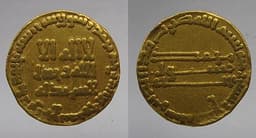
Al-Mahdi
Emperor · Medieval
54.5Total
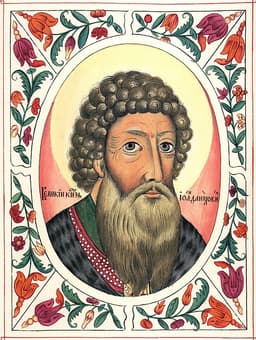
Ivan I Kalita
Emperor · Medieval
52.6Total
Basic Information
Born
744
1288
Died
785
1341
Era
Medieval
Medieval
Nationality
Abbasid Caliphate
Muscovy
Occupation
Emperor
Emperor
Civilization
Middle Eastern
Western
Score Comparison
Military (10%)
52.5
25.9
Political (20%)
68.0
72.0
Influence (20%)
59.0
51.8
Legacy (20%)
50.0
48.3
Leadership (15%)
40.0
68.0
Strategy (15%)
57.5
39.6
TOTAL
54.5
52.6
Al-Mahdi — Complete Timeline
762 AD
Construction of Baghdad's Round CityCultural◆ Major
Al-Mahdi oversaw the completion of the Round City of Baghdad, the new Abbasid capital founded by his father al-Mansur. This city became a center of trade, learning, and culture, symbolizing Abbasid power.
Urban DevelopmentCapital City
Impact: globalconstructive
775 AD
Campaign against the ByzantinesWar◆ Major
Al-Mahdi led military campaigns against the Byzantine Empire, including a major expedition in 775 that reached as far as the outskirts of Constantinople. These campaigns were part of the ongoing Arab-Byzantine wars and resulted in territorial gains for the Abbasids.
Arab-Byzantine WarsMilitary Campaign
Impact: regional
779 AD
Suppression of the Kharijite RevoltWar
Al-Mahdi dispatched forces to suppress a Kharijite rebellion in the Jazira region. The revolt was crushed, and its leaders were executed, reinforcing Abbasid control over the region.
Kharijite RevoltInternal Conflict
Impact: regionaldestructive
780 AD
Patronage of the Translation MovementCultural◆ Major
Al-Mahdi supported the translation of Greek, Persian, and Indian scientific and philosophical texts into Arabic. This patronage contributed to the Abbasid Golden Age and the preservation of classical knowledge.
Translation MovementGolden Age
Impact: globalprogressive
Ivan I Kalita — Complete Timeline
1325 AD
Appointed as Grand Prince of MoscowPolitical Action◆ Major
Ivan I became Grand Prince of Moscow after his brother Yuri's death. He secured the title by cooperating with the Mongol Golden Horde, using his position to collect tribute from other Russian principalities on behalf of the Khan.
MoscowGolden HordeTribute
Impact: regional
1326 AD
Moved the Metropolitan See to MoscowPolitical Action◆ Major
Ivan I persuaded Metropolitan Peter to move his residence from Vladimir to Moscow. This made Moscow the ecclesiastical center of the Russian Orthodox Church, greatly enhancing its political and religious authority.
MoscowOrthodox ChurchMetropolitan
Impact: regionalconstructive
1327 AD
Suppressed the Tver UprisingWar◆ Major
When Tver rebelled against Mongol tax collectors, Ivan I led a Mongol-Muscovite army to crush the uprising. The destruction of Tver eliminated Moscow's main rival for supremacy in northeastern Russia.
TverGolden HordeUprising
Impact: regionaldestructive
1328 AD
Acquired the title of Grand Prince of VladimirPolitical Action◆ Major
Ivan I obtained the yarlyk (patent) for the Grand Principality of Vladimir from the Mongol Khan Uzbek. This made Moscow the primary collector of tribute for the Horde and the most powerful Russian principality.
MoscowGolden HordeVladimir
Impact: regional
Expert Analysis
Origins
Al-Mahdi, born in 744 or 745 as Muhammad ibn al-Mansur, was the third Abbasid caliph. His father, al-Mansur, founded Baghdad and established the dynasty's power. Al-Mahdi grew up in the court, receiving education in Islamic sciences and governance. He was appointed governor of Rayy before becoming caliph in 775.
Ivan I Kalita, born around 1288, was a prince of Moscow. His father, Daniel of Moscow, was the youngest son of Alexander Nevsky. Ivan inherited a small principality and initially served as a deputy to his elder brother Yuri. The death of Yuri in 1325 left Ivan as the sole ruler of Moscow.
Rise to Power
Al-Mahdi's rise was uncontested; he succeeded his father al-Mansur in 775 after the latter's death during a pilgrimage. His early reign focused on consolidating control over the vast Abbasid realm, dealing with rebellions, and continuing the construction of Baghdad.
Ivan I Kalita rose through cooperation with the Mongol Golden Horde. After Yuri's murder by the prince of Tver, Ivan traveled to Sarai and secured the title of Grand Prince of Moscow from Khan Uzbek in 1325. He then used his position to collect tribute for the Mongols, gaining their trust and weakening rivals like Tver.
Leadership & Governance
Al-Mahdi's governance emphasized cultural patronage and religious orthodoxy. He supported the Translation Movement, funding scholars to translate Greek, Persian, and Indian works into Arabic. This fostered intellectual growth but also required significant state expenditure. He also suppressed the Kharijite revolt, demonstrating his willingness to use force against dissent. His leadership score of 40.0 reflects a mixed record: he was effective but not transformative.
Ivan I Kalita governed Moscow with a focus on financial accumulation and strategic submission. He earned the nickname "Kalita" (moneybag) for his wealth, which came from tribute collection. He used these funds to buy land, construct churches, and strengthen Moscow's fortifications. His political score of 72.0 reflects his ability to navigate Mongol politics and expand Moscow's influence without direct military confrontation.
Triumph & Tragedy
Al-Mahdi's greatest triumph was his patronage of the Translation Movement, which preserved and transmitted classical knowledge. The completion of Baghdad's Round City also stands as an architectural achievement. His tragedy was that many of his military campaigns, including the 775 expedition against the Byzantines, failed to achieve lasting gains. The Byzantine frontier remained largely unchanged, and his military score of 52.5 indicates modest success.
Ivan I's triumph was moving the Metropolitan See to Moscow in 1325, making it the religious center of Russia. This gave Moscow immense soft power. His tragedy was his complicity in the Mongol suppression of Tver in 1327, which devastated a Russian principality and reinforced Mongol dominance. While this eliminated a rival, it also demonstrated Moscow's subservience. His military score of 25.9 is low, but his political acumen (72.0) compensated.
Character & Destiny
Al-Mahdi was known for his piety and generosity, but also for his ruthlessness against enemies. He executed the Kharijite leaders and dealt harshly with rebellions. His character combined intellectual curiosity with authoritarian control, shaping a reign that promoted learning but also centralized power.
Ivan I Kalita was cunning and patient. He understood the necessity of Mongol overlordship and used it to his advantage. His character was pragmatic, avoiding unnecessary risks. This approach secured Moscow's rise but at the cost of moral compromise. Historians note that his legacy is mixed: he built Moscow's power but at the expense of Russian unity against the Mongols.
Legacy
Al-Mahdi's legacy is tied to the Abbasid Golden Age. The Translation Movement he supported laid the groundwork for later advances in science and philosophy. Baghdad's Round City became a symbol of Islamic civilization. However, his reign did not fundamentally alter the course of Islamic history; his influence score of 59.0 reflects moderate impact.
Ivan I Kalita's legacy is more direct: he transformed Moscow from a minor principality into the dominant Russian state. His policies of tribute collection and ecclesiastical centralization set the stage for Moscow's eventual liberation from Mongol rule. His legacy score of 48.3 is slightly lower than Al-Mahdi's 50.0, but his political legacy arguably had greater long-term consequences for Russia.
Conclusion
While Al-Mahdi scored higher overall (54.5 vs 52.6), Ivan I Kalita had a more profound impact on the political landscape of Eastern Europe. Al-Mahdi's contributions to culture were significant, but his governance did not fundamentally alter the Abbasid trajectory. Ivan I, by contrast, transformed Moscow into the nucleus of a future empire. His political score of 72.0 versus Al-Mahdi's 68.0 underscores his superior statecraft. Thus, in terms of lasting geopolitical impact, Ivan I Kalita surpasses Al-Mahdi.
Rankings
🥇
Al-MahdiLeader
Mil: 52.5Pol: 68.0Inf: 59.0
54.5
🥈
Ivan I Kalita
Mil: 25.9Pol: 72.0Inf: 51.8
52.6
+1.9 behind
How This Comparison Works
Algorithm
Each figure is scored on 6 dimensions (0—100 scale) based on structured historical data: Military (10%), Political (20%), Influence (20%), Legacy (20%), Leadership (15%), Strategy (15%). The weighted total produces the final ranking.
Data Sources
Scores are computed from structured sub-indicators in the database. Scale factors adjust for era (Ancient ×0.85, Modern ×1.0) and civilization size (Eastern ×1.05, Other ×0.80) to account for differences in population and military scale.
Maximum 3 Figures
Comparisons are limited to 2—3 figures to ensure readability and statistical meaningfulness.
Error Margins
±5 points per dimension — Sub-scores are derived from historical records with inherent uncertainty. Two figures within 5 points on a dimension should be considered roughly equivalent in that area.
Total Score Accuracy
±3 points overall — The weighted combination of 6 dimensions produces a total score with approximately ±3 points of uncertainty. Differences of less than 3 points are not statistically significant— the figures are effectively tied.
Known Limitations
- Historical records are incomplete and uneven across civilizations
- Figures from oral-tradition societies may be underrepresented
- Occupation labels can misclassify multi-role figures
- Scores measure capability and impact, not moral character
- Quantitative scoring is a comparison tool, not absolute truth
Capability Radar
Military (10%) — Battles & Warfare
Battles
55
10
Win Rate
60
10
Expansion
50
20
Political (20%) — Governance & Reform
Reform
55
55
Diplomacy
60
70
Economy
65
75
Influence (20%) — Cultural & Global Reach
Cultural
50
30
Global
45
20
Legacy (20%) — Historical Impact
Historical
55
50
Longevity
50
40
Leadership (15%) — Power & Stability
Tenure
60
60
Stability
55
65
Strategy (15%) — Tactics & Innovation
Strategy
55
15
Tactics
50
5
Reform
40
5
Similar Comparisons
Comments & Discussion
No comments yet. Be the first to share your thoughts!