Loading...
Ivan I Kalita vs Napoleon Bonaparte
Napoleon Bonaparte leads by 18.3 pts · 2 figures compared
…
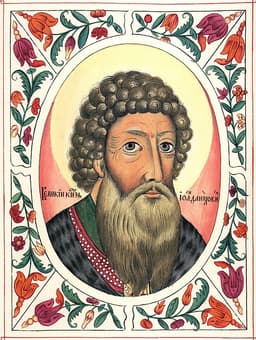
Ivan I Kalita
Emperor · Medieval
52.6Total

Napoleon Bonaparte
General · Modern
70.9Total
Basic Information
Born
1288
1769
Died
1341
1821
Era
Medieval
Modern
Nationality
Muscovy
France
Occupation
Emperor
General
Civilization
Western
Western
Score Comparison
Military (10%)
25.9
94.0
Political (20%)
72.0
72.0
Influence (20%)
51.8
40.0
Legacy (20%)
48.3
80.0
Leadership (15%)
68.0
78.0
Strategy (15%)
39.6
90.0
TOTAL
52.6
70.9
Ivan I Kalita — Complete Timeline
1325 AD
Appointed as Grand Prince of MoscowPolitical Action◆ Major
Ivan I became Grand Prince of Moscow after his brother Yuri's death. He secured the title by cooperating with the Mongol Golden Horde, using his position to collect tribute from other Russian principalities on behalf of the Khan.
MoscowGolden HordeTribute
Impact: regional
1326 AD
Moved the Metropolitan See to MoscowPolitical Action◆ Major
Ivan I persuaded Metropolitan Peter to move his residence from Vladimir to Moscow. This made Moscow the ecclesiastical center of the Russian Orthodox Church, greatly enhancing its political and religious authority.
MoscowOrthodox ChurchMetropolitan
Impact: regionalconstructive
1327 AD
Suppressed the Tver UprisingWar◆ Major
When Tver rebelled against Mongol tax collectors, Ivan I led a Mongol-Muscovite army to crush the uprising. The destruction of Tver eliminated Moscow's main rival for supremacy in northeastern Russia.
TverGolden HordeUprising
Impact: regionaldestructive
1328 AD
Acquired the title of Grand Prince of VladimirPolitical Action◆ Major
Ivan I obtained the yarlyk (patent) for the Grand Principality of Vladimir from the Mongol Khan Uzbek. This made Moscow the primary collector of tribute for the Horde and the most powerful Russian principality.
MoscowGolden HordeVladimir
Impact: regional
Napoleon Bonaparte — Complete Timeline
1799 AD
Coup of 18 BrumaireOther◆ Major
Napoleon Bonaparte, with support from his brother Lucien and key political figures, overthrew the Directory in a bloodless coup. He established the Consulate with himself as First Consul, effectively becoming the ruler of France. This event ended the French Revolution's most unstable period.
French RevolutionCoupRise to Power
Impact: regional
1804 AD
Promulgation of the Napoleonic CodeOther◆ Major
Napoleon enacted the Civil Code of the French, known as the Napoleonic Code, a comprehensive set of laws that replaced the fragmented feudal legal systems. The code established legal equality, protected property rights, and secularized law. It became the basis for legal systems in many European and world countries.
Legal ReformNapoleonic CodeCivil Law
Impact: globalconstructive
1805 AD
Battle of AusterlitzWar◆ Major
Napoleon's Grande Arm
Napoleonic WarsBattleDecisive Victory
Impact: global
1812 AD
Invasion of RussiaWar◆ Major
Napoleon led the Grande Arm
Napoleonic WarsInvasionDisaster
Impact: globaldestructive
1815 AD
Battle of WaterlooWar◆ Major
Napoleon's French army was defeated by the combined forces of the Duke of Wellington's Anglo-Allied army and Gebhard Leberecht von Bl
Napoleonic WarsBattleFinal Defeat
Impact: globaldestructive
Expert Analysis
ivan-i-kalita-vs-napoleon-bonaparte
# The Conqueror and the Collector
On a June morning in 1815, Napoleon Bonaparte stood on a muddy field near Waterloo, watching his Imperial Guard march into a storm of British cannon fire. Less than five centuries earlier, another man had stood on a very different field—a forest clearing outside Tver, watching Mongol horsemen burn a Russian city to the ground. One was the greatest military genius of the modern age; the other was a tax collector who never won a battle. Yet both shaped history as profoundly as any sword-wielding conqueror. The question is not which was greater, but what made them so different—and what their differences reveal about power itself.
Origins
Napoleon was born in 1769 on the island of Corsica, a place only recently annexed by France. His family were minor nobles, proud and impoverished. He grew up speaking Italian-accented French, an outsider in a country he would one day rule. The son of the Enlightenment, he devoured books on military tactics, artillery science, and the campaigns of Alexander and Caesar. His world was one of rapid change: the French Revolution had shattered the old order, and a gifted young man could rise faster than ever before.
Ivan I Kalita was born around 1288 in Moscow, then a small, unremarkable town in the forests of northeastern Rus. His world was one of grinding stability—the stability of Mongol domination. The Golden Horde had crushed the Russian principalities in the 1230s, and for generations, the princes of Rus had learned one lesson above all: survival meant submission. Ivan's father, Daniil, had begun the slow work of building Moscow's power, but the family's resources were meager. Ivan grew up not in a palace of marble, but in a wooden fortress, surrounded by tribute collectors and Mongol envoys. His education was not in philosophy or artillery, but in accounting, diplomacy, and the art of knowing when to bow.
Rise to Power
Napoleon's rise was a cannon shot. At 24, he drove the British out of Toulon. At 26, he crushed a royalist uprising in Paris with a "whiff of grapeshot." At 27, he took command of the French army in Italy and, in a single year, won a dozen battles against the Austrians. By 30, he was First Consul of France; by 35, Emperor. Every step was a gamble, every victory a ladder. His rise was the product of talent, yes, but also of a revolutionary era that had demolished the old hierarchies. In 1793, a Corsican artillery officer could become a general; in 1789, he would have been a nobody.
Ivan's rise was a whisper. In 1325, his brother Yuri died, and Ivan inherited the title of Grand Prince of Moscow. But the title meant nothing without Mongol approval. Ivan traveled to Sarai, the Mongol capital on the Volga, and knelt before Khan Uzbek. He paid tribute, offered gifts, and spoke in soft words. The Khan gave him the yarlyk—the patent to rule. But Ivan's true masterstroke came in 1326, when he persuaded Metropolitan Peter, the head of the Russian Church, to move his residence from Vladimir to Moscow. This was not a military conquest; it was a bureaucratic coup. By making Moscow the spiritual capital of Rus, Ivan ensured that the Church's wealth, influence, and legitimacy would flow into his city. The Mongols did not object—what did they care about bishops?
Leadership & Governance
Napoleon governed like he commanded: with speed, clarity, and relentless energy. He reformed French law with the Napoleonic Code, sweeping away feudal remnants and establishing equality before the law. He centralized the state, created a system of lycées for education, and negotiated the Concordat with the Pope to restore religious peace. His leadership was magnetic—soldiers adored him, and even his enemies acknowledged his brilliance. But he also governed like a conqueror: he placed his brothers on thrones, demanded tribute from vassals, and treated Europe as a chessboard. His political wisdom, scored at 75, was real but brittle. He could build an empire, but he could not sustain it.
Ivan governed like a banker. His political score is also 75, but his methods could not be more different. He collected tribute for the Mongols, a task that required meticulous record-keeping, negotiation, and the willingness to enforce the Khan's will. When Tver rebelled in 1327 against Mongol tax collectors, Ivan led a Mongol-Muscovite army to crush the uprising. The destruction was total—Tver never recovered. Ivan's reward was the title of Grand Prince of Vladimir, making Moscow the dominant Russian principality. He used the tribute system to enrich Moscow: by collecting taxes for the Mongols, he kept a portion for himself, and he also secured exemptions for Moscow's lands. His military score is a mere 14—he never won a battle. But he understood that in a world where the Mongols held all the military cards, the only path to power was through their favor.
Triumph & Tragedy
Napoleon's greatest moment was Austerlitz in 1805, where he destroyed the combined armies of Austria and Russia in a single day. His tragedy was the invasion of Russia in 1812. He marched 600,000 men into the Russian winter and returned with fewer than 100,000. The disaster broke his aura of invincibility. Exiled to Elba, he escaped and ruled for a Hundred Days, only to be defeated at Waterloo in 1815. His final exile on Saint Helena was a slow, bitter end—a man who had conquered Europe reduced to dictating memoirs to a handful of followers.
Ivan's triumph was quieter but more enduring. By the time he died in 1341, Moscow was the richest and most powerful city in Rus. The Metropolitan See was in Moscow, the treasury was full, and the Mongol Khan trusted Ivan's successors. His tragedy was that he never saw the fruits of his labor. Moscow would not throw off Mongol rule for another 140 years, and Ivan's methods—submission, tribute, and patience—would be reviled by later generations who glorified resistance. He died known as "Kalita," meaning "moneybag," a nickname that honored his wealth but also hinted at his role as a tax collector for the oppressor.
Character & Destiny
Napoleon was driven by ambition, ego, and a belief that he was destined to reshape the world. "I am not a man," he once said, "but a thing." He could not stop—victory demanded more victory, power demanded more power. His personality was his strength and his flaw. The same relentless drive that carried him to Moscow also destroyed him there.
Ivan was driven by calculation, caution, and a cold-eyed realism. He understood that in a world of Mongol khans and rival princes, the wise man does not fight—he waits. His personality was his armor. He never overreached, never gambled on a battle, never let pride override prudence. He was the opposite of Napoleon: where Napoleon burned bright and fast, Ivan burned slow and steady.
Legacy
Napoleon's legacy is written in law, in borders, and in the modern state. The Napoleonic Code influenced legal systems across Europe and the Americas. He shattered the Holy Roman Empire and redrew the map of Europe. He is remembered as a military genius, a tyrant, and a reformer—a figure of endless fascination and debate. His scores reflect this: Military 94, Influence 82, Legacy 78.
Ivan's legacy is Moscow itself. By making Moscow the political and ecclesiastical center of Rus, he laid the foundation for the Russian state. The tsars who followed—Ivan the Terrible, Peter the Great, Catherine the Great—all built on his work. He is remembered as a builder, not a warrior; a diplomat, not a conqueror. His scores are modest: Military 14, Influence 68.8, Legacy 64.1. But without Ivan Kalita, there might never have been a Russia strong enough to produce a Napoleon of its own.
Conclusion
Napoleon and Ivan I Kalita represent two poles of power. Napoleon believed that greatness came through conquest; Ivan believed it came through accumulation. One changed the world in a decade; the other in a century. One is remembered for his battles; the other for his bargains. But both understood something fundamental: that power is not a gift, but a loan—and that history pays its debts in unexpected ways. Standing at Waterloo, Napoleon saw a field of glory and defeat. Standing at Tver, Ivan saw a field of ashes and opportunity. Each chose his path, and each left a world transformed.
Rankings
🥇
Napoleon BonaparteLeader
Mil: 94.0Pol: 72.0Inf: 40.0
70.9
🥈
Ivan I Kalita
Mil: 25.9Pol: 72.0Inf: 51.8
52.6
+18.3 behind
How This Comparison Works
Algorithm
Each figure is scored on 6 dimensions (0—100 scale) based on structured historical data: Military (10%), Political (20%), Influence (20%), Legacy (20%), Leadership (15%), Strategy (15%). The weighted total produces the final ranking.
Data Sources
Scores are computed from structured sub-indicators in the database. Scale factors adjust for era (Ancient ×0.85, Modern ×1.0) and civilization size (Eastern ×1.05, Other ×0.80) to account for differences in population and military scale.
Maximum 3 Figures
Comparisons are limited to 2—3 figures to ensure readability and statistical meaningfulness.
Error Margins
±5 points per dimension — Sub-scores are derived from historical records with inherent uncertainty. Two figures within 5 points on a dimension should be considered roughly equivalent in that area.
Total Score Accuracy
±3 points overall — The weighted combination of 6 dimensions produces a total score with approximately ±3 points of uncertainty. Differences of less than 3 points are not statistically significant— the figures are effectively tied.
Known Limitations
- Historical records are incomplete and uneven across civilizations
- Figures from oral-tradition societies may be underrepresented
- Occupation labels can misclassify multi-role figures
- Scores measure capability and impact, not moral character
- Quantitative scoring is a comparison tool, not absolute truth
Capability Radar
Military (10%) — Battles & Warfare
Battles
10
95
Win Rate
10
90
Expansion
20
95
Political (20%) — Governance & Reform
Reform
55
95
Diplomacy
70
80
Economy
75
85
Influence (20%) — Cultural & Global Reach
Cultural
30
85
Global
20
90
Legacy (20%) — Historical Impact
Historical
50
95
Longevity
40
90
Leadership (15%) — Power & Stability
Tenure
60
85
Stability
65
70
Strategy (15%) — Tactics & Innovation
Strategy
15
95
Tactics
5
98
Reform
5
92
Similar Comparisons
Comments & Discussion
IvanTheTaxMan6/17/2026
Calling Ivan a "collector" is generous; he was a Mongol collaborator who sold out his fellow Russians for gold and the title of Grand Prince. Sure, Napoleon lost Waterloo, but he actually fought for his ambitions. Ivan just bribed and betrayed his way to power, never risking his own neck. History buffs romanticize him as a builder, but his Moscow was built on Mongol tribute and Russian blood. Give me Napoleon's ambition over Ivan's cowardice any day.|zh|拿破仑是个战争狂人,但伊万才是真正的战略家。他懂得在蒙古铁蹄下生存,用税收和联姻逐步