Loading...
Al-Mansur vs Julius Caesar
Julius Caesar leads by 18.1 pts · 2 figures compared
…
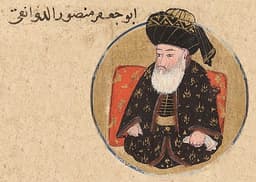
Al-Mansur
Emperor · Medieval
64.7Total

Julius Caesar
General · Ancient
82.8Total
Basic Information
Born
714
-100
Died
775
-44
Era
Medieval
Ancient
Nationality
Abbasid Caliphate
Roman Republic
Occupation
Emperor
General
Civilization
Middle Eastern
Western
Score Comparison
Military (10%)
65.0
88.0
Political (20%)
62.7
78.0
Influence (20%)
65.0
85.0
Legacy (20%)
65.0
82.0
Leadership (15%)
72.0
80.0
Strategy (15%)
55.0
85.0
TOTAL
64.7
82.8
Al-Mansur — Complete Timeline
750 AD
Administrative ReformsReform◆ Major
Al-Mansur established a centralized bureaucracy modeled on Sassanid practices, creating the office of the vizier and a postal service (barid). These reforms improved tax collection, communication, and governance across the vast Abbasid Empire.
BureaucracyGovernanceAdministration
Impact: regionalconstructive
Patronage of Translation MovementCultural◆ Major
Al-Mansur sponsored the translation of Greek, Persian, and Indian scientific and philosophical works into Arabic. This initiative laid the foundation for the Abbasid translation movement, which later flourished under the House of Wisdom and preserved classical knowledge.
TranslationScienceCulture
Impact: globalconstructive
754 AD
Consolidation of Abbasid PowerPolitical Action◆ Major
After the death of his brother As-Saffah, Al-Mansur became the second Abbasid caliph. He systematically eliminated rivals, including the powerful Barmakid family and other potential claimants, to secure his rule and establish the Abbasid dynasty as the sole ruling house.
Dynastic ConsolidationPurgePower Struggle
Impact: regionaldestructive
762 AD
Suppression of the Alid RevoltWar◆ Major
Al-Mansur faced a major rebellion led by Muhammad al-Nafs al-Zakiyya, a descendant of Ali, who claimed the caliphate. The revolt was crushed by Abbasid forces, and Muhammad was killed, solidifying Abbasid control against Alid claimants.
RebellionAlid RevoltCivil War
Impact: regionaldestructive
Foundation of BaghdadPolitical Action◆ Major
Al-Mansur ordered the construction of the new capital city, Baghdad, on the west bank of the Tigris River. The city was designed as a circular 'Round City' and became the administrative and cultural center of the Abbasid Caliphate, replacing the previous capital at Al-Hashimiya.
Urban PlanningCapital CityAbbasid Caliphate
Impact: globalconstructive
Julius Caesar — Complete Timeline
58 BC
Gallic WarsWar◆ Major
Caesar, as proconsul of Gaul, launched a series of campaigns that conquered all of Gaul (modern France, Belgium, and parts of Switzerland). He fought numerous battles, including against the Helvetii, the Belgae, and the Gallic chieftain Vercingetorix. The wars brought immense wealth and a loyal army to Caesar.
Gallic WarsConquestRoman Expansion
Impact: regional
49 BC
Crossing the RubiconPolitical Action◆ Major
Caesar led Legio XIII across the Rubicon River into Italy, defying the Roman Senate's order to disband his army. This act triggered a civil war against Pompey and the Optimates, ultimately leading to Caesar's dictatorship and the end of the Roman Republic.
Roman Civil WarEnd of RepublicPower Struggle
Impact: global
48 BC
Battle of PharsalusWar◆ Major
Caesar's outnumbered army defeated the larger forces of Pompey the Great at Pharsalus in Greece. Caesar's tactical use of a reserve line to counter Pompey's cavalry charge proved decisive. Pompey fled to Egypt, where he was assassinated, leaving Caesar as the undisputed master of the Roman world.
Roman Civil WarBattleDecisive Victory
Impact: regional
44 BC
Appointment as Dictator for LifePolitical Action◆ Major
The Roman Senate appointed Caesar dictator perpetuo (dictator for life), granting him unprecedented personal power. This move concentrated military, legislative, and judicial authority in one person, effectively ending the Roman Republic's traditional system of checks and balances and alarming many senators.
DictatorshipEnd of RepublicPower Consolidation
Impact: regionaldestructive
Assassination on the Ides of MarchPolitical Action◆ Major
A group of Roman senators, led by Marcus Junius Brutus and Gaius Cassius Longinus, stabbed Caesar to death at a meeting of the Senate in the Theatre of Pompey. The assassination was intended to restore the Republic, but instead triggered another civil war that led to the rise of the Roman Empire.
AssassinationRoman PoliticsEnd of Republic
Impact: globaldestructive
Expert Analysis
al-mansur-vs-julius-caesar
# Two Men Who Built Empires from Nothing
On a winter morning in 762, on the west bank of the Tigris River, a man in his late forties watched as laborers began digging the foundations of a circular city that would one day bear the name Baghdad. Half a world away and eight centuries earlier, another man in his fifties stood on the banks of a small river in northern Italy, the Rubicon, knowing that the moment he crossed it, he would ignite a civil war that would end the Roman Republic forever. Both men, Julius Caesar and Al-Mansur, were builders of empires. But one built his on the edge of a sword, the other on the foundation of a city. Why did their paths diverge so dramatically?
Origins
Julius Caesar was born into the chaos of the late Roman Republic, a world of senatorial intrigue, civil wars, and crumbling traditions. His family, the Julii, claimed descent from the goddess Venus, but they were not among the ruling elite. Young Caesar grew up watching his uncle Marius fight Sulla for control of Rome, learning early that politics was a blood sport. He was educated in rhetoric and philosophy, but his real classroom was the Forum, where he saw men rise and fall on the strength of their alliances and their armies.
Al-Mansur, born in 714, came from a very different world. His full name was Abu Ja'far Abdallah ibn Muhammad al-Mansur, and he was a member of the Abbasid family, descendants of the Prophet Muhammad's uncle. The Umayyad Caliphate, which had ruled the Islamic world for a century, was crumbling under the weight of its own corruption. Al-Mansur's brother, As-Saffah, led a revolution that toppled the Umayyads in 750, but the new Abbasid regime was fragile from the start. Al-Mansur grew up in a world where legitimacy was everything, where a caliph's claim to rule rested not just on military power but on religious authority and the loyalty of diverse peoples from Persia to Syria.
Rise to Power
Caesar's rise was a masterpiece of calculated risk. He climbed the Roman political ladder step by step, serving as a military tribune, quaestor, aedile, and praetor, all while building a network of alliances. His military genius first shone in Gaul, where between 58 and 50 BCE he conquered a vast territory, wrote his own commentaries to shape public opinion, and trained an army loyal to him personally, not to the Republic. The Senate, fearing his power, ordered him to disband his army. He refused. When he crossed the Rubicon in 49 BCE, he was not just a general rebelling against the state—he was a man who understood that in a republic rotten with corruption, the only path to survival was absolute control.
Al-Mansur's ascent was more cautious and more bureaucratic. When his brother died in 754, Al-Mansur became caliph, but his position was immediately challenged. He faced rebellions from Alid claimants—descendants of Ali who believed they had a divine right to rule—and from former allies who saw the Abbasids as usurpers. Al-Mansur did not have Caesar's military flair. His strategy score of 57.0, compared to Caesar's 88.0, reflects a man who won wars through patience and organization, not battlefield brilliance. He suppressed the Alid revolt in 762 not with a dramatic crossing of a river, but with systematic military campaigns, bribery, and the careful elimination of rivals.
Leadership & Governance
Caesar ruled as a dictator, but his genius lay in knowing when to be merciful and when to be ruthless. He pardoned many of his enemies, reformed the calendar, granted citizenship to provincials, and launched public works projects. His political reforms were sweeping but rushed, and they alienated the old senatorial class. He centralized power in his own hands, but he never fully dismantled the Republic's institutions—he simply rendered them irrelevant. His leadership was personal, charismatic, and terrifying.
Al-Mansur, by contrast, built institutions. His political score of 72.2 and leadership score of 80.2 reflect a man who understood that an empire cannot be run by one person alone. He established the office of the vizier, a chief minister modeled on Persian Sassanid practices, and created a centralized bureaucracy that could administer a vast territory. His most lasting achievement was the foundation of Baghdad in 762, a city designed as a perfect circle, symbolizing the unity of the Islamic world under Abbasid rule. He also sponsored the Translation Movement, bringing Greek, Persian, and Indian knowledge into Arabic, laying the groundwork for the Islamic Golden Age.
Triumph & Tragedy
Caesar's greatest triumph was his conquest of Gaul, a campaign that made him fabulously wealthy and gave him an army that would do anything for him. His greatest tragedy was his assassination on the Ides of March in 44 BCE, stabbed to death by senators he had pardoned, men who called themselves liberators but who plunged Rome into another generation of civil war. His death proved that a man can conquer the world but cannot conquer the resentment of those he has surpassed.
Al-Mansur's triumph was the survival of the Abbasid Caliphate. When he died in 775, he left a stable dynasty that would rule for nearly five centuries. His tragedy was that he never fully escaped the shadow of his brother's revolution. He spent his reign eliminating rivals, including former allies, and his paranoia created a court culture of fear and intrigue. Unlike Caesar, he died in his bed, but his legacy was built on a foundation of suspicion.
Character & Destiny
Caesar was a gambler. He risked everything on the crossing of the Rubicon, on the invasion of Gaul, on his clemency toward enemies. His personality was magnetic, his ambition boundless. He wrote his own history, literally, in his *Commentaries on the Gallic War*, and he understood that in a world of shifting loyalties, the story that wins is the story that is told first.
Al-Mansur was a builder. He was cautious, calculating, and deeply religious. He saw himself not as a conqueror but as a steward of God's community on Earth. His personality was shaped by the constant threat of rebellion, and his decisions were guided by a desire for stability, not glory. He founded a city that would become the center of the world, but he never wrote his own story. Others would write it for him.
Legacy
Caesar's legacy is the Roman Empire. His name became a title—Kaiser, Tsar, Qaysar—used by rulers from Germany to Russia. He transformed the Republic into an autocracy, for better or worse, and his assassination ensured that the Republic would never return. His memory has been contested for two millennia: tyrant or visionary, destroyer or founder.
Al-Mansur's legacy is the Islamic Golden Age and the city of Baghdad. He did not conquer vast territories like Caesar, but he created the conditions for a civilization to flourish. His centralized bureaucracy, his patronage of learning, and his capital city made the Abbasid Caliphate the intellectual center of the medieval world. Today, his name is less known in the West, but his influence on science, philosophy, and administration is immeasurable.
Conclusion
One man crossed a river and changed the world through force of will. The other built a city and changed the world through force of organization. Caesar's story is about the power of the individual—one man who dared to defy a republic and remake it in his image. Al-Mansur's story is about the power of institutions—one man who understood that empires last not through the charisma of a single ruler, but through the structures they leave behind. Both succeeded. Both failed. But their different paths remind us that history is not made by one kind of greatness alone. Sometimes it is the conqueror who captures our imagination, and sometimes it is the builder who shapes our world without ever appearing in our dreams.
Rankings
🥇
Julius CaesarLeader
Mil: 88.0Pol: 78.0Inf: 85.0
82.8
🥈
Al-Mansur
Mil: 65.0Pol: 62.7Inf: 65.0
64.7
+18.1 behind
How This Comparison Works
Algorithm
Each figure is scored on 6 dimensions (0—100 scale) based on structured historical data: Military (10%), Political (20%), Influence (20%), Legacy (20%), Leadership (15%), Strategy (15%). The weighted total produces the final ranking.
Data Sources
Scores are computed from structured sub-indicators in the database. Scale factors adjust for era (Ancient ×0.85, Modern ×1.0) and civilization size (Eastern ×1.05, Other ×0.80) to account for differences in population and military scale.
Maximum 3 Figures
Comparisons are limited to 2—3 figures to ensure readability and statistical meaningfulness.
Error Margins
±5 points per dimension — Sub-scores are derived from historical records with inherent uncertainty. Two figures within 5 points on a dimension should be considered roughly equivalent in that area.
Total Score Accuracy
±3 points overall — The weighted combination of 6 dimensions produces a total score with approximately ±3 points of uncertainty. Differences of less than 3 points are not statistically significant— the figures are effectively tied.
Known Limitations
- Historical records are incomplete and uneven across civilizations
- Figures from oral-tradition societies may be underrepresented
- Occupation labels can misclassify multi-role figures
- Scores measure capability and impact, not moral character
- Quantitative scoring is a comparison tool, not absolute truth
Capability Radar
Military (10%) — Battles & Warfare
Battles
60
95
Win Rate
65
92
Expansion
70
97
Political (20%) — Governance & Reform
Reform
85
90
Diplomacy
80
85
Economy
85
82
Influence (20%) — Cultural & Global Reach
Cultural
75
88
Global
75
94
Legacy (20%) — Historical Impact
Historical
80
95
Longevity
85
96
Leadership (15%) — Power & Stability
Tenure
75
75
Stability
70
60
Strategy (15%) — Tactics & Innovation
Strategy
70
94
Tactics
55
96
Reform
75
88
Similar Comparisons
Comments & Discussion
Tiberius Rex6/17/2026
Caesar's crossing of the Rubicon is far more dramatic than Mansur laying bricks, but let's be real—one man built a legacy that lasted centuries of Roman dominance, while the other just founded a city that burned down in 1258. Caesar's military genius reshaped warfare forever; Mansur was a paranoid bureaucrat who murdered allies to secure his throne. Give me a general who conquered Gaul over a caliph who obsessed over city walls any day.
历史真探6/17/2026
说真的,这两个人根本不是同一级别。凯撒征服高卢、击败庞培、改革历法,这些成就哪个不是改变了西方历史的走向?而曼苏尔呢,除了建了巴格达,还有什么拿得出手?凯撒死时罗马已经是个超级大国,曼苏尔建立阿巴斯王朝时,伊斯兰世界本来就存在着。说他是"从零建立帝国"完全是夸大其词。
ClassicsForTheWin6/17/2026
You revisionists always ignore context. Caesar didn't "build an empire from nothing"—he inherited a ready-made military machine and exploited a crumbling republic. Al-Mansur literally created Baghdad from scratch on empty plains, designing a circular city that influenced urban planning for centuries. Plus, Caesar's "empire" lasted barely 20 years before assassination chaos, while the Abbasid Caliphate thrived under Mansur's administrative reforms for 500 years. Pound for pound, Mansur's foundati
战史评论家6/17/2026
军事角度看,凯撒完胜。凯撒是实战派统帅,在高卢战役中展现的战术创新——比如阿莱西亚战役的双重围城防线,影响了欧洲军事史两千年。曼苏尔呢?他根本没有亲自指挥过重大战役,全靠雇佣的波斯将领和官僚系统维稳。一个靠剑建国的男人,怎么能和躲在幕后搞阴谋的政客相提并论?这不是比较,是降维打击。
ArchScroll446/17/2026
Let's look at the numbers, people. Caesar's empire at its peak: 3 million square kilometers expansion. Al-Mansur's Abbasid territory: over 11 million. Caesar's reign: 5 years (dictator for life was a joke). Al-Mansur's reign: 21 years. Caesar's assassination left a power vacuum that spawned centuries of chaos; Mansur's disciplined succession kept stability for generations. The "great" Caesar was just a flash in the pan compared to the administrative longevity of al-Mansur. Show me the GDP per ca