Loading...
This comparison has not been analyzed yet.
One-time AI generation (~1 minute). Scores and timeline are already available below.
Al-Muhtadi vs Ariq Boke
Ariq Boke leads by 0.1 pts · 2 figures compared
…
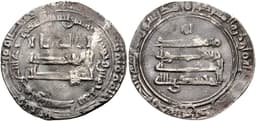
Al-Muhtadi
Emperor · Medieval
40.0Total

Ariq Boke
Emperor · Medieval
40.1Total
Basic Information
Born
825
1219
Died
870
1266
Era
Medieval
Medieval
Nationality
Abbasid Caliphate
Mongol Empire
Occupation
Emperor
Emperor
Civilization
Middle Eastern
Eastern
Score Comparison
Military (10%)
10.2
45.0
Political (20%)
36.5
30.7
Influence (20%)
51.0
47.9
Legacy (20%)
41.7
39.2
Leadership (15%)
44.5
33.6
Strategy (15%)
36.8
41.7
TOTAL
40.0
40.1
Al-Muhtadi — Complete Timeline
869 AD
Reformist PoliciesReform◆ Major
Al-Muhtadi attempted to implement reforms to curb the power of the Turkish guard and restore caliphal authority. He sought to reduce corruption and enforce Islamic law, but his efforts faced strong opposition.
ReformPower Struggle
Impact: nationalprogressive
870 AD
Conflict with Turkish GuardPolitical Action◆ Major
Al-Muhtadi's attempts to limit Turkish power led to a direct confrontation with the guard. He was captured and killed after a brief reign of less than a year, demonstrating the futility of his reforms.
Power StruggleTurkish Guard
Impact: nationaltragic
Ariq Boke — Complete Timeline
1260 AD
Proclaimed Great Khan at KarakorumPolitical Action
Ariq Boke, younger brother of Kublai, was proclaimed Great Khan of the Mongol Empire at the traditional capital of Karakorum by a kurultai of Mongol princes. This challenged Kublai's own election at Shangdu, sparking a civil war.
Mongol Succession CrisisCivil War
Impact: global
1261 AD
Defeat by Kublai at the Battle of XanaduWar◆ Major
Ariq Boke's forces were defeated by Kublai's army near Xanadu (Shangdu). This battle weakened Ariq Boke's position and forced him to retreat to Mongolia, where he continued to resist but lost support.
Mongol Civil WarKublai vs Ariq Boke
Impact: global
1264 AD
Surrender to Kublai KhanPolitical Action◆ Major
After years of civil war and dwindling support, Ariq Boke surrendered to Kublai Khan. He was imprisoned but not executed. His defeat solidified Kublai's claim as Great Khan and led to the fragmentation of the Mongol Empire.
Mongol Empire FragmentationSuccession
Impact: globaltragic
This comparison has not been analyzed yet.
One-time AI generation (~1 minute). Scores and timeline are already available below.
Rankings
🥇
Ariq BokeLeader
Mil: 45.0Pol: 30.7Inf: 47.9
40.1
🥈
Al-Muhtadi
Mil: 10.2Pol: 36.5Inf: 51.0
40.0
+0.1 behind
How This Comparison Works
Algorithm
Each figure is scored on 6 dimensions (0—100 scale) based on structured historical data: Military (10%), Political (20%), Influence (20%), Legacy (20%), Leadership (15%), Strategy (15%). The weighted total produces the final ranking.
Data Sources
Scores are computed from structured sub-indicators in the database. Scale factors adjust for era (Ancient ×0.85, Modern ×1.0) and civilization size (Eastern ×1.05, Other ×0.80) to account for differences in population and military scale.
Maximum 3 Figures
Comparisons are limited to 2—3 figures to ensure readability and statistical meaningfulness.
Error Margins
±5 points per dimension — Sub-scores are derived from historical records with inherent uncertainty. Two figures within 5 points on a dimension should be considered roughly equivalent in that area.
Total Score Accuracy
±3 points overall — The weighted combination of 6 dimensions produces a total score with approximately ±3 points of uncertainty. Differences of less than 3 points are not statistically significant— the figures are effectively tied.
Known Limitations
- Historical records are incomplete and uneven across civilizations
- Figures from oral-tradition societies may be underrepresented
- Occupation labels can misclassify multi-role figures
- Scores measure capability and impact, not moral character
- Quantitative scoring is a comparison tool, not absolute truth
Capability Radar
Military (10%) — Battles & Warfare
Battles
10
30
Win Rate
10
25
Expansion
5
20
Political (20%) — Governance & Reform
Reform
60
10
Diplomacy
20
15
Economy
15
10
Influence (20%) — Cultural & Global Reach
Cultural
20
15
Global
15
10
Legacy (20%) — Historical Impact
Historical
30
20
Longevity
20
15
Leadership (15%) — Power & Stability
Tenure
15
20
Stability
5
10
Strategy (15%) — Tactics & Innovation
Strategy
10
30
Tactics
10
35
Reform
10
10
Similar Comparisons
Comments & Discussion
No comments yet. Be the first to share your thoughts!