Loading...
Al-Muktafi vs Guy of Lusignan
Al-Muktafi leads by 5.0 pts · 2 figures compared
…
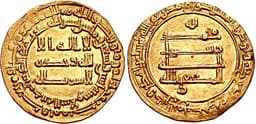
Al-Muktafi
Emperor · Medieval
44.4Total
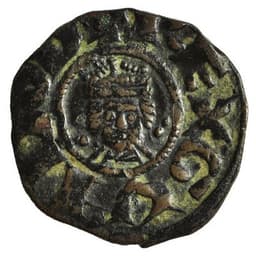
Guy of Lusignan
Emperor · Medieval
39.4Total
Basic Information
Born
877
1150
Died
908
1194
Era
Medieval
Medieval
Nationality
Abbasid Caliphate
Jerusalem
Occupation
Emperor
Emperor
Civilization
Middle Eastern
Western
Score Comparison
Military (10%)
45.0
21.2
Political (20%)
36.5
30.7
Influence (20%)
49.4
51.0
Legacy (20%)
40.0
45.0
Leadership (15%)
51.9
31.2
Strategy (15%)
43.3
39.6
TOTAL
44.4
39.4
Al-Muktafi — Complete Timeline
907 AD
Victory over the QarmatiansWar◆ Major
Al-Muktafi's forces defeated a Qarmatian army near Kufa, temporarily halting their raids into Iraq. This victory was one of the last significant military successes of the Abbasid caliphate before its decline.
QarmatiansBattleVictory
Impact: regionalconstructive
908 AD
Return of the Caliphate to BaghdadPolitical Action◆ Major
Al-Muktafi moved the Abbasid court from Samarra back to Baghdad. This ended the period of Samarra as the capital, which had lasted since 836, and marked a symbolic return to the traditional seat of the caliphate.
Capital MoveBaghdadSamarra
Impact: nationalconstructive
Death of Al-MuktafiPolitical Action◆ Major
Al-Muktafi died after a short reign of about six years. His death marked the end of the last effective Abbasid caliph from the Samarra period, as his successors were weaker and more dependent on military factions.
DeathSuccessionDecline
Impact: nationaltragic
Guy of Lusignan — Complete Timeline
1187 AD
Battle of HattinWar
Guy of Lusignan led the Crusader army to a disastrous defeat at the Battle of Hattin against Saladin. The army was surrounded and destroyed, leading to the capture of Guy and the fall of Jerusalem.
Crusader StatesBattleDefeatSaladin
Impact: regionaltragic
Loss of JerusalemWar
Following the Battle of Hattin, Saladin captured Jerusalem in October 1187. Guy's defeat directly led to the loss of the city, which had been under Christian control since 1099.
Crusader StatesSiegeSaladin
Impact: regionaltragic
1188 AD
Release from CaptivityPolitical Action◆ Major
Guy was released from captivity by Saladin in 1188. He was allowed to return to the Crusader states, but his reputation was ruined, and he was unable to regain his former authority.
Crusader StatesCaptivity
Impact: regional
1189 AD
Siege of AcreWar◆ Major
Guy of Lusignan led the siege of Acre, which began in 1189. The siege lasted two years and involved the forces of the Third Crusade. Guy's role was overshadowed by the arrival of Richard the Lionheart and Philip Augustus.
CrusadeSiege
Impact: regional
1192 AD
Sale of CyprusPolitical Action◆ Major
After the Third Crusade, Guy purchased the island of Cyprus from the Knights Templar. He became the first Lusignan ruler of Cyprus, establishing a dynasty that lasted until 1489.
Crusader StatesCyprusDynasty
Impact: regional
Expert Analysis
Origins
Al-Muktafi, born around 877 AD, was the son of Caliph al-Mu'tadid. He grew up in the turbulent Abbasid court in Samarra, a city that had been the capital since 836. His education focused on administration and military affairs, preparing him for rule in a period of decline. His father's death in 902 placed him on the throne at a critical time.
Guy of Lusignan, born around 1150 in France, was a knight from the powerful Lusignan family. He traveled to the Holy Land in the 1170s, seeking fortune. Through marriage to Sibylla, sister of King Baldwin IV of Jerusalem, he gained claims to the throne. His early life in France provided chivalric training but limited exposure to the complexities of Crusader politics.
Rise to Power
Al-Muktafi became caliph in 902 after his father's death. His rise was smooth due to his father's consolidation of power. He swiftly moved to restore the caliphate's prestige by relocating the court from Samarra to Baghdad in 903, a strategic shift that reasserted traditional authority. This move was completed within months, ending the Samarra period (836-892).
Guy's rise was more contested. He married Sibylla in 1180, becoming count of Jaffa and Ascalon. When Baldwin IV died in 1185, Guy's stepson Baldwin V became king, but the boy died in 1186. Guy claimed the throne through Sibylla, but faced opposition from Raymond III of Tripoli and others. He was crowned in 1186, but his legitimacy was disputed, leading to internal divisions.
Leadership & Governance
Al-Muktafi ruled for about six years (902-908). He focused on restoring stability, returning the capital to Baghdad, and defeating the Qarmatians. His governance was traditional, relying on viziers and military commanders. He scored 51.9 in leadership, reflecting his ability to manage the court but limited strategic vision. His political score of 36.5 shows weak control over the fragmented empire.
Guy's leadership was highly contested. He scored 31.2 in leadership and 30.7 in politics. As king, he struggled to unite the Crusader barons. His decision to march the army to Hattin in July 1187, lacking water and under Saladin's pressure, showed poor strategy (39.6). He alienated key allies like Raymond III. His governance was ineffective, leading to the loss of Jerusalem.
Triumph & Tragedy
Al-Muktafi's greatest success was the return to Baghdad, reestablishing the symbolic heart of the caliphate. His victory over the Qarmatians in 903 near Kufa halted their raids temporarily. However, his reign was short, and he failed to stem the broader decline of Abbasid power. His death in 908 at age 31 left the caliphate weaker, with his successors facing greater challenges.
Guy's tragedy is the Battle of Hattin (July 4, 1187), where his army was destroyed, leading to the loss of Jerusalem in October 1187. He was captured and later released. His triumph was the Siege of Acre (1189-1191), where he initiated the siege that eventually recaptured the city. He also purchased Cyprus in 1192, founding a dynasty that lasted centuries. However, his defeat at Hattin overshadowed these achievements.
Character & Destiny
Al-Muktafi was decisive in moving the capital but lacked long-term vision. His character was cautious, focusing on immediate stability. His early death cut short any potential for greater reforms. Historical assessments note his role as a transitional figure, ending the Samarra period but not reversing decline.
Guy was headstrong and politically naive. He made rash decisions, like marching to Hattin without water. His stubbornness alienated allies. His destiny was shaped by the conflict with Saladin, where his military score of 21.2 reflects poor tactical ability. His character led to disaster, but his later actions in Acre and Cyprus showed resilience.
Legacy
Al-Muktafi's legacy is modest. He is remembered as the last caliph to rule from Samarra and the one who returned to Baghdad. This move had symbolic significance but did not restore power. His influence score of 49.4 and legacy of 40.0 reflect limited lasting impact.
Guy's legacy is mixed. He is infamous for losing Jerusalem, but the Lusignan dynasty on Cyprus lasted until 1474. His role in the Third Crusade and the Siege of Acre contributed to the Crusader presence. His influence score of 51.0 and legacy of 45.0 are slightly higher than Al-Muktafi's, largely due to the long-lasting Cyprus kingdom.
Conclusion
While Al-Muktafi scored higher overall (44.4 vs 39.4), Guy of Lusignan had a more significant historical impact. Al-Muktafi's actions were largely reactive and did not alter the trajectory of the Abbasid decline. In contrast, Guy's defeat at Hattin directly led to the loss of Jerusalem, triggering the Third Crusade. His later acquisition of Cyprus established a dynasty that shaped Mediterranean history. Therefore, despite his lower scores, Guy's consequences were more profound. Al-Muktafi's impact was localized and temporary, while Guy's decisions had lasting geopolitical effects.
Rankings
🥇
Al-MuktafiLeader
Mil: 45.0Pol: 36.5Inf: 49.4
44.4
🥈
Guy of Lusignan
Mil: 21.2Pol: 30.7Inf: 51.0
39.4
+5.0 behind
How This Comparison Works
Algorithm
Each figure is scored on 6 dimensions (0—100 scale) based on structured historical data: Military (10%), Political (20%), Influence (20%), Legacy (20%), Leadership (15%), Strategy (15%). The weighted total produces the final ranking.
Data Sources
Scores are computed from structured sub-indicators in the database. Scale factors adjust for era (Ancient ×0.85, Modern ×1.0) and civilization size (Eastern ×1.05, Other ×0.80) to account for differences in population and military scale.
Maximum 3 Figures
Comparisons are limited to 2—3 figures to ensure readability and statistical meaningfulness.
Error Margins
±5 points per dimension — Sub-scores are derived from historical records with inherent uncertainty. Two figures within 5 points on a dimension should be considered roughly equivalent in that area.
Total Score Accuracy
±3 points overall — The weighted combination of 6 dimensions produces a total score with approximately ±3 points of uncertainty. Differences of less than 3 points are not statistically significant— the figures are effectively tied.
Known Limitations
- Historical records are incomplete and uneven across civilizations
- Figures from oral-tradition societies may be underrepresented
- Occupation labels can misclassify multi-role figures
- Scores measure capability and impact, not moral character
- Quantitative scoring is a comparison tool, not absolute truth
Capability Radar
Military (10%) — Battles & Warfare
Battles
30
15
Win Rate
35
5
Expansion
20
10
Political (20%) — Governance & Reform
Reform
30
10
Diplomacy
35
15
Economy
30
10
Influence (20%) — Cultural & Global Reach
Cultural
20
20
Global
15
25
Legacy (20%) — Historical Impact
Historical
25
40
Longevity
15
30
Leadership (15%) — Power & Stability
Tenure
40
30
Stability
25
5
Strategy (15%) — Tactics & Innovation
Strategy
30
10
Tactics
30
10
Reform
20
5
Similar Comparisons
Comments & Discussion
No comments yet. Be the first to share your thoughts!