Loading...
Al-Muktafi vs Julius Caesar
Julius Caesar leads by 38.4 pts · 2 figures compared
…
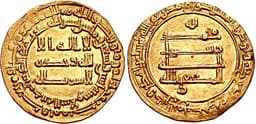
Al-Muktafi
Emperor · Medieval
44.4Total

Julius Caesar
General · Ancient
82.8Total
Basic Information
Born
877
-100
Died
908
-44
Era
Medieval
Ancient
Nationality
Abbasid Caliphate
Roman Republic
Occupation
Emperor
General
Civilization
Middle Eastern
Western
Score Comparison
Military (10%)
45.0
88.0
Political (20%)
36.5
78.0
Influence (20%)
49.4
85.0
Legacy (20%)
40.0
82.0
Leadership (15%)
51.9
80.0
Strategy (15%)
43.3
85.0
TOTAL
44.4
82.8
Al-Muktafi — Complete Timeline
907 AD
Victory over the QarmatiansWar◆ Major
Al-Muktafi's forces defeated a Qarmatian army near Kufa, temporarily halting their raids into Iraq. This victory was one of the last significant military successes of the Abbasid caliphate before its decline.
QarmatiansBattleVictory
Impact: regionalconstructive
908 AD
Return of the Caliphate to BaghdadPolitical Action◆ Major
Al-Muktafi moved the Abbasid court from Samarra back to Baghdad. This ended the period of Samarra as the capital, which had lasted since 836, and marked a symbolic return to the traditional seat of the caliphate.
Capital MoveBaghdadSamarra
Impact: nationalconstructive
Death of Al-MuktafiPolitical Action◆ Major
Al-Muktafi died after a short reign of about six years. His death marked the end of the last effective Abbasid caliph from the Samarra period, as his successors were weaker and more dependent on military factions.
DeathSuccessionDecline
Impact: nationaltragic
Julius Caesar — Complete Timeline
58 BC
Gallic WarsWar◆ Major
Caesar, as proconsul of Gaul, launched a series of campaigns that conquered all of Gaul (modern France, Belgium, and parts of Switzerland). He fought numerous battles, including against the Helvetii, the Belgae, and the Gallic chieftain Vercingetorix. The wars brought immense wealth and a loyal army to Caesar.
Gallic WarsConquestRoman Expansion
Impact: regional
49 BC
Crossing the RubiconPolitical Action◆ Major
Caesar led Legio XIII across the Rubicon River into Italy, defying the Roman Senate's order to disband his army. This act triggered a civil war against Pompey and the Optimates, ultimately leading to Caesar's dictatorship and the end of the Roman Republic.
Roman Civil WarEnd of RepublicPower Struggle
Impact: global
48 BC
Battle of PharsalusWar◆ Major
Caesar's outnumbered army defeated the larger forces of Pompey the Great at Pharsalus in Greece. Caesar's tactical use of a reserve line to counter Pompey's cavalry charge proved decisive. Pompey fled to Egypt, where he was assassinated, leaving Caesar as the undisputed master of the Roman world.
Roman Civil WarBattleDecisive Victory
Impact: regional
44 BC
Appointment as Dictator for LifePolitical Action◆ Major
The Roman Senate appointed Caesar dictator perpetuo (dictator for life), granting him unprecedented personal power. This move concentrated military, legislative, and judicial authority in one person, effectively ending the Roman Republic's traditional system of checks and balances and alarming many senators.
DictatorshipEnd of RepublicPower Consolidation
Impact: regionaldestructive
Assassination on the Ides of MarchPolitical Action◆ Major
A group of Roman senators, led by Marcus Junius Brutus and Gaius Cassius Longinus, stabbed Caesar to death at a meeting of the Senate in the Theatre of Pompey. The assassination was intended to restore the Republic, but instead triggered another civil war that led to the rise of the Roman Empire.
AssassinationRoman PoliticsEnd of Republic
Impact: globaldestructive
Expert Analysis
al-muktafi-vs-julius-caesar
# The Weight of Empire: Caesar and Al-Muktafi
In the spring of 44 BCE, a dagger’s stroke ended the life of the most famous man in Roman history. On the Ides of March, Julius Caesar fell beneath the blades of senators who feared his power, his blood pooling on the floor of the Pompeian Senate House. Less than a thousand years later and two thousand miles to the east, another ruler died in his bed—Al-Muktafi, the Abbasid caliph who had briefly revived the fortunes of a fading dynasty. One death shook the world; the other passed almost without notice. What separates a figure who reshapes history from one who merely marks time? The answer lies not in circumstance alone, but in how ambition, opportunity, and character intertwine.
Origins
Julius Caesar was born into a patrician family of modest wealth in 100 BCE, at a time when the Roman Republic was tearing itself apart. His uncle Marius had been a populist reformer; his father died when Caesar was sixteen. From the start, he learned that survival meant navigating rivalries, debt, and the knife-edge of Roman politics. He was a child of crisis, raised in a world where old certainties were crumbling.
Al-Muktafi came into the world in 877 CE, a prince of the Abbasid dynasty that had ruled the Islamic world for over a century. His father was Caliph al-Mu'tadid, a capable ruler who had begun restoring order after years of chaos. Al-Muktafi grew up in Samarra, the sprawling capital built by his ancestors, surrounded by Turkish guards and court intrigue. Where Caesar learned to fight for everything, Al-Muktafi inherited a throne—but one that had already lost much of its power.
Rise to Power
Caesar’s ascent was a masterclass in calculated risk. He served as a military tribune, then as quaestor in Spain, where he wept before a statue of Alexander the Great—wept because Alexander had conquered the world by his age, while Caesar had done nothing. He climbed the ladder of Roman offices: aedile, praetor, pontifex maximus. He forged the First Triumvirate with Pompey and Crassus, then secured the governorship of Gaul. In nine years of war, he conquered a territory larger than Italy itself, building an army loyal not to Rome but to him.
Al-Muktafi became caliph in 902 CE upon his father’s death. He inherited a realm still reeling from the Anarchy at Samarra, when Turkish soldiers had made and unmade caliphs at will. His rise was not a triumph of will but a matter of blood. The Abbasid bureaucracy placed him on the throne, and the Turkish generals tolerated him—for now.
Leadership & Governance
Caesar governed as he fought: with speed, audacity, and a relentless focus on personal authority. As dictator, he reformed the calendar, extended citizenship to provincials, and launched public works that employed the poor. He pardoned his enemies—a calculated mercy that disarmed opposition while building a network of obligation. His military genius lay in speed and logistics: he crossed the Rhine in ten days, bridged the English Channel, and besieged Alesia with a ring of fortifications that still inspires study. Yet his political wisdom faltered at the end. He accepted the title of dictator for life, wore a purple robe like a king, and dismissed warnings of conspiracy. He trusted that his clemency had bought loyalty; it had only bought time.
Al-Muktafi ruled differently. He was not a conqueror but a restorer. His greatest military achievement came in 907, when his forces defeated a Qarmatian army near Kufa, halting their raids into Iraq. It was a victory, but it did not expand the empire—it merely preserved what remained. In 908, he made a decision that defined his reign: he moved the Abbasid court from Samarra back to Baghdad. This was not a conquest but a homecoming. Baghdad had been the heart of the caliphate before the Turkish generals dragged the court north. By returning, Al-Muktafi symbolically reclaimed the legacy of Harun al-Rashid. He also quietly reduced the power of the Turkish guard, reasserting civilian authority.
Triumph & Tragedy
Caesar’s greatest moment was his triumph over Gaul—a conquest that doubled Rome’s territory and made him the richest man in the Republic. His tragedy was that he could not stop. When the Senate ordered him to disband his army, he crossed the Rubicon River into Italy, igniting civil war. He defeated Pompey, crushed his enemies, and became master of Rome—only to be murdered by the men he had spared.
Al-Muktafi’s triumph was the Qarmatian victory and the return to Baghdad. His tragedy was his brevity. He died later that same year, 908, after a reign of only six years. He was just thirty-one years old. His death marked the end of the last effective Abbasid caliph from the old line. Within decades, the caliphs would become puppets of Buyid emirs, then Seljuk sultans. The empire he had briefly revived slipped away.
Character & Destiny
Caesar’s character was ambition incarnate—restless, brilliant, and ruthless when necessary. He could read men, forgive them, and use them. But his arrogance blinded him to the hatred he inspired. He once said, “It is better to create than to learn; creating is the essence of life.” He created a new world, but he could not live in it.
Al-Muktafi’s character was cautious and conservative. He was not a visionary but a steward. He saw his role as preserving what his father had rebuilt. Where Caesar gambled everything, Al-Muktafi consolidated. He understood that the caliphate could no longer command the world; it could only hope to hold itself together. His destiny was to be the last of a line, a caretaker at the end of an era.
Legacy
Caesar’s legacy is the Roman Empire. His adopted heir, Octavian, became Augustus, and the Republic became a monarchy. His name became a title—Kaiser, Tsar—still used a thousand years later. His writings, especially his *Commentaries on the Gallic War*, shaped military education for centuries. He is remembered as a genius and a tyrant, a man who destroyed one world to create another.
Al-Muktafi is remembered, if at all, as the caliph who brought the court home. The return to Baghdad gave the Abbasid dynasty a final century of cultural brilliance, but political power had already shifted. His name appears in histories as a footnote, a brief flicker before the long twilight.
Conclusion
Standing in the ruins of Samarra, one can feel the weight of Al-Muktafi’s quiet effort—a man trying to hold back the tide. Standing on the banks of the Rubicon, one feels the force of Caesar’s ambition—a man who chose to cross, knowing there was no return. Both men faced the same essential question: What do you do when the world you inherited is breaking? Caesar broke it further to build anew. Al-Muktafi tried to mend what was already shattered. History remembers the breaker, not the mender. But perhaps the mender deserves a moment of our attention, too—for he understood something Caesar never did: that some things, once broken, cannot be remade.
Rankings
🥇
Julius CaesarLeader
Mil: 88.0Pol: 78.0Inf: 85.0
82.8
🥈
Al-Muktafi
Mil: 45.0Pol: 36.5Inf: 49.4
44.4
+38.4 behind
How This Comparison Works
Algorithm
Each figure is scored on 6 dimensions (0—100 scale) based on structured historical data: Military (10%), Political (20%), Influence (20%), Legacy (20%), Leadership (15%), Strategy (15%). The weighted total produces the final ranking.
Data Sources
Scores are computed from structured sub-indicators in the database. Scale factors adjust for era (Ancient ×0.85, Modern ×1.0) and civilization size (Eastern ×1.05, Other ×0.80) to account for differences in population and military scale.
Maximum 3 Figures
Comparisons are limited to 2—3 figures to ensure readability and statistical meaningfulness.
Error Margins
±5 points per dimension — Sub-scores are derived from historical records with inherent uncertainty. Two figures within 5 points on a dimension should be considered roughly equivalent in that area.
Total Score Accuracy
±3 points overall — The weighted combination of 6 dimensions produces a total score with approximately ±3 points of uncertainty. Differences of less than 3 points are not statistically significant— the figures are effectively tied.
Known Limitations
- Historical records are incomplete and uneven across civilizations
- Figures from oral-tradition societies may be underrepresented
- Occupation labels can misclassify multi-role figures
- Scores measure capability and impact, not moral character
- Quantitative scoring is a comparison tool, not absolute truth
Capability Radar
Military (10%) — Battles & Warfare
Battles
30
95
Win Rate
35
92
Expansion
20
97
Political (20%) — Governance & Reform
Reform
30
90
Diplomacy
35
85
Economy
30
82
Influence (20%) — Cultural & Global Reach
Cultural
20
88
Global
15
94
Legacy (20%) — Historical Impact
Historical
25
95
Longevity
15
96
Leadership (15%) — Power & Stability
Tenure
40
75
Stability
25
60
Strategy (15%) — Tactics & Innovation
Strategy
30
94
Tactics
30
96
Reform
20
88
Similar Comparisons
Comments & Discussion
TogaTraitor6/17/2026
Let’s be real—Caesar’s “ambition” is just elite propaganda. He was a populist who gave land to veterans and grain to plebs. Al-Muktafi? He actually tracked inflation and cut taxes, while Caesar inflated the Senate with his cronies. I’d take a caliph who died sleeping over a dictator who got knifed eating popcorn any day.
星河铁蹄6/17/2026
拿恺撒跟穆克塔菲比?根本是降维打击。恺撒一辈子打了高卢、跨了卢比孔河,死得惊天动地;这位哈里发呢?平了哈瓦利吉叛乱、稳了税收,结果一死帝国就崩。故事和人家的权谋差得远,活该被历史遗忘。纯粹是时代太烂,不是他有多牛逼。
Lex Scrollburn6/17/2026
As a classics scholar, I have to laugh. Al-Muktafi’s tax reforms were clever but pedestrian—he basically reorganized land grants. Caesar tore up the entire Roman Republic and rebuilt it DNA-level. Two totally different ballgames, and one player was playing checkers while the other was disassembling the board itself.
烟斗老吏6/17/2026
数据上看,恺撒治下人口普查和债务减记比穆克塔菲的食利税调整激进多了。一个靠量化宽松撑住撑崩的共和国,另一个只是在宫廷账本上画画。穆克塔菲是账房先生,恺撒是金融危机制造者——后者更历史,但也更危险。哪个更好?我选账房。
GladiusGrumbler6/17/2026
Honestly, both were fighting their era’s losing battle against entropy. Caesar’s assassination was the final gasp of a failed republic; al-Muktafi’s peaceful death was the last breath of a caliphate that had already lost control of its provinces. Neither really “fixed” anything. One just got a better playwright to mythologize his exit.