Loading...
Guy of Lusignan vs Napoleon Bonaparte
Napoleon Bonaparte leads by 31.5 pts · 2 figures compared
…
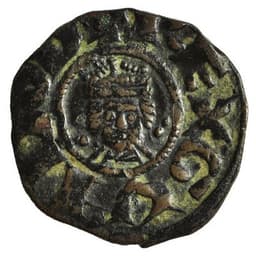
Guy of Lusignan
Emperor · Medieval
39.4Total

Napoleon Bonaparte
General · Modern
70.9Total
Basic Information
Born
1150
1769
Died
1194
1821
Era
Medieval
Modern
Nationality
Jerusalem
France
Occupation
Emperor
General
Civilization
Western
Western
Score Comparison
Military (10%)
21.2
94.0
Political (20%)
30.7
72.0
Influence (20%)
51.0
40.0
Legacy (20%)
45.0
80.0
Leadership (15%)
31.2
78.0
Strategy (15%)
39.6
90.0
TOTAL
39.4
70.9
Guy of Lusignan — Complete Timeline
1187 AD
Battle of HattinWar
Guy of Lusignan led the Crusader army to a disastrous defeat at the Battle of Hattin against Saladin. The army was surrounded and destroyed, leading to the capture of Guy and the fall of Jerusalem.
Crusader StatesBattleDefeatSaladin
Impact: regionaltragic
Loss of JerusalemWar
Following the Battle of Hattin, Saladin captured Jerusalem in October 1187. Guy's defeat directly led to the loss of the city, which had been under Christian control since 1099.
Crusader StatesSiegeSaladin
Impact: regionaltragic
1188 AD
Release from CaptivityPolitical Action◆ Major
Guy was released from captivity by Saladin in 1188. He was allowed to return to the Crusader states, but his reputation was ruined, and he was unable to regain his former authority.
Crusader StatesCaptivity
Impact: regional
1189 AD
Siege of AcreWar◆ Major
Guy of Lusignan led the siege of Acre, which began in 1189. The siege lasted two years and involved the forces of the Third Crusade. Guy's role was overshadowed by the arrival of Richard the Lionheart and Philip Augustus.
CrusadeSiege
Impact: regional
1192 AD
Sale of CyprusPolitical Action◆ Major
After the Third Crusade, Guy purchased the island of Cyprus from the Knights Templar. He became the first Lusignan ruler of Cyprus, establishing a dynasty that lasted until 1489.
Crusader StatesCyprusDynasty
Impact: regional
Napoleon Bonaparte — Complete Timeline
1799 AD
Coup of 18 BrumaireOther◆ Major
Napoleon Bonaparte, with support from his brother Lucien and key political figures, overthrew the Directory in a bloodless coup. He established the Consulate with himself as First Consul, effectively becoming the ruler of France. This event ended the French Revolution's most unstable period.
French RevolutionCoupRise to Power
Impact: regional
1804 AD
Promulgation of the Napoleonic CodeOther◆ Major
Napoleon enacted the Civil Code of the French, known as the Napoleonic Code, a comprehensive set of laws that replaced the fragmented feudal legal systems. The code established legal equality, protected property rights, and secularized law. It became the basis for legal systems in many European and world countries.
Legal ReformNapoleonic CodeCivil Law
Impact: globalconstructive
1805 AD
Battle of AusterlitzWar◆ Major
Napoleon's Grande Arm
Napoleonic WarsBattleDecisive Victory
Impact: global
1812 AD
Invasion of RussiaWar◆ Major
Napoleon led the Grande Arm
Napoleonic WarsInvasionDisaster
Impact: globaldestructive
1815 AD
Battle of WaterlooWar◆ Major
Napoleon's French army was defeated by the combined forces of the Duke of Wellington's Anglo-Allied army and Gebhard Leberecht von Bl
Napoleonic WarsBattleFinal Defeat
Impact: globaldestructive
Expert Analysis
guy-of-lusignan-vs-napoleon-bonaparte
# The Emperor and the King: Two Men, Two Fates
On a July morning in 1187, Guy of Lusignan stood on a parched hillside near the Horns of Hattin, watching his army—the flower of Crusader knighthood—die of thirst under a merciless sun. He had made a terrible choice: to march his men across a waterless plateau, straight into Saladin’s trap. Less than three decades later, in October 1815, Napoleon Bonaparte paced the deck of HMS *Northumberland*, watching the coast of Europe disappear forever as he sailed toward his final exile on Saint Helena. Both men had worn crowns. Both had commanded armies. But one had shaped the destiny of a continent; the other had merely lost it. What separated them was not luck alone—it was the gulf between genius and mediocrity, between a man who understood history and a man who was crushed by it.
Origins
Napoleon was born in 1769 on the island of Corsica, a land of fierce independence and simmering resentment against French rule. His family was minor nobility, poor enough to feel the sting of poverty but connected enough to send him to military school in mainland France. There, the young Corsican was mocked for his accent and his small stature—and he never forgot it. He devoured books on military strategy, artillery, and the campaigns of Alexander and Caesar. The French Revolution, erupting when he was twenty, shattered the old world and opened paths that birth alone could never have provided. Napoleon was a son of the Revolution, and he carried its fire in his blood.
Guy of Lusignan came from a different world entirely. Born around 1150 in Poitou, France, he was the son of a noble house that had tangled itself in the violent politics of the Crusader kingdoms. The Lusignans were ambitious, ruthless, and chronically overextended. Guy arrived in the Holy Land in the 1170s, a younger son with little to his name but a handsome face and a talent for courtly intrigue. He married Sibylla, sister of the leprous King Baldwin IV of Jerusalem, and through her, he climbed toward a throne he was never fit to hold. Where Napoleon’s rise was forged in the crucible of revolution, Guy’s was the product of dynastic accident.
Rise to Power
Napoleon’s ascent was breathtaking. In 1793, at age twenty-four, he drove British forces from the port of Toulon with a brilliant use of artillery—a victory that made him a brigadier general overnight. In 1796, he took command of a starving, unpaid army in Italy and turned it into a conquering force, winning battle after battle against the Austrians. By 1799, he had staged a coup and made himself First Consul of France. He was thirty. He crowned himself Emperor in 1804, not by inheritance or election, but by sheer will.
Guy’s path was slower and more treacherous. Baldwin IV, despite his leprosy, recognized Guy’s incompetence and tried to prevent him from inheriting the throne. But when Baldwin died in 1185, and his infant nephew soon after, the crown passed to Sibylla—and through her, to Guy. He was crowned King of Jerusalem in 1186, not because he had earned it, but because he had married the right woman. His political score of 38.5 reflects a man who could scheme his way into power but could not wield it.
Leadership & Governance
Napoleon’s leadership was a study in controlled energy. He governed France with a mixture of iron discipline and revolutionary idealism. He reformed the legal system with the Napoleonic Code, which enshrined equality before the law, protected property rights, and secularized the state. He reorganized education, established the Bank of France, and built roads and canals that knit the nation together. On the battlefield, his strategy score of 93 speaks to a mind that could read terrain, timing, and enemy psychology with near-supernatural clarity. He moved armies faster than his enemies could think, striking at seams and crushing isolated forces before they could unite. His military score of 94 places him among the greatest commanders in history.
Guy of Lusignan’s leadership was defined by indecision and arrogance. As king, he alienated the powerful barons of the Crusader states, ignored the advice of experienced commanders like Raymond of Tripoli, and allowed his personal feud with Raymond to dictate strategy. When Saladin invaded in 1187, Guy led the largest army the Crusader kingdom had ever fielded—some 20,000 men—directly into a death trap. He chose to march across a waterless plateau in July, under a blazing sun, with Saladin’s cavalry harassing his flanks. By the time the army reached Hattin, men and horses were dying of thirst. The battle was a massacre. Guy’s military score of 30 and leadership score of 35 are not harsh judgments; they are simple arithmetic.
Triumph & Tragedy
Napoleon’s greatest moment came in December 1805, when he destroyed the combined armies of Austria and Russia at Austerlitz. It was a masterpiece of deception and timing: he deliberately weakened his right flank to lure the Allies into attacking, then smashed their center with a sudden, overwhelming assault. The battle ended the Third Coalition and cemented Napoleon’s dominance over Europe. But his tragedy was a slow unraveling: the disastrous invasion of Russia in 1812, where he lost half a million men to winter and starvation; the defeat at Leipzig in 1813; the first abdication in 1814; the desperate gamble of Waterloo in 1815, where he threw his Imperial Guard into a hopeless charge and watched them break. He died in 1821 on Saint Helena, a prisoner of the British, his empire reduced to memory.
Guy’s triumph, if it can be called that, came after his fall. Released from captivity by Saladin in 1188, he led the siege of Acre in 1189, a two-year ordeal that eventually drew the forces of the Third Crusade to the Holy Land. But he was never again a true king. In 1192, after Richard the Lionheart and Philip Augustus had sidelined him, Guy purchased the island of Cyprus from the Knights Templar. There, he founded a dynasty that would rule for nearly three centuries—a small, unexpected redemption. His tragedy, of course, was Hattin. In a single day, he lost Jerusalem, the Holy Cross, and the entire Kingdom of Jerusalem. The city had been in Christian hands for nearly a century. He gave it away in an afternoon.
Character & Destiny
Napoleon’s character was a paradox: a man of immense discipline and boundless ambition, capable of both sweeping reform and petty tyranny. He believed he was making history, and he was right. His confidence, his speed, his ability to inspire loyalty in common soldiers and marshal the resources of a nation—these were the tools of a man who understood that power is not given, but taken. Yet his hubris was his undoing. He could not stop. He invaded Russia because he could not imagine defeat. He refused to compromise because he could not imagine equality with other monarchs. His character drove him to the top and then over the edge.
Guy’s character was defined by a fatal passivity. He did not seize power; he married into it. He did not lead his army; he followed the advice of hotheads and ignored the counsel of realists. At Hattin, he had a choice: he could have stayed in a fortified camp and forced Saladin to fight on his terms, or he could march to relieve a besieged fortress. He chose the march—the wrong choice, and he made it because he lacked the strategic vision to see the consequences. His destiny was not to shape history, but to be shaped by it, and crushed.
Legacy
Napoleon’s legacy is everywhere. The Napoleonic Code influenced legal systems across Europe and the Americas. His military innovations—mass conscription, the corps system, the use of artillery as a decisive arm—became the foundation of modern warfare. He is remembered as both liberator and tyrant, the man who spread the ideals of the French Revolution across Europe and the man who drowned them in blood. His total score of 82.4 reflects a figure of towering influence, flawed but unforgettable.
Guy of Lusignan’s legacy is narrower. He is remembered, when he is remembered at all, as the man who lost Jerusalem. His name appears in histories of the Crusades as a cautionary tale: the king who could not lead, the commander who could not think, the ruler who threw away a kingdom. His total score of 46.3 is a verdict written in the dust of Hattin.
Conclusion
Standing at the edge of history, one sees two men who both reached for greatness but grasped very different things. Napoleon seized the world and lost it, but left it changed forever. Guy seized a crown and lost it, leaving only the memory of a catastrophe. The difference was not in their circumstances—both faced impossible odds, both had enemies who outmatched them. The difference was in their minds. Napoleon thought in systems, in movements, in the long arc of power. Guy thought in the moment, in the immediate, in the desperate gamble. One was a master of history; the other, its victim. In the end, the measure of a leader is not whether he wins or loses, but whether he understands the game he is playing. Napoleon understood it perfectly. Guy never even knew the rules.
Rankings
🥇
Napoleon BonaparteLeader
Mil: 94.0Pol: 72.0Inf: 40.0
70.9
🥈
Guy of Lusignan
Mil: 21.2Pol: 30.7Inf: 51.0
39.4
+31.5 behind
How This Comparison Works
Algorithm
Each figure is scored on 6 dimensions (0—100 scale) based on structured historical data: Military (10%), Political (20%), Influence (20%), Legacy (20%), Leadership (15%), Strategy (15%). The weighted total produces the final ranking.
Data Sources
Scores are computed from structured sub-indicators in the database. Scale factors adjust for era (Ancient ×0.85, Modern ×1.0) and civilization size (Eastern ×1.05, Other ×0.80) to account for differences in population and military scale.
Maximum 3 Figures
Comparisons are limited to 2—3 figures to ensure readability and statistical meaningfulness.
Error Margins
±5 points per dimension — Sub-scores are derived from historical records with inherent uncertainty. Two figures within 5 points on a dimension should be considered roughly equivalent in that area.
Total Score Accuracy
±3 points overall — The weighted combination of 6 dimensions produces a total score with approximately ±3 points of uncertainty. Differences of less than 3 points are not statistically significant— the figures are effectively tied.
Known Limitations
- Historical records are incomplete and uneven across civilizations
- Figures from oral-tradition societies may be underrepresented
- Occupation labels can misclassify multi-role figures
- Scores measure capability and impact, not moral character
- Quantitative scoring is a comparison tool, not absolute truth
Capability Radar
Military (10%) — Battles & Warfare
Battles
15
95
Win Rate
5
90
Expansion
10
95
Political (20%) — Governance & Reform
Reform
10
95
Diplomacy
15
80
Economy
10
85
Influence (20%) — Cultural & Global Reach
Cultural
20
85
Global
25
90
Legacy (20%) — Historical Impact
Historical
40
95
Longevity
30
90
Leadership (15%) — Power & Stability
Tenure
30
85
Stability
5
70
Strategy (15%) — Tactics & Innovation
Strategy
10
95
Tactics
10
98
Reform
5
92
Similar Comparisons
Comments & Discussion
Emperor's Shadow6/17/2026
Calling Guy of Lusignan "mediocre" is too kind. The man made catastrophic blunders that a good sergeant would avoid: marching an entire Crusader army across a dry plateau in July, into a trap that Saladin set with the subtlety of a sledgehammer. Napoleon made mistakes too—his Egyptian campaign was a strategic dead end, and he butchered the Peninsular War. But even his worst failures show operational brilliance. Guy's entire career reads like a checklist of how to destroy a kingdom. He didn't jus
历史棋精6/17/2026
拿拿破仑对比居伊?这是拿波拿巴的《军事回忆录》去比街边赌徒的决斗账本。拿破仑在奥斯特里茨把俄奥联军切成三块,一天内粉碎两个帝国——这需要把时间、地形、士气当棋子来下。居伊呢?他连水都算不准,七月酷暑里带全军走没水源的路,别说战略眼光,连基本生存常识都没有。拿破仑输滑铁卢是因为格鲁希迷路和布吕歇尔赶到;居伊输哈丁是因为他主动走进陷阱,就像自己挖坑自己跳。这差距不是运气,是智商鸿沟。
Caesar's Dice6/17/2026
The comparison is unfair because it ignores context. Napoleon inherited a revolutionary state with centralized command, a professional officer corps, and logistical systems Guy could only dream of. Guy ruled a fractured kingdom where barons squabbled like children and the military orders answered to Rome, not Jerusalem. But here's the brutal truth: great leaders overcome constraints. Napoleon landed in Egypt with 38,000 men and no supply lines, yet kept his army fed and fighting. Guy couldn't ma
胜败之眼6/17/2026
别给居伊找借口。1187年的十字军王国确实分裂,但萨拉丁的军队也是拼凑的——库尔德人、突厥人、埃及人凑一块,全靠他个人威信捏合。拿破仑面对的敌手更可怕:反法联盟每次都是列强联手,兵力、资源远超法国。他却能十年连胜,把整个欧洲打得跪地求饶。居伊面对的只是一个萨拉丁,兵力还未必占优势,结果连战都不敢打就渴死在山上。一个在绝境中创造帝国,一个在还算不错的局面下把王国输光。这不是环境问题,是人问题。
Classics Counterpoint6/17/2026
Actually, there's a classical parallel here. Napoleon was Alexander; Guy was Darius III at Gaugamela, stumbling into a battle he couldn't win. The