Loading...
Al-Muqtadir vs Al-Saffah
Al-Saffah leads by 18.5 pts · 2 figures compared
…
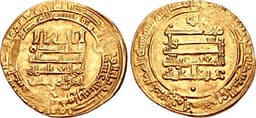
Al-Muqtadir
Emperor · Medieval
41.5Total
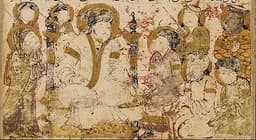
Al-Saffah
Emperor · Medieval
60.0Total
Basic Information
Born
895
721
Died
932
754
Era
Medieval
Medieval
Nationality
Abbasid Caliphate
Abbasid Caliphate
Occupation
Emperor
Emperor
Civilization
Middle Eastern
Middle Eastern
Score Comparison
Military (10%)
20.0
65.0
Political (20%)
30.7
68.0
Influence (20%)
49.4
59.0
Legacy (20%)
39.2
56.0
Leadership (15%)
55.3
58.8
Strategy (15%)
45.0
57.5
TOTAL
41.5
60.0
Al-Muqtadir — Complete Timeline
908 AD
Accession of Al-MuqtadirPolitical Action◆ Major
Al-Muqtadir became caliph at age 13 after the death of Al-Muktafi. His youth and inexperience led to factional struggles among court officials and military commanders, accelerating the decline of Abbasid authority.
AccessionYouthDecline
Impact: nationaldestructive
929 AD
Battle of BaghdadWar◆ Major
The Qarmatians attacked and sacked Baghdad, the Abbasid capital. Al-Muqtadir's forces were unable to defend the city, and the caliph was forced to flee. This event demonstrated the complete military weakness of the caliphate.
QarmatiansSack of BaghdadWeakness
Impact: regionaltragic
932 AD
Assassination of Al-MuqtadirPolitical Action◆ Major
Al-Muqtadir was killed in battle against a rebel army led by Mu'nis al-Muzaffar, a former general. His death ended a 24-year reign marked by political instability, economic decline, and loss of territory.
AssassinationRebellionEnd of Reign
Impact: nationaltragic
Al-Saffah — Complete Timeline
750 AD
Proclamation as CaliphPolitical Action
Al-Saffah was proclaimed the first Abbasid caliph in Kufa after the Abbasid Revolution overthrew the Umayyads. His title 'al-Saffah' means 'the Shedder of Blood', reflecting the violent transition.
CaliphateRevolutionAbbasid
Impact: global
Massacre of the UmayyadsPolitical Action◆ Major
Al-Saffah ordered the systematic elimination of the Umayyad family to prevent any restoration. Most Umayyad princes were killed, though one, Abd al-Rahman I, escaped to Spain and founded the Emirate of Cordoba.
MassacreUmayyadPurge
Impact: globaldestructive
Establishment of the Abbasid CaliphatePolitical Action
Al-Saffah established the Abbasid Caliphate, moving the capital from Damascus to a new city near Kufa. This shift marked the beginning of a new era in Islamic history, with a focus on Persian influence and Baghdad.
CaliphateCapitalIslamic History
Impact: global
Expert Analysis
Origins
**Al-Muqtadir** was born in 895 CE into the Abbasid dynasty, the son of Caliph Al-Muqtadir's predecessor Al-Muktafi. His early life was marked by palace intrigue; his mother, a Greek concubine, wielded significant influence. He received minimal education or training in statecraft, being raised in the harem. His youth left him unprepared for leadership.
**Al-Saffah** (full name: Abu al-Abbas Abdallah ibn Muhammad) was born around 721 CE into the Abbasid family, descendants of the Prophet Muhammad's uncle. His family spent decades building a revolutionary network against the Umayyad Caliphate. He was groomed for leadership by his father and uncles, learning military strategy and political organization. His upbringing was steeped in the clandestine movement that would bring him to power.
Rise to Power
**Al-Muqtadir** ascended the throne at age 13 in 908 CE after the death of his brother, Caliph Al-Muktafi. His accession was engineered by palace officials who sought a weak ruler to control. His early reign was dominated by rival factions: the vizier (chief minister) and the chamberlain. He never consolidated personal authority, remaining a figurehead for 24 years.
**Al-Saffah** rose through the Abbasid Revolution. In 749 CE, after years of covert propaganda and military campaigns led by his brother Ibrahim and general Abu Muslim, the Umayyad Caliphate collapsed. Al-Saffah was proclaimed caliph in Kufa in October 749. His title "al-Saffah" (the Shedder of Blood) reflected his merciless consolidation of power. He immediately ordered the massacre of Umayyad princes, securing his dynasty's rule.
Leadership & Governance
**Al-Muqtadir** scored 55.3 in leadership and 30.7 in political skill. His reign was characterized by administrative decay. He relied on incompetent viziers and allowed the military to dominate. He failed to address the Qarmatian threat, leading to the sacking of Baghdad in 928 CE. His governance was reactive, with policies dictated by court factions.
**Al-Saffah** scored 58.8 in leadership and 68.0 in political skill. He established the Abbasid Caliphate's foundations: moving the capital from Damascus to a new city near Kufa (later Baghdad), centralizing administration, and integrating Persian bureaucratic traditions. He appointed capable governors but maintained strict control. His political acumen allowed him to navigate the diverse coalition that brought him to power.
Triumph & Tragedy
**Al-Muqtadir**'s greatest success was surviving 24 years on the throne despite his weakness. However, his reign saw the catastrophic Battle of Baghdad (928 CE) where Qarmatians sacked the capital, forcing him to flee. His assassination in 932 CE by his own general Mu'nis al-Muzaffar marked the nadir of caliphal authority. His legacy is one of decline: military score 20.0, influence 49.4.
**Al-Saffah**'s triumph was founding the Abbasid Caliphate, which lasted over 500 years. He successfully eliminated Umayyad resistance. However, his reign was short (749-754 CE) and marred by brutal purges. His massacre of the Umayyads, while effective, set a precedent of dynastic violence. He died at age 33, possibly from smallpox, leaving his brother al-Mansur to complete the consolidation.
Character & Destiny
**Al-Muqtadir** was indecisive and easily manipulated. His character—weak-willed, pleasure-seeking, and lacking vision—made him a pawn. His destiny was to preside over decline; his assassination was the logical outcome of his passivity.
**Al-Saffah** was ruthless, calculating, and determined. His title "the Shedder of Blood" reflects his willingness to use extreme violence. His character drove him to seize power and eliminate threats. His early death cut short his rule, but his foundations allowed the dynasty to flourish.
Legacy
**Al-Muqtadir** is remembered as the caliph who accelerated Abbasid decline. His reign saw the loss of provinces, the rise of military dictators, and the weakening of the caliphate. His legacy is negative: a score of 39.2.
**Al-Saffah** is remembered as the founder of the Abbasid Caliphate, a dynasty that presided over the Islamic Golden Age. He established the political framework that enabled cultural and scientific flourishing. His legacy score of 56.0 reflects his foundational role.
Conclusion
Al-Saffah had far greater impact than Al-Muqtadir. While Al-Muqtadir's reign was a disaster, Al-Saffah's actions created a new era in Islamic history. His total score of 60.0 versus Al-Muqtadir's 41.5 reflects his superior military (65.0 vs 20.0) and political (68.0 vs 30.7) abilities. Al-Saffah's legacy as a founder outweighs Al-Muqtadir's failure as a ruler. The Abbasid Caliphate would not have existed without Al-Saffah; Al-Muqtadir's reign was merely a chapter of decline within that established order.
Rankings
🥇
Al-SaffahLeader
Mil: 65.0Pol: 68.0Inf: 59.0
60.0
🥈
Al-Muqtadir
Mil: 20.0Pol: 30.7Inf: 49.4
41.5
+18.5 behind
How This Comparison Works
Algorithm
Each figure is scored on 6 dimensions (0—100 scale) based on structured historical data: Military (10%), Political (20%), Influence (20%), Legacy (20%), Leadership (15%), Strategy (15%). The weighted total produces the final ranking.
Data Sources
Scores are computed from structured sub-indicators in the database. Scale factors adjust for era (Ancient ×0.85, Modern ×1.0) and civilization size (Eastern ×1.05, Other ×0.80) to account for differences in population and military scale.
Maximum 3 Figures
Comparisons are limited to 2—3 figures to ensure readability and statistical meaningfulness.
Error Margins
±5 points per dimension — Sub-scores are derived from historical records with inherent uncertainty. Two figures within 5 points on a dimension should be considered roughly equivalent in that area.
Total Score Accuracy
±3 points overall — The weighted combination of 6 dimensions produces a total score with approximately ±3 points of uncertainty. Differences of less than 3 points are not statistically significant— the figures are effectively tied.
Known Limitations
- Historical records are incomplete and uneven across civilizations
- Figures from oral-tradition societies may be underrepresented
- Occupation labels can misclassify multi-role figures
- Scores measure capability and impact, not moral character
- Quantitative scoring is a comparison tool, not absolute truth
Capability Radar
Military (10%) — Battles & Warfare
Battles
5
60
Win Rate
5
65
Expansion
5
70
Political (20%) — Governance & Reform
Reform
10
55
Diplomacy
15
60
Economy
10
45
Influence (20%) — Cultural & Global Reach
Cultural
15
45
Global
10
50
Legacy (20%) — Historical Impact
Historical
20
65
Longevity
15
55
Leadership (15%) — Power & Stability
Tenure
60
40
Stability
10
35
Strategy (15%) — Tactics & Innovation
Strategy
5
55
Tactics
5
50
Reform
5
40
Similar Comparisons
Comments & Discussion
No comments yet. Be the first to share your thoughts!