Loading...
Al-Mustakfi vs Henry IV of HRE
Henry IV of HRE leads by 17.9 pts · 2 figures compared
…
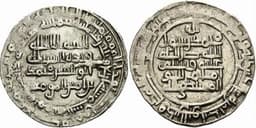
Al-Mustakfi
Emperor · Medieval
47.4Total

Henry IV of HRE
Emperor · Medieval
65.3Total
Basic Information
Born
905
1050
Died
949
1106
Era
Medieval
Medieval
Nationality
Abbasid Caliphate
Holy Roman Empire
Occupation
Emperor
Emperor
Civilization
Middle Eastern
Western
Score Comparison
Military (10%)
35.3
50.0
Political (20%)
39.4
54.7
Influence (20%)
60.0
72.0
Legacy (20%)
40.8
72.0
Leadership (15%)
45.0
67.0
Strategy (15%)
60.0
60.0
TOTAL
47.4
65.3
Al-Mustakfi — Complete Timeline
944 AD
Accession of Al-MustakfiPolitical Action◆ Major
Al-Mustakfi became caliph after the deposition of Al-Muttaqi. His reign was entirely under the control of the Buyid emir Mu'izz al-Dawla, who used the caliph as a figurehead to legitimize his rule.
AccessionBuyid ControlFigurehead
Impact: national
946 AD
Deposition and Blinding by the BuyidsPolitical Action◆ Major
Al-Mustakfi was deposed and blinded by Mu'izz al-Dawla after only two years. The Buyid emir accused him of plotting against him, but the real reason was to replace him with a more compliant caliph.
DepositionBlindingBuyid
Impact: nationaltragic
949 AD
Death of Al-MustakfiPolitical Action
Al-Mustakfi died shortly after his deposition, possibly murdered on the orders of the Buyids. His death marked the end of a short and powerless reign.
DeathMurderBuyid
Impact: nationaltragic
Henry IV of HRE — Complete Timeline
1075 AD
Battle of LangensalzaWar◆ Major
Henry IV defeated Saxon rebels at Langensalza in Thuringia. The victory temporarily ended the Saxon Rebellion, but the conflict resumed later. The battle demonstrated Henry's military capability early in his reign.
Saxon RebellionBattle
Impact: regional
1076 AD
Excommunication by Pope Gregory VIIPolitical Action◆ Major
Pope Gregory VII excommunicated Henry IV after Henry attempted to depose the Pope. The excommunication freed Henry's subjects from their oaths of loyalty, leading to a rebellion by German princes. This forced Henry to seek reconciliation at Canossa.
Investiture ControversyPapacyRebellion
Impact: globaldestructive
1077 AD
Walk to CanossaPolitical Action
Henry IV traveled to Canossa Castle in northern Italy to seek absolution from Pope Gregory VII. He stood barefoot in the snow for three days before the Pope lifted his excommunication. This event symbolized the power struggle between secular and religious authority.
Investiture ControversyPapacyPenance
Impact: global
1084 AD
Siege of RomeWar◆ Major
Henry IV besieged Rome and captured the city. He was crowned Holy Roman Emperor by Antipope Clement III. Pope Gregory VII took refuge in the Castel Sant'Angelo and was rescued by Norman forces under Robert Guiscard, who sacked Rome.
Investiture ControversyRomeCrowning
Impact: regionaldestructive
Expert Analysis
Origins
Al-Mustakfi (born 905 CE) was an Abbasid caliph in Baghdad, ascending to the throne in 944 CE after his cousin Al-Muttaqi was deposed. His family, the Abbasids, had long been figureheads under the control of various military commanders. He received a traditional Islamic education but had no real political or military experience. His reign was entirely dominated by the Buyid emir Mu'izz al-Dawla, who had captured Baghdad in 945 CE.
Henry IV (born 1050 CE) was the son of Henry III, Holy Roman Emperor. Raised in the Salian dynasty, he inherited a powerful kingdom but also faced internal opposition from the Saxon nobility. His education focused on governance and military strategy, but his youth was marked by conflict with the papacy. He became king at age 6 and emperor in 1084.
Rise to Power
Al-Mustakfi became caliph through the machinations of the Buyids, who sought a compliant figurehead. He was installed in 944 CE after Al-Muttaqi was deposed. His rise was not due to his own efforts but rather the political needs of his overlords. He had no allies of his own and was entirely dependent on Mu'izz al-Dawla.
Henry IV rose to power as a child king, with his mother Agnes of Poitou acting as regent. He faced a rebellion led by Archbishop Anno II of Cologne, who kidnapped him in 1062 CE to seize control. Henry eventually asserted his authority in 1065 CE, but his reign was plagued by conflicts with the Saxon nobles and the papacy. The turning point came in 1075 CE when he attempted to depose Pope Gregory VII, leading to his excommunication and the Walk to Canossa in 1077 CE.
Leadership & Governance
Al-Mustakfi's leadership was nonexistent; he was a puppet caliph with no real power. His governance was limited to ceremonial duties, while the Buyid emir controlled the state. He scored 39.4 in political skill, reflecting his inability to influence events. His only notable act was attempting to assert independence, which led to his deposition.
Henry IV, scoring 54.7 in politics, was a more active ruler. He fought the Investiture Controversy, asserting royal authority over church appointments. He appointed bishops and abbots, challenging papal supremacy. His governance style was authoritarian; he suppressed the Saxon rebellion with force at the Battle of Langensalza in 1075 CE. However, his excommunication weakened his position, forcing him to seek forgiveness at Canossa.
Triumph & Tragedy
Al-Mustakfi's triumph was simply surviving as caliph for two years, but he achieved nothing lasting. His tragedy was his deposition and blinding in 946 CE, after being accused of plotting against the Buyids. He died shortly after, possibly murdered. His total score of 47.4 reflects his insignificance.
Henry IV's greatest triumph was the Siege of Rome in 1084 CE, where he captured the city and was crowned emperor by Antipope Clement III. He also defeated Saxon rebels at Langensalza. His greatest tragedy was the Walk to Canossa, a humiliating act of penance that temporarily restored his position but weakened imperial authority. His excommunication in 1076 CE led to a civil war, and he died in 1106 CE, betrayed by his son Henry V.
Character & Destiny
Al-Mustakfi was weak and indecisive, unable to resist Buyid control. His attempt to assert independence was reckless and poorly planned. His character sealed his fate: a powerless figure in a system that demanded compliance.
Henry IV was stubborn and ambitious, refusing to bow to papal authority. His determination led him to Canossa, but also to years of conflict. Historians note his resilience but also his poor judgment in provoking the papacy. His personality shaped the Investiture Controversy, which defined his reign.
Legacy
Al-Mustakfi left no lasting legacy; he is a footnote in Abbasid history. The Buyid emirate continued to control caliphs, and the Abbasid caliphate declined further. His score of 40.8 in legacy reflects his minimal impact.
Henry IV's legacy is significant: he fought for royal prerogatives against the papacy, setting the stage for centuries of church-state conflict. The Investiture Controversy was partially resolved by the Concordat of Worms in 1122 CE, but his struggle weakened the Holy Roman Empire. He is remembered as a symbol of imperial resistance. His legacy score of 72.0 indicates his enduring impact.
Conclusion
Henry IV had far greater impact than Al-Mustakfi. With a total score of 65.3 against 47.4, Henry's actions shaped medieval politics, while Al-Mustakfi was a mere pawn. Henry's Walk to Canossa and the Investiture Controversy are seminal events; Al-Mustakfi's blinding is a minor note. Therefore, Henry IV is the more significant historical figure.
Rankings
🥇
Henry IV of HRELeader
Mil: 50.0Pol: 54.7Inf: 72.0
65.3
🥈
Al-Mustakfi
Mil: 35.3Pol: 39.4Inf: 60.0
47.4
+17.9 behind
How This Comparison Works
Algorithm
Each figure is scored on 6 dimensions (0—100 scale) based on structured historical data: Military (10%), Political (20%), Influence (20%), Legacy (20%), Leadership (15%), Strategy (15%). The weighted total produces the final ranking.
Data Sources
Scores are computed from structured sub-indicators in the database. Scale factors adjust for era (Ancient ×0.85, Modern ×1.0) and civilization size (Eastern ×1.05, Other ×0.80) to account for differences in population and military scale.
Maximum 3 Figures
Comparisons are limited to 2—3 figures to ensure readability and statistical meaningfulness.
Error Margins
±5 points per dimension — Sub-scores are derived from historical records with inherent uncertainty. Two figures within 5 points on a dimension should be considered roughly equivalent in that area.
Total Score Accuracy
±3 points overall — The weighted combination of 6 dimensions produces a total score with approximately ±3 points of uncertainty. Differences of less than 3 points are not statistically significant— the figures are effectively tied.
Known Limitations
- Historical records are incomplete and uneven across civilizations
- Figures from oral-tradition societies may be underrepresented
- Occupation labels can misclassify multi-role figures
- Scores measure capability and impact, not moral character
- Quantitative scoring is a comparison tool, not absolute truth
Capability Radar
Military (10%) — Battles & Warfare
Battles
32
55
Win Rate
35
50
Expansion
35
35
Political (20%) — Governance & Reform
Reform
0
40
Diplomacy
5
70
Economy
0
30
Influence (20%) — Cultural & Global Reach
Cultural
0
60
Global
0
55
Legacy (20%) — Historical Impact
Historical
5
75
Longevity
0
65
Leadership (15%) — Power & Stability
Tenure
5
65
Stability
0
25
Strategy (15%) — Tactics & Innovation
Strategy
40
45
Tactics
45
40
Reform
44
30
Similar Comparisons
Comments & Discussion
No comments yet. Be the first to share your thoughts!