Loading...
Henry IV of HRE vs Qapaghan Qaghan
Henry IV of HRE leads by 6.2 pts · 2 figures compared
…

Henry IV of HRE
Emperor · Medieval
65.3Total
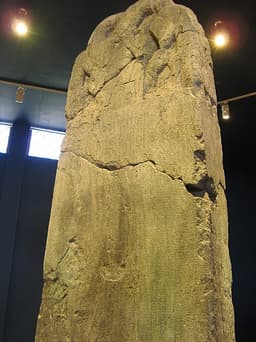
Qapaghan Qaghan
Emperor · Medieval
59.1Total
Basic Information
Born
1050
664
Died
1106
716
Era
Medieval
Medieval
Nationality
Holy Roman Empire
Gokturk Khaganate
Occupation
Emperor
Emperor
Civilization
Western
Eastern
Score Comparison
Military (10%)
50.0
72.0
Political (20%)
54.7
68.0
Influence (20%)
72.0
59.0
Legacy (20%)
72.0
49.2
Leadership (15%)
67.0
53.2
Strategy (15%)
60.0
66.3
TOTAL
65.3
59.1
Henry IV of HRE — Complete Timeline
1075 AD
Battle of LangensalzaWar◆ Major
Henry IV defeated Saxon rebels at Langensalza in Thuringia. The victory temporarily ended the Saxon Rebellion, but the conflict resumed later. The battle demonstrated Henry's military capability early in his reign.
Saxon RebellionBattle
Impact: regional
1076 AD
Excommunication by Pope Gregory VIIPolitical Action◆ Major
Pope Gregory VII excommunicated Henry IV after Henry attempted to depose the Pope. The excommunication freed Henry's subjects from their oaths of loyalty, leading to a rebellion by German princes. This forced Henry to seek reconciliation at Canossa.
Investiture ControversyPapacyRebellion
Impact: globaldestructive
1077 AD
Walk to CanossaPolitical Action
Henry IV traveled to Canossa Castle in northern Italy to seek absolution from Pope Gregory VII. He stood barefoot in the snow for three days before the Pope lifted his excommunication. This event symbolized the power struggle between secular and religious authority.
Investiture ControversyPapacyPenance
Impact: global
1084 AD
Siege of RomeWar◆ Major
Henry IV besieged Rome and captured the city. He was crowned Holy Roman Emperor by Antipope Clement III. Pope Gregory VII took refuge in the Castel Sant'Angelo and was rescued by Norman forces under Robert Guiscard, who sacked Rome.
Investiture ControversyRomeCrowning
Impact: regionaldestructive
Qapaghan Qaghan — Complete Timeline
690 AD
Expansion of the Gokturk KhaganateWar◆ Major
Qapaghan Qaghan led military campaigns that expanded the Gokturk Khaganate's territory from the Great Wall of China to the Caspian Sea. He subjugated the Kyrgyz, Turgesh, and other steppe tribes, establishing Gokturk dominance over the eastern steppes.
ExpansionSteppe EmpireMilitary Campaign
Impact: regional
695 AD
Submission of the Khitans and TatarsWar
Qapaghan Qaghan forced the Khitan and Tatar confederations to submit to Gokturk authority. He incorporated their cavalry into his army and used them as vassals in campaigns against China and other steppe peoples.
SubjugationSteppe PoliticsVassalage
Impact: regional
698 AD
Defeat of the Tang Dynasty at the Battle of QarabaliqWar◆ Major
Qapaghan Qaghan defeated a Tang Chinese army near Qarabaliq, forcing the Tang to recognize Gokturk suzerainty over the Tarim Basin. This victory secured Gokturk control over the Silk Road trade routes for a decade.
Tang-Gokturk WarBattleSilk Road
Impact: regional
716 AD
Death in Battle against the BasmylWar◆ Major
Qapaghan Qaghan was killed in a battle against the Basmyl tribe, a former vassal that rebelled. His death led to a succession crisis and the eventual decline of the Gokturk Khaganate, as his son was unable to maintain control.
DeathBattleSuccession Crisis
Impact: regionaltragic
Expert Analysis
Origins
Henry IV was born on November 11, 1050, in Goslar, the eldest son of Emperor Henry III and Agnes of Poitou. Raised in a tumultuous court, he inherited the throne at age six, with his mother acting as regent until he came of age. His early years were marked by noble rebellions and the influence of the Church, particularly the papacy's growing power under Gregory VII.
Qapaghan Qaghan, born around 670, was a member of the Ashina clan, the ruling family of the Second Turkic Khaganate. His brother, Ilterish Qaghan, founded the khaganate in 682 after a revolt against Tang Chinese dominance. Qapaghan served as a general under Ilterish, gaining military experience that would later define his reign. Little is known of his early life, but his martial upbringing in the steppes shaped his expansionist ambitions.
Rise to Power
Henry IV's rise was fraught with challenges. He assumed full control in 1065, but faced immediate opposition from Saxon nobles. In 1073, the Saxon Rebellion erupted, and Henry's army was defeated at the Battle of Homburg. He regrouped and won a decisive victory at the Battle of Langensalza in 1075, temporarily crushing the rebellion. However, his conflict with Pope Gregory VII over investiture rights escalated. In 1076, Gregory excommunicated Henry and declared him deposed, prompting Henry to seek absolution through the famous Walk to Canossa in January 1077, where he stood barefoot in the snow for three days to gain forgiveness.
Qapaghan Qaghan rose to power after his brother Ilterish died in 693. As the younger brother, he inherited the khaganate and immediately launched campaigns to consolidate and expand the realm. His military prowess was demonstrated in 696 when he defeated the Khitans, forcing them into submission. By 698, he had subjugated the Tatars, and by 706, he led a major campaign against the Tang Dynasty, culminating in the Battle of Qarabaliq (ca. 710), where he defeated a Tang army and secured Gokturk control over the Tarim Basin.
Leadership & Governance
Henry IV's leadership was characterized by a persistent struggle for authority against both secular nobles and the papacy. His governance focused on centralizing royal power in the Holy Roman Empire, but he often had to compromise with powerful dukes. He appointed loyal bishops to counterbalance secular lords, a policy that directly conflicted with papal reforms. His approach to the Investiture Controversy was pragmatic: after Canossa, he continued to appoint bishops, leading to renewed excommunication in 1080. He then marched on Rome, installed Antipope Clement III, and was crowned emperor in 1084. However, his reliance on force alienated many.
Qapaghan Qaghan ruled the Gokturk Khaganate as an autocratic military leader. His governance was based on tribal confederation, with subordinate khans ruling over conquered peoples like the Khitans, Tatars, and Basmyls. He integrated these groups into his army, using their cavalry to supplement his own. He maintained a mobile court and relied on a network of loyal commanders. His expansion brought immense territory under his control, but he did little to create lasting administrative structures, relying instead on tribute and military supremacy.
Triumph & Tragedy
Henry IV's greatest triumph was surviving the Investiture Controversy and reasserting imperial authority. He defeated rival kings like Rudolf of Rheinfelden and secured his coronation as emperor. His greatest failure was the unresolved conflict with the papacy, which weakened the empire and led to civil wars. He also faced rebellion from his own sons, Conrad and Henry V, who eventually forced his abdication in 1105.
Qapaghan Qaghan's triumphs were military: he expanded the khaganate to its greatest extent, from the Great Wall to the Caspian, and forced the Tang to pay tribute. His tragedy was his death in battle against the Basmyl tribe in 716. His overreliance on military force and failure to secure a stable succession led to internal strife and the eventual collapse of the khaganate in 745.
Character & Destiny
Henry IV was stubborn and proud, yet capable of dramatic humility when necessary. His decision to walk to Canossa shows a strategic mind willing to endure public humiliation for political gain. However, his inflexibility in the Investiture Controversy and his harsh treatment of rebels alienated key allies. His character ultimately led to his downfall, as his sons and nobles turned against him.
Qapaghan Qaghan was a relentless warrior and expansionist. He led campaigns personally and demanded absolute loyalty. His death in battle reflects his aggressive style, but also his inability to delegate or build lasting institutions. His destiny was to create a vast but fragile empire that crumbled without his leadership.
Legacy
Henry IV's legacy is intertwined with the Investiture Controversy, which fundamentally reshaped the relationship between church and state. His struggle with Gregory VII set precedents for secular versus papal power that echoed for centuries. He scored 72.0 in Influence and Legacy, reflecting his lasting impact on European political thought. The empire he left was weakened, but the conflict defined medieval politics.
Qapaghan Qaghan's legacy is less enduring. His military score of 72.0 demonstrates his prowess, but his Legacy score of 49.2 indicates the ephemeral nature of his achievements. The Gokturk Khaganate collapsed within decades of his death. However, he is remembered as a symbol of Turkic power and a precursor to later steppe empires. His campaigns influenced the balance of power in Central Asia.
Conclusion
Henry IV had a greater impact on history than Qapaghan Qaghan, as evidenced by his higher overall score of 65.3 compared to 59.1. While Qapaghan was a more successful military leader, Henry's political and religious struggles shaped the development of Western Europe, influencing the separation of church and state and the evolution of imperial authority. Qapaghan's conquests were impressive but transient, whereas Henry's conflicts had enduring consequences that are still studied today.
Rankings
🥇
Henry IV of HRELeader
Mil: 50.0Pol: 54.7Inf: 72.0
65.3
🥈
Qapaghan Qaghan
Mil: 72.0Pol: 68.0Inf: 59.0
59.1
+6.2 behind
How This Comparison Works
Algorithm
Each figure is scored on 6 dimensions (0—100 scale) based on structured historical data: Military (10%), Political (20%), Influence (20%), Legacy (20%), Leadership (15%), Strategy (15%). The weighted total produces the final ranking.
Data Sources
Scores are computed from structured sub-indicators in the database. Scale factors adjust for era (Ancient ×0.85, Modern ×1.0) and civilization size (Eastern ×1.05, Other ×0.80) to account for differences in population and military scale.
Maximum 3 Figures
Comparisons are limited to 2—3 figures to ensure readability and statistical meaningfulness.
Error Margins
±5 points per dimension — Sub-scores are derived from historical records with inherent uncertainty. Two figures within 5 points on a dimension should be considered roughly equivalent in that area.
Total Score Accuracy
±3 points overall — The weighted combination of 6 dimensions produces a total score with approximately ±3 points of uncertainty. Differences of less than 3 points are not statistically significant— the figures are effectively tied.
Known Limitations
- Historical records are incomplete and uneven across civilizations
- Figures from oral-tradition societies may be underrepresented
- Occupation labels can misclassify multi-role figures
- Scores measure capability and impact, not moral character
- Quantitative scoring is a comparison tool, not absolute truth
Capability Radar
Military (10%) — Battles & Warfare
Battles
55
85
Win Rate
50
80
Expansion
35
85
Political (20%) — Governance & Reform
Reform
40
55
Diplomacy
70
65
Economy
30
60
Influence (20%) — Cultural & Global Reach
Cultural
60
45
Global
55
50
Legacy (20%) — Historical Impact
Historical
75
55
Longevity
65
40
Leadership (15%) — Power & Stability
Tenure
65
70
Stability
25
50
Strategy (15%) — Tactics & Innovation
Strategy
45
80
Tactics
40
75
Reform
30
60
Similar Comparisons
Comments & Discussion
No comments yet. Be the first to share your thoughts!