Loading...
Henry IV of HRE vs Muhammad bin Tughluq
Henry IV of HRE leads by 16.9 pts · 2 figures compared
…

Henry IV of HRE
Emperor · Medieval
65.3Total
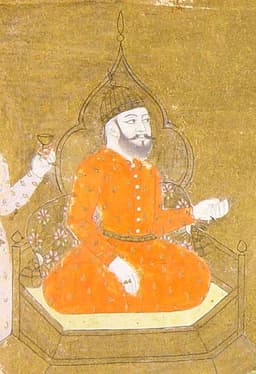
Muhammad bin Tughluq
Emperor · Medieval
48.4Total
Basic Information
Born
1050
1290
Died
1106
1351
Era
Medieval
Medieval
Nationality
Holy Roman Empire
India
Occupation
Emperor
Emperor
Civilization
Western
Indian
Score Comparison
Military (10%)
50.0
20.0
Political (20%)
54.7
40.8
Influence (20%)
72.0
57.2
Legacy (20%)
72.0
47.5
Leadership (15%)
67.0
65.0
Strategy (15%)
60.0
43.3
TOTAL
65.3
48.4
Henry IV of HRE — Complete Timeline
1075 AD
Battle of LangensalzaWar◆ Major
Henry IV defeated Saxon rebels at Langensalza in Thuringia. The victory temporarily ended the Saxon Rebellion, but the conflict resumed later. The battle demonstrated Henry's military capability early in his reign.
Saxon RebellionBattle
Impact: regional
1076 AD
Excommunication by Pope Gregory VIIPolitical Action◆ Major
Pope Gregory VII excommunicated Henry IV after Henry attempted to depose the Pope. The excommunication freed Henry's subjects from their oaths of loyalty, leading to a rebellion by German princes. This forced Henry to seek reconciliation at Canossa.
Investiture ControversyPapacyRebellion
Impact: globaldestructive
1077 AD
Walk to CanossaPolitical Action
Henry IV traveled to Canossa Castle in northern Italy to seek absolution from Pope Gregory VII. He stood barefoot in the snow for three days before the Pope lifted his excommunication. This event symbolized the power struggle between secular and religious authority.
Investiture ControversyPapacyPenance
Impact: global
1084 AD
Siege of RomeWar◆ Major
Henry IV besieged Rome and captured the city. He was crowned Holy Roman Emperor by Antipope Clement III. Pope Gregory VII took refuge in the Castel Sant'Angelo and was rescued by Norman forces under Robert Guiscard, who sacked Rome.
Investiture ControversyRomeCrowning
Impact: regionaldestructive
Muhammad bin Tughluq — Complete Timeline
1325 AD
Accession to the Delhi SultanatePolitical Action
Muhammad bin Tughluq succeeded his father Ghiyas-ud-din Tughluq as sultan of Delhi. He inherited a vast empire but soon embarked on ambitious and often controversial policies that would define his reign.
Delhi SultanateTughluqSuccession
Impact: regional
1327 AD
Transfer of Capital to DaulatabadPolitical Action◆ Major
Muhammad bin Tughluq ordered the transfer of the capital from Delhi to Daulatabad in the Deccan, forcing the entire population and administration to move. The plan failed due to water scarcity and logistical issues, and the capital was later moved back to Delhi.
Capital TransferDaulatabadFailed Reform
Impact: regionaldestructive
1329 AD
Introduction of Token CurrencyReform◆ Major
Muhammad bin Tughluq introduced a token currency made of copper and brass, intended to replace silver coins. The government failed to prevent counterfeiting, leading to economic chaos and the eventual withdrawal of the currency at great loss.
Token CurrencyEconomic ReformFailure
Impact: regionaldestructive
1330 AD
Campaign in the Deccan and South IndiaWar◆ Major
Muhammad bin Tughluq led military campaigns into the Deccan and southern India, attempting to consolidate control over the region. He faced rebellions from local rulers, including the Hoysala and Kakatiya, and the campaigns drained the treasury.
DeccanSouthern IndiaRebellion
Impact: regional
1335 AD
Revolt of the Nobility and Provincial GovernorsPolitical Action◆ Major
Muhammad bin Tughluq faced multiple revolts from nobles and provincial governors, including in Bengal, Gujarat, and the Deccan. These rebellions weakened the central authority and led to the fragmentation of the Delhi Sultanate, with the rise of independent states like the Bahmani Sultanate.
RevoltNobilityFragmentation
Impact: regionaldestructive
1340 AD
Famine in Northern IndiaOther◆ Major
A severe famine struck northern India during Muhammad bin Tughluq's reign, exacerbated by his failed economic policies and military campaigns. The famine caused widespread suffering and depopulation, further destabilizing the empire.
FamineEconomic CrisisDepopulation
Impact: regionaltragic
Expert Analysis
Origins
Henry IV (1050–1106) was born into the Salian dynasty of the Holy Roman Empire. His father, Henry III, died when he was six, leaving him under the regency of his mother, Agnes of Poitou. Raised amid political intrigue, Henry faced a nobility eager to curb imperial power. He was educated in governance but lacked military training, a deficiency that shaped his reign.
Muhammad bin Tughluq (c. 1290–1351) was the eldest son of Ghiyas-ud-din Tughluq, founder of the Tughluq dynasty in India. He received a broad education, excelling in logic, philosophy, and calligraphy. His father’s military campaigns exposed him to administration early. Unlike Henry, Muhammad was intellectually gifted but impulsive, a trait that would define his rule.
Rise to Power
Henry IV became king of Germany in 1056 at age six. His early reign was dominated by regents and the powerful Archbishop of Cologne. In 1065, he came of age and immediately clashed with the Saxon nobility. The turning point came in 1073 with the Saxon Rebellion. Henry defeated the rebels at the Battle of Langensalza in 1075, temporarily consolidating power. However, his conflict with Pope Gregory VII escalated, leading to the Investiture Controversy. In 1077, Henry performed the Walk to Canossa, standing barefoot in the snow for three days to receive absolution. This diplomatic move preserved his throne but weakened his authority.
Muhammad bin Tughluq ascended the Delhi Sultanate in 1325 after his father’s suspicious death. He quickly launched ambitious projects. In 1327, he ordered the transfer of the capital from Delhi to Daulatabad, a 1,500-kilometer relocation that cost thousands of lives. In 1329, he introduced token currency made of copper and brass, which failed due to rampant counterfeiting. These early decisions marked him as a ruler of grand ideas but poor execution. His rise was not contested, but his policies bred immediate resistance.
Leadership & Governance
Henry IV governed a decentralized empire where nobles and bishops held significant power. He attempted to centralize authority by appointing loyal bishops, which sparked the Investiture Controversy. His leadership was reactive: he used diplomacy (Canossa) when weak and military force when strong. He scored 67.0 in leadership, reflecting his ability to survive, but 54.7 in politics, as he failed to subdue the papacy.
Muhammad bin Tughluq was an intellectual ruler who wrote poetry and studied philosophy. He imposed high taxes, expanded the bureaucracy, and sought to integrate the Deccan into his empire. However, his governance was erratic. His token currency scheme caused economic chaos, and his forced migration depopulated Delhi. He scored 65.0 in leadership but only 40.8 in politics, as his reforms alienated elites and subjects alike.
Triumph & Tragedy
Henry IV’s greatest success was surviving excommunication and rebellion. He eventually deposed Gregory VII and installed Antipope Clement III, securing his coronation as emperor in 1084. His tragedy was the ongoing civil war with his own son, Henry V, who forced him to abdicate in 1105. Henry died in 1106, broken and excommunicated again.
Muhammad bin Tughluq’s triumph was expanding the sultanate to its greatest territorial extent, incorporating the Deccan and parts of South India. His tragedy was the failure of nearly every reform. The token currency was withdrawn at great loss; the capital was moved back to Delhi; and rebellions in Bengal, Gujarat, and the Deccan fragmented the empire. By his death in 1351, the sultanate was in decline.
Character & Destiny
Henry IV was stubborn and pragmatic. His walk to Canossa showed his willingness to humble himself for power, but his later actions revealed a vengeful streak. His character led to constant conflict, and his inability to compromise with his son sealed his fate. Historians see him as a symbol of the struggle between church and state.
Muhammad bin Tughluq was brilliant but hubristic. He implemented ideas ahead of their time, but his arrogance prevented him from testing them. His character invited rebellion, and his reign is often cited as a cautionary tale of mismanagement. Ibn Battuta, who served at his court, noted his generosity but also his ruthlessness.
Legacy
Henry IV’s legacy is the Investiture Controversy, which ultimately weakened imperial authority and strengthened the papacy. His walk to Canossa became a metaphor for political submission. He scored 72.0 in influence and legacy, reflecting his lasting symbolic impact.
Muhammad bin Tughluq’s legacy is one of failed ambition. His reforms are studied as examples of poor execution. He scored 57.2 in influence and 47.5 in legacy, as his empire fragmented soon after his death. However, his attempts to centralize administration influenced later Mughal rulers.
Conclusion
Henry IV had a greater impact, with a total score of 65.3 compared to Muhammad bin Tughluq’s 48.4. Henry’s conflict with the papacy shaped medieval European politics for centuries, while Muhammad’s failures weakened the Delhi Sultanate irreparably. Henry’s legacy endured in church-state relations; Muhammad’s did not. Thus, Henry IV stands as the more consequential ruler.
Rankings
🥇
Henry IV of HRELeader
Mil: 50.0Pol: 54.7Inf: 72.0
65.3
🥈
Muhammad bin Tughluq
Mil: 20.0Pol: 40.8Inf: 57.2
48.4
+16.9 behind
How This Comparison Works
Algorithm
Each figure is scored on 6 dimensions (0—100 scale) based on structured historical data: Military (10%), Political (20%), Influence (20%), Legacy (20%), Leadership (15%), Strategy (15%). The weighted total produces the final ranking.
Data Sources
Scores are computed from structured sub-indicators in the database. Scale factors adjust for era (Ancient ×0.85, Modern ×1.0) and civilization size (Eastern ×1.05, Other ×0.80) to account for differences in population and military scale.
Maximum 3 Figures
Comparisons are limited to 2—3 figures to ensure readability and statistical meaningfulness.
Error Margins
±5 points per dimension — Sub-scores are derived from historical records with inherent uncertainty. Two figures within 5 points on a dimension should be considered roughly equivalent in that area.
Total Score Accuracy
±3 points overall — The weighted combination of 6 dimensions produces a total score with approximately ±3 points of uncertainty. Differences of less than 3 points are not statistically significant— the figures are effectively tied.
Known Limitations
- Historical records are incomplete and uneven across civilizations
- Figures from oral-tradition societies may be underrepresented
- Occupation labels can misclassify multi-role figures
- Scores measure capability and impact, not moral character
- Quantitative scoring is a comparison tool, not absolute truth
Capability Radar
Military (10%) — Battles & Warfare
Battles
55
55
Win Rate
50
40
Expansion
35
50
Political (20%) — Governance & Reform
Reform
40
40
Diplomacy
70
35
Economy
30
20
Influence (20%) — Cultural & Global Reach
Cultural
60
30
Global
55
25
Legacy (20%) — Historical Impact
Historical
75
45
Longevity
65
30
Leadership (15%) — Power & Stability
Tenure
65
65
Stability
25
15
Strategy (15%) — Tactics & Innovation
Strategy
45
45
Tactics
40
60
Reform
30
30
Similar Comparisons
Comments & Discussion
No comments yet. Be the first to share your thoughts!