Loading...
Al-Mustakfi vs Philip of Saint-Pol
Al-Mustakfi leads by 9.5 pts · 2 figures compared
…
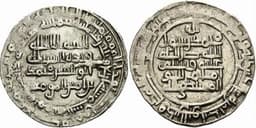
Al-Mustakfi
Emperor · Medieval
47.4Total

Philip of Saint-Pol
Emperor · Medieval
37.9Total
Basic Information
Born
905
1404
Died
949
1430
Era
Medieval
Medieval
Nationality
Abbasid Caliphate
Brabant
Occupation
Emperor
Emperor
Civilization
Middle Eastern
Western
Score Comparison
Military (10%)
35.3
21.2
Political (20%)
39.4
29.3
Influence (20%)
60.0
47.1
Legacy (20%)
40.8
37.5
Leadership (15%)
45.0
41.5
Strategy (15%)
60.0
39.6
TOTAL
47.4
37.9
Al-Mustakfi — Complete Timeline
944 AD
Accession of Al-MustakfiPolitical Action◆ Major
Al-Mustakfi became caliph after the deposition of Al-Muttaqi. His reign was entirely under the control of the Buyid emir Mu'izz al-Dawla, who used the caliph as a figurehead to legitimize his rule.
AccessionBuyid ControlFigurehead
Impact: national
946 AD
Deposition and Blinding by the BuyidsPolitical Action◆ Major
Al-Mustakfi was deposed and blinded by Mu'izz al-Dawla after only two years. The Buyid emir accused him of plotting against him, but the real reason was to replace him with a more compliant caliph.
DepositionBlindingBuyid
Impact: nationaltragic
949 AD
Death of Al-MustakfiPolitical Action
Al-Mustakfi died shortly after his deposition, possibly murdered on the orders of the Buyids. His death marked the end of a short and powerless reign.
DeathMurderBuyid
Impact: nationaltragic
Philip of Saint-Pol — Complete Timeline
1427 AD
Accession as Duke of BrabantPolitical Action◆ Major
Philip of Saint-Pol inherited the Duchy of Brabant upon the death of his brother John IV. His rule marked the last independent reign of a Burgundian duke in Brabant before it was fully integrated into the Burgundian state.
SuccessionBrabantBurgundy
Impact: regional
1428 AD
Treaty of DelftPolitical Action◆ Major
Philip of Saint-Pol signed the Treaty of Delft with Jacqueline of Hainaut, ending the war over the succession in Hainaut and Holland. The treaty recognized Philip's authority over these territories, expanding Burgundian control.
TreatyBurgundian ExpansionHainaut
Impact: regionalconstructive
1430 AD
Death without HeirsPolitical Action
Philip of Saint-Pol died without legitimate children, leading to the Duchy of Brabant passing to his cousin Philip the Good, Duke of Burgundy. This ended the independent line of Burgundian dukes in Brabant and fully integrated the duchy into the Burgundian state.
SuccessionBrabantBurgundian State
Impact: regional
Expert Analysis
Origins
Al-Mustakfi (born 905 CE) was an Abbasid caliph from the ancient dynasty that had once ruled the Islamic world. By his time, the caliphate was a shadow of its former glory, with real power held by the Buyid emirs. His father was Caliph al-Muktafi, but his family had been sidelined by military strongmen. He was raised in the caliphal palace in Baghdad, but his education was more about survival than statecraft.
Philip of Saint-Pol (born 1404 CE) was a prince of the House of Burgundy, a cadet branch of the French royal family. He was the son of Antoine, Duke of Brabant, and a great-grandson of Philip the Bold. He grew up in the lavish Burgundian court, surrounded by the wealth and culture of the Low Countries. His upbringing prepared him for rule, but he was overshadowed by his more famous cousin, Philip the Good.
Rise to Power
Al-Mustakfi became caliph in 944 CE after the Buyid emir Mu'izz al-Dawla deposed his predecessor, al-Muttaqi. The Buyids, a Shi'a dynasty from Daylam, controlled Baghdad and used the caliph as a figurehead. Al-Mustakfi's accession was a mere formality; he had no real power and was allowed only the trappings of the office. His rise was not based on merit or support but on Buyid convenience.
Philip of Saint-Pol became Duke of Brabant in 1427 upon the death of his brother John IV. He inherited a duchy that was part of the Burgundian sphere but still had its own traditions and estates. His rise was typical for a medieval prince: he was the next in line after his brother died without children. However, his rule was marked by conflict with Jacqueline of Hainaut over succession rights.
Leadership & Governance
Al-Mustakfi's leadership score of 45.0 reflects his complete powerlessness. He was a puppet caliph; the Buyid emir made all decisions. He attempted no reforms and left no administrative mark. His only act of governance was to confirm Buyid appointments. He had no army, no treasury, and no real authority.
Philip of Saint-Pol, with a leadership score of 41.5, was more active but still ineffective. He signed the Treaty of Delft in 1428 with Jacqueline of Hainaut, ending a war over her inheritance. The treaty recognized her as Countess of Hainaut and Holland but placed her under Burgundian protection, effectively ceding power. Philip's governance was constrained by the powerful estates of Brabant and his reliance on Burgundian support.
Triumph & Tragedy
Al-Mustakfi's greatest achievement was simply surviving two years as caliph—a minor triumph in a dangerous era. His tragedy was his deposition and blinding in 946 CE by Mu'izz al-Dawla, who accused him of plotting. The real reason was Buyid consolidation of power. He died soon after, possibly murdered. His total score of 47.4 reflects his minimal impact.
Philip of Saint-Pol's triumph was the Treaty of Delft, which temporarily stabilized the succession in Hainaut and Holland. His tragedy was dying without legitimate heirs in 1430, leading to the absorption of Brabant into the Burgundian state. His legacy score of 37.5 shows how his death ended independent Brabant.
Character & Destiny
Al-Mustakfi was a figurehead, but his character is obscure. He likely understood his precarious position, but he could not escape his fate. His political score of 39.4 indicates he was outmaneuvered by the Buyids. His destiny was sealed by the decline of the Abbasid caliphate.
Philip of Saint-Pol was a typical late medieval prince, more interested in chivalry and court life than hard politics. His strategy score of 39.6 shows he was not a great planner. His death without heirs was a personal and dynastic failure, shaped by his inability to produce a successor.
Legacy
Al-Mustakfi is a footnote in Abbasid history, remembered only as one of the many caliphs blinded by the Buyids. His legacy score of 40.8 is low because he contributed nothing enduring. The Abbasid caliphate continued as a puppet institution until 1258.
Philip of Saint-Pol's legacy is more tangible: his death led to the unification of Brabant with Burgundy under Philip the Good, strengthening the Burgundian state. However, his personal legacy is weak, scoring 37.5. He is remembered mainly as the last independent duke of Brabant before Burgundian consolidation.
Conclusion
Al-Mustakfi and Philip of Saint-Pol were both weak rulers in decline. Al-Mustakfi's total score of 47.4 is higher than Philip's 37.9, but this gap is misleading. Al-Mustakfi was a complete puppet with no agency, while Philip had some autonomy but squandered it. In terms of historical impact, Philip's death changed the political map of the Low Countries, whereas Al-Mustakfi's reign changed nothing. Thus, Philip of Saint-Pol had greater impact, despite his lower scores, because his failure led to the consolidation of Burgundian power.
Rankings
🥇
Al-MustakfiLeader
Mil: 35.3Pol: 39.4Inf: 60.0
47.4
🥈
Philip of Saint-Pol
Mil: 21.2Pol: 29.3Inf: 47.1
37.9
+9.5 behind
How This Comparison Works
Algorithm
Each figure is scored on 6 dimensions (0—100 scale) based on structured historical data: Military (10%), Political (20%), Influence (20%), Legacy (20%), Leadership (15%), Strategy (15%). The weighted total produces the final ranking.
Data Sources
Scores are computed from structured sub-indicators in the database. Scale factors adjust for era (Ancient ×0.85, Modern ×1.0) and civilization size (Eastern ×1.05, Other ×0.80) to account for differences in population and military scale.
Maximum 3 Figures
Comparisons are limited to 2—3 figures to ensure readability and statistical meaningfulness.
Error Margins
±5 points per dimension — Sub-scores are derived from historical records with inherent uncertainty. Two figures within 5 points on a dimension should be considered roughly equivalent in that area.
Total Score Accuracy
±3 points overall — The weighted combination of 6 dimensions produces a total score with approximately ±3 points of uncertainty. Differences of less than 3 points are not statistically significant— the figures are effectively tied.
Known Limitations
- Historical records are incomplete and uneven across civilizations
- Figures from oral-tradition societies may be underrepresented
- Occupation labels can misclassify multi-role figures
- Scores measure capability and impact, not moral character
- Quantitative scoring is a comparison tool, not absolute truth
Capability Radar
Military (10%) — Battles & Warfare
Battles
32
10
Win Rate
35
10
Expansion
35
10
Political (20%) — Governance & Reform
Reform
0
20
Diplomacy
5
30
Economy
0
20
Influence (20%) — Cultural & Global Reach
Cultural
0
15
Global
0
5
Legacy (20%) — Historical Impact
Historical
5
15
Longevity
0
10
Leadership (15%) — Power & Stability
Tenure
5
30
Stability
0
20
Strategy (15%) — Tactics & Innovation
Strategy
40
10
Tactics
45
10
Reform
44
5
Similar Comparisons
Comments & Discussion
No comments yet. Be the first to share your thoughts!