Loading...
Napoleon Bonaparte vs Philip of Saint-Pol
Napoleon Bonaparte leads by 33.0 pts · 2 figures compared
…

Napoleon Bonaparte
General · Modern
70.9Total
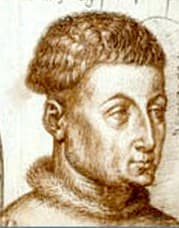
Philip of Saint-Pol
Emperor · Medieval
37.9Total
Basic Information
Born
1769
1404
Died
1821
1430
Era
Modern
Medieval
Nationality
France
Brabant
Occupation
General
Emperor
Civilization
Western
Western
Score Comparison
Military (10%)
94.0
21.2
Political (20%)
72.0
29.3
Influence (20%)
40.0
47.1
Legacy (20%)
80.0
37.5
Leadership (15%)
78.0
41.5
Strategy (15%)
90.0
39.6
TOTAL
70.9
37.9
Napoleon Bonaparte — Complete Timeline
1799 AD
Coup of 18 BrumaireOther◆ Major
Napoleon Bonaparte, with support from his brother Lucien and key political figures, overthrew the Directory in a bloodless coup. He established the Consulate with himself as First Consul, effectively becoming the ruler of France. This event ended the French Revolution's most unstable period.
French RevolutionCoupRise to Power
Impact: regional
1804 AD
Promulgation of the Napoleonic CodeOther◆ Major
Napoleon enacted the Civil Code of the French, known as the Napoleonic Code, a comprehensive set of laws that replaced the fragmented feudal legal systems. The code established legal equality, protected property rights, and secularized law. It became the basis for legal systems in many European and world countries.
Legal ReformNapoleonic CodeCivil Law
Impact: globalconstructive
1805 AD
Battle of AusterlitzWar◆ Major
Napoleon's Grande Arm
Napoleonic WarsBattleDecisive Victory
Impact: global
1812 AD
Invasion of RussiaWar◆ Major
Napoleon led the Grande Arm
Napoleonic WarsInvasionDisaster
Impact: globaldestructive
1815 AD
Battle of WaterlooWar◆ Major
Napoleon's French army was defeated by the combined forces of the Duke of Wellington's Anglo-Allied army and Gebhard Leberecht von Bl
Napoleonic WarsBattleFinal Defeat
Impact: globaldestructive
Philip of Saint-Pol — Complete Timeline
1427 AD
Accession as Duke of BrabantPolitical Action◆ Major
Philip of Saint-Pol inherited the Duchy of Brabant upon the death of his brother John IV. His rule marked the last independent reign of a Burgundian duke in Brabant before it was fully integrated into the Burgundian state.
SuccessionBrabantBurgundy
Impact: regional
1428 AD
Treaty of DelftPolitical Action◆ Major
Philip of Saint-Pol signed the Treaty of Delft with Jacqueline of Hainaut, ending the war over the succession in Hainaut and Holland. The treaty recognized Philip's authority over these territories, expanding Burgundian control.
TreatyBurgundian ExpansionHainaut
Impact: regionalconstructive
1430 AD
Death without HeirsPolitical Action
Philip of Saint-Pol died without legitimate children, leading to the Duchy of Brabant passing to his cousin Philip the Good, Duke of Burgundy. This ended the independent line of Burgundian dukes in Brabant and fully integrated the duchy into the Burgundian state.
SuccessionBrabantBurgundian State
Impact: regional
Expert Analysis
napoleon-bonaparte-vs-philip-of-saint-pol
# The Emperor and the Duke: Two Lives That Measured the Distance of Ages
In the spring of 1815, Napoleon Bonaparte stood before his Grande Armée, about to march into a destiny that would end at Waterloo. Four centuries earlier, in the winter of 1430, another Philip—Philip of Saint-Pol, Duke of Brabant—lay dying in a Brussels palace, his body ravaged by illness, his line extinguished. One man had shaken the foundations of Europe; the other could barely keep his own duchy intact. What separates a titan from a footnote? The answer lies not merely in talent, but in the very currents of history that lifted one and drowned the other.
Origins
Napoleon Bonaparte was born in 1769 on Corsica, an island that had been French for barely a year. His family belonged to the minor nobility, poor enough that his father's connections were essential for the boy to enter French military school. Here was a man forged in the crucible of revolution: the old order had collapsed, and for a brilliant artillery officer of modest birth, the path to supreme power lay open as it never had been under the Bourbon monarchy.
Philip of Saint-Pol, born in 1404, entered a world still rigid with medieval certainties. He was a prince of the House of Burgundy, a cadet branch of the French royal family, and his destiny was written in his blood. The Duchy of Brabant was his birthright, not his ambition. He grew up in a world where legitimacy meant everything, where power flowed from inheritance and marriage, not from genius and will.
Rise to Power
Napoleon's ascent was meteoric and earned. In 1793, at just twenty-four, he drove the British from Toulon and was promoted to brigadier general. By 1796, he commanded the Army of Italy, where his lightning campaigns humiliated the Austrians and made him a national hero. The Directory, corrupt and faltering, needed a sword—and Napoleon provided it. In 1799, he seized power in a coup d'état, becoming First Consul, then Emperor in 1804. Every step was a gamble, each victory a stepping stone.
Philip of Saint-Pol's rise was the opposite: quiet, expected, almost passive. When his brother John IV died in 1427, Philip simply inherited the Duchy of Brabant. There was no coup, no great campaign, no triumph against the odds. He was twenty-three years old, a duke by accident of birth, ruling a territory that had been squabbled over for generations.
Leadership & Governance
Napoleon governed with the energy of a man who believed he could reshape reality. He reformed France's legal system with the Napoleonic Code, centralizing administration, standardizing education, and creating a meritocratic bureaucracy. His military genius was legendary: at Austerlitz in 1805, he crushed the combined armies of Russia and Austria in a single day, a battle still studied in war colleges. He was a strategist of the highest order—scored 93 in strategy—who understood that war was not merely about winning battles but about destroying enemy coalitions.
Philip of Saint-Pol, by contrast, governed as a medieval duke: cautiously, within the constraints of feudal law and family alliances. His single notable achievement was the Treaty of Delft in 1428, which ended a war with Jacqueline of Hainaut. It was a political settlement, not a military victory. His military score of 30 reflects a man who never commanded a major army, never fought a decisive battle. He was a caretaker, not a conqueror.
Triumph & Tragedy
Napoleon's greatest triumph was his empire: at its height in 1811, he ruled from Madrid to Warsaw, and his brothers sat on thrones across Europe. But his tragedy was the same ambition that built him. The invasion of Russia in 1812 cost him half a million men. Exiled to Elba in 1814, he returned for a Hundred Days, only to meet final defeat at Waterloo in 1815. He died in 1821 on Saint Helena, a prisoner of the British, his empire in ashes.
Philip of Saint-Pol's life held no such grandeur. His triumph was simply to rule for three years without disaster. His tragedy was that he died without heirs in 1430, at just twenty-six. The Duchy of Brabant passed to his cousin Philip the Good, Duke of Burgundy, and the independent line of Brabant vanished into the larger Burgundian state. He was the last of his house, remembered only because he was the last.
Character & Destiny
Napoleon was driven by an insatiable will to power, a belief that he was the instrument of history. He once said, "Impossible is a word to be found only in the dictionary of fools." His personality—restless, brilliant, arrogant—shaped every decision. He trusted no one fully, centralized everything in himself, and ultimately could not stop.
Philip of Saint-Pol, by the sparse records we have, was a conventional medieval prince: pious, cautious, bound by family duty. He had no grand vision, no revolutionary ambition. His personality did not shape history; history shaped him, and then discarded him.
Legacy
Napoleon's legacy is enormous. The Napoleonic Code still underpins civil law in much of Europe and the world. His military campaigns are studied as models of strategy. He is remembered as both a liberator who spread revolutionary ideals and a tyrant who drowned Europe in war. His total score of 82.4 reflects a figure of immense, if controversial, influence.
Philip of Saint-Pol's legacy is almost invisible. His name appears in genealogies and obscure historical footnotes. His score of 44.2 is a measure of obscurity. He left no laws, no battles, no enduring memory—only a duchy that became a province.
Conclusion
What separates Napoleon from Philip of Saint-Pol is not merely talent but the age that each was born into. Napoleon arrived at history's moment of maximum possibility, when revolution had shattered old structures and genius could seize power. Philip arrived in a world where birth was destiny, where a duke was born, not made. One man created his own fate; the other accepted his. In the end, Napoleon's tragedy was that he could not stop reaching for more. Philip's tragedy was that he never reached at all. Both are warnings: the one of overreach, the other of passivity. But only one of them changed the world, for better and for worse.
Rankings
🥇
Napoleon BonaparteLeader
Mil: 94.0Pol: 72.0Inf: 40.0
70.9
🥈
Philip of Saint-Pol
Mil: 21.2Pol: 29.3Inf: 47.1
37.9
+33.0 behind
How This Comparison Works
Algorithm
Each figure is scored on 6 dimensions (0—100 scale) based on structured historical data: Military (10%), Political (20%), Influence (20%), Legacy (20%), Leadership (15%), Strategy (15%). The weighted total produces the final ranking.
Data Sources
Scores are computed from structured sub-indicators in the database. Scale factors adjust for era (Ancient ×0.85, Modern ×1.0) and civilization size (Eastern ×1.05, Other ×0.80) to account for differences in population and military scale.
Maximum 3 Figures
Comparisons are limited to 2—3 figures to ensure readability and statistical meaningfulness.
Error Margins
±5 points per dimension — Sub-scores are derived from historical records with inherent uncertainty. Two figures within 5 points on a dimension should be considered roughly equivalent in that area.
Total Score Accuracy
±3 points overall — The weighted combination of 6 dimensions produces a total score with approximately ±3 points of uncertainty. Differences of less than 3 points are not statistically significant— the figures are effectively tied.
Known Limitations
- Historical records are incomplete and uneven across civilizations
- Figures from oral-tradition societies may be underrepresented
- Occupation labels can misclassify multi-role figures
- Scores measure capability and impact, not moral character
- Quantitative scoring is a comparison tool, not absolute truth
Capability Radar
Military (10%) — Battles & Warfare
Battles
95
10
Win Rate
90
10
Expansion
95
10
Political (20%) — Governance & Reform
Reform
95
20
Diplomacy
80
30
Economy
85
20
Influence (20%) — Cultural & Global Reach
Cultural
85
15
Global
90
5
Legacy (20%) — Historical Impact
Historical
95
15
Longevity
90
10
Leadership (15%) — Power & Stability
Tenure
85
30
Stability
70
20
Strategy (15%) — Tactics & Innovation
Strategy
95
10
Tactics
98
10
Reform
92
5
Similar Comparisons
Comments & Discussion
No comments yet. Be the first to share your thoughts!