Loading...
Al-Mustasim vs Yelu Yanxi
Al-Mustasim leads by 0.5 pts · 2 figures compared
…
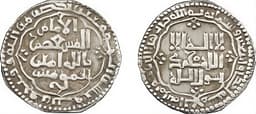
Al-Mustasim
Emperor · Medieval
40.8Total

Yelu Yanxi
Emperor · Medieval
40.3Total
Basic Information
Born
1213
1075
Died
1258
1128
Era
Medieval
Medieval
Nationality
Abbasid Caliphate
Khitan Empire
Occupation
Emperor
Emperor
Civilization
Middle Eastern
Eastern
Score Comparison
Military (10%)
50.0
50.0
Political (20%)
26.4
35.0
Influence (20%)
46.3
45.5
Legacy (20%)
36.7
35.8
Leadership (15%)
48.4
39.0
Strategy (15%)
38.6
38.6
TOTAL
40.8
40.3
Al-Mustasim — Complete Timeline
1258 AD
Siege of BaghdadWar
Mongol forces under Hulagu Khan besieged and captured Baghdad. Al-Mustasim was executed, ending the Abbasid Caliphate in Baghdad. The city was sacked, resulting in massive destruction and loss of life, marking a turning point in Islamic history.
Mongol InvasionFall of BaghdadEnd of Caliphate
Impact: globaltragic
Yelu Yanxi — Complete Timeline
1122 AD
Fled the Jurchen invasionWar◆ Major
As the Jurchen Jin army advanced on the Liao capital, Yelu Yanxi abandoned his court and fled westward. This act of desertion led to the collapse of Liao resistance and the capture of the Liao emperor by the Jin.
Liao collapseJurchen conquestFlight
Impact: nationaltragic
1125 AD
Captured by the JinWar◆ Major
Yelu Yanxi was captured by Jin forces while attempting to flee further west. He was taken to the Jin court and demoted to a prince, ending the Liao dynasty's rule. He died in captivity in 1128.
CaptureEnd of LiaoCaptivity
Impact: nationaltragic
Expert Analysis
Origins
Al-Mustasim (full name: Al-Mustasim Billah) was born in 1213 in Baghdad, the capital of the Abbasid Caliphate. He was the son of Caliph Al-Zahir, and from a young age was groomed for leadership within the opulent and scholarly Abbasid court. His education focused on Islamic jurisprudence, poetry, and courtly etiquette, with little training in military or administrative affairs. The Abbasid state had long been in decline, its authority reduced to a ceremonial role under the shadow of the Seljuk Turks and later the Khwarezmian Empire. Al-Mustasim inherited a caliphate that was more symbolic than powerful, controlling little more than Baghdad and its immediate environs.
Yelu Yanxi was born in 1075, the grandson of the Liao emperor Yelu Hongji. He belonged to the Yelu clan, the ruling family of the Khitan Liao dynasty, which had dominated northern China and the steppes for over two centuries. His upbringing was typical for a Khitan prince: trained in horsemanship, archery, and the nomadic traditions of his people, but also educated in Chinese classics and Buddhist texts. The Liao Empire was a dualistic state, combining Chinese-style bureaucracy with tribal Khitan structures. By Yelu Yanxi's time, the dynasty faced internal corruption and external threats, particularly from the rising Jurchen tribes in the northeast.
Rise to Power
Al-Mustasim became caliph in 1242 after the death of his father. His accession was smooth, as he was the designated heir, but the caliphate was a shadow of its former glory. The real power in the region was held by the Khwarezmian Empire and the Mongol Empire that was rapidly expanding westward. Al-Mustasim's reign was marked by indecision and political infighting among his advisors. He alienated key military commanders and failed to prepare for the Mongol threat, dismissing warnings from his own generals. His rise was not through merit but through lineage, and he lacked the acumen to navigate the crisis.
Yelu Yanxi ascended the Liao throne in 1101, succeeding his grandfather. His early reign saw attempts to revive Liao fortunes through campaigns against the Song dynasty and other neighbors, but these were largely unsuccessful. He faced rebellions from Khitan nobles and Jurchen tribes. In 1114, the Jurchen leader Wanyan Aguda declared war on Liao, marking the beginning of the end. Yelu Yanxi's response was ineffective: he led punitive expeditions that failed to crush the rebellion, and his court became divided. By 1120, the Jurchens had captured significant Liao territories, and Yelu Yanxi's authority crumbled.
Leadership & Governance
Al-Mustasim's leadership style was passive and detached. He relied heavily on his vizier, Ibn al-Alqami, who was later accused of treachery. The caliph refused to fortify Baghdad or mobilize a substantial army, despite clear intelligence of the Mongol approach. He spent his time in luxury, believing that the prestige of the caliphate would deter attack. His governance was weak; he alienated the Sunni and Shia factions within Baghdad, failing to unite them against the common enemy. When Hulagu Khan's forces arrived in 1258, Al-Mustasim offered a token resistance but quickly surrendered, hoping to negotiate. The Mongols sacked Baghdad, executed him, and ended the Abbasid Caliphate.
Yelu Yanxi was a more active but equally ineffective leader. He attempted to lead armies personally but lacked strategic skill. In 1122, as the Jurchen Jin army advanced on the Liao capital of Shangjing (modern Inner Mongolia), he panicked and abandoned his court, fleeing westward. This act of desertion demoralized his army and led to the rapid collapse of Liao resistance. He spent the next three years wandering, seeking refuge with other tribes, but was captured by Jin forces in 1125. He was demoted to a prince and died in captivity in 1128. Yelu Yanxi's score of 39.0 in leadership reflects his failure to inspire loyalty or make sound decisions.
Triumph & Tragedy
Al-Mustasim's greatest triumph was simply maintaining the caliphate's ceremonial existence for sixteen years, though this was more a result of Mongol delays than his own actions. His tragedy was total: the destruction of Baghdad, the loss of the caliphate's library (the House of Wisdom), and his own execution by being rolled in a carpet and trampled by horses. The Mongol sack killed hundreds of thousands and ended the Islamic Golden Age. His military score of 50.0 is generous, as he effectively had no military achievements.
Yelu Yanxi's reign saw some early successes in diplomacy, such as securing alliances with the Song dynasty against the Jin, but these failed to materialize. His greatest tragedy was his flight: by abandoning his capital, he ensured the Liao dynasty's extinction. He was captured and lived out his life as a puppet prince, a humiliating end for an emperor. His political score of 35.0 and military score of 50.0 reflect his inability to use the resources he had.
Character & Destiny
Al-Mustasim was described as pious but naive, indulgent, and indecisive. He trusted his vizier over his generals, and his character—a combination of arrogance and ignorance—led him to underestimate the Mongols. His destiny was sealed by his refusal to act, scoring 46.3 in influence (largely due to the caliphate's symbolic role) but 26.4 in political acumen.
Yelu Yanxi was more proactive but equally flawed. He was impulsive and lacked resolve, fleeing at the first sign of danger. His character—courageous in small skirmishes but cowardly in crisis—caused his downfall. He scored 35.0 in political ability and 38.6 in strategy, reflecting his poor choices.
Legacy
Al-Mustasim's legacy is that of a cautionary tale: the last caliph of Baghdad, whose inaction led to the end of the Abbasid line. The caliphate was revived later in Cairo but never regained its former authority. His legacy score of 36.7 reflects the negative impact of his failures.
Yelu Yanxi's legacy is similar: the last Liao emperor, remembered for fleeing and losing his empire. The Khitan people eventually assimilated or formed the Kara-Khitan Khanate in Central Asia, but his name is synonymous with collapse. His legacy score of 35.8 is almost identical.
Conclusion
While both emperors presided over the destruction of their dynasties, Al-Mustasim had a marginally greater impact due to the historical significance of the Abbasid Caliphate and the Mongol sack of Baghdad. His total score of 40.8 edges out Yelu Yanxi's 40.3. However, the difference is negligible; both were failures. Al-Mustasim's greater influence score (46.3 vs 45.5) and legacy (36.7 vs 35.8) tip the scales slightly in his favor. In the end, Al-Mustasim's fate marked a turning point in world history, while Yelu Yanxi's was a regional event. Thus, Al-Mustasim is the more consequential figure.
Rankings
🥇
Al-MustasimLeader
Mil: 50.0Pol: 26.4Inf: 46.3
40.8
🥈
Yelu Yanxi
Mil: 50.0Pol: 35.0Inf: 45.5
40.3
+0.5 behind
How This Comparison Works
Algorithm
Each figure is scored on 6 dimensions (0—100 scale) based on structured historical data: Military (10%), Political (20%), Influence (20%), Legacy (20%), Leadership (15%), Strategy (15%). The weighted total produces the final ranking.
Data Sources
Scores are computed from structured sub-indicators in the database. Scale factors adjust for era (Ancient ×0.85, Modern ×1.0) and civilization size (Eastern ×1.05, Other ×0.80) to account for differences in population and military scale.
Maximum 3 Figures
Comparisons are limited to 2—3 figures to ensure readability and statistical meaningfulness.
Error Margins
±5 points per dimension — Sub-scores are derived from historical records with inherent uncertainty. Two figures within 5 points on a dimension should be considered roughly equivalent in that area.
Total Score Accuracy
±3 points overall — The weighted combination of 6 dimensions produces a total score with approximately ±3 points of uncertainty. Differences of less than 3 points are not statistically significant— the figures are effectively tied.
Known Limitations
- Historical records are incomplete and uneven across civilizations
- Figures from oral-tradition societies may be underrepresented
- Occupation labels can misclassify multi-role figures
- Scores measure capability and impact, not moral character
- Quantitative scoring is a comparison tool, not absolute truth
Capability Radar
Military (10%) — Battles & Warfare
Battles
5
5
Win Rate
5
5
Expansion
0
0
Political (20%) — Governance & Reform
Reform
0
5
Diplomacy
5
10
Economy
5
5
Influence (20%) — Cultural & Global Reach
Cultural
5
5
Global
10
5
Legacy (20%) — Historical Impact
Historical
15
10
Longevity
5
5
Leadership (15%) — Power & Stability
Tenure
10
20
Stability
0
5
Strategy (15%) — Tactics & Innovation
Strategy
5
5
Tactics
5
5
Reform
0
0
Similar Comparisons
Comments & Discussion
No comments yet. Be the first to share your thoughts!