Loading...
Al-Mustazhir vs Al-Saffah
Al-Saffah leads by 21.0 pts · 2 figures compared
…
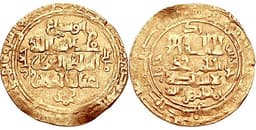
Al-Mustazhir
Emperor · Medieval
39.0Total
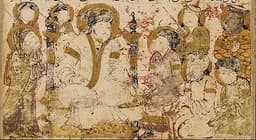
Al-Saffah
Emperor · Medieval
60.0Total
Basic Information
Born
1078
721
Died
1118
754
Era
Medieval
Medieval
Nationality
Abbasid Caliphate
Abbasid Caliphate
Occupation
Emperor
Emperor
Civilization
Middle Eastern
Middle Eastern
Score Comparison
Military (10%)
21.2
65.0
Political (20%)
26.4
68.0
Influence (20%)
50.2
59.0
Legacy (20%)
41.7
56.0
Leadership (15%)
41.5
58.8
Strategy (15%)
36.8
57.5
TOTAL
39.0
60.0
Al-Mustazhir — Complete Timeline
1096 AD
Caliphate During the First CrusadeWar◆ Major
Al-Mustazhir was caliph when the First Crusade began. The crusaders captured Jerusalem in 1099. The caliphate, under Seljuk domination, did not directly confront the crusaders, but the event marked a shift in regional power dynamics.
CrusadesJerusalemSeljuk Era
Impact: global
1101 AD
Conflict with Sultan Muhammad IPolitical Action◆ Major
Al-Mustazhir faced a rebellion by the Seljuk Sultan Muhammad I, who besieged Baghdad. The caliph was forced to accept Muhammad's authority and pay tribute, further reducing caliphal independence.
Seljuk SiegePower Struggle
Impact: regionaldestructive
1105 AD
Assassination of VizierPolitical Action
Al-Mustazhir's vizier, Amid al-Dawla, was assassinated by the Seljuk faction. This event demonstrated the caliph's inability to protect his own officials and the extent of Seljuk control over the caliphal administration.
AssassinationSeljuk Influence
tragic
Al-Saffah — Complete Timeline
750 AD
Proclamation as CaliphPolitical Action
Al-Saffah was proclaimed the first Abbasid caliph in Kufa after the Abbasid Revolution overthrew the Umayyads. His title 'al-Saffah' means 'the Shedder of Blood', reflecting the violent transition.
CaliphateRevolutionAbbasid
Impact: global
Massacre of the UmayyadsPolitical Action◆ Major
Al-Saffah ordered the systematic elimination of the Umayyad family to prevent any restoration. Most Umayyad princes were killed, though one, Abd al-Rahman I, escaped to Spain and founded the Emirate of Cordoba.
MassacreUmayyadPurge
Impact: globaldestructive
Establishment of the Abbasid CaliphatePolitical Action
Al-Saffah established the Abbasid Caliphate, moving the capital from Damascus to a new city near Kufa. This shift marked the beginning of a new era in Islamic history, with a focus on Persian influence and Baghdad.
CaliphateCapitalIslamic History
Impact: global
Expert Analysis
Origins
Al-Mustazhir (born 1078) was the 28th Abbasid caliph, ascending to the throne in 1094. He was the son of Caliph Al-Muqtadi and a Seljuk princess, placing him at the heart of the declining Abbasid Caliphate under Seljuk domination. His early life was shaped by the delicate balance between the caliphate's religious authority and the Seljuk sultans' military power. In contrast, Al-Saffah (born 721) was a descendant of Abbas ibn Abd al-Muttalib, the Prophet Muhammad's uncle. He grew up in the secretive Abbasid movement, which was organizing a revolution against the Umayyad Caliphate. His family's base in Humayma (modern Jordan) provided a strategic center for propaganda and military planning.
Rise to Power
Al-Mustazhir became caliph at age 16 after his father's death, but real power lay with the Seljuk Sultan Barkiyaruq. His reign was marked by internal conflicts among Seljuk factions, culminating in a rebellion by Sultan Muhammad I in 1101. Muhammad besieged Baghdad, forcing Al-Mustazhir to accept his authority and pay tribute. The caliph's inability to assert independence was further exposed when his vizier, Amid al-Dawla, was assassinated by Seljuk agents in 1102. Al-Saffah's rise was more dramatic. In 750, the Abbasid Revolution culminated in the Battle of the Zab, where his general Abu Muslim defeated the Umayyad forces. Al-Saffah was proclaimed caliph in Kufa, taking the title 'al-Saffah' (the Shedder of Blood) to signify his ruthless elimination of enemies. He immediately ordered the massacre of the Umayyad family, killing most princes except Abd al-Rahman I, who escaped to Spain.
Leadership & Governance
Al-Mustazhir's leadership was constrained by Seljuk dominance. He focused on maintaining the caliphate's religious prestige while avoiding direct confrontation. His political score of 26.4 reflects his limited authority; he could not direct military campaigns even during the First Crusade, which began in 1096. The crusaders captured Jerusalem in 1099, but Al-Mustazhir's response was negligible, as the Seljuks handled the military resistance. In contrast, Al-Saffah actively shaped governance. He established the Abbasid Caliphate's administrative structure, moving the capital from Damascus to a new city near Kufa (later Baghdad). His political score of 68.0 indicates his effectiveness in consolidating power. He appointed capable governors, including his brother Al-Mansur, and centralized tax collection. However, his reliance on Persian bureaucrats like the Barmakids created tensions that would later explode.
Triumph & Tragedy
Al-Mustazhir's greatest success was surviving the Seljuk siege of Baghdad in 1101 while retaining the caliphate's symbolic authority. He managed to stay on the throne for 24 years (1094–1118), a relatively long reign given the instability. His tragedy was his complete lack of military and political power; he scored only 21.2 in military and 26.4 in political. He could not protect his own vizier and had no influence over the Crusades, which fundamentally altered the Middle East. Al-Saffah's triumph was the overthrow of the Umayyad Caliphate and the founding of the Abbasid dynasty, which would last for 500 years. His military score of 65.0 reflects the success of the Abbasid Revolution. However, his tragedy was the brutality of his consolidation: the massacre of the Umayyads tainted his legacy, and his short reign (only 4 years, 750–754) meant he did not see the full establishment of the Abbasid state. His death from smallpox at age 33 left unfinished work for his successors.
Character & Destiny
Al-Mustazhir was a passive figure, shaped by the decline of Abbasid authority. His leadership score of 41.5 suggests a moderate ability to navigate court politics, but he lacked the ambition or capability to assert power. His destiny was to be a puppet caliph, a role that preserved the Abbasid line but rendered it irrelevant in military affairs. Al-Saffah, by contrast, was ruthless and ambitious. His title 'al-Saffah' reflects his willingness to shed blood to secure his rule. He was also cunning, using propaganda to portray the Abbasids as rightful heirs to the Prophet. His strategy score of 57.5 indicates a calculated approach to revolution. His destiny was to be a founder, but his early death meant his brother Al-Mansur would be the true architect of the Abbasid empire.
Legacy
Al-Mustazhir's legacy is minimal. He is remembered primarily as the caliph during the First Crusade, a role in which he was powerless. His influence score of 50.2 is partly due to his position, but his personal impact was near zero. The Abbasid caliphate continued to decline under his successors. In contrast, Al-Saffah's legacy is foundational. He established the Abbasid Caliphate, which became a center of Islamic culture and learning. His legacy score of 56.0 reflects this, though it is tempered by the brutality of his methods. The Abbasid dynasty he founded lasted until 1258, and its cultural achievements (e.g., the House of Wisdom) are often attributed to his successors. However, Al-Saffah's role as the first Abbasid caliph gives him a permanent place in history.
Conclusion
Al-Saffah had a significantly greater impact than Al-Mustazhir. With a total score of 60.0 against 39.0, the gap of 21 points reflects Al-Saffah's role as a founder of a dynasty that shaped Islamic history for centuries. Al-Mustazhir, despite being caliph during a pivotal event (the First Crusade), was a powerless figure whose reign exemplified Abbasid decline. Al-Saffah's military (65.0 vs 21.2) and political (68.0 vs 26.4) scores underscore his active agency compared to Al-Mustazhir's passivity. While Al-Saffah's methods were brutal, his founding of the Abbasid Caliphate had a lasting impact on the Islamic world, whereas Al-Mustazhir's reign was a footnote in a larger story of decline.
Rankings
🥇
Al-SaffahLeader
Mil: 65.0Pol: 68.0Inf: 59.0
60.0
🥈
Al-Mustazhir
Mil: 21.2Pol: 26.4Inf: 50.2
39.0
+21.0 behind
How This Comparison Works
Algorithm
Each figure is scored on 6 dimensions (0—100 scale) based on structured historical data: Military (10%), Political (20%), Influence (20%), Legacy (20%), Leadership (15%), Strategy (15%). The weighted total produces the final ranking.
Data Sources
Scores are computed from structured sub-indicators in the database. Scale factors adjust for era (Ancient ×0.85, Modern ×1.0) and civilization size (Eastern ×1.05, Other ×0.80) to account for differences in population and military scale.
Maximum 3 Figures
Comparisons are limited to 2—3 figures to ensure readability and statistical meaningfulness.
Error Margins
±5 points per dimension — Sub-scores are derived from historical records with inherent uncertainty. Two figures within 5 points on a dimension should be considered roughly equivalent in that area.
Total Score Accuracy
±3 points overall — The weighted combination of 6 dimensions produces a total score with approximately ±3 points of uncertainty. Differences of less than 3 points are not statistically significant— the figures are effectively tied.
Known Limitations
- Historical records are incomplete and uneven across civilizations
- Figures from oral-tradition societies may be underrepresented
- Occupation labels can misclassify multi-role figures
- Scores measure capability and impact, not moral character
- Quantitative scoring is a comparison tool, not absolute truth
Capability Radar
Military (10%) — Battles & Warfare
Battles
10
60
Win Rate
10
65
Expansion
10
70
Political (20%) — Governance & Reform
Reform
20
55
Diplomacy
20
60
Economy
20
45
Influence (20%) — Cultural & Global Reach
Cultural
20
45
Global
20
50
Legacy (20%) — Historical Impact
Historical
30
65
Longevity
20
55
Leadership (15%) — Power & Stability
Tenure
30
40
Stability
20
35
Strategy (15%) — Tactics & Innovation
Strategy
10
55
Tactics
10
50
Reform
10
40
Similar Comparisons
Comments & Discussion
No comments yet. Be the first to share your thoughts!