Loading...
Al-Mustazhir vs Cunhambebe
Cunhambebe leads by 6.5 pts · 2 figures compared
…
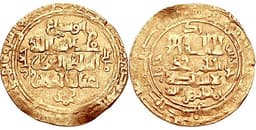
Al-Mustazhir
Emperor · Medieval
39.0Total

Cunhambebe
Emperor · Medieval
45.5Total
Basic Information
Born
1078
1500
Died
1118
1555
Era
Medieval
Medieval
Nationality
Abbasid Caliphate
Tupinamba
Occupation
Emperor
Emperor
Civilization
Middle Eastern
Other
Score Comparison
Military (10%)
21.2
55.0
Political (20%)
26.4
32.2
Influence (20%)
50.2
51.0
Legacy (20%)
41.7
39.2
Leadership (15%)
41.5
55.3
Strategy (15%)
36.8
43.3
TOTAL
39.0
45.5
Al-Mustazhir — Complete Timeline
1096 AD
Caliphate During the First CrusadeWar◆ Major
Al-Mustazhir was caliph when the First Crusade began. The crusaders captured Jerusalem in 1099. The caliphate, under Seljuk domination, did not directly confront the crusaders, but the event marked a shift in regional power dynamics.
CrusadesJerusalemSeljuk Era
Impact: global
1101 AD
Conflict with Sultan Muhammad IPolitical Action◆ Major
Al-Mustazhir faced a rebellion by the Seljuk Sultan Muhammad I, who besieged Baghdad. The caliph was forced to accept Muhammad's authority and pay tribute, further reducing caliphal independence.
Seljuk SiegePower Struggle
Impact: regionaldestructive
1105 AD
Assassination of VizierPolitical Action
Al-Mustazhir's vizier, Amid al-Dawla, was assassinated by the Seljuk faction. This event demonstrated the caliph's inability to protect his own officials and the extent of Seljuk control over the caliphal administration.
AssassinationSeljuk Influence
tragic
Cunhambebe — Complete Timeline
1540 AD
Leadership of the Tupinamba ResistanceWar◆ Major
Cunhambebe became the principal leader of the Tupinamba people in the region of Rio de Janeiro, organizing resistance against Portuguese colonization. He led attacks on Portuguese settlements and allied with the French to oppose Portuguese expansion.
ResistanceTupinambaPortuguese
Impact: regionaldestructive
1550 AD
Alliance with the FrenchPolitical Action◆ Major
Cunhambebe formed an alliance with French traders and colonists, including Nicolas Durand de Villegagnon, who established the France Antarctique colony. The alliance provided the Tupinamba with firearms and support against the Portuguese.
AllianceFrenchTupinamba
Impact: regional
1554 AD
Battle of Rio de JaneiroWar◆ Major
Cunhambebe led Tupinamba warriors in a major attack on the Portuguese settlement of Rio de Janeiro, which had been founded by Est
BattleRio de JaneiroPortuguese
Impact: regionaldestructive
1555 AD
Death of CunhambebeOther
Cunhambebe died, possibly from wounds or disease, during the ongoing conflict with the Portuguese. His death weakened the Tupinamba resistance, and his successor continued the struggle but with less success.
DeathResistanceTupinamba
Impact: regionaltragic
Expert Analysis
Origins
Al-Mustazhir (born 1078) was the 28th Abbasid caliph, ruling from 1094 to 1118. He ascended to the caliphate at age 16, inheriting a position that had been reduced to a figurehead under Seljuk Turk dominance. His family, the Abbasids, had once ruled a vast empire from Baghdad, but by his time, real power lay with the Seljuk sultans. Al-Mustazhir's education was typical for a caliph, focused on Islamic jurisprudence and courtly arts, but he lacked military training or administrative experience.
Cunhambebe (born c. 1520, exact date unknown) was a Tupinamba chief in what is now Brazil. The Tupinamba were a semi-nomadic, warrior society organized into villages. Cunhambebe rose through the tribal hierarchy, likely through displays of bravery, oratory, and leadership in intertribal conflicts. His formative experiences included encounters with Portuguese colonizers and French traders, which shaped his strategic choices.
Rise to Power
Al-Mustazhir became caliph in 1094 after the death of his father, al-Muqtadi. His rise was uneventful, as succession was predetermined by the Seljuk sultan. In 1099, the First Crusade captured Jerusalem, but the caliphate under Al-Mustazhir played no active role; the response was left to local Muslim rulers like the Seljuks and Fatimids. A major turning point was the rebellion of Sultan Muhammad I, who besieged Baghdad in 1101. Al-Mustazhir was forced to accept Muhammad's authority and pay tribute, cementing his subordination.
Cunhambebe rose to prominence in the 1550s as Portuguese colonization intensified. He became the principal leader of the Tupinamba in the Rio de Janeiro region, uniting several villages against the Portuguese. His key ally was the French, who established the France Antarctique colony in 1555. Cunhambebe's alliance with Nicolas Durand de Villegagnon provided firearms and trade goods, enhancing his military capability. By 1560, he led a confederation of Tupinamba warriors numbering in the thousands.
Leadership & Governance
Al-Mustazhir's leadership was constrained. He governed as a ceremonial figure, with real power exercised by the Seljuk sultan and his viziers. His one significant act was attempting to assert independence, which led to the 1101 siege. After that, he focused on court intrigues and religious patronage. His military score of 21.2 reflects his inability to command armies; his political score of 26.4 indicates limited influence. He did, however, maintain the caliphate's religious prestige, scoring 50.2 in influence.
Cunhambebe's leadership was direct and charismatic. He led warriors in battle, organized logistics, and negotiated alliances. His military score of 55.0 and leadership score of 55.3 reflect his effectiveness. He governed through consensus among village elders and war chiefs, using rituals and oratory to maintain unity. His political score of 32.2 shows the limitations of tribal governance against a colonial power.
Triumph & Tragedy
Al-Mustazhir's greatest success was surviving 24 years as caliph despite Seljuk dominance, maintaining the Abbasid line. He also managed to preserve the caliphate's religious authority, which later caliphs would leverage. His failures were the loss of Jerusalem to the Crusaders without response, and his subjugation to Sultan Muhammad I, which diminished the caliphate's temporal power.
Cunhambebe's triumph was leading the Tupinamba to a major victory at the Battle of Rio de Janeiro in 1560, where they forced the Portuguese to abandon the settlement temporarily. He also successfully maintained the French alliance, which provided military support. His tragedy was the eventual Portuguese reconquest of Rio de Janeiro in 1565, and his death soon after, likely from disease or wounds, which led to the collapse of Tupinamba resistance.
Character & Destiny
Al-Mustazhir was cautious and diplomatic, avoiding direct confrontation. His decision to submit to Sultan Muhammad I preserved his life and office but at the cost of independence. Historical assessments note his piety but lack of initiative. His character shaped a destiny of irrelevance.
Cunhambebe was bold and strategic, willing to use violence and alliances. His decision to ally with the French gave him an edge but also tied him to a European power that eventually abandoned him. His character led to a fierce resistance but also a tragic end.
Legacy
Al-Mustazhir's legacy is minor. He is remembered as a caliph during the First Crusade, but his lack of action contrasts with later Muslim leaders like Zengi. His reign marked the low point of Abbasid power. His legacy score of 41.7 reflects limited long-term impact.
Cunhambebe's legacy is more significant. He is celebrated in Brazil as a symbol of indigenous resistance. His alliance with the French influenced early colonial dynamics. His resistance delayed Portuguese expansion. His legacy score of 39.2 is slightly lower due to the eventual Portuguese victory, but his cultural impact endures.
Conclusion
Cunhambebe had greater impact. With a total score of 45.5 vs Al-Mustazhir's 39.0, he led a resistance that shaped colonial history, whereas Al-Mustazhir was a passive figure during a transformative event. Cunhambebe's military and leadership scores (55.0 and 55.3) far exceed Al-Mustazhir's (21.2 and 41.5). While Al-Mustazhir's religious influence was higher (50.2 vs 51.0), his political impotence limited his historical role. Cunhambebe's direct action and legacy of resistance make him the more impactful figure.
Rankings
🥇
CunhambebeLeader
Mil: 55.0Pol: 32.2Inf: 51.0
45.5
🥈
Al-Mustazhir
Mil: 21.2Pol: 26.4Inf: 50.2
39.0
+6.5 behind
How This Comparison Works
Algorithm
Each figure is scored on 6 dimensions (0—100 scale) based on structured historical data: Military (10%), Political (20%), Influence (20%), Legacy (20%), Leadership (15%), Strategy (15%). The weighted total produces the final ranking.
Data Sources
Scores are computed from structured sub-indicators in the database. Scale factors adjust for era (Ancient ×0.85, Modern ×1.0) and civilization size (Eastern ×1.05, Other ×0.80) to account for differences in population and military scale.
Maximum 3 Figures
Comparisons are limited to 2—3 figures to ensure readability and statistical meaningfulness.
Error Margins
±5 points per dimension — Sub-scores are derived from historical records with inherent uncertainty. Two figures within 5 points on a dimension should be considered roughly equivalent in that area.
Total Score Accuracy
±3 points overall — The weighted combination of 6 dimensions produces a total score with approximately ±3 points of uncertainty. Differences of less than 3 points are not statistically significant— the figures are effectively tied.
Known Limitations
- Historical records are incomplete and uneven across civilizations
- Figures from oral-tradition societies may be underrepresented
- Occupation labels can misclassify multi-role figures
- Scores measure capability and impact, not moral character
- Quantitative scoring is a comparison tool, not absolute truth
Capability Radar
Military (10%) — Battles & Warfare
Battles
10
35
Win Rate
10
30
Expansion
10
25
Political (20%) — Governance & Reform
Reform
20
15
Diplomacy
20
25
Economy
20
10
Influence (20%) — Cultural & Global Reach
Cultural
20
30
Global
20
15
Legacy (20%) — Historical Impact
Historical
30
25
Longevity
20
20
Leadership (15%) — Power & Stability
Tenure
30
30
Stability
20
20
Strategy (15%) — Tactics & Innovation
Strategy
10
35
Tactics
10
40
Reform
10
20
Similar Comparisons
Comments & Discussion
No comments yet. Be the first to share your thoughts!