Loading...
Al-Mustazhir vs Injong of Goryeo
Injong of Goryeo leads by 6.4 pts · 2 figures compared
…
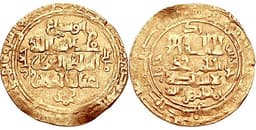
Al-Mustazhir
Emperor · Medieval
39.0Total

Injong of Goryeo
Emperor · Medieval
45.4Total
Basic Information
Born
1078
1109
Died
1118
1146
Era
Medieval
Medieval
Nationality
Abbasid Caliphate
Korea
Occupation
Emperor
Emperor
Civilization
Middle Eastern
Eastern
Score Comparison
Military (10%)
21.2
25.9
Political (20%)
26.4
37.9
Influence (20%)
50.2
50.2
Legacy (20%)
41.7
45.0
Leadership (15%)
41.5
62.2
Strategy (15%)
36.8
39.6
TOTAL
39.0
45.4
Al-Mustazhir — Complete Timeline
1096 AD
Caliphate During the First CrusadeWar◆ Major
Al-Mustazhir was caliph when the First Crusade began. The crusaders captured Jerusalem in 1099. The caliphate, under Seljuk domination, did not directly confront the crusaders, but the event marked a shift in regional power dynamics.
CrusadesJerusalemSeljuk Era
Impact: global
1101 AD
Conflict with Sultan Muhammad IPolitical Action◆ Major
Al-Mustazhir faced a rebellion by the Seljuk Sultan Muhammad I, who besieged Baghdad. The caliph was forced to accept Muhammad's authority and pay tribute, further reducing caliphal independence.
Seljuk SiegePower Struggle
Impact: regionaldestructive
1105 AD
Assassination of VizierPolitical Action
Al-Mustazhir's vizier, Amid al-Dawla, was assassinated by the Seljuk faction. This event demonstrated the caliph's inability to protect his own officials and the extent of Seljuk control over the caliphal administration.
AssassinationSeljuk Influence
tragic
Injong of Goryeo — Complete Timeline
1135 AD
Myocheong rebellionWar◆ Major
The Buddhist monk Myocheong led a rebellion in Pyongyang, advocating for moving the capital and attacking the Jurchen Jin dynasty. King Injong initially supported the plan but later opposed it, leading to a three-year revolt that was crushed by the general Kim Bu-sik.
RebellionCapital MoveGoryeo
Impact: nationaldestructive
1136 AD
Suppression of the Myocheong rebellion by Kim Bu-sikWar◆ Major
General Kim Bu-sik, acting on Injong's orders, besieged and captured Pyongyang, ending the Myocheong rebellion. The victory strengthened the authority of the civil bureaucracy over military and religious factions, but also deepened regional tensions.
Civil WarMilitary CampaignGoryeo
Impact: national
1140 AD
Adoption of the 'Goryeo dogyeong' (Goryeo Code)Reform
Injong oversaw the compilation of a new legal code based on Tang and Song Chinese models. The code standardized administrative procedures and criminal law, but its implementation was uneven due to aristocratic resistance.
Legal ReformCodeGoryeo
Impact: nationalconstructive
Expert Analysis
Origins
Al-Mustazhir (born 1078) was the 28th Abbasid caliph, ascending to the throne in 1094. He inherited a caliphate that had long been under Seljuk tutelage, with real power held by the Seljuk sultans. His early life was shaped by the court politics of Baghdad, where the caliphs were figureheads. He was the son of Caliph al-Muqtadi and a Turkish concubine, and his education focused on Islamic jurisprudence and ceremonial duties.
Injong of Goryeo (born 1109) was the 17th king of the Goryeo dynasty, reigning from 1122 to 1146. He was the son of King Yejong and Queen Sundeok. His education was steeped in Confucian classics and Korean history, preparing him for a role that combined ritual authority with administrative responsibilities. Goryeo was a stable kingdom but faced internal factionalism and external pressure from the Jurchen Jin dynasty.
Rise to Power
Al-Mustazhir became caliph at age 16 after his father's death. His rise was uncontested within the Abbasid family, but the real power lay with the Seljuk sultan, Barkiyaruq. In 1101, Sultan Muhammad I, Barkiyaruq's brother, rebelled and besieged Baghdad, forcing al-Mustazhir to submit. The caliph's role was largely ceremonial; he was a pawn in Seljuk power struggles.
Injong became king at age 13 after his father's death. His early reign was dominated by powerful officials, including the scholar Kim Bu-sik and the monk Myocheong. In 1126, Myocheong gained influence by advocating a move of the capital to Pyongyang and a war against the Jurchen Jin. Injong initially supported Myocheong, but when the rebellion erupted in 1135, he sided with Kim Bu-sik, who led the suppression.
Leadership & Governance
Al-Mustazhir's governance was constrained by Seljuk dominance. He focused on maintaining the caliphate's religious prestige, sponsoring scholars and building mosques. However, he had no control over military or foreign policy. The First Crusade began in 1096, and Jerusalem fell to the crusaders in 1099, but al-Mustazhir could not mount a response. His vizier, Amid al-Dawla, was assassinated by Seljuk agents in 1100, highlighting his impotence. He scored 41.5 in leadership, reflecting his limited agency.
Injong, in contrast, exercised more authority. He oversaw the compilation of the 'Goryeo dogyeong' (Goryeo Code), a legal code based on Tang and Song models, which standardized administration. He also promoted Confucian education and supported the historian Kim Bu-sik in writing the Samguk Sagi, a history of the Three Kingdoms. However, his indecision during the Myocheong rebellion—first supporting Myocheong, then switching to Kim Bu-sik—shows political maneuvering. His political score of 37.9 and leadership score of 62.2 indicate a more active ruler.
Triumph & Tragedy
Al-Mustazhir's greatest success was surviving his reign without being deposed or killed, given the volatile Seljuk politics. He managed to maintain the caliphate's symbolic unity. His tragedy was his complete irrelevance to the First Crusade; the crusaders captured Jerusalem in 1099 without any significant opposition from the Abbasid caliphate. The Seljuk sultan Muhammad I forced him to pay tribute and recognize Seljuk suzerainty. His military score of 21.2 reflects this helplessness.
Injong's triumph was the suppression of the Myocheong rebellion in 1136, which preserved the capital in Kaesong and strengthened royal authority. The victory was achieved by General Kim Bu-sik, but Injong's decision to back Kim was crucial. His tragedy was his initial support for Myocheong, which nearly led to a disastrous war with the Jin dynasty. The rebellion cost lives and resources, but ultimately, Injong's position was bolstered.
Character & Destiny
Al-Mustazhir was a passive figure, content with ceremonial power. He accepted Seljuk domination without resistance, likely recognizing his military weakness. His character—cautious, religious, and non-confrontational—allowed him to survive but not to influence events. Historical assessments view him as a placeholder caliph.
Injong was more ambitious but indecisive. He was swayed by Myocheong's charisma initially, but later showed pragmatism by aligning with Kim Bu-sik. His willingness to adopt Confucian reforms suggests a desire for a strong, centralized state. His character combined intellectual curiosity with political caution, leading to a stable but not transformative reign.
Legacy
Al-Mustazhir's legacy is minimal. He is remembered as the caliph during the First Crusade, but his lack of action meant the crusaders faced only local resistance. The Abbasid caliphate continued its decline, and his reign did not alter that trajectory. His influence score of 50.2 is inflated by the caliphate's symbolic importance.
Injong's legacy is more substantial. The Goryeo Code influenced legal administration for centuries. The Samguk Sagi, commissioned under his reign, remains a key historical source. The suppression of the Myocheong rebellion preserved the Goryeo dynasty's stability. His legacy score of 45.0 reflects these contributions.
Conclusion
Injong of Goryeo had a greater impact than Al-Mustazhir. His total score of 45.4 versus 39.0 reflects his more active role in governance and lasting contributions to Korean statecraft. Al-Mustazhir, despite holding the prestigious title of caliph, was a passive figure whose reign coincided with a major historical event—the First Crusade—without influencing it. Injong, while not a great king, made concrete contributions to law and historiography, and his handling of the Myocheong rebellion preserved Goryeo's stability. The score gap of 6.4 points aligns with this assessment.
Rankings
🥇
Injong of GoryeoLeader
Mil: 25.9Pol: 37.9Inf: 50.2
45.4
🥈
Al-Mustazhir
Mil: 21.2Pol: 26.4Inf: 50.2
39.0
+6.4 behind
How This Comparison Works
Algorithm
Each figure is scored on 6 dimensions (0—100 scale) based on structured historical data: Military (10%), Political (20%), Influence (20%), Legacy (20%), Leadership (15%), Strategy (15%). The weighted total produces the final ranking.
Data Sources
Scores are computed from structured sub-indicators in the database. Scale factors adjust for era (Ancient ×0.85, Modern ×1.0) and civilization size (Eastern ×1.05, Other ×0.80) to account for differences in population and military scale.
Maximum 3 Figures
Comparisons are limited to 2—3 figures to ensure readability and statistical meaningfulness.
Error Margins
±5 points per dimension — Sub-scores are derived from historical records with inherent uncertainty. Two figures within 5 points on a dimension should be considered roughly equivalent in that area.
Total Score Accuracy
±3 points overall — The weighted combination of 6 dimensions produces a total score with approximately ±3 points of uncertainty. Differences of less than 3 points are not statistically significant— the figures are effectively tied.
Known Limitations
- Historical records are incomplete and uneven across civilizations
- Figures from oral-tradition societies may be underrepresented
- Occupation labels can misclassify multi-role figures
- Scores measure capability and impact, not moral character
- Quantitative scoring is a comparison tool, not absolute truth
Capability Radar
Military (10%) — Battles & Warfare
Battles
10
20
Win Rate
10
15
Expansion
10
5
Political (20%) — Governance & Reform
Reform
20
30
Diplomacy
20
40
Economy
20
30
Influence (20%) — Cultural & Global Reach
Cultural
20
30
Global
20
10
Legacy (20%) — Historical Impact
Historical
30
40
Longevity
20
30
Leadership (15%) — Power & Stability
Tenure
30
60
Stability
20
20
Strategy (15%) — Tactics & Innovation
Strategy
10
10
Tactics
10
10
Reform
10
5
Similar Comparisons
Comments & Discussion
No comments yet. Be the first to share your thoughts!