Loading...
Al-Mutadid vs Parakramabahu II
Al-Mutadid leads by 6.2 pts · 2 figures compared
…
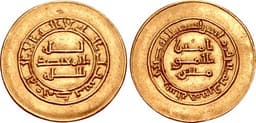
Al-Mutadid
Emperor · Medieval
57.9Total
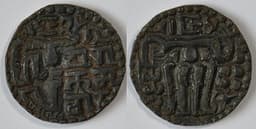
Parakramabahu II
Emperor · Medieval
51.7Total
Basic Information
Born
857
1236
Died
902
1270
Era
Medieval
Medieval
Nationality
Abbasid Caliphate
Sri Lanka
Occupation
Emperor
Emperor
Civilization
Middle Eastern
Indian
Score Comparison
Military (10%)
52.5
40.0
Political (20%)
68.0
68.0
Influence (20%)
55.7
55.7
Legacy (20%)
47.5
48.3
Leadership (15%)
74.0
40.0
Strategy (15%)
55.0
55.0
TOTAL
57.9
51.7
Al-Mutadid — Complete Timeline
883 AD
Suppression of the Zanj RebellionWar◆ Major
Al-Mutadid, as regent and later caliph, led the final campaign that crushed the Zanj Rebellion. The rebel leader Ali ibn Muhammad was killed, and the revolt was brutally suppressed, restoring some order to southern Iraq.
Zanj RebellionMilitary CampaignRestoration
Impact: regionalconstructive
901 AD
Execution of the Qarmatian LeaderPolitical Action
Al-Mutadid ordered the execution of a captured Qarmatian leader, Yahya ibn Zikrawayh. This act was part of his efforts to suppress the Qarmatian movement, which threatened Abbasid rule in Syria and Iraq.
QarmatiansExecutionSuppression
Impact: regionaldestructive
Parakramabahu II — Complete Timeline
1236 AD
Establishment of Dambadeniya as CapitalPolitical Action◆ Major
Parakramabahu II established Dambadeniya as the capital of the Sinhalese kingdom. This marked the beginning of the Dambadeniya period, a new era of Sinhalese history.
CapitalFoundationGovernance
Impact: nationalconstructive
1240 AD
Patronage of LiteratureCultural
Parakramabahu II was a noted patron of literature. He himself wrote the 'Kavyasekaraya', a Sinhalese poem, and encouraged the composition of other works, fostering a cultural renaissance.
LiteraturePatronageCulture
Impact: nationalconstructive
Construction of the Temple of the Tooth in DambadeniyaCultural◆ Major
Parakramabahu II built a temple to house the Tooth Relic of the Buddha in Dambadeniya. This ensured the relic's safety and reinforced the capital's religious significance.
BuddhismRelicArchitecture
Impact: nationalconstructive
1255 AD
Expulsion of Kalinga MaghaWar
Parakramabahu II led a successful campaign to expel Kalinga Magha, the invader from the Kalinga region of India, from Sri Lanka. This ended a period of foreign occupation and restored Sinhalese rule.
LiberationMilitary CampaignForeign Invasion
Impact: national
Expert Analysis
Origins
Al-Mutadid (born Ahmad ibn Talha, 857 CE) was the grandson of the Abbasid caliph al-Mutawakkil. His father, al-Muwaffaq, served as regent during the reign of al-Mu'tamid, effectively ruling the caliphate. Al-Mutadid grew up in the turbulent environment of the Abbasid court, witnessing the decline of central authority and the rise of powerful provincial dynasties. He received military training and administrative experience under his father, preparing him for leadership.
Parakramabahu II (born 1236 CE) was a prince of the Sinhalese royal family, which had been displaced by the invasion of Kalinga Magha in 1215. He grew up in exile or under foreign rule, likely in the region of Dambadeniya. His early life was shaped by the need to reclaim his kingdom and restore Sinhalese sovereignty. He was educated in Buddhist scriptures and Sinhalese literature, which later influenced his patronage of the arts.
Rise to Power
Al-Mutadid rose to prominence as the effective ruler of the Abbasid Caliphate during his father's regency. In 883 CE, he led the final campaign against the Zanj Rebellion, a brutal slave revolt that had plagued southern Iraq for 14 years. His military acumen and ruthless tactics led to the capture and execution of the rebel leader Ali ibn Muhammad, ending the rebellion. When his father died in 891 CE, al-Mutadid succeeded as caliph, but he had already been the de facto power.
Parakramabahu II ascended to the throne of Dambadeniya in 1236 CE, following his father Vijayabahu III. Vijayabahu had established a base at Dambadeniya and begun the resistance against Kalinga Magha. Parakramabahu II continued this effort, organizing a campaign to expel the invader. By 1255 CE, he succeeded in driving Kalinga Magha out of Sri Lanka, reunifying the island under Sinhalese rule. This victory established his legitimacy and marked the start of the Dambadeniya period.
Leadership & Governance
Al-Mutadid's leadership was characterized by centralization and military force. He personally led campaigns to reassert Abbasid control, such as the reconquest of Egypt from the Tulunid dynasty in 905 CE. He also dealt harshly with internal dissent, executing Qarmatian leaders and suppressing revolts. His governance relied on a strong army and loyal Turkish commanders, but he failed to address the structural weaknesses of the caliphate, such as fiscal decline and provincial autonomy. His political score of 68.0 reflects his ability to restore order temporarily, but his military score of 52.5 indicates limited strategic innovation.
Parakramabahu II's leadership focused on cultural revival and religious patronage. He established Dambadeniya as the capital, building the Temple of the Tooth to house the sacred relic, which became a symbol of Sinhalese sovereignty. He also patronized literature, writing the 'Kavyasekaraya' himself. However, his military score of 40.0 suggests he was more a consolidator than a conqueror. His political score of 68.0 matches al-Mutadid's, indicating effective governance within his realm, but his leadership score of 40.0 is significantly lower, perhaps due to a less assertive style.
Triumph & Tragedy
Al-Mutadid's greatest triumph was the suppression of the Zanj Rebellion, which saved the Abbasid Caliphate from collapse. He also restored control over Egypt, a key economic asset. However, his greatest failure was the inability to permanently reverse the caliphate's decline. After his death in 902 CE, the Abbasids continued to lose power to the Buyids and other dynasties. His reign was a temporary respite, not a revival.
Parakramabahu II's triumph was the expulsion of Kalinga Magha, ending 40 years of foreign rule and reunifying Sri Lanka. He also fostered a cultural renaissance, with Dambadeniya becoming a center of Buddhist learning and Sinhalese literature. His tragedy was that his gains were not fully secured; after his death, the kingdom faced new invasions and fragmentation. His legacy score of 48.3 reflects limited long-term impact beyond his reign.
Character & Destiny
Al-Mutadid was a decisive and ruthless ruler, willing to use violence to achieve his goals. His character was shaped by the chaotic environment of the late 9th century, where only the strong survived. He was a capable general and administrator but lacked the vision to reform the caliphate's institutions. His destiny was to be a restorer who could not prevent eventual collapse.
Parakramabahu II was a scholarly and pious king, more interested in culture than conquest. He wrote poetry and promoted Buddhism, earning him a reputation as a wise ruler. However, his character may have been too passive for the military challenges of his era. His destiny was to be a liberator and patron, but not a builder of lasting political structures.
Legacy
Al-Mutadid's legacy is mixed. He is remembered as a strong caliph who temporarily restored Abbasid authority, but his achievements did not outlast his reign. The Zanj Rebellion was crushed, but the caliphate continued to fragment. In historical assessments, he scores 47.5 in legacy, reflecting his limited long-term influence.
Parakramabahu II's legacy is more cultural. He is celebrated in Sri Lankan history as a great king who expelled foreign invaders and revived Sinhalese identity. The Temple of the Tooth remains a sacred site, and his literary contributions are studied. However, his political legacy was fragile; the Dambadeniya kingdom lasted only a few decades. His legacy score of 48.3 is slightly higher than al-Mutadid's, due to his cultural impact.
Conclusion
Al-Mutadid had a greater immediate impact on the Abbasid Caliphate, crushing the Zanj Rebellion and reasserting control over Egypt. His total score of 57.9 reflects stronger military and leadership scores, while Parakramabahu II's 51.7 is dragged down by lower military and leadership ratings. Although Parakramabahu II's cultural contributions are notable, al-Mutadid's actions prevented the early collapse of a major empire. Therefore, Al-Mutadid had a greater historical impact.
Rankings
🥇
Al-MutadidLeader
Mil: 52.5Pol: 68.0Inf: 55.7
57.9
🥈
Parakramabahu II
Mil: 40.0Pol: 68.0Inf: 55.7
51.7
+6.2 behind
How This Comparison Works
Algorithm
Each figure is scored on 6 dimensions (0—100 scale) based on structured historical data: Military (10%), Political (20%), Influence (20%), Legacy (20%), Leadership (15%), Strategy (15%). The weighted total produces the final ranking.
Data Sources
Scores are computed from structured sub-indicators in the database. Scale factors adjust for era (Ancient ×0.85, Modern ×1.0) and civilization size (Eastern ×1.05, Other ×0.80) to account for differences in population and military scale.
Maximum 3 Figures
Comparisons are limited to 2—3 figures to ensure readability and statistical meaningfulness.
Error Margins
±5 points per dimension — Sub-scores are derived from historical records with inherent uncertainty. Two figures within 5 points on a dimension should be considered roughly equivalent in that area.
Total Score Accuracy
±3 points overall — The weighted combination of 6 dimensions produces a total score with approximately ±3 points of uncertainty. Differences of less than 3 points are not statistically significant— the figures are effectively tied.
Known Limitations
- Historical records are incomplete and uneven across civilizations
- Figures from oral-tradition societies may be underrepresented
- Occupation labels can misclassify multi-role figures
- Scores measure capability and impact, not moral character
- Quantitative scoring is a comparison tool, not absolute truth
Capability Radar
Military (10%) — Battles & Warfare
Battles
55
45
Win Rate
60
50
Expansion
50
40
Political (20%) — Governance & Reform
Reform
55
50
Diplomacy
50
55
Economy
45
50
Influence (20%) — Cultural & Global Reach
Cultural
40
45
Global
35
30
Legacy (20%) — Historical Impact
Historical
45
50
Longevity
40
40
Leadership (15%) — Power & Stability
Tenure
60
60
Stability
50
55
Strategy (15%) — Tactics & Innovation
Strategy
55
55
Tactics
50
55
Reform
45
40
Similar Comparisons
Comments & Discussion
No comments yet. Be the first to share your thoughts!